
Planning another corporate team event and scrolling past the same tired options? You're not alone. UK planners want something that feels current, works in real venues, and gives people a reason to switch off autopilot without wasting a day on awkward filler. The strongest team building event ideas in 2026 do more than entertain. They create visible momentum, keep people moving, and give you something useful to measure afterwards, whether that's attendance, participation, feedback, or stronger cross-team behaviour.
The UK events market gives you a serious advantage here. The sector generated about £61.6 billion in business activity in 2023, and in-person events had returned to 93% of pre-pandemic levels by the end of that year, which means there's mature venue, production, and supplier support behind corporate experiences in the UK (UK events sector recovery and market scale). That matters because the best team events aren't niche experiments. They're built on reliable logistics, tested equipment, and formats that work in hotels, exhibition centres, and dedicated corporate venues.
The ideas below lean into that reality. They focus on simulator hire, interactive competition, and managed experiences that suit corporate audiences who need engagement, not just novelty. If you want a day people remember for the right reasons, get to the list and choose the format that fits your team's size, energy, and goals.
1. Racing Simulator Team Challenges
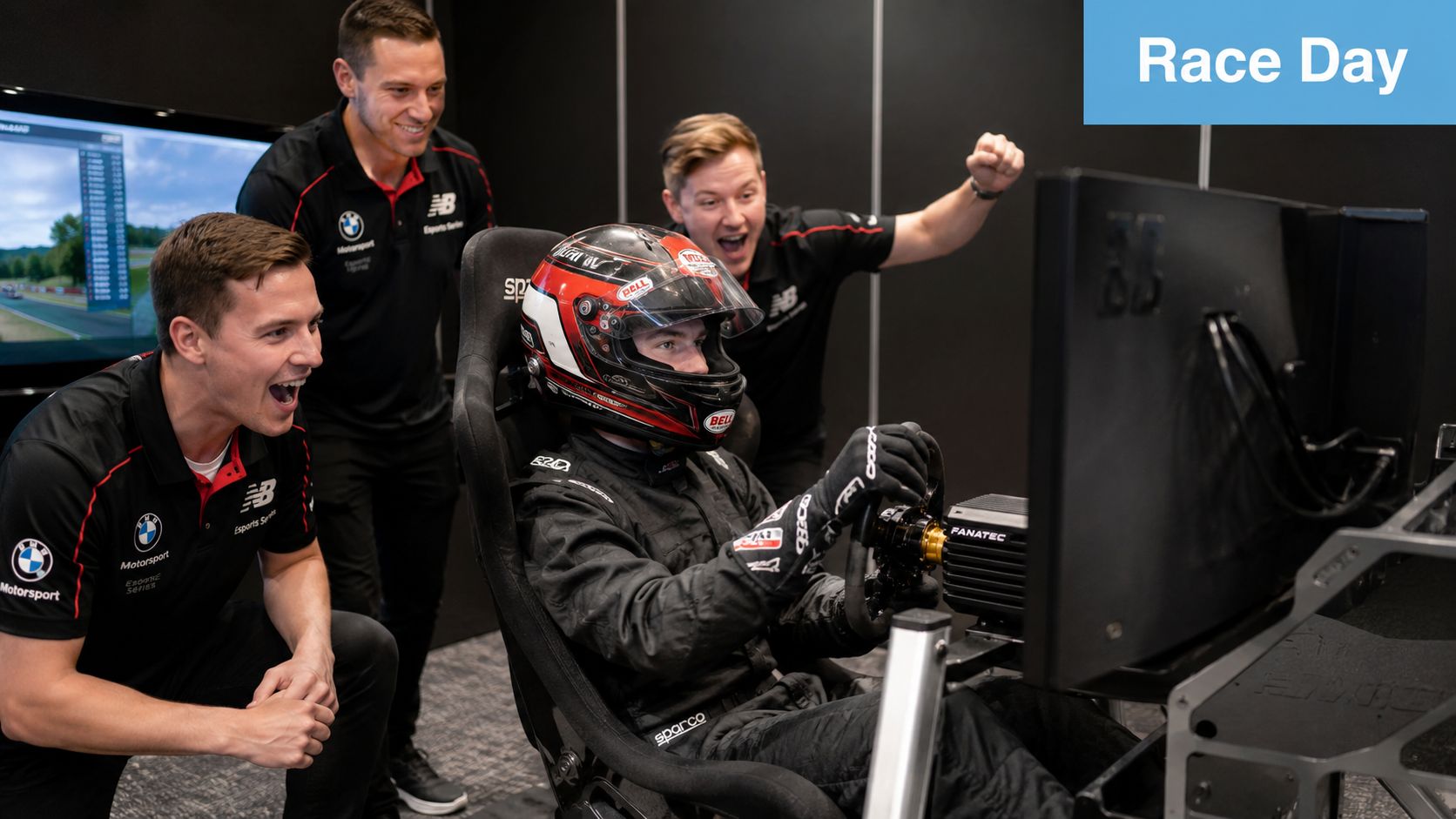
A racing simulator event works because it gives people an instant role, a clear score, and something worth watching. Teams can rotate through F1 and multi-racing rigs, compare lap times, and build momentum through heats rather than relying on one-off participation. At high-footfall corporate events, that structure keeps the whole room active, not just the person in the seat.
Make the competition feel managed, not chaotic
The best racing setups start with tournament brackets. If you build the structure before the event opens, you avoid queues turning into dead time, which is where engagement usually slips. I'd also recommend giving people two entry paths, one competitive and one casual, because some teams want the pressure and others want the experience without the noise.
Leaderboards should be branded, visible, and live. Add commentary if you can, because racing sims become far more compelling when the room hears who's leading and why a last-lap mistake changed the result. For a venue like Silverstone or ExCeL London, that energy works well with hospitality areas where people can reset between races and keep watching.
For a practical hire option, PSW Events' racing simulator hire suits corporate planners who want a managed, high-uptime attraction with strong spectator appeal.
Practical rule: if people can't see the leaderboard, they stop caring about the bracket.
Where it works best
Racing simulators fit client entertainment, sales incentives, and brand-led away-days where you want a polished finish. They also suit blue-chip automotive settings because the experience feels connected to performance, control, and precision. Done properly, the event gives you competition without needing a sports field or weather backup.
2. Flight Simulator Team Experiences
Flight simulators change the tone of a team event fast. They're immersive, technical, and naturally collaborative, because people have to listen, react, and support each other while the scenario changes. In a helicopter or motion sim, that can mean emergency landings, navigation under pressure, or turn-taking between team members who've never worked together in that kind of setting.
Build confidence before you build intensity
A good flight simulator session starts with screening and briefing. Motion sensitivity matters, and skipping that check can turn a premium experience into an uncomfortable one. Once people are in the simulator, trained instructors should be active, not passive. They need to coach in real time so the challenge stays engaging rather than intimidating.
The format suits executive teams, graduate attraction, and milestone celebrations because it feels credible and memorable without drifting into gimmick territory. You can set up light competition around fastest emergency landing or best teamwork, then use those moments for internal or external content. If you're collecting reactions on camera, do it naturally, because forced footage never helps the event story.
A comfortable waiting area matters more than many planners expect. People need a calm place to watch, decompress, and re-enter the action. Light refreshments work better than a heavy catering spread here, because flight simulator sessions tend to move in waves.
For setup guidance, PSW Events' flight simulator requirements are a useful planning reference when you're matching equipment, audience comfort, and venue layout.
What this format does well
Flight simulators reward communication under pressure. They also expose how different people behave when the environment is changing quickly, which makes them useful for leadership teams and mixed-function groups. If you want a high-end experience that still feels practical, this is one of the strongest options.
3. Multi-Sport Simulator Tournaments
Multi-sport simulator events are one of the easiest ways to stop a team from splitting into “sporty people” and “non-sporty people”. Boxing, golf, rugby, and American football simulators let different personalities find their own entry point, and tournament rotation keeps the pace moving. That variety makes the format feel more inclusive than a single-sport challenge.
Rotate people, don't park them
The event lives or dies on flow. Pre-assign team groups and rotation order so people aren't standing around deciding where to go next. A smooth schedule keeps the room energetic and helps quieter attendees stay involved because they always know what's coming.
I like this format for corporate sports days at venues such as Manchester Central or SEC Glasgow, where teams need a mix of spectacle and structure. You can run it as a points-based championship, then keep the energy up with live commentary, music, and clear station instructions from enthusiastic instructors. That combination helps even when the group has mixed confidence levels or very different levels of physical ability.
Good event design here is simple: every station should work for spectators as well as players.
Keep inclusivity visible
The best version of this event doesn't force every person into the same sport. It gives teams the chance to contribute through different strengths, whether that's precision, timing, power, or support from the sidelines. Offer branded prizes and certificates so the winning team feels recognised, but also acknowledge individual standouts, because not every meaningful contribution shows up on the scoreboard.
This format is especially useful for client hospitality days and marketing agency events, where you want an easy mix of networking, competition, and entertainment. It feels active without being exclusive, which is a rare balance in live corporate events.
4. Electronic Leaderboard Competitive Challenges
Electronic leaderboard events work because people instinctively respond to live ranking. The moment a score changes on screen, the room adjusts. That makes the format ideal for conferences, brand activations, and sales events where you want fast engagement without overcomplicating the mechanics.
Visibility is the whole game
Put the leaderboard where everyone can see it. If half the audience can't read the rankings, you lose the tension and the event flattens out. Live commentary helps as well, because a good host can turn a simple score change into a moment the room feels together.
This format suits real-time games, timed challenges, and multi-round contests. You can separate results into categories like fastest, most consistent, or best teamwork so the event doesn't reward only one style of participation. That matters in corporate settings because some people excel under pressure, while others contribute through steady performance and smart decisions.
Testing is essential. Every system needs a full check before the event begins, and you should have backup equipment ready in case a display or scoring feed fails. The best live events look effortless only because the technical rehearsal was serious.
For a dedicated setup, PSW Events' electronic leaderboard solution fits events where live scoring is part of the attraction rather than a side feature.
Use the data after the event
If the leaderboard data is clean, it becomes useful after the event too. You can use it in follow-up communications, highlight team performance, and identify who participated most consistently. That kind of record gives planners something concrete to discuss instead of just saying the event was fun.
5. Team-Based Escape Room Challenges
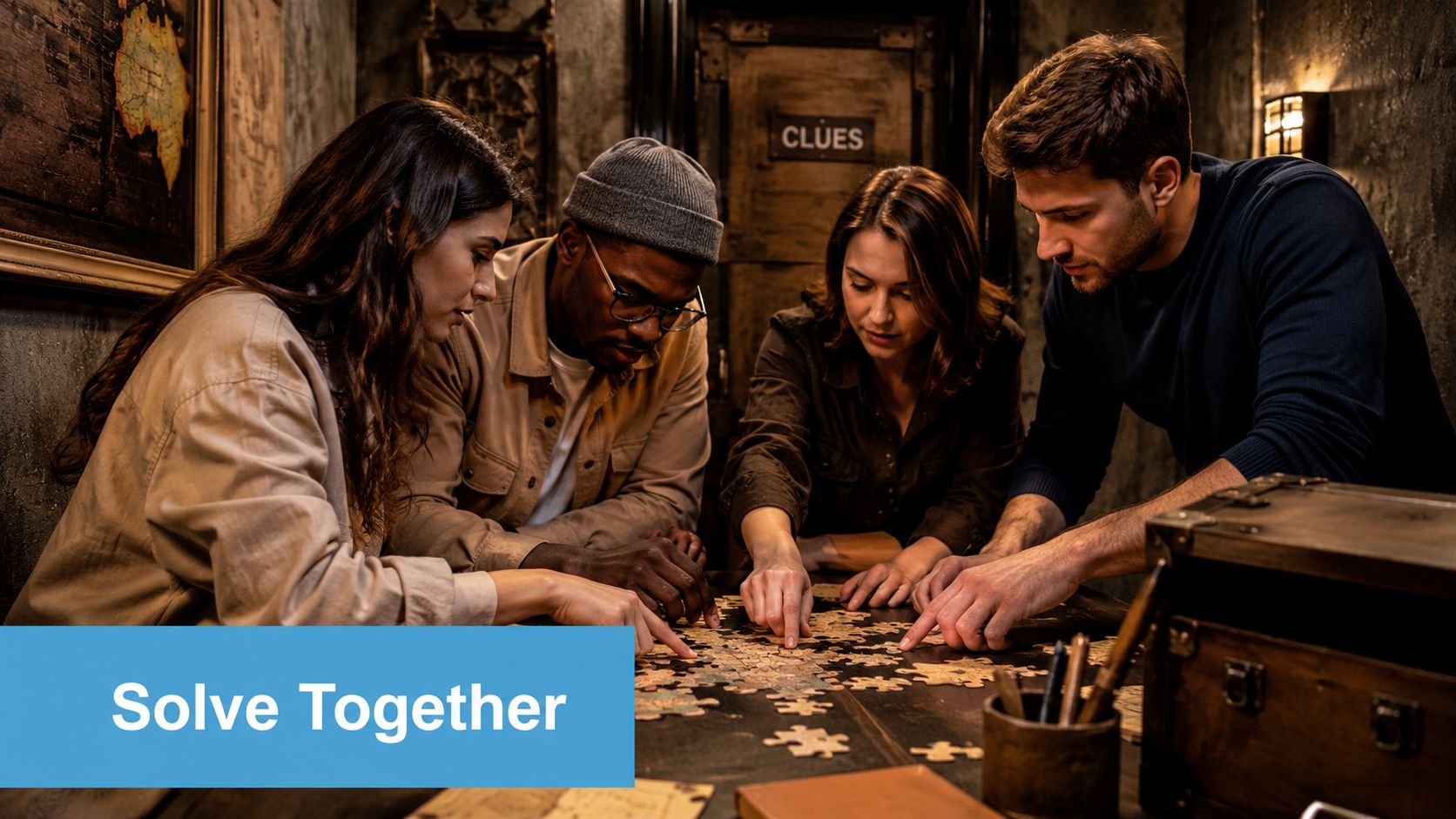
Escape rooms still earn their place because they force teams to communicate under pressure. People can't bluff their way through a locked-room puzzle. They need to share information, assign roles, and notice details quickly, which makes the format effective for collaboration and debriefs.
The debrief matters as much as the puzzle
A strong escape room event doesn't end when the group gets out. The learning comes from the discussion afterwards, when people can identify who noticed clues, who kept the group organised, and where communication broke down. That's where the team-building value becomes visible.
I'd brief teams on communication roles before the game starts. If everyone talks at once, the room turns noisy and progress slows. If one person dominates, quieter contributors disengage. A simple role split, such as clue handler, tracker, and time keeper, makes the experience cleaner and usually more productive.
Choose the difficulty to match the group, not the ego of the organiser. If the scenario is too hard, people frustrate quickly. If it's too easy, the event loses tension. The right level feels challenging but still winnable.
Use it for learning, not just entertainment
This format works well for team development workshops and premium client entertainment because it gives you a real-time picture of how people solve problems together. It can also support sales incentive events, especially when winning teams earn bonus rewards. The key is to treat the room as a collaboration exercise first and a game second.
6. VR Team Experiences and Competitions
VR can be excellent for corporate events, but only when it's managed properly. The technology creates high immersion and a strong “we're all in this together” feeling, especially in mission-based games or competitive multiplayer scenarios. It's also one of the easiest formats to make feel new without building an entire environment from scratch.
Safety and hygiene come first
Physical checks matter before anyone picks up a headset. The event team needs to confirm the space is clear, the movement area is safe, and each participant is comfortable with the format. Hygiene protocols are equally important because headsets change hands quickly during busy sessions.
A trained technician should be present the whole time. VR equipment is brilliant when it works smoothly, but it can stall instantly if a connection drops or a headset needs recalibration. That's why this format suits corporate organisers who want a polished, closely managed experience rather than a DIY attraction.
Spectator visibility helps more than people expect. When others can watch a teammate in action, they stay engaged even when they're not wearing the headset themselves. If you also provide seated alternatives, you make the event far more comfortable for mixed groups and people who prefer not to stand for long periods.
Why teams respond to it
VR is strong for tech company events, exhibition activations, and client hospitality because it feels modern and interactive. It also gives you good content opportunities for photography and short-form video, provided you're capturing genuine reactions rather than staged gestures. The experience feels useful when it's varied, safe, and easy to join.
Keep the rotation short, the briefing clear, and the viewing area active. That's what stops VR from becoming a one-person experience.
7. Climbing Wall and Physical Challenge Stations
Physical challenge stations work because they combine visible effort with team support. Climbing walls, rope elements, and related tasks create natural moments of encouragement, which makes the event feel more human than a screen-based game. People contribute differently, and that's part of the value.
Build confidence with support structures
Not everyone wants the same level of physical intensity, so alternative challenges are essential. If you want the event to feel inclusive, give non-climbing participants a meaningful role, whether that's timing, support, route planning, or a parallel task. Team relay formats also help because they allow different people to contribute different strengths.
Certified supervision matters at every station. This is one of those formats where professional oversight isn't a nice extra, it's part of the event's credibility. Pre-event fitness and health checks help reduce surprises, and they show that you've taken participation seriously.
Warm-up time is easy to overlook. If people go straight from arrival into climbing, the event can feel abrupt. Build in a proper start, some recovery space, and visible recognition for individual achievements so the event never feels like a pure test of athletic ability.
Good use cases
This format works well for adventure-themed team days, outdoor corporate events, and client incentive programmes. It's especially effective when the venue already supports movement and supervised challenge areas. The strongest version balances physical effort with team encouragement, so people leave with a sense of shared achievement rather than pure exhaustion.
8. Casino Table Team Nights with Charity Elements
Casino-style team nights bring polish and social energy without requiring real gambling from the group. Roulette, blackjack, and poker tables create a formal, slightly glamorous atmosphere, while play money or charity-linked formats keep the event appropriate for corporate audiences. The result feels like an occasion, not just a game night.
Make the rules clear before people arrive
People need to know whether the event is purely social, charity-linked, or mixed-format. If you're raising money, say so clearly and explain how the mechanism works. Ambiguity makes corporate groups hesitant, especially when gambling tables are involved.
Professional croupiers are worth the investment because they keep the tone light and inclusive. Their job is not just to run the tables, it's to make sure less confident participants feel welcome. Non-gambling areas help too, because not everyone in the room will want to join every table.
I'd use team-based scoring rather than individual winnings whenever possible. That keeps the focus on group participation instead of turning the night into a solo contest. Quality catering also matters, because casino events need atmosphere and pacing to feel complete.
Keep compliance in view
If there's any real gambling component, licensing and regulations must be handled properly. Do not treat that as a side note. The event should be designed responsibly from the start, especially if it includes a charity partnership such as Movember or another cause-driven tie-in.
This format is well suited to partner entertainment, year-end celebrations, and fundraising galas. It gives people a reason to dress up, stay engaged, and talk to colleagues they might not usually meet in a standard work setting.
9. Giant Scalextric Tournament Experiences
Giant Scalextric has a nostalgic pull that works across age groups, and that's one reason it performs so well at corporate events. People recognise it immediately, but the oversized format turns a familiar game into something that feels new and theatrical. It's simple to understand, which makes it ideal for mixed audiences and large conference spaces.
Structure the heats so the room stays alive
Tournament brackets should be fixed before the first race begins. If the structure is unclear, people lose track of where they are in the event, and spectators drift. Practice heats help build confidence and make the actual competition more engaging because participants understand the track and the controls.
I'd use colour-coded cars and relay-style team formats wherever possible. That keeps the visual identity strong and makes it easy for spectators to follow who's on which car. Commentary between heats adds momentum, especially when you want a trade-show floor or conference hall to feel busy without becoming noisy.
This format works well at venues like Wembley or ExCeL London, especially when you need something that sits comfortably alongside hospitality and networking. It's not demanding on the participant, but it still feels competitive and high-value.
Why it keeps working
The attraction is the mix of familiarity and spectacle. People already know the idea of Scalextric, so they can join quickly, but the scale creates enough theatre to hold attention. That balance is difficult to beat in a large-group event.
10. Integrated Interactive Exhibition Zones with Multiple Experiences
An integrated exhibition zone is the strongest option when you want scale, dwell time, and variety in one place. Instead of relying on one attraction, you build a connected environment with multiple interactive stations, such as simulators, games, challenges, and live scoring. Teams move through the zone, pick up points, and stay engaged for longer because there's always another activity nearby.
Design flow, not just content
The layout needs to guide movement clearly. Good signage, well-positioned staff, and a visible route through the space stop bottlenecks from forming. If the event is for a conference or trade show, that flow becomes part of the attendee experience, not just an operational detail.
Brand ambassadors should be briefed properly at every station. Their role is to keep energy high while staying on message, because a zone like this only works when the brand story and the entertainment experience support each other. Live leaderboards help too, since they connect every activity into one running challenge.
VIP fast-pass options can be useful for premium attendees or timed activations, but they need to be balanced carefully so the room doesn't feel split into separate experiences. Rest areas with hospitality matter because these zones can be high-energy and high-volume, especially when footfall is strong. Contingency planning is essential as well, since equipment failures and traffic spikes can happen at the same time.
For planners who want a trust-led behavioural exercise alongside interactive experiences, the United We Transform trust exercise shows how a more structured challenge can sit alongside broader engagement formats.
The best exhibition zones don't feel like a row of machines. They feel like a managed journey with a clear finish.
These zones are ideal for major conferences, product launches, awards evenings, and trade show stands that need more than passive footfall. They give you flexibility for group size, stronger branding opportunities, and a cleaner route to measurable engagement.
Top 10 Team-Building Event Comparison
| Activity | 🔄 Implementation Complexity | ⚡ Resource Requirements | 📊 Expected Outcomes / ⭐ | Ideal Use Cases | 💡 Key Advantages |
|---|---|---|---|---|---|
| Racing Simulator Team Challenges | Medium–High, specialist rigs, bracket management | High, multiple simulators, power, space, tech crew | High engagement, measurable performance and memorable moments ⭐⭐⭐⭐ | Corporate events, conferences, sales incentives | Scalable, spectator-friendly, strong social/media content |
| Flight Simulator Team Experiences | High, motion platforms, scenario programming, instructors | High, motion rigs, trained instructors, scheduling, cost | Deep memorable experiences; improved communication & resilience ⭐⭐⭐⭐ | Executive team days, recruitment events, milestone celebrations | Unique, high-impact learning; develops decision-making under pressure |
| Multi-Sport Simulator Tournaments | High, multi-station coordination and scheduling | Very high, several specialist simulators, large footprint, staff | Broad participation and team cohesion across disciplines ⭐⭐⭐⭐ | Corporate sports days, large agency/client events | Inclusive variety, flexible duration, sustained engagement |
| Electronic Leaderboard Competitive Challenges | Medium, integration with systems and UI design | Medium, large screens, connectivity, reliable tech support | Immediate excitement, visible competition, strong engagement ⭐⭐⭐⭐ | Conferences, gamified events, sales incentives | High visibility, custom branding, instant social content |
| Team-Based Escape Room Challenges | Medium, themed design and game-mastering | Low–Medium, themed rooms, props, trained facilitators | Improves communication, problem-solving; reveals team dynamics ⭐⭐⭐⭐ | Team development workshops, small-group bonding events | Strong collaborative learning, memorable shared experience |
| VR Team Experiences and Competitions | High, complex tech setup and safety protocols | High, multiple headsets, technicians, hygiene systems | Novel, highly engaging experiences; strong appeal to tech-forward groups ⭐⭐⭐⭐ | Tech-company events, exhibitions, immersive brand activations | Cutting-edge appeal, highly shareable, scalable via rotations |
| Climbing Wall & Physical Challenge Stations | Medium–High, safety systems and certified supervision | High, climbing equipment, trained staff, space; weather-dep. | Builds confidence, peer support and visible achievement ⭐⭐⭐⭐ | Outdoor team days, adventure events, incentive days | Visceral achievements, strong motivational impact, inclusive with alternatives |
| Casino Table Team Nights with Charity Elements | Medium, licensing, hospitality coordination | Medium, tables, croupiers, catering, compliance | Social networking, entertainment with fundraising potential ⭐⭐⭐ | Client entertainment, year-end parties, charity galas | Sophisticated atmosphere, flexible scale, optional charity integration |
| Giant Scalextric Tournament Experiences | Medium, track installation and maintenance | Medium, large tracks, timing systems, floor space | Nostalgic fun, spectator appeal and light competition ⭐⭐⭐⭐ | Conferences, client hospitality, trade show entertainment | Low intimidation, highly visual, quick learning curve |
| Integrated Interactive Exhibition Zones | Very High, complex logistics, flow design, integration | Very high, many stations, tech, staff, large venue footprint | Extended engagement, measurable metrics, strong dwell time ⭐⭐⭐⭐⭐ | Major conferences, product launches, large-scale brand activations | Highly customisable, scalable to thousands, rich data & content collection |
Choosing the Right Event for Your Team
The best team building event ideas are never one-size-fits-all. They need to match your company culture, your audience, and the outcome you want. If the goal is friendly rivalry, a racing simulator or leaderboard challenge usually lands well. If the brief is collaboration under pressure, flight simulators, escape rooms, or integrated multi-zone formats give you more room to observe how people work together.
That's where many generic list articles fall short in the UK market. They talk about fun, but they rarely address measurement, accessibility, or the practical reality of running the event inside a hotel, exhibition hall, or corporate venue. A better plan starts with the question, “What should change after this event?” That might be stronger internal engagement, better attendance, more visible collaboration, or a more memorable experience for clients and staff.
Inclusivity needs to be part of that decision too. UK employers have to think carefully about access and adjustments, and good event design should reflect that from the start. The Equality and Human Rights Commission says employers must make reasonable adjustments for disabled people, and Acas states that employers must not discriminate under the Equality Act 2010 in relation to protected characteristics including age, disability, gender reassignment, marriage and civil partnership, pregnancy and maternity, race, religion or belief, sex, and sexual orientation. A team event should let people join safely and comfortably, not force them into a format that only suits one group.
The strongest planners choose activities that can be watched, joined, and measured. That's why simulator-led events, interactive leaderboards, and managed exhibition zones work so well for corporate audiences. They're easy to scale, easy to brand, and easier to justify afterwards because you can connect them to attendance, participation, and follow-up engagement.
If you're planning for 2026, start with the experience your people will use. Then choose the format that supports it, not the other way around.
PSW Events designs and delivers interactive corporate entertainment across the UK, including racing and flight simulators, electronic leaderboards, VR, Scalextric, casino tables, climbing walls, and multi-zone exhibition experiences. If you want practical help matching the right attraction to your venue, audience, and event goals, visit PSW Events and speak to a team that handles planning, branding, logistics, installation, and on-site delivery.