
F1 Simulator cost in the UK is usually a bespoke hire quote, not a clean rate card. If you're buying, static units start around £6,249, premium branded motion rigs can reach £99,999, and true team-grade systems sit in the £2 million to £8 million bracket.
That's the reality most corporate planners run into when they ask for a simulator and get back a vague line with no detail. You're not just pricing a machine, you're pricing transport, crew, branding, venue access, power, install time, and the amount of realism your stakeholders expect to see on the stand.
Why F1 Simulator Cost Is Rarely a Simple Number
A marketing manager gets a quote, opens it, and sees a total that looks high but still leaves out the important bits. There's no clarity on whether delivery, build, staffing, insurance, branding, or power is included, so the supplier sounds expensive and the budget holder sounds cautious. That is the situation most corporate planners run into, and it is why people waste time comparing quotes that are not pricing the same scope.
The first mistake is comparing simulator types before comparing operational cost. A consumer rig, an event-grade cockpit, and a professional team simulator do not solve the same brief, so the headline price never tells the full story. A simple home setup can begin in the low thousands, a serious event activation may need a different hardware stack entirely, and top-tier F1 team systems sit in a completely separate budget class at £2 million to £8 million (industry benchmark, UK cost overview).
That is why planners get tripped up. They search one phrase, F1 simulator cost, and the results jumble together hobby kits, showroom replicas, and elite training systems. One benchmark even shows consumer-style replicas sold at £99,999 for the Red Bull RB18 Champions Edition, while a UK-focused overview places entry-level professional systems at around £2.5 million (UK cost overview).
If you want a quote that is usable, ask what sits inside it. Transport, crew, insurance, venue access, branding, and setup time change the final number fast, and they are exactly the items planners miss when they focus only on hardware.
A practical rate card for event hire also helps set expectations. PSW Events rental rates show how equipment pricing is only one part of the spend, because venue logistics and support costs still have to be covered somewhere.
For corporate planners, the useful question is not “what does a simulator cost?” It is “what level of experience am I buying, and what operational burden comes with it?” Once you frame the brief that way, the numbers make sense.
UK F1 Simulator Pricing Tiers Explained
UK pricing only makes sense when you separate retail showpieces from hireable event assets. A cheap sticker price can still become an expensive line item once you add transport, crew, insurance, branding, and venue setup.
Static, motion, and professional tiers
At the entry point, the TRK Package Static Simulator is listed at £6,249, which gives you a clear floor for the branded retail market (F1 Authentics pricing). At the other end, the Red Bull RB18 Champions Edition sits at £99,999 in Britain, while the Race Edition is £74,999 (Business Insider benchmark).
That gap is the point. Static rigs suit straightforward activations where you want a visual talking point and controlled deployment. Motion rigs and replica car installations serve a different brief, they are built for theatre, immersion, and a higher-spec presentation on the show floor.
The middle of the market is where many planners misread the brief. The Financial Times reported UK home simulators styled like an F1 cockpit at £11,950 to £85,000, which shows how fast the price rises once realism and finish become part of the ask (FT coverage). A separate UK overview places professional racing simulator models at £39,900 for a Formula setup and just under £100,000 for a full motion-and-g-force package, which is a useful reminder that “simulator” covers a wide range of builds (FT coverage).
| Tier | Example Product | Price Range | Key Features |
|---|---|---|---|
| Entry-level static | TRK Package Static Simulator | £6,249 | Static cockpit, lower complexity, suitable for simpler activations |
| Premium static to showroom | X Lite Static Simulator, X Wav Static Simulator | £19,995 to £24,995 | Branded presentation, stronger realism, no motion system |
| Motion-enabled event rig | X6 Motion Simulator | £64,995 | Motion hardware, higher immersion, more setup complexity |
| Premium branded replica | Oracle Red Bull Racing Simulator, Visa Cash App Racing Bulls Simulator | £69,995 | Brand-led visual impact, premium build |
| Elite retail benchmark | Red Bull RB18 Champions Edition | £99,999 | High-end replica positioning, physical components included |
| Professional team-grade | Full professional package | £2 million to £8 million | Elite motion, telemetry, bespoke vehicle and terrain modelling |
For corporate planners, the practical move is simple. Decide which tier fits the brief before you speak to suppliers, or you will compare a static event rig against a motion showpiece and approve the wrong budget.
If you need a rental reference point, the PSW Events equipment rental rates page helps show how event hire pricing is usually structured, because the simulator itself is only part of the spend.
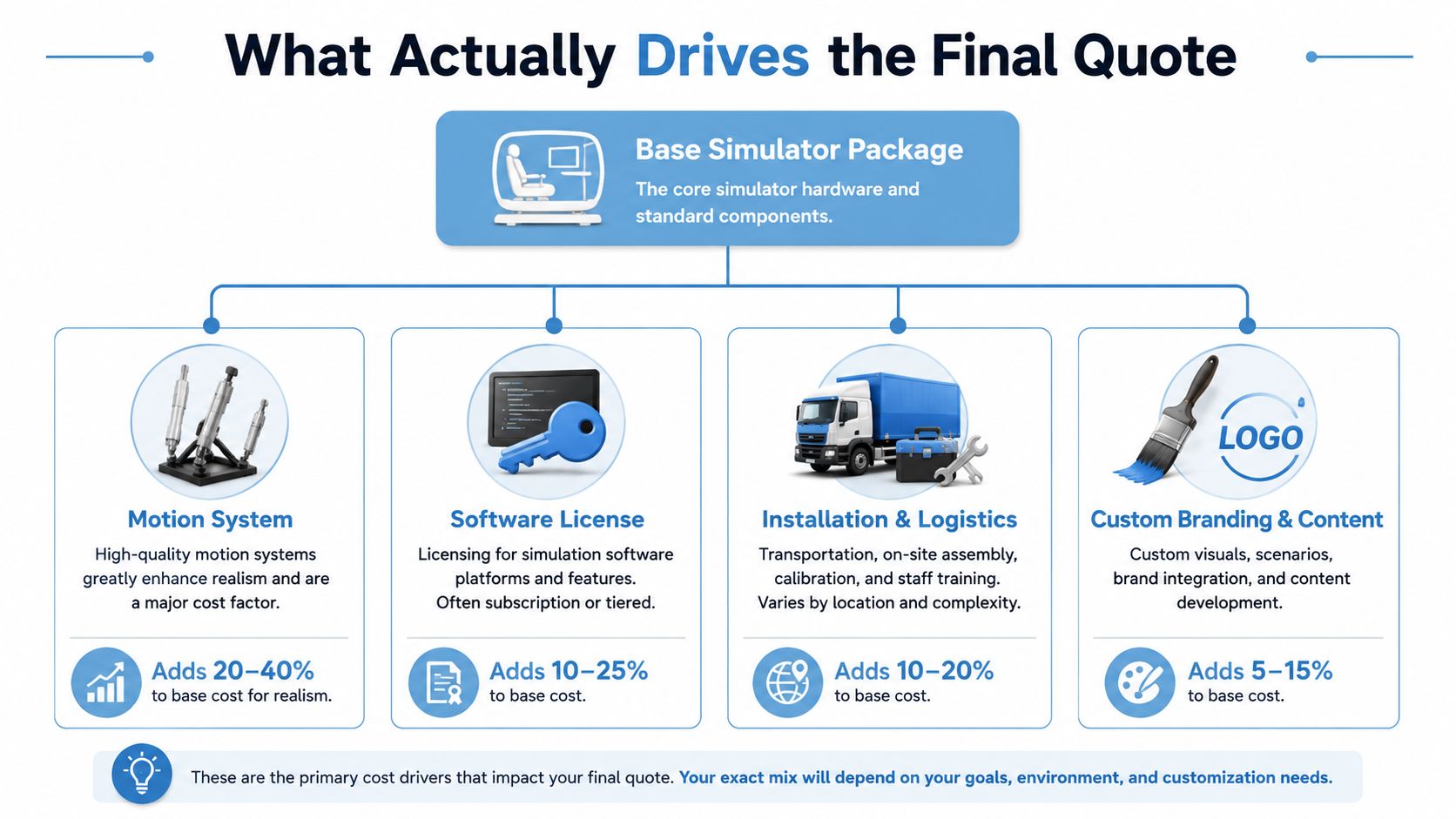
The Hidden Costs That Drive Your Final Quote
The base unit is only the opening number. The final invoice changes fast once the simulator stops being a product and becomes an event asset that has to arrive on time, work in your venue, look on-brand, and survive live use.
Motion, screens, and replica hardware
Motion systems are the first major cost driver. Once you add hydraulic or comparable motion hardware, the quote rises because the setup needs more engineering, more calibration, and more time on site. The same applies when the brief shifts from a cockpit to a life-size car-style installation, because replica chassis components, physical bodywork, and visual finish all add labour and complexity.
Display choice also changes the budget. A static cockpit with a single screen is straightforward. A rig built around VR, extra displays, or a larger wraparound visual environment needs more hardware, more testing, and more failure points. That is why a VR-enabled build is cited around £30,000, while full life-size F1 car-style installations sit around £120,000 to £150,000 in the UK market (UK event-grade figures).
Logistics, staffing, branding, and risk
Transport is where many budgets leak. A simulator has to be moved, protected, unloaded, assembled, and removed without damaging the venue or the kit. If the event is at a difficult site, or the machine needs specialist handling, the quote rises quickly.
Staffing matters just as much. A polished activation needs operators, technical support, and sometimes guest management. Branded wraps, liveries, screen content, and custom messaging also add cost because they turn a generic machine into a client-specific experience. Insurance matters too, especially when the kit is expensive, visible, and used by the public.
If the supplier cannot explain the install process in plain English, the quote is not detailed enough for a board-level budget.
Setup and teardown time are easy to ignore until they start eating into venue access windows. A simple static rig in a conference suite carries one cost profile. A full motion installation on a busy exhibition stand carries another. The more the supplier has to adapt the simulator to your venue, the more the quote moves.
Three Realistic Event Budget Scenarios
You do not need a fantasy budget. You need a quote that matches the event you are running, including the parts planners usually undercount, transport, staffing, branding, insurance, and the time it takes to get the kit in and out of the venue.

Modest, premium, and championship-grade activations
A modest activation is the kind of one-day conference booking that needs a clean guest experience and a small footprint. A static simulator, modest branding, delivery, setup, and on-site operation fit this brief. The UK event-grade floor for this sort of setup starts around £12,000 (UK event-grade benchmark).
A premium experience is where agencies usually mean “immersive.” It brings motion, stronger visual presentation, branded livery, and dedicated staffing. At that point, you are no longer pricing a machine on its own, you are pricing a managed activation with technical risk, venue constraints, and guest handling built in.
A championship package is for launches, flagship stands, or brand moments where the simulator itself becomes the feature. That is the point where retail-grade premium builds enter the conversation, and the UK market already shows units at £69,995, £74,999, and £99,999. For a rental brief, that should tell you where the ceiling sits, even before transport, install complexity, and support are added.
For a hire quote, a source like PSW Events simulator hire is useful because it makes clear that the price is not just the hardware. It is the whole event delivery around it.
| Scenario | Typical Build | What It Includes |
|---|---|---|
| Modest Activation | Static event rig | Basic simulator, delivery, setup, simple staffing |
| Premium Experience | Motion-enabled branded rig | Multi-day use, immersive visuals, custom branding, technical support |
| Championship Package | Life-size premium installation | High-end motion, full replica styling, premium guest experience |
For stakeholder approval, the point is simple. Do not ask for a generic simulator quote and hope the rest sorts itself out. Ask suppliers to price the event style you want, because the gap between a modest conference activation and a premium product launch is wide once transport, staffing, branding, and setup are priced properly.
Hire Versus Purchase for Corporate Activations
If you're doing one show, hire. If you're doing a full programme of activations, buy only after you've counted the costs of ownership. That's the clean decision line, and most brands wait too long to draw it.
When hiring makes sense
Hiring works best for one-off launches, seasonal campaigns, and events where venue access is tight. You avoid storage, maintenance, and depreciation, and you can change the spec from event to event. That flexibility matters when each venue has different load-in rules, floor space, or branding demands.
It also protects you from carrying equipment you won't use often enough. For most corporate teams, the recurring pain is not the simulator itself, it's the operational overhead around the simulator. Hire pushes that burden back to the supplier.
When purchase starts to make sense
Owning a simulator makes sense when your calendar is full and your brand wants a consistent experiential asset. In that case, you can control the look, tune the content, and reuse the kit without rebriefing a new supplier every time. The catch is simple, you now own maintenance, storage, software, and technical staffing.
That's why purchase decisions usually belong with brands that already know how often they'll deploy the kit. If the simulator is going to sit in a warehouse for months at a time, the maths weakens fast. If it's active across exhibitions, roadshows, and internal events, ownership becomes easier to defend.
For a planning lens, the most useful hire resource is the PSW Events F1 simulator hire page, because it shows how hire sits inside a wider event-production service rather than a simple equipment transaction.
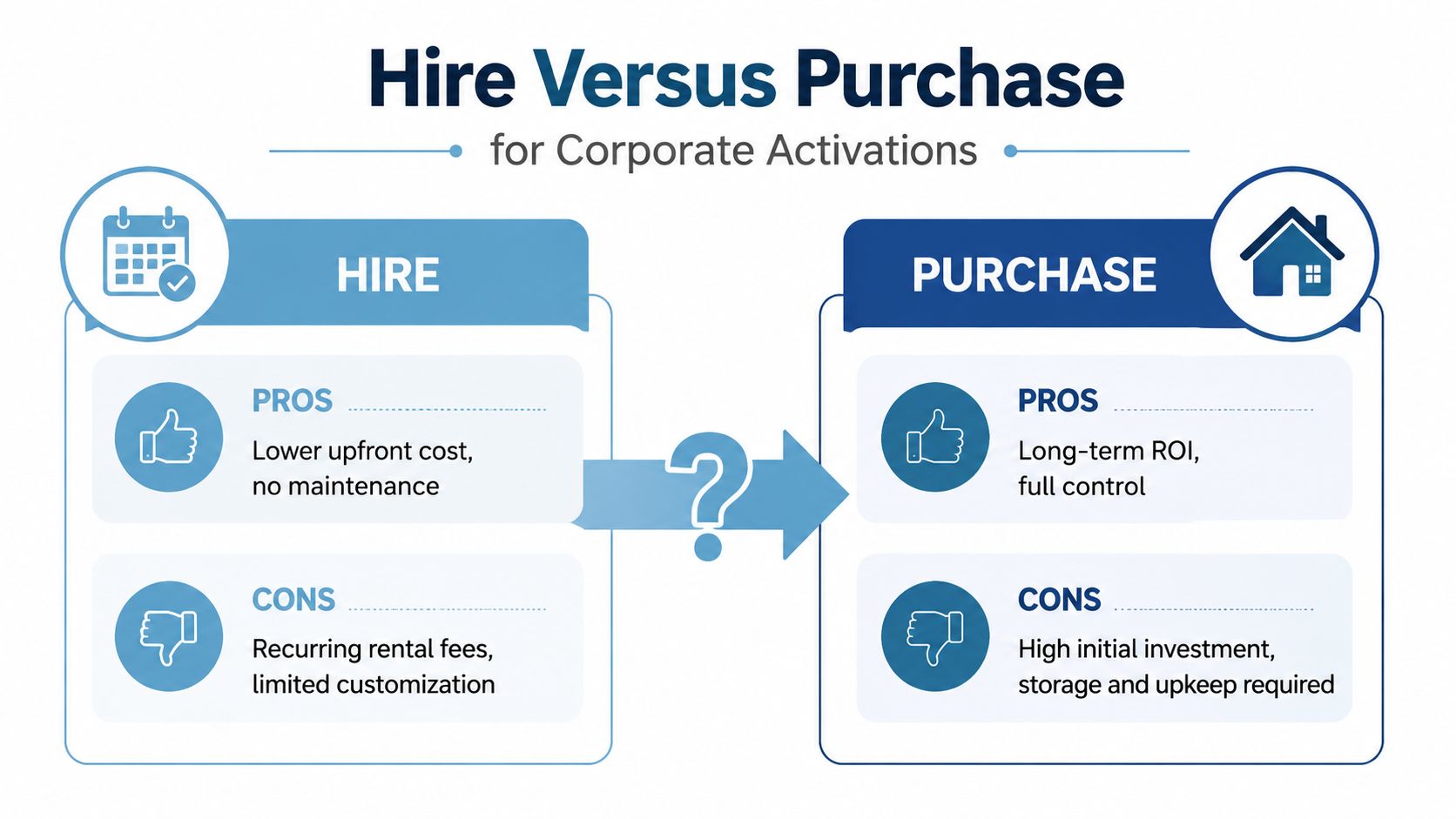
Ownership only works when utilisation is high enough to justify storage, servicing, and technical cover.
That's the decision. Hire for flexibility, purchase for control, and ignore both if the calendar doesn't support the commitment.
Questions to Ask Suppliers and Cost-Saving Strategies
The fastest way to overspend is to ask for a price before you ask what's included. A supplier can look cheap until transport, staffing, and install time appear on the final line.
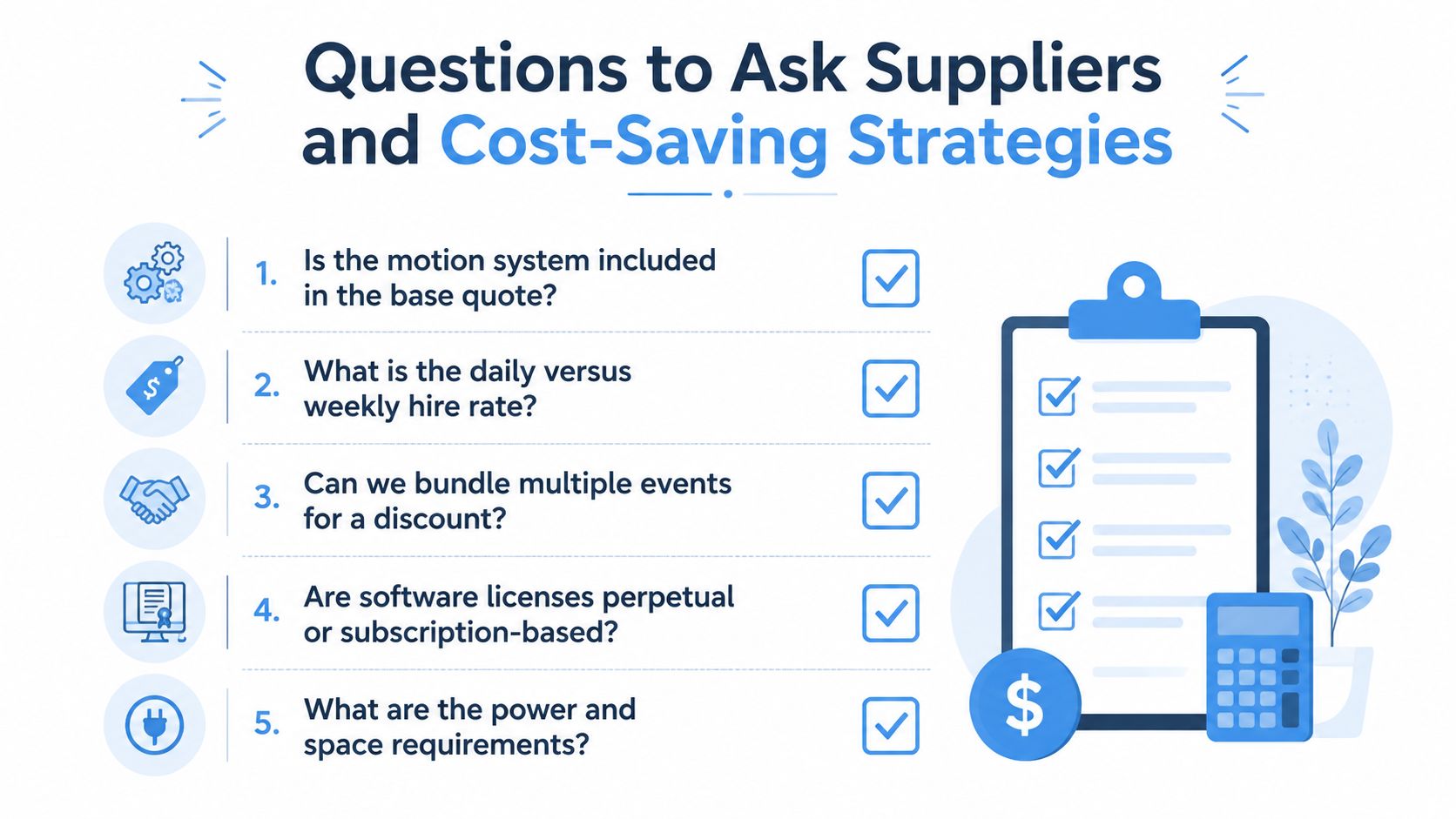
The questions that expose hidden costs
Ask whether the motion system is included in the base price. If it isn't, the headline number is not your real number. Ask how transport is calculated, because mileage, labour, and venue access can change the total materially.
You should also ask whether insurance is included, whether branding can be swapped between events, and what happens if hardware fails on site. Those five questions flush out most of the hidden costs before you commit.
- Is the motion system included in the base quote? If not, price the upgrade before you compare suppliers.
- What is the daily versus weekly hire rate? A longer booking can change the economics in your favour.
- Can we bundle multiple events for a discount? Multi-activation contracts often create room for better terms.
- Are software licences perpetual or subscription-based? Ongoing licensing can reshape ownership maths.
- What are the power and space requirements? A rig that doesn't fit the venue costs more than it should.
Where to save without making the activation look cheap
Book mid-week where possible. Weekends are busy, and busy dates usually cost more. If motion isn't essential to the guest experience, choose a static rig and spend the savings on branding or better staffing.
Multi-day hires can also work in your favour, especially if the same asset stays live on a stand for several days. Bundling multiple activations into one contract gives you more bargaining power than booking each event separately. That's the commercial reality suppliers work with, even when the quote language sounds polished.
Practical rule: spend on the part guests notice, cut the part they won't miss.
The other trap is over-specifying the experience. A client often asks for the most elaborate build in the room when a simpler cockpit would have delivered the same crowd response. Be direct about the job the simulator has to do, then budget for that job only.
Measuring ROI and Justifying the Investment
The strongest simulator budgets are the ones tied to outcomes, not enthusiasm. A planner who can explain what the activation is meant to achieve gets a far easier sign-off than one who just likes the idea of a racing rig.
Start with the metrics that matter on site. Footfall tells you whether the simulator pulls people in. Dwell time tells you whether it holds them. Lead capture shows whether the activation is helping sales or account teams do real work. Social sharing and brand recall matter too, but they should support the core business case, not replace it.
Set those KPIs before the event, not after it. If you're comparing the simulator to another attraction, do it in the language of engagement and operational simplicity, not in the language of novelty. A premium F1 experience costs more because it feels premium, looks premium, and gives guests something they'll stop for.
That's why planners who treat cost as a strategic input, not a nuisance line, usually get the better result. They scope the activation properly, staff it properly, and brief stakeholders on what success looks like before the first guest arrives. For a broader framework on proving event value, the PSW Events experiential marketing ROI resource is worth reviewing alongside your internal KPI plan.
The right question for leadership isn't whether the simulator is expensive. It's whether the attention it creates is worth more than the cheaper option you'd have chosen instead.
If you need a simulator activation that's priced properly, delivered cleanly, and built around your venue rather than around a generic rate card, PSW Events can handle the full brief from hire through to on-site operation. Visit PSW Events to discuss a corporate event simulator package that fits your budget, brand, and guest numbers.