
You’ve got a live brief, a fixed footprint, a sales team asking for stronger engagement, and a venue form demanding exact power and access details before they approve anything. That is often the moment when f1 simulator hire stops being a fun idea and becomes an operational decision.
Done well, it gives you spectacle and structure at the same time. It pulls people in from the aisle, keeps them on the stand longer, gives your team a natural opener, and creates a reason for guests to come back later to defend a lap time. Done badly, it becomes a queue with no flow, a rig that overpowers the space, or a novelty that fails to connect to your event goal.
The difference is seldom the simulator alone. It comes down to choosing the right format, planning the footprint properly, building the competition mechanic around the audience, and making sure the supplier can handle delivery, staffing, branding, and health and safety without drama on the day.
Your Guide to High-Octane Event Engagement
A common event problem looks like this. The stand design is signed off, the branding is sharp, the product story is clear, but the team still needs something that stops traffic. Not just a screen. Not just a giveaway. Something that creates a crowd without feeling gimmicky.
That is where f1 simulator hire often earns its keep. At a conference, guests see a cockpit, hear the feedback from the wheel and pedals, spot a leaderboard, and immediately understand the challenge. They do not need much explanation. “Fastest lap” does the work.
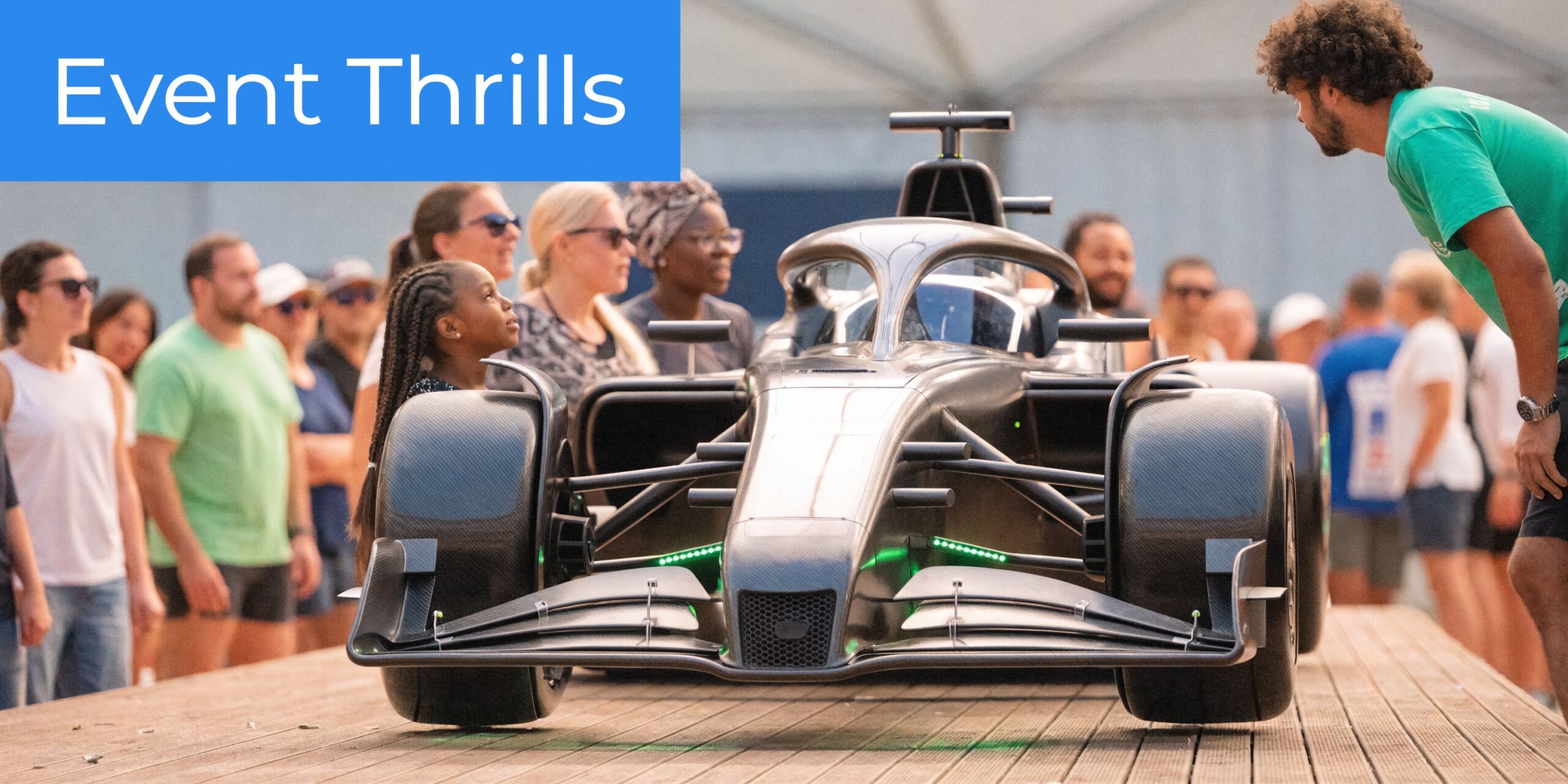
The strongest uses are seldom accidental. A product launch might use a branded simulator as the hero attraction. An exhibition stand might use head-to-head racing to pull in decision-makers who would otherwise walk past. A team-building day might frame the experience as a timed tournament rather than free play, so the session has shape and momentum.
Why planners keep coming back to it
An F1 simulator works because it solves several event problems at once:
- It attracts attention fast. A rig has physical presence. People notice it from a distance.
- It creates a queue people are happy to join. Unlike passive displays, guests understand the reward.
- It gives staff a reason to start a conversation. Lap time, track choice, and competition format all break the ice naturally.
- It leaves behind a memory with a score attached. That matters more than a generic branded interaction.
Tip: If your event objective is vague, the simulator will feel vague too. Tie it to one primary job, such as footfall, lead capture, hospitality, or team competition.
Driving Real Results with Simulator Hire
F1 simulator hire is not merely an entertainment line item. It is a practical engagement tool when the brief is clear and the activation is built around measurable behaviour.
The wider market points in the same direction. The global racing simulator market was valued at USD 494.83 million in 2024 and is projected to reach USD 1,133.27 million by 2030, growing at a 14.81% CAGR, according to Mordor Intelligence’s racing simulator market analysis. For event planners, that matters because growth in this category reflects demand for higher-fidelity, hardware-led experiences rather than passive stand features.
What it does better than static stand attractions
A simulator gives your audience something to do, not merely something to see. That difference matters in exhibition halls where attention is fragmented and every stand competes for the same passing traffic.
Three outcomes tend to make the commercial case:
Drive footfall
People are drawn to visible activity. A racing rig creates movement, noise, competition, and a small audience around it. That audience becomes social proof.Increase dwell time
Once someone is seated, your team has breathing room. The interaction lasts long enough for a thorough conversation before or after the drive.Generate qualified leads
If the lap-time entry process is tied to registration, the simulator becomes part of your data capture flow rather than a side attraction.
Where it fits best
It works especially well in these settings:
- Trade shows and exhibitions where aisle traffic is high and differentiation matters.
- Brand activations where physical immersion supports a premium message.
- Hospitality spaces where guests want something competitive, not childish.
- Internal events where departments, regions, or leadership teams can race in a structured format.
If you are building a broader engagement mix around the simulator, it helps to look at other formats used in corporate brand activations and event hire. That wider planning lens is useful because the simulator performs best when it sits inside a full guest journey rather than carrying the entire experience by itself.
What does not work
Some setups underperform for predictable reasons:
- A premium simulator placed with no visible scoreboard
- A competition with no host or staff control
- A stand trying to serve serious sales meetings and noisy racing in the same corner
- A rig booked because it “looks impressive” but not matched to the event audience
Key takeaway: The simulator earns ROI when you treat it as a structured engagement mechanic, not a decorative prop.
Choosing the Right F1 Simulator Rig for Your Goals
A planner booking an F1 simulator for a gala dinner has a different job from a planner trying to stop traffic on a trade show stand. One needs a hero experience that feels premium the moment guests walk in. The other needs a rig that can keep a queue moving without creating operational headaches. The right choice starts with that distinction.
If you are comparing F1 against other racing formats, it helps to review the wider range of car simulator hire options for UK events. That gives you a clearer benchmark for immersion, audience fit, and event flow before you lock in a specific rig.
Motion or static
The first major choice is between motion and static platforms.
A motion simulator adds pitch, roll, and vibration to the driving experience. It creates more theatre and tends to draw a bigger crowd around the activation. That makes it a strong option for launches, hospitality spaces, and brand experiences where spectacle is part of the brief. The trade-off is easier to manage when the event has enough floor space, a sensible queue plan, and staff who can brief guests properly.
A static simulator keeps the visual and competitive part of the experience without the moving base. It is frequently the smarter option for exhibitions, conference environments, and events where guest turnover matters more than maximum immersion. Fewer moving parts typically means easier supervision, quicker resets between drivers, and fewer restrictions around who can take part.
At PSW Events, this is frequently the decision that shapes everything else. Get it right and the rest of the activation becomes easier to staff, schedule, and sell internally.
Simulator Type Comparison
| Feature | Motion Simulator | Static Simulator |
|---|---|---|
| Immersion | Higher physical sensation and theatre | Strong visual and driving experience without movement |
| Best fit | Premium activations, launches, VIP hospitality | Trade shows, tighter spaces, faster turnover |
| Crowd appeal | Strong spectator pull | Strong if paired with leaderboard and hosting |
| Compliance load | Higher | Simpler |
| Budget impact | Higher | Lower |
| Throughput | Can be slower depending on briefing time | Usually easier to cycle drivers through |
One rig or several
The next decision is capacity.
A single rig works well when the simulator is meant to act as a focal point. That suits a fastest-lap challenge, a prize mechanic, or a hospitality setup where each guest gets a more curated moment. It also keeps staffing and queue management straightforward.
Multiple rigs change the format from individual participation to shared competition. Head-to-head racing creates more noise, more audience attention, and more repeat attempts. It can also solve a practical problem. If your stand is expected to attract heavy footfall, one rig may look busy but still leave too many guests waiting.
Choose one rig when:
- Space is tight
- The simulator is a visual hero asset
- You want a single leaderboard or timed challenge
- Guest volume is moderate and dwell time is high
Choose multiple rigs when:
- Participation numbers matter
- Teams, departments, or clients will race each other
- You need stronger spectator energy
- The event runs long enough to justify tournament or knockout formats
Full show car or compact cockpit
A full-size show car simulator is built for visual impact. It photographs well, supports branded content, and helps the activation read from a distance. For some events, that alone justifies the extra footprint and handling requirements.
A compact cockpit rig is easier to place into real-world event spaces. It suits exhibition stands, hotel ballrooms, upper-floor venues, and sites where install access is less forgiving. It also tends to be the better choice if the simulator needs to earn its place through repeat usage rather than set-piece branding.
That is the trade-off. Show car rigs win on presence. Compact cockpits typically win on practicality.
Screens or VR
For public-facing events, screens are the safer operational choice.
A screen-based setup lets spectators follow the lap, react to mistakes, and understand the competition without needing an explanation. Staff can coach the driver, brand teams can capture content more easily, and the queue stays connected to what is happening.
VR has its place, but it changes the event dynamic. It isolates the participant, can slow driver changeovers, and may not suit guests who wear glasses or are unsure about headsets. If the event goal is throughput, visibility, and shared energy, screens tend to perform better.
Hardware quality affects guest perception
Guests notice weak equipment fast, particularly if the audience includes motorsport fans, engineers, senior clients, or buyers from automotive and performance sectors.
The difference is rarely about spec-sheet language on its own. It shows up in steering response, brake feel, seat rigidity, screen quality, and how planted the whole rig feels under pressure. A good simulator feels credible within seconds. A poor one feels like an arcade machine dressed up for a corporate event.
Ask suppliers direct questions before you book:
- Is the wheelbase direct drive or belt-driven?
- Are the pedals load-cell or basic spring resistance?
- What display format is included?
- Is the seat position fixed or adjustable for different guests?
- Can the rig support both short experience laps and longer competitive sessions?
That level of detail helps you match the rig to the audience, rather than hiring on appearance alone.
Tip: If your guest list includes experienced drivers or technically minded attendees, invest in control quality before you spend extra on cosmetic features. They will forgive a simpler frame. They will not forgive vague steering or poor brake feel.
Planning Your F1 Simulator Setup and Logistics
At 7:00am, the ballroom is still empty, the client walk-through is in two hours, and the simulator is downstairs because the service lift opening is smaller than the crate. That is how good activations get into trouble. F1 simulator hire operates effectively when the logistics are treated like live equipment install, not entertainment dressing.
A race rig can sit tidily on a floorplan and still fail in delivery, power, queueing, or venue sign-off. The planners who get the best results check the route, the operating area, the paperwork, and the staffing plan before anyone talks about lap times.
If you are weighing layouts across different event formats, it helps to review broader driving simulators for UK events before you lock in an F1 rig. It makes floorplan decisions easier, especially if the event also needs spectator space, lead capture, or branded scenic elements.
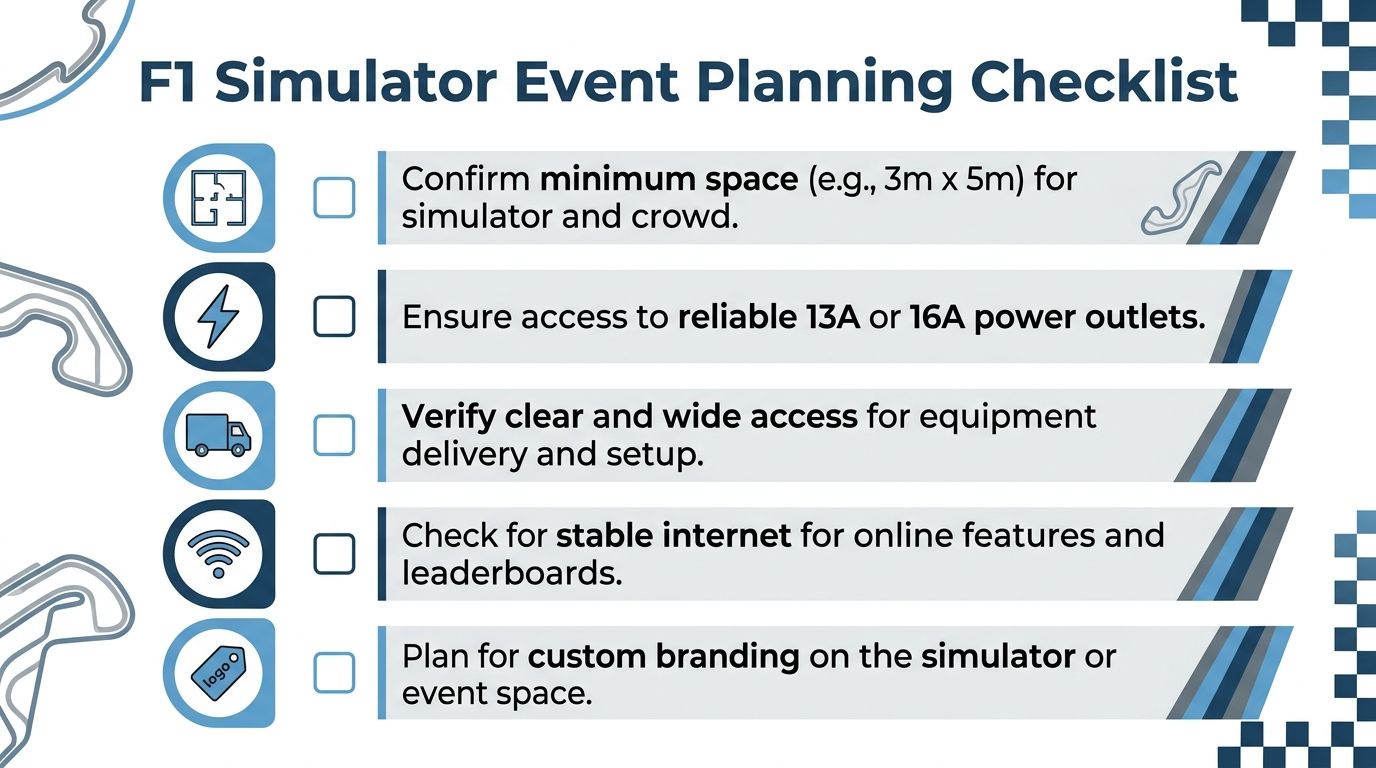
Start with the site survey
Problems emerge early enough here to fix at a lower cost.
Do not ask whether the simulator fits the room. Ask for the full delivery path from unloading bay to final position. I have seen rigs approved for the event space, then delayed by a narrow corridor, a backstage fire door, a sharp turn into a function suite, or a lift that could take the weight but not the shape of the packed equipment.
Check these points with exact measurements:
Access route
Door widths, corridor widths, lift dimensions, ramp gradients, and awkward corners.Build window
Venue access time, unloading restrictions, crew booking rules, and whether setup must happen outside guest hours.Final position
Clearances around the rig, proximity to walls or drape, and whether the screen can be seen from the aisle.Floor condition
Level surface, carpet thickness, cable cover requirements, and any venue restrictions on marking out the area.
Plan the activation footprint, not just the simulator footprint
The rig itself only tells part of the story. The live footprint includes the driver entry area, operator position, queue line, viewing angle for spectators, and any registration or prize desk.
For planning, break the space into four working zones:
- Driver zone for the rig, seat adjustment, and safe access in and out
- Operator zone for briefing, resetting sessions, and managing the running order
- Spectator zone so people can watch without blocking traffic flow
- Registration or lead capture zone if names, lap times, or follow-up data need to be collected
This matters more than planners expect. A simulator with no effective queue plan rapidly turns into a blocked aisle with a member of staff shouting names over the crowd.
Power and connectivity need a real plan
Most rigs can run from standard venue power, but that does not mean power planning is simple. Socket location matters. So does cable routing. So does who else is drawing from the same circuit.
Confirm these points in advance with both venue and supplier:
- Dedicated power in the correct position
- Cable runs that do not cross guest walkways without protection
- Internet access if the activation needs live leaderboards, data capture, or remote support
- An offline operating plan if venue Wi-Fi drops out
If the event depends on competitive timing, do not leave network questions until build day. A local leaderboard or self-contained session format is frequently the safer choice in exhibition halls and temporary venues.
Paperwork should be ready before the venue asks twice
A simulator should be processed like technical equipment. Venues typically want the documentation well before tenancy starts, especially for exhibitions, large corporate conferences, and public-facing events.
Ask for:
- Risk assessment
- Method statement
- PAT testing records
- Public liability insurance confirmation
- Operator staffing details
- Any manual handling notes or installation requirements
The publisher information for this article notes substantial products, employee, and public liability insurance for PSW Events. Whether you book that provider or another, expect the same standard of documentation discipline before sign-off.
One final point. Staffing changes the whole setup. A single-rig activation with one operator can work well for short branded experiences. A competitive format with heavy footfall typically needs clearer queue management, faster guest briefings, and someone focused on throughput rather than just technical operation. That decision affects space, scheduling, and the guest experience from the first session onward.
Understanding F1 Simulator Hire Costs and Timelines
The quote for f1 simulator hire is seldom driven by one thing. It is the sum of hardware choice, event duration, staffing, transport, branding, and the amount of pre-production needed to make the activation run cleanly.
What pushes the quote up
The biggest cost driver is typically the type of rig.
A motion platform brings more immersion, but also more complexity in transport, setup, and compliance. A static rig is simpler. A full show car body adds visual impact but also changes delivery and installation requirements. Multi-rig formats increase both hardware and staffing.
Branding can also shift the budget noticeably. There is a big difference between adding a logo to a leaderboard screen and wrapping a show car or creating a fully themed race environment around the simulator.
Other common quote variables include:
- Location of the event and travel logistics
- Venue access windows, especially out-of-hours build times
- Length of hire, from short activations to multi-day exhibitions
- Number of trained staff needed on site
- Software format, such as time trial versus race competition
- Data capture and leaderboard requirements
What helps you get an accurate price quickly
Planners frequently slow the process down by asking for a price before they can answer the basic operational questions. You will get a better quote faster if your first brief includes:
- Event date and venue
- Indoor or outdoor setup
- Approximate floor space
- Audience type
- Desired number of rigs
- Whether branding is needed
- Whether the format is free play, fastest lap, or race tournament
- Build and breakdown windows
A vague enquiry typically produces a vague quote range. A proper brief produces a workable plan.
Timelines that make life easier
For major shows, conferences, and branded activations, start early enough for proper planning, artwork approval, and venue sign-off. If branding is involved, leave enough time for design changes and print production. If the simulator is only one part of a larger stand or hospitality build, the schedule needs to align with the rest of the production.
The smoothest bookings typically follow this sequence:
- Initial brief and rough scope
- Provisional recommendation and quote
- Site or floorplan review
- Contract confirmation
- Branding sign-off
- Final logistics call
- Live event delivery
Where planners lose money
The avoidable costs are typically not hidden extras. They come from late changes.
A last-minute shift from static to motion, a venue move, additional branding after artwork deadline, or shortened build access can all make a straightforward hire more expensive and more stressful. Early clarity protects the budget better than aggressive negotiation does.
How to Maximise Engagement on Event Day
Once the simulator is installed, the job changes. The challenge is no longer technical. It is behavioural. You need people to notice it, join it, complete it, talk about it, and ideally come back for another attempt.
Many decent activations flatten out at this stage. The rig is strong, but the format is weak. Guests drive once and leave. Sales teams stand nearby waiting for a natural opening that never comes.
Professional motorsport shows why authenticity matters. UK F1 teams invest up to £8 million in private simulators, and that pro-level realism influences the quality expectations guests now bring to event rigs, as discussed in this YouTube analysis of professional simulator systems. The lesson for event planners is simple. Realistic hardware gets attention, but structure creates the result.
Use the leaderboard as the engine
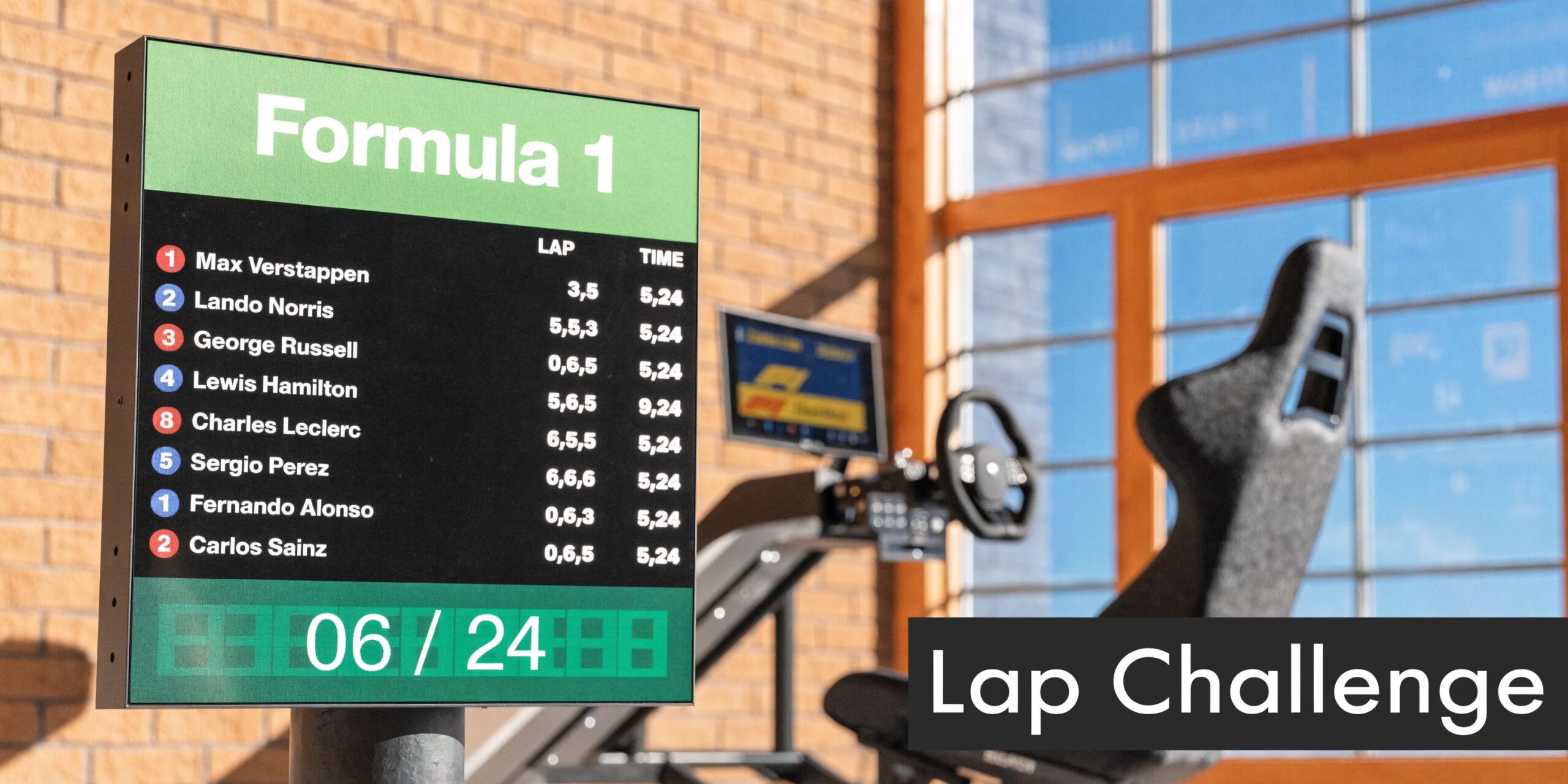
If I had to choose one element that changes engagement most, it would be the live leaderboard.
It turns a private driving experience into a public contest. Guests stop to watch. Drivers stay emotionally invested after their run. Colleagues come back later to see whether their time still holds up.
A good leaderboard setup should:
- Show names or team names clearly
- Update quickly
- Be visible from outside the activation space
- Keep the message simple, typically fastest lap or top positions
Design the competition properly
Not every audience wants the same thing. A trade show crowd typically responds well to short, repeatable time-trial sessions. A hospitality crowd may prefer a hosted challenge with prizes or a final culmination. Team-building groups frequently engage best with heats and knockouts.
Formats that typically work:
- Fastest lap challenge for exhibitions
- Head-to-head races for internal events
- Team leaderboard for conferences and dealer meetings
- VIP final for hospitality sessions later in the day
Make the queue productive
A queue should not feel like dead time. It should feel like build-up.
Use that waiting period for:
- Registration
- Briefing
- Brand messaging
- Conversation with sales or event staff
- Photograph opportunities beside the rig
Complementary features can also be beneficial in this context. If you are planning a broader exhibition activation, resources on interactive trade show displays can help you think beyond the simulator itself and build a stronger visitor journey around it.
Staff the activation like a live experience
A simulator with no host frequently loses energy. A trained operator keeps the pace up, explains controls quickly, manages expectations, and narrates the action for spectators.
For motorsport-themed events, another useful add-on is a pit stop challenge hire option. It works well alongside the simulator because it gives waiting guests something physical and competitive to do without duplicating the same experience.
Tip: The host does more than explain the pedals. They set the emotional tempo. Good staffing can make an average queue feel exciting.
Match session length to event rhythm
Long sessions feel premium but can choke throughput. Short sessions increase volume but can feel rushed. The right answer depends on audience type, queue length, and whether the event rewards spectacle or participation numbers.
The strongest event-day setups balance all three:
- a visible competition mechanic,
- brisk but not abrupt driver turnover,
- and staff who know when to move people through and when to hold a crowd for a final.
Your Ready-to-Use F1 Simulator Hire Checklist
Use this as a working brief before you send an enquiry or approve a quote.
Phase one briefing
Define the main objective
Decide whether the simulator is there for lead generation, brand awareness, hospitality, team building, or general entertainment.Name the audience
Senior clients, trade show visitors, staff teams, families, and motorsport fans all respond differently.Set the essential requirements
Date, venue, build window, and rough budget range should be clear before supplier conversations start.
Phase two supplier vetting
Check insurance
Confirm the supplier carries sufficient public liability cover if that is your venue requirement.Ask for H&S paperwork
You should expect risk assessments, method statements, and PAT testing records.Confirm trained staff are included
A rig without competent operators is a risk to flow and guest experience.
Phase three site and logistics
Measure properly
Capture usable floor space, ceiling height, and spectator area, not just the spot where the cockpit sits.Trace the delivery route
Check service doors, corridors, lifts, loading docks, and any tight turns.Confirm power position
Make sure standard sockets are available where the rig will operate.Check connectivity if needed
Leaderboards and linked features may require dependable internet.
Phase four pre-event sign-off
- Approve branding artwork
- Finalise competition format
- Confirm arrival and build times
- Share venue contact details and access notes
- Brief your own staff on how the simulator supports the wider event goal
Common Questions About F1 Simulator Hire
Is f1 simulator hire only suitable for motorsport events
No. Motorsport fans will always engage with it quickly, but corporate audiences, hospitality guests, and exhibition visitors respond just as well when the format is simple. People do not need specialist racing knowledge to understand a fastest-lap challenge.
Is motion always the best option
Not always. Motion adds theatre and can lift participation, but it also increases compliance considerations and typically costs more. Static rigs are frequently the smarter choice for compact stands, high-throughput activations, and venues where simplicity matters.
How much space do I really need
More than the rig alone. The cockpit footprint is only one part of the activation. You need room for screens, operator position, queueing, and spectators. A setup that technically fits can still fail operationally if people cannot circulate around it comfortably.
Do venues usually object to simulator installations
Usually not, if the supplier provides proper documentation and the logistics have been checked in advance. Problems tend to come from late paperwork, unclear power arrangements, or access routes that were never verified.
Can the simulator be branded
Yes. Branding can sit on the rig, surrounding set, screen content, and leaderboard graphics. The key is to avoid over-designing it to the point where the driving experience becomes secondary or the visuals obstruct operational elements.
Is it better as free play or competition
Competition typically wins. Free play can work in relaxed hospitality settings, but most public or corporate environments benefit from structure. A lap-time challenge gives the activation a clear purpose and gives guests a reason to stay connected to it after their session.
What is the biggest mistake planners make
Booking the simulator before deciding what job it has to do.
That leads to weak placement, poor staffing decisions, and a format that does not support the event objective. If you decide first whether the priority is footfall, data capture, hospitality, or team rivalry, most of the other choices become much easier.
If you’re planning an event and need a practical recommendation on rig type, footprint, or competition format, PSW Events can help scope the activation around your venue, audience, and event objective.