
You're signing off a venue, the client wants the budget by lunchtime, and three hire quotes are sitting in your inbox with different headline prices. One looks cheap until you notice the delivery line, another bundles staff you don't need, and the third barely explains what happens on site. That's where equipment rental rates stop being a simple daily number and start becoming a planning problem.
In the UK, hiring is often the smarter move when usage is short and intermittent, because rental pricing can stay comparatively stable even while purchase costs rise. A 2025 industry review described construction equipment rental prices as “mostly flat”, with only a 1% to 2% rise in many markets, while broader construction input costs had risen 41% since the start of 2020 and equipment rental prices were up only 12% since early 2020 (industry review). For planners, that gap matters. It shows why hire can be the cleaner budgeting choice when you need control, predictability, and no long-tail ownership burden.
The main task is not reading the headline rate card. It's finding the true all-in rental rate, the figure that includes delivery, staffing, setup, insurance, and any venue-specific extras that turn a quote into an invoice.
Demystifying Equipment Rental Rates for Your Next Event
A planner under pressure rarely gets a neat quote. More often, there's a base hire fee, then a delivery charge, then staff, then an extra line for access or evening installation. The headline price looks manageable, but the total creeps up once the supplier starts accounting for the actual work of getting kit onto a site and operating it properly.
That's why the first mistake is treating every quote as if it means the same thing. Two suppliers can both advertise a similar equipment rental rate, but one may include collection, installation, and a trained operator, while the other only prices the asset itself. If you compare only the base number, you're not comparing like with like.
What a good planner watches for
The practical move is to ask what the rate includes before you ask whether it's fair. Rental pricing in the UK often follows daily, weekly, and monthly hiring cycles set out by the British Standards Institution, and that structure exists because hirers need a transparent basis for comparing offers rather than relying on a one-off quote style. In mature hire markets, rate cards tend to be indexed, tracked, and negotiated, not guessed at, which is why professional buyers expect clarity and itemisation rather than a vague total.
Practical rule: if a quote doesn't separate the base hire from the on-site services, it's not ready for approval.
That discipline matters across exhibitions, temporary works, and corporate events. Hire is often used because it keeps costs more predictable than buying equipment for one-off or irregular use. For a planner, that predictability is only useful if the supplier shows where the money goes.
How UK Event Hire Pricing Structures Work

The simplest way to read a hire quote is to start with the base hire fee, then look at the period attached to it. In UK event work, you'll commonly see rates framed as a day, a week, or a month, and the per-day cost usually gets lighter as the booking gets longer. That's normal. Operators need to protect utilisation, so short hires carry a heavier daily load than extended bookings.
Day, week, and month pricing
The useful comparison is not just the total price, it's the effective daily rate. Pricing guides commonly cite roughly 3–5% of retail value per day, about 10% per week, and 20% per month (pricing guide). That structure creates rate compression, which means the longer you keep the kit, the better the per-day value becomes. If you're budgeting for a three-day activation, a one-day quote multiplied by three will usually overstate the true cost. If you're booking for a longer stretch, a weekly or monthly rate may be materially better.
Dry hire and wet hire
The other split you'll see is dry hire versus wet hire. Dry hire means equipment only. Wet hire means equipment plus the people who install, run, supervise, or dismantle it. For event planners, wet hire often makes more sense for complex attractions, venue-sensitive installations, or anything that needs specialist operation. Dry hire can look cheaper on paper, but it shifts more responsibility onto your own team or your production partner.
For a cleaner side-by-side comparison of market offers, it helps to compare pricing before you commit to a quote structure. That's especially useful when one supplier prices by period and another folds services into a broader package.
A fixed period quote is only useful if you know what happens when the clock runs long, or the site opens late.
What Really Drives Your Event Equipment Hire Cost

A quoted hire price is only the starting point. Behind it sits the supplier's break-even logic, the purchase cost of the asset, maintenance, insurance, storage, transport, and the time the kit spends idle between bookings. Two items that look similar on a brochure can land at very different hire costs once the supplier has worked out the minimum viable rate.
The variables that move a quote
Hire duration is the first lever. Longer bookings usually reduce the effective daily rate because the kit is working for more of the booking period. Location comes next, because delivery and collection are not just a line on an invoice, they are vehicle, labour, and route costs. Public guidance on equipment hire also stresses comparing the full cost, not just the base fee, because extras often sit outside the headline rate.
Staffing changes the quote as soon as the hire needs a trained operator, technician, or brand ambassador. The rate has to cover wages, scheduling, and the supplier's duty of care. Branding can also push the price up, since bespoke wraps, graphics, vinyl, or themed dressing add production time and extra handling. Venue access matters more than many new planners expect. A basement load-in, tight dock, stairs, or a long walk from the vehicle can change labour needs fast.
Power, fuel, and connectivity need checking early. If the attraction needs generators, cable runs, network access, or consumables, those items should be clear before sign-off. If they are missing from the quote, the price is not complete.
Budgeting rule: every time the supplier needs a second person, a second vehicle, or a second trip, your cost risk goes up.
A practical planning step is to compare equipment costs with the rest of the site spend. Security uses the same kind of thinking, because access, staffing, and site movement all affect the final budget. A useful reference for that comparison is planning event security budgets.
For planners trying to get the true all-in rental rate, the headline figure is only part of the picture. A full F1 racing simulator can justify a much higher hire cost than a simple game because it brings transport complexity, setup time, and a stronger need for on-site support, and you can see that in F1 racing simulator hire options. The same logic applies across other event kit, once delivery, staffing, insurance, and consumables are counted properly.
Sample Rental Rates for Corporate Event Attractions
For corporate attractions, the fastest way to budget is to work with package-style ranges rather than assume a single flat rate. A full F1 racing simulator, for example, will usually sit at a much different level from a simple interactive game because the simulator brings transport complexity, setup time, and a higher expectation of on-site support. The same logic applies to multi-player VR rigs, Batak-style reaction games, and larger footprint attractions like a giant Scalextric track.
| Attraction | Typical Price Range (4-Hour Hire) | Common Inclusions |
|---|---|---|
| Full F1 racing simulator | Budget for a packaged hire that typically includes setup, collection, and a trained operator | 4-hour hire period, delivery, installation, one staff member |
| Multi-player VR experience | Budget for a higher-touch package where the software, safety briefing, and supervision are part of the offer | 4-hour hire period, delivery, install, one staff member |
| Batak Pro | Budget for a more compact hire where the attraction footprint is small but live supervision still matters | 4-hour hire period, delivery, setup, one staff member |
| Giant Scalextric track | Budget for an attraction built around presence and participation, with transport and assembly built into the cost | 4-hour hire period, delivery, installation, one staff member |
The important point is not the exact line item. It's what sits inside the quote. A compact game can still be expensive if the venue access is awkward or the supplier has to provide repeated support throughout the event. A larger simulator may look pricey until you compare it against the labour, branding, and technical support it includes.
If you're shortlisting a racing setup, the event-side detail is often clearer on a dedicated product page such as racing simulator hire, because it shows how the attraction is normally packaged for a live activation.
How to Budget for the True All-In Rental Cost
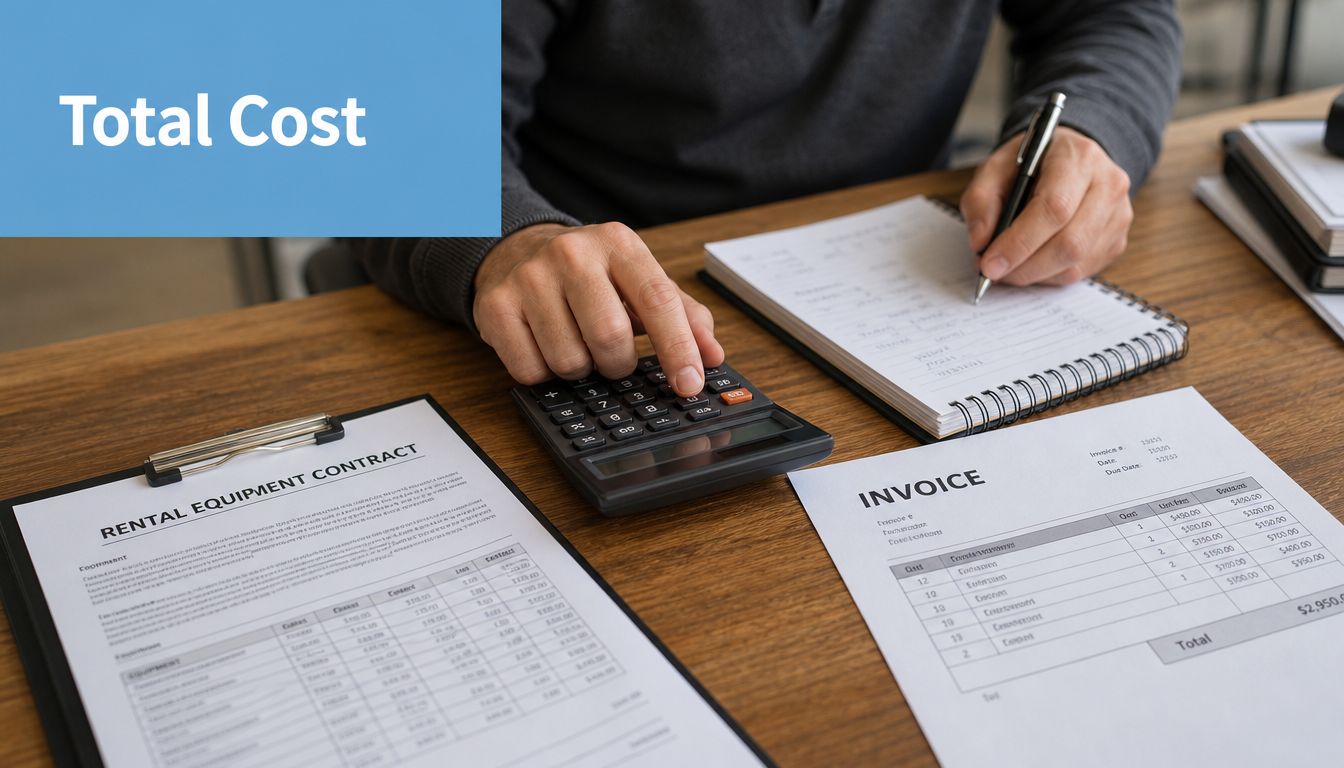
A headline hire rate can look tidy on paper and still leave you exposed once the kit reaches site. The safer budget starts with the base fee, then adds every cost tied to delivery, crew, access, insurance, and any site-specific requirement. That gives you a true all-in figure, not a wishful one.
Build the invoice before the supplier does
Ask for separate lines for delivery and collection, installation and de-rig, staffing, branding, power provision, and consumables. If the booking runs late, after-hours labour may apply. If the attraction needs qualified technicians, that should appear in the quote. When a venue has restricted access, longer loading windows or extra handling can push the final bill up quickly.
Insurance needs the same level of scrutiny. Some suppliers include cover in the rate, others do not, and some expect the hirer to carry event-specific protection. For broader planning, it helps to compare the equipment hire position with other event risk items, because the same hidden-cost problem shows up across several supplier categories. A useful reference point is planning event security budgets, since both areas can include staff, access control, and site-specific compliance.
If you are budgeting linked sound or AV alongside the attraction, look at the full production stack rather than each item in isolation. A separate planning page such as sound system rental can help you frame the right questions before you sign off the order.
Ask for the landed total
The question is not, “What is the daily rate?” The question is, “What will the invoice be once this is on site, staffed, and insured?” That is the number that protects your margin.
If the supplier cannot explain the extra lines in plain English, the quote is not ready for procurement.
Negotiating and Procuring Event Equipment Like a Pro
The best negotiation starts with better questions, not a blunt request for a discount. A professional supplier expects a planner to ask about public liability insurance, method statements, risk assessments, operator experience, backup equipment, and what happens if load-in is delayed. Those questions don't make you difficult. They make you credible.
Questions that separate real suppliers from paper quotes
Ask who handles installation, who stays on site, and who is responsible if the equipment stops working during trading hours. Check whether the supplier has a replacement plan for key components, because the cost of failure on event day is far higher than the difference between two quotes. If the attraction depends on specialist handling, confirm the crew has done this exact kind of work before, not just “similar” work.
Ways to improve value without chasing the lowest number
Consolidating multiple hires with one supplier can reduce coordination friction. Flexibility on timing can also help, especially when delivery windows are tight or peak dates are congested. If you're booking several attractions or adding branding and staffing at the same time, you may get better commercial terms because the supplier can spread transport and crew costs across one booking rather than several.
It also helps to read supplier guidance outside the event niche, because the same procurement principles show up in adjacent sectors. The Woolpit Truck Repairs guide is useful in that sense, because it reinforces the practical value of asking about access, transport, and equipment suitability before you sign off on specialist hire.
For planners working on broader activations, a supplier's ability to bundle entertainment, logistics, and on-site support often matters more than a small rate difference. A category page such as event entertainment hire can also help you see how related services fit together before you split the brief across multiple vendors.
Your Essential Event Hire Quote Checklist
Before you approve any hire quote, confirm the all-in price in writing. Make sure the supplier separates the base hire fee from delivery, collection, installation, staffing, branding, power, and insurance. If anything is bundled, ask what exactly is included and what triggers an extra charge.
Use this checklist on every quote:
- Base hire clarity: Is the rate for equipment only, or does it include staff and setup?
- Delivery and collection: Is transport a fixed fee, distance-based, or conditional on location?
- Site services: Who handles installation, de-rig, and any technical supervision?
- Insurance position: What cover is included, and what must the hirer provide?
- Venue constraints: Are access, loading, stairs, lifts, or timing restrictions priced in?
- Power and consumables: Does the quote include cables, fuel, batteries, or connectivity?
- Fallback plan: What happens if the kit fails, arrives late, or can't be installed as planned?
The UK hire market is mature enough that transparency should be normal. The supplier who can itemise costs clearly is usually the one who understands the job properly. The supplier who hides behind a headline rate often leaves the planner to discover the gap later.
If you want a supplier who treats equipment rental rates as part of a proper event plan, not just a quote sheet, take a look at PSW Events. They handle interactive attractions, logistics, staffing, and compliance as one joined-up service, which is exactly what makes a hire budget easier to control.