
A launch team has spent months preparing a polished presentation. The venue is booked, the product is ready, and the guest list includes customers, media and partners. Yet, after the reveal, attendees drift towards the refreshments, conversations become fragmented and the product demo struggles to compete with the noise of the room.
The strongest product launch event ideas turn the reveal into something guests actively do. A simulator, tournament, team challenge or guided story can make product benefits easier to understand while giving staff a natural reason to start conversations and capture useful data.
The right format depends on the audience, product fit, venue scale, budget, operational complexity and primary KPI. The ten concepts below cover hands-on product trial, sustained participation, executive networking, VIP positioning, national reach and media amplification. Each includes practical guidance on venue, technology, staffing, measurement and delivery checks.
PSW Events can support branded interactive attractions, logistics, installation, on-site staffing and health and safety compliance across UK venues. That matters in a market where live experiences already operate at considerable scale. The UK events industry is estimated at £61.653 billion annually, supports about 570,000 full-time jobs and reaches around 85 million attendees, according to the UK Events Report 2024 summary.
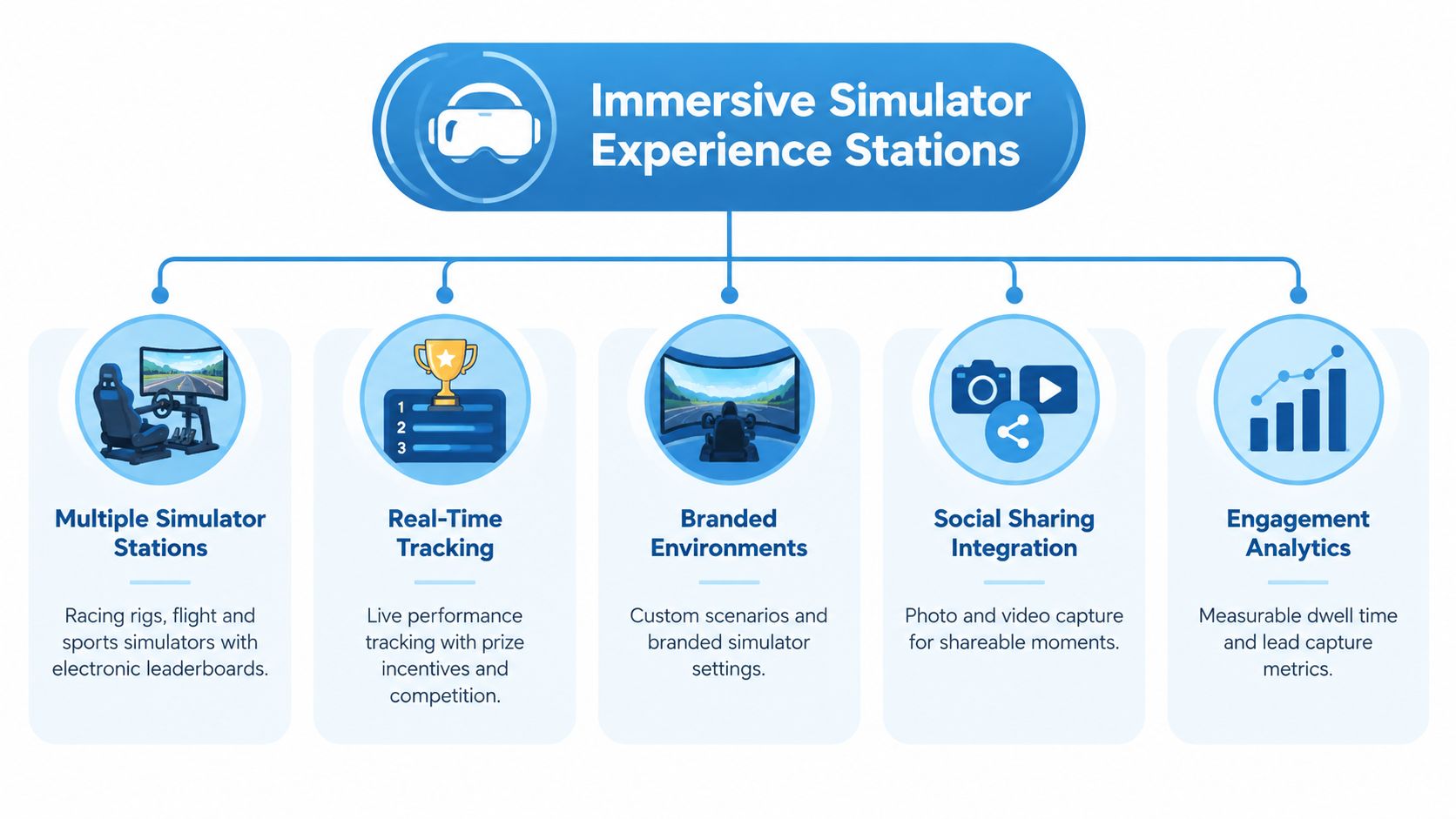
1. Immersive Simulator Experience Stations
A simulator station suits launches where the product benefit is easier to experience than describe. Racing rigs, flight simulators, golf, boxing and VR can turn a passive demonstration into a repeatable interaction. Each session should have a defined duration, clear queue capacity and a follow-up conversation, so dwell time supports the launch objective rather than creating congestion.
Match the format to the venue and audience. Automotive brands might use racing rigs at Goodwood Festival of Speed, technology companies could build a VR demonstration into a CES-style exhibition stand, and sports brands may connect simulation challenges with Silverstone. At a music festival, an energy drink activation could use boxing or sports simulators as a high-energy entry point. Check floor loading, power, internet access, sightlines, accessibility and noise before confirming the layout.
Make the product part of the scenario
Build the product benefit into the simulation, then brief staff to connect the result to the product immediately afterwards. A nearby banner alone will not make that connection.
- Use a visible leaderboard: Branded rankings encourage repeat visits and provide a natural prompt for social sharing.
- Train brand ambassadors: Staff should explain the product and record useful feedback, while a separate team manages queues and resets.
- Capture consent properly: Registration can collect email details for CRM follow-up when the consent process is clear.
- Refresh the content: Rotate scenarios during the day, and monitor session completion, queue time, participation and qualified conversations.
Teams exploring VR for a product demonstration can use VR app development guidance from London App Development to align the technology with the intended user journey.
2. Racing Rig Tournament with Brand Integration
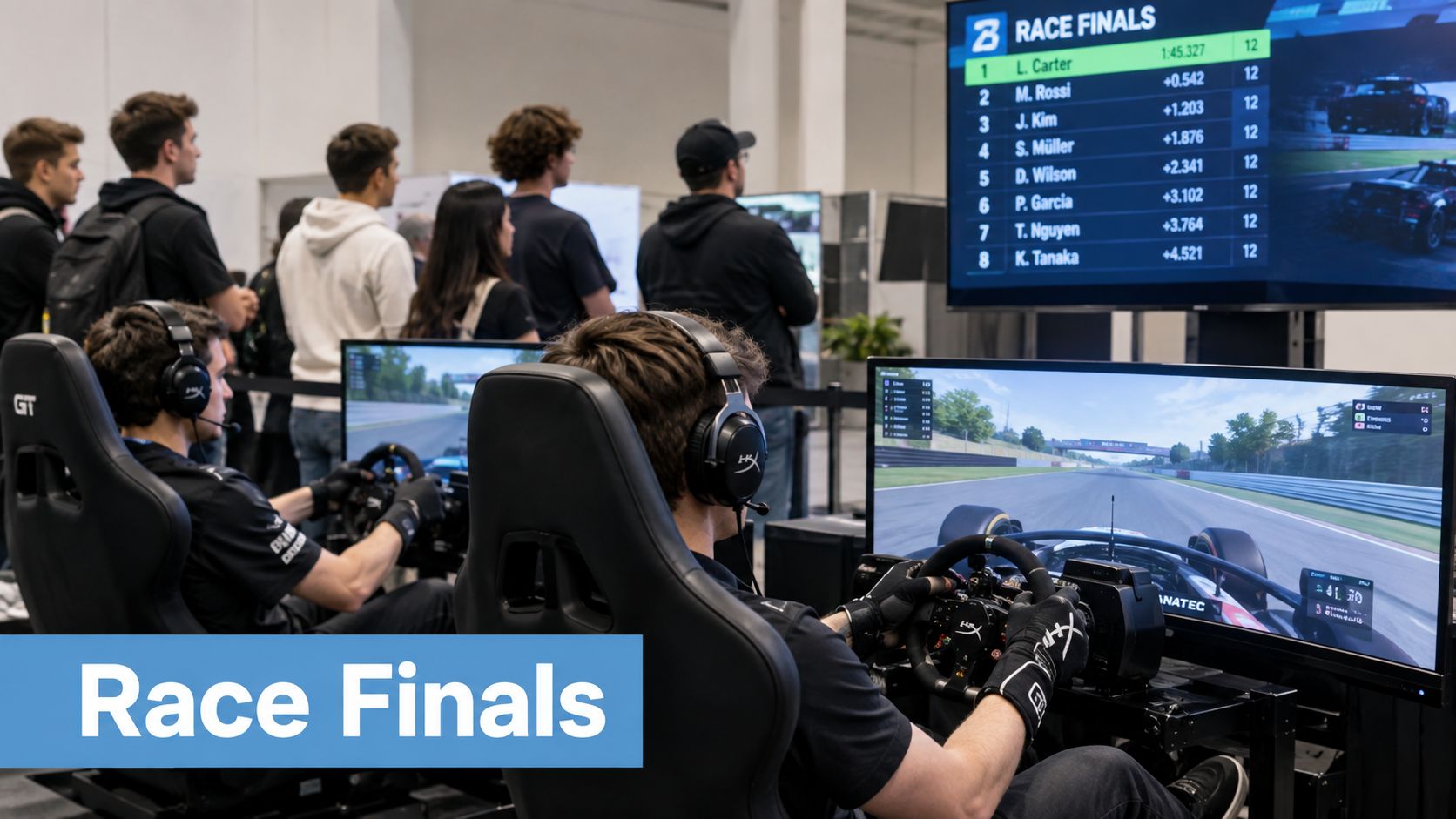
A racing tournament gives a launch a clear storyline. Heats progress to semi-finals and a final, giving visitors a reason to return rather than treating the attraction as a brief stand visit.
The format suits automotive launches at Silverstone, technology brands using esports-style entertainment at trade shows and energy drink activations at motorsport events. Insurance and financial services brands can also use it as a low-pressure engagement hook when the product is difficult to demonstrate physically.
Keep the competition structure easy to understand from passing traffic. Offer on-site registration so people discovering the activation can join. A host or esports commentator should explain rules, maintain pace between heats and connect the result to the product message. Assign separate staff to registration, queue management, technical resets and product conversations.
Give spectators a reason to stay
The rigs are only one part of the event. Screens can show product benefits, competitor names and upcoming heats, while a branded championship identity makes the activation feel like an event within the wider launch.
- Build credibility early: Invite a celebrity, creator or industry personality to compete in an opening heat.
- Design the viewing area: Provide a clear sightline, comfortable standing space and concise product information.
- Capture usable content: Record driver reactions, commentary and the final for post-event edits.
- Publish results clearly: An electronic leaderboard keeps rankings visible and supports a competitive atmosphere.
Track registrations, completed heats, queue time, spectator dwell and qualified product conversations. These measures show whether the tournament is attracting attention and contributing to the launch, rather than filling the rigs.
The main trade-off is throughput. Short qualifying rounds suit footfall-heavy exhibitions, while longer races work better for invited audiences. Confirm rig numbers, power, network reliability, screen sightlines and a recovery plan for technical faults before opening.
3. Multi-Sport Simulator Zone with Team Challenges
A multi-sport zone gives mixed groups several ways to participate. Place American football, rugby, boxing and golf simulators within one team challenge, so each guest can contribute through accuracy, timing, technique or decision-making.
The format suits conferences at venues such as Manchester Central, corporate away-days, client hospitality events and sporting activations. One person may choose golf accuracy, another rugby passing, while someone else takes the boxing station. A shared score creates a reason to compare attempts and discuss the product after each round.
Set scoring around control and consistency rather than strength. If one station rewards athletic ability alone, less confident guests may disengage. Give every participant a credible route to a useful team result, then connect that behaviour to the launch message.
Make the team result explain the product
A collaboration-focused product can be introduced through shared scoring and joint decisions. A performance product may fit precision, speed or controlled improvement. Keep the explanation short, and brief team leaders before competition begins so the product benefit is understood before play starts.
- Assign clear team identities: Colour-coded wristbands or branded jerseys show group membership and create stronger photo opportunities.
- Balance the station mix: Combine different physical and technical demands, allowing teams to divide roles naturally.
- Return useful follow-up: Email team results and approved event photographs with a clear product message.
Use a simple operating check before guests arrive. Confirm ceiling height, access routes, power requirements, noise bleed and the boundary between active play and passing traffic. Assign one host to manage scoring and another to reset stations or handle questions, especially during busy periods.
Track completed team challenges, average queue time, station participation, spectator dwell and product conversations that meet the launch criteria. These measures show whether the zone is producing interaction and relevant engagement, rather than only occupying floor space. A well-spaced layout supports group movement. A cramped one creates queues and makes the launch feel disorganised.
4. Helicopter Flight Simulator VIP Experience Zone
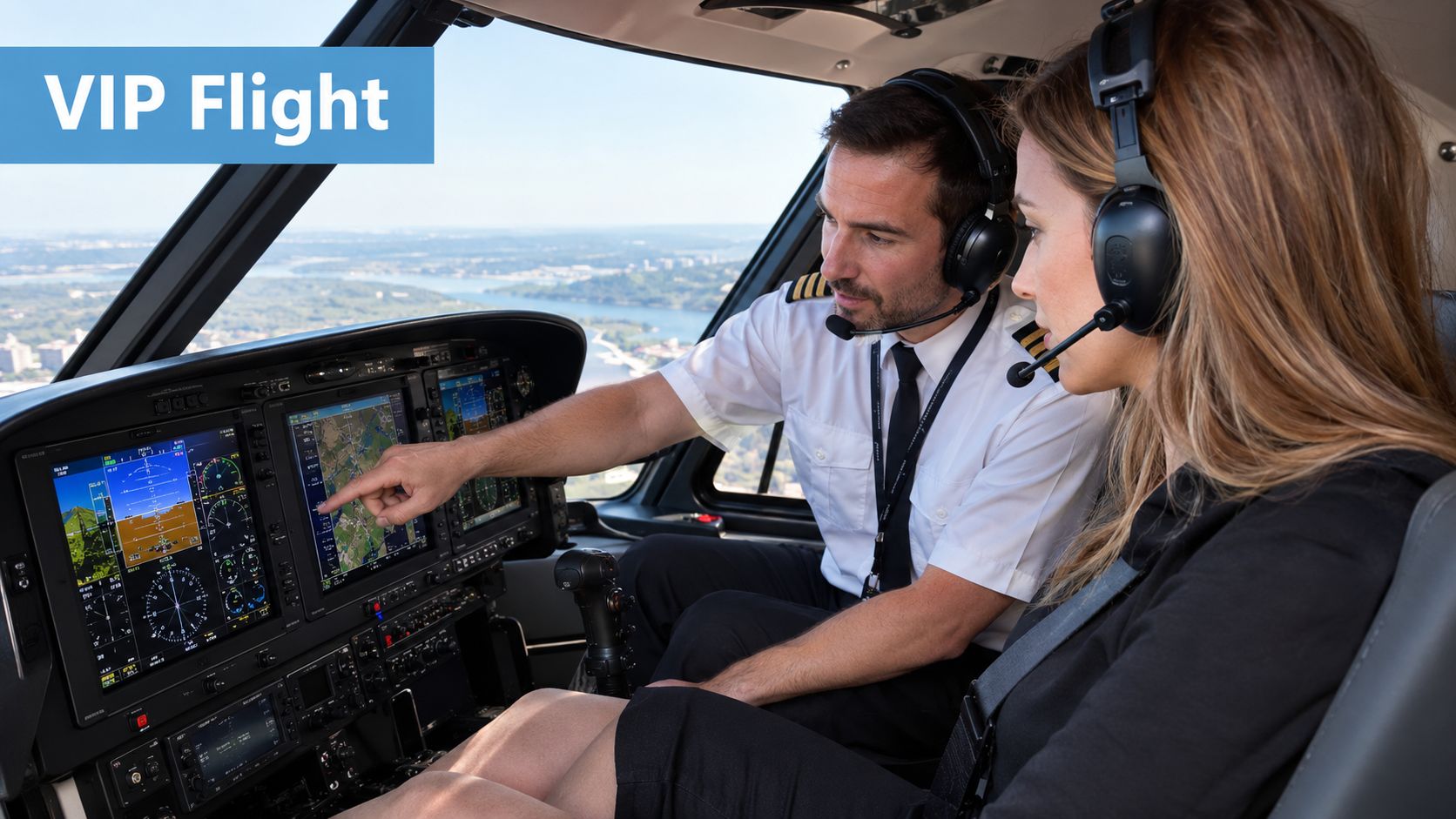
A motion-enabled helicopter simulator can anchor an invitation-led launch for luxury, technical achievement, travel, performance or access to an aspirational world. Its value depends on guest selection and conversation quality, not visitor volume.
Use the cockpit as a controlled product setting. A luxury automotive brand might pair the flight with a new model reveal. A travel company could build a destination mission, while a financial services or technology company might offer curated sessions for VIP clients, relevant media or influencers. Treating it as a general amusement ride weakens the premium positioning.
Build each flight around a short sequence: host briefing, mission, relevant product story and post-flight demonstration. The instructor needs a clear run sheet, including safety information, permitted controls and the points at which the product message should appear. Keep the session concise enough to protect the schedule without making the guest feel rushed.
Design for privacy and throughput
Exclusivity requires more than a branded cockpit. Screen the simulator from general footfall, provide a discreet waiting area and schedule named guests so VIPs do not queue beside registration. Assign a host to arrivals, an instructor to the flight and a separate team member to manage content consent and follow-up notes.
- Curate the guest list: Prioritise top-tier clients, relevant media and creators whose audiences fit the launch.
- Brief the instructor: Keep product language accurate, natural and consistent.
- Capture selectively: Record professional flight footage for personalised follow-up only with consent.
- Check the venue early: Confirm access, loading, floor protection, power and operating clearances against these flight simulator requirements.
The trade-off is capacity. Fewer guests may participate than in a fan zone, but the format can support stronger conversations with high-value attendees. Track completed flights, waiting time, qualified product conversations, follow-up meetings and approved content assets. Review the results against the launch objective before adding more sessions.
5. Interactive Fan Zone with Gamified Brand Challenges
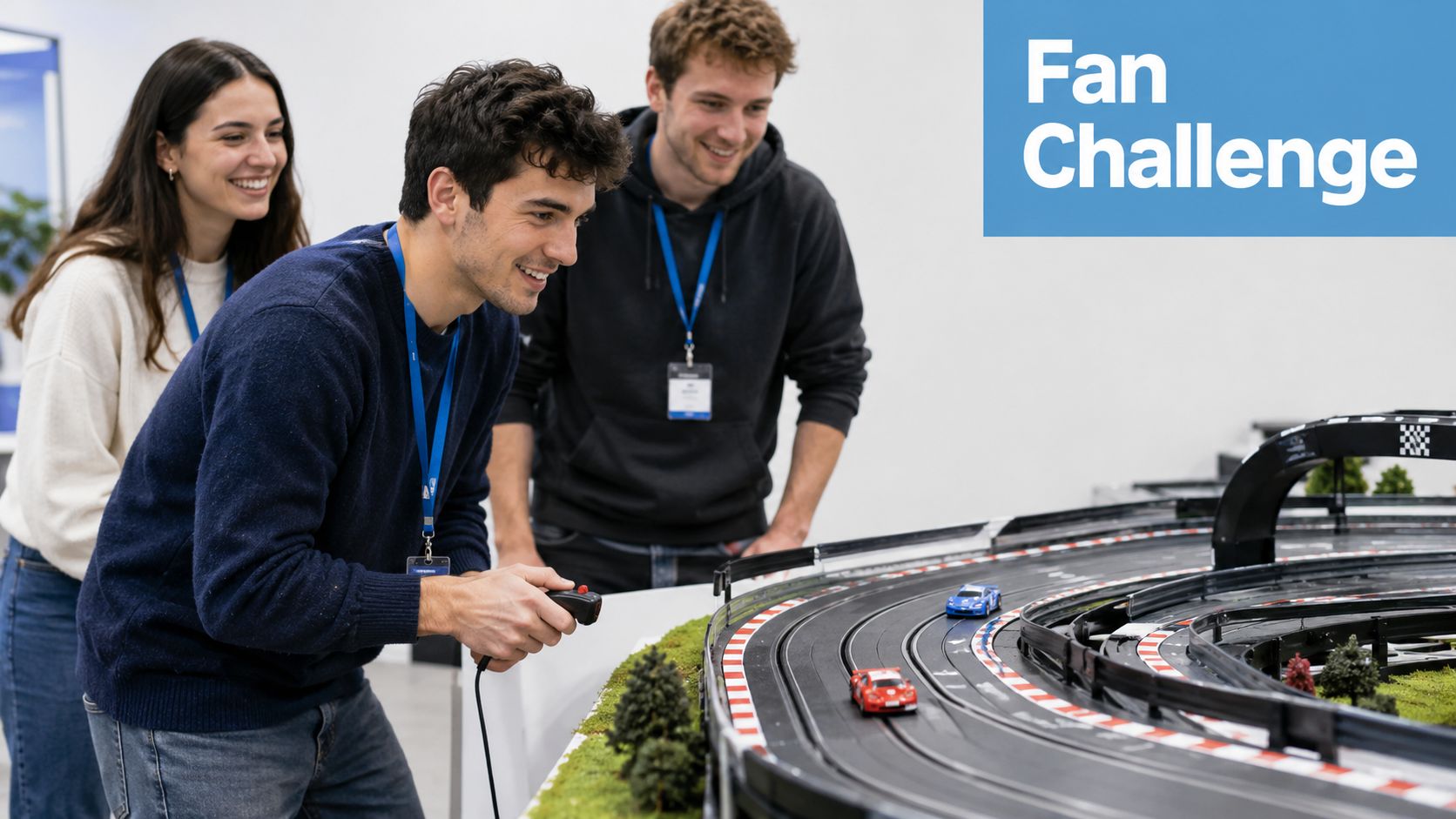
A fan zone works best when each attraction serves a clear launch objective. Climbing walls, giant Scalextric, Batak Pro, boxing simulators and racing challenges can create a route where visitors collect points, digital stamps or rewards while encountering the product at planned moments.
The format suits sports brands at UK music festivals, technology companies at trade shows and energy drink activations at major sporting events. Automotive brands can use racing simulators as the traffic driver, then place product demonstrations, sampling and sales conversations near the finish.
Build the circuit around throughput rather than adding attractions. Give every station a visible capacity, a short briefing and a defined handover to the next activity. Keep one team member roving between stations to redirect queues and support visitors who need help.
Make every challenge support the launch
Set two difficulty levels. The first should allow partial success, while a harder option gives repeat players a reason to continue. Staff must explain the next step before guests leave, especially if points or stamps affect access to a reward.
- Turn queues into product time: Use screens to explain features, use cases or proof points while visitors wait.
- Connect rewards to conversion: Place the product demonstration, sample collection or consultation at redemption.
- Brief the whole team: Operators need the launch message, escalation route and rules for handling damaged equipment or disputes.
- Check the layout before opening: Test queue lengths, sightlines, power access, safety zones and the route between stations.
- Capture usable content: Film reactions, attempts and completed challenges only where consent and venue permissions allow.
A busy attraction can still have limited launch value if visitors leave without engaging with the product. Track station participation, progression, repeat attempts, reward redemptions, queue time and qualified conversations. Compare results by station to identify where staffing, difficulty or signage needs adjustment.
6. Executive Networking Tournament with Simulation Entertainment
Senior guests need a reason to move beyond formal introductions. A racing or sports tournament creates shared experience, lowers the pressure of conversation and breaks up a launch programme dominated by presentations.
This format suits technology launches for C-suite decision-makers, automotive events for fleet managers, financial services introductions for investors and professional services client entertainment. Competition needs careful framing. Individual races can deter less confident guests, while team challenges create a more welcoming social setting.
Run the tournament as one programme element. Schedule structured networking before or after the competition, then protect informal time for guests to discuss the experience. A host should link the simulation to the product through brief, relevant prompts rather than turning each interaction into a sales pitch.
Practical rule: Ask executives to compete in teams before asking them to compete against one another.
Build useful follow-up into the format
Record each participant's team, score and contact permissions. A shareable scorecard can extend discussion with colleagues at their home offices. Tournament footage may support approved client communications if it matches the audience's tone and consent has been secured.
Choose a venue for conversation as well as activity. A simulator beside loud staging can create energy while making discussion difficult. Use a separate lounge, clear sightlines and controlled sound levels. Check the number of facilitators against expected participation, brief staff on introductions and follow-up capture, and test the scoring system before guests arrive.
Measure team participation, completed conversations, qualified follow-up requests and permissioned content captured. Review these results alongside queue time and lounge usage. If guests compete but do not enter meaningful discussions, adjust the timetable, staffing or room layout before the next session.
7. Immersive Brand Story Experience with Simulator Climax
Some products need context before their features make sense. Build a narrative route that takes guests from brand heritage or customer problem to proposed solution, then ends with a simulator experience that delivers the product promise physically or emotionally.
A luxury automotive launch could move from design heritage to engineering decisions and finish with a driving scenario. A technology brand might introduce a business problem, demonstrate selected features and use VR to show the complete solution. Pharmaceutical and travel brands can use the same structure when the product requires explanation before its reveal.
Set up the venue as distinct chapters, with one clear question answered in each zone. Keep sightlines and sound transitions consistent, and staff each station with a host who can adjust the explanation to the visitor's prior knowledge. The route should have a planned capacity, timed entry or queue control, and a clear handover between teams.
Make the finale earn its position
The simulator must dramatise the central product promise, not serve as decorative entertainment. A launch about control should give guests meaningful control. A product focused on speed, efficiency or exploration should express that quality through the interaction itself.
- Use transitions deliberately: Lighting, sound and scenic elements should signal movement between chapters without slowing the route.
- Train narrative hosts: Staff must adapt explanations while keeping the core message consistent.
- Capture reactions: Record genuine responses only with clear consent and an agreed use for recap or testimonial content.
- Track the journey: A passport, collectible or digital record can show completed zones and identify drop-off points.
Measure zone completion, time spent in each stage, simulator participation and product questions. Review queue length and host observations alongside those results. This format requires more creative and production planning than a standalone simulator, but it can create stronger recall by giving guests a beginning, development and resolution. Test the full route with staff before opening, including audio cues, content handovers and the final booking or follow-up process.
8. Live Streaming Tournament with Remote Audience Participation
A tournament broadcast gives remote viewers a reason to stay involved. On-site competitors can race or complete sports challenges while online audiences vote, answer polls, react to the action or join a parallel challenge from their own locations.
The format suits technology companies launching across distributed offices, esports organisations, financial services brands addressing wider stakeholder groups and consumer brands extending fan-zone content to social channels. It creates two audiences, so plan two connected experiences, with separate hosts, moderation and technical support.
Design the broadcast around participation
Set the venue for the camera, not only the room. Use clean branding, controlled lighting and clear sightlines, then appoint a broadcast producer to own the online running order. Professional commentators can explain rules, introduce product benefits and keep viewers engaged between heats.
Build shared moments that work on-site and remotely, such as audience voting, remote leaderboards and a product Q&A. Keep the competition easy to follow, with short instructions, visible scoring and a clear route from viewing to participation.
- Check the technical chain: Test cameras, audio, encoding, venue bandwidth and fallback recording before doors open.
- Staff interaction: Assign a moderator to manage questions, comments and polls, while a floor team supports competitors.
- Prepare fast content: Cut highlight clips soon after the broadcast while the competition remains relevant.
- Control permissions: Confirm consent for participant names, images, voices and remote contributions.
Track concurrent viewers, poll responses, remote entries, average watch time and qualified product questions. Compare those results with on-site attendance and participation, rather than treating the stream as a separate campaign.
The hybrid event planning service should be included during production planning, alongside venue, staffing and content decisions. Run a full rehearsal with remote participants, test the fallback route and confirm who can pause or restart the broadcast if the connection fails.
9. Mobile Simulator Roadshow with Multi-Stop Launch Campaign
A mobile roadshow turns one launch date into a sequence of local product trials. Branded simulators and interactive attractions can visit shopping centres, sports grounds, local venues and business districts, giving a national launch reach beyond one city.
Automotive manufacturers might tour a new model through major UK cities. Technology companies can take a product to business markets, while gaming brands can run a travelling esports tournament. Energy drink brands can use a festival-style vehicle or installation to connect local partnerships with one consistent identity.
The operating plan needs to be repeatable. Transport, storage, setup, venue access, local permissions, power and weather contingencies must be checked at every stop. Keep the core experience consistent, then adjust the schedule, supporting content and staffing to suit each location.
Turn the route into a campaign
Use the first stops to produce footage, participant reactions and testimonials for later promotion. Local media and creators can give each visit a clear reason to attend. A stamp-card mechanic can reward visitors who attend more than one location.
Plan the tour around measurable launch objectives:
- Build local partnerships: Work with venues, sports clubs, retailers and community organisations to secure access and local promotion.
- Adapt the message: Keep the product promise consistent, but tailor examples to regional audiences.
- Prepare a touring pack: Include drawings, risk assessments, power requirements, staffing plans and signage specifications.
- Set stop-level KPIs: Compare qualified attendance, product conversations, data capture and content output by location.
- Run a departure check: Confirm transport timing, equipment condition, connectivity, power, permissions and the next venue's access window before leaving each stop.
A roadshow provides wider geographic coverage than a single venue, but multiplies operational checks and staffing demands. It suits teams with a clear national objective, a defined route and enough fresh content to maintain interest as the campaign travels.
10. Influencer and Media Challenge Event with Simulator Gamification
A controlled challenge event can turn product access into publishable material for media, creators and influencers. Use a racing rig, flight simulator, VR station or sports challenge as the activity, then place product demonstrations and spokespeople close enough to connect the experience with the launch.
Match the format to the audience. Car YouTubers can test a new model, technology reviewers can receive early access, gaming brands can host streamers, and lifestyle brands can build a visual challenge around audience interests. The guest list should prioritise category understanding and audience fit over reach alone.
Set the brief before invitations go out. Cover key claims, safety boundaries, filming access and disclosure requirements, while leaving room for guests to present the experience naturally. A relevant creator may deliver more useful coverage than a larger account with little connection to the product.
Build a filming plan around the challenge
Reserve camera positions, lighting, branded background details and clear space around moving equipment. Assign a floor manager to coordinate turns, protect restricted areas and pause activity if a guest changes the agreed format.
- Keep the challenge simple: Viewers should understand the objective quickly.
- Plan several content outputs: Include short video, interviews, stills and longer reviews.
- Use one campaign tag: Make posts easier to locate and group.
- Agree usage rights: Confirm repurposing permissions and provide a concise media kit after the event.
Track qualified coverage, completed challenges, product conversations, usable content and audience engagement. Check that consent, release forms, safety briefings, equipment resets and upload access are ready before guests arrive.
Message dilution remains the main trade-off. A simulator can attract more attention than the product itself. Place demonstrations, spokesperson access and clear takeaways around each challenge so entertainment reinforces the launch story rather than replacing it.
Top 10 Launch Event Ideas Comparison
| Activation | Implementation Complexity 🔄 | Resource Requirements ⚡ | Expected Outcomes 📊 | Ideal Use Cases 💡 | Key Advantages ⭐ |
|---|---|---|---|---|---|
| Immersive Simulator Experience Stations | High 🔄🔄🔄, multi-station AV, power, staffing | High ⚡⚡⚡, space, rigs, insurance, operators | Very high engagement & dwell time; measurable leads 📊 ⭐⭐⭐⭐ | Product launches, trade shows, brand activations | Memorable, shareable experiences; strong data capture ⭐⭐⭐⭐ |
| Racing Rig Tournament with Brand Integration | High 🔄🔄🔄, scheduling, tournament ops | Medium–High ⚡⚡⚡, rigs, commentary, screens, crew | Strong headline moments; media & streaming potential 📊 ⭐⭐⭐⭐ | Motorsport launches, esports-style activations, streamed events | Creates narrative momentum and broadcastable content ⭐⭐⭐⭐ |
| Multi-Sport Simulator Zone with Team Challenges | Medium–High 🔄🔄, zone coordination, scheduling | High ⚡⚡⚡, multiple simulators, space, staff | High group engagement; peer recommendation uplift 📊 ⭐⭐⭐ | Corporate team-building, conferences, hospitality | Encourages teamwork and group social content ⭐⭐⭐ |
| Helicopter Flight Simulator VIP Experience Zone | High 🔄🔄🔄, motion systems, safety protocols | Very High ⚡⚡⚡⚡, full-motion rig, dedicated space, operators | Premium brand positioning; high-quality influencer content 📊 ⭐⭐⭐⭐ | VIP launches, influencer/media hospitality, luxury brands | Aspirational, highly memorable, great premium content ⭐⭐⭐⭐ |
| Interactive Fan Zone with Gamified Brand Challenges | Medium 🔄🔄, coordination across stations | High ⚡⚡⚡, multiple stations, digital tracking, prizes | Very high footfall conversion; increased cross-touch engagement 📊 ⭐⭐⭐⭐ | Festivals, large public activations, mass-market launches | Broad appeal, gamification drives repeat visits ⭐⭐⭐⭐ |
| Executive Networking Tournament with Simulation Entertainment | Medium 🔄🔄, balancing networking and tournament | Medium ⚡⚡, simulators + premium catering, AV | Strong B2B lead generation; relationship-building impact 📊 ⭐⭐⭐ | Executive launches, client entertainment, B2B events | Lowers networking barriers; creates memorable business interactions ⭐⭐⭐ |
| Immersive Brand Story Experience with Simulator Climax | Very High 🔄🔄🔄🔄, creative production, staging | Very High ⚡⚡⚡⚡, multi-zone build, actors, tech | Deep emotional engagement; improved message recall 📊 ⭐⭐⭐⭐ | High-end product reveals, narrative-led brand launches | Superior recall and storytelling-driven persuasion ⭐⭐⭐⭐ |
| Live Streaming Tournament with Remote Audience Participation | High 🔄🔄🔄, broadcast & interactive systems | High ⚡⚡⚡, cameras, streaming crew, platform integration | Extended reach; simultaneous online engagement & analytics 📊 ⭐⭐⭐⭐ | Hybrid launches, distributed teams, international audiences | Scales audience beyond venue; creates long-tail content ⭐⭐⭐⭐ |
| Mobile Simulator Roadshow with Multi-Stop Launch Campaign | High 🔄🔄🔄, logistics across locations | Very High ⚡⚡⚡⚡, mobile units, transport, local teams | Regional reach & repeated PR cycles; cumulative momentum 📊 ⭐⭐⭐ | National product rollouts, regional market activation | Broad geographic penetration; multiple local media stories ⭐⭐⭐ |
| Influencer and Media Challenge Event with Simulator Gamification | Medium 🔄🔄, curation & content ops | Medium ⚡⚡, simulators, content crew, hospitality | High earned reach via UGC; strong social amplification 📊 ⭐⭐⭐⭐ | Influencer-led launches, press previews, content-first events | Generates authentic UGC and media coverage rapidly ⭐⭐⭐⭐ |
Choose the Concept That Matches Your Launch Goal
The best format depends on what the launch must achieve. Choose simulator stations when the priority is hands-on engagement and visitors need to experience a benefit quickly. Choose tournaments when you want sustained participation, recurring audience attention and a clear competitive narrative. Team-based sport zones are better for group interaction, particularly at conferences, away-days and client events.
A VIP helicopter flight experience supports premium positioning, while a broad fan zone is designed for footfall, progression and reward redemption. An executive networking tournament can help B2B teams create more natural conversations with decision-makers. A narrative journey is the stronger choice when the product needs emotional context or a staged explanation before the final demonstration.
For national coverage, a mobile roadshow can take the experience to multiple UK markets. Streaming extends the event to distributed teams and remote audiences, but it requires its own producer, moderator and technical checks. Influencer and media challenges are built for amplification, provided the guest list, filming environment and content rights are managed properly.
UK planners should also treat measurement as part of the creative brief. Events and experiences budgets grew by 23.1% in Q1 2024, up from 15.9% in the previous quarter, according to the IPA Bellwether reporting cited in UK event industry data. That investment creates pressure to show what the experience delivered, not merely how impressive it looked.
Execution checks before approval
- Audience: Define who needs to participate and what behaviour should follow.
- Product message: Map each station, zone or broadcast segment to one product benefit.
- Venue and power: Confirm access, floor loading, ceiling height, power, connectivity, noise and sightlines.
- Staffing: Assign hosts, operators, registration staff, data-capture staff, producers and safety leads.
- Accessibility: Offer alternative ways to participate and keep routes, queues and viewing areas usable.
- Data capture: Collect only the information you need, with transparent consent and a clear follow-up plan.
- Safety: Complete risk assessments, equipment checks, public-liability arrangements and site briefings.
- Content: Plan photography, video, livestreaming, permissions and post-event editing before launch day.
- KPIs: Report participation, dwell time, qualified conversations, leads, registrations, content output and follow-up actions against the original objective.
For organisers considering formats that combine play, hospitality and conversation, an event platform for competitive socialising spaces can help frame the venue experience around interaction rather than passive viewing.
PSW Events is relevant when the concept needs interactive attractions alongside practical delivery. Its services cover planning, branding, logistics, installation, staffing and health and safety compliance, with sports, racing, flight, VR and other attractions suitable for exhibitions, conferences, brand activations, team building and fan zones. UK search visibility also matters after the event. Google held 91.75% of UK search engine market share across all platforms in August 2026, while Bing held 5.67%, according to Statcounter's UK search market data. On mobile, Google's share was 97.6% in the same period, reinforcing the need for fast, mobile-first launch pages and post-event content, as reported in UK mobile search market data.
Choose the concept that gives your audience a useful reason to participate, then design the venue, staffing, data capture and content plan around that behaviour. The attraction should make the product easier to understand, easier to remember and easier for the commercial team to follow up.
PSW Events provides branded sports, racing and flight simulators, VR, electronic leaderboards, climbing walls and other interactive attractions for UK product launches, exhibitions, conferences and activations. Visit PSW Events to discuss the right format, venue requirements, staffing and delivery plan for your next launch.