
A lot of event briefs look strong on paper and flat on the show floor.
You’ve booked the stand. The branding is approved. The sales team has talking points. Then the doors open and a major problem appears. Attendees keep moving, conversations stay shallow, and the people you wanted to stop long enough for a proper discussion barely break stride.
That’s where a boxing simulator game becomes useful. Not as a gimmick, and not as a gamer novelty, but as a working event tool. Used properly, it gives people a reason to stop, a reason to stay, and a reason to remember your brand afterwards. It creates a moment with enough energy around it that your team can turn attention into conversations and conversations into leads.
Most online coverage talks about boxing simulators from a player’s point of view. Corporate planners need something else. They need to know how the attraction works in a live environment, what makes people engage, what can go wrong, and how to plan it so it supports measurable event outcomes rather than distracting from them.
Beyond the Booth The Modern Event Challenge
A common exhibition problem isn’t lack of footfall. It’s lack of meaningful pause.
You can have a solid location in a busy hall and still lose attention if the stand experience asks too little of people. A static screen, a brochure rack, or a bowl of giveaways might pull a glance. It rarely holds someone long enough for your team to qualify them, explain the proposition, and move them towards a next step.
A boxing simulator changes the rhythm of the stand. One person steps up. Another watches. A queue forms. Scores get compared. Colleagues film each other. The stand stops feeling like a sales point and starts feeling active. That change matters because people don’t drift past active spaces in the same way they drift past passive ones.
The attraction works well when the event objective is clear. If the goal is lead generation, the simulator gives your staff a natural opening line and a clear dwell window. If the goal is brand memory, the competitive element creates a stronger emotional association than a standard product demo. If the goal is atmosphere, it adds movement and noise in the right way.
Three event problems tend to respond well to this format:
- Low stand engagement: People need a reason to cross the invisible line from aisle to stand.
- Short conversations: Your team needs more than a few seconds to do useful work.
- Weak recall after the event: Attendees remember what they did, not only what they saw.
For planners shaping broader experiential marketing activations, that’s its primary value. A boxing simulator game isn’t there to decorate the footprint. It’s there to earn attention and convert that attention into a business outcome.
The attraction only works when the event team treats it as part of the engagement strategy, not as entertainment parked in the corner.
How a Boxing Simulator Game Actually Works
A boxing simulator at an event is a live interaction system built for throughput, visibility, and repeat play. One guest steps in, throws a sequence of punches, gets an instant score or outcome on screen, and clears the space for the next participant within seconds. For a corporate planner, that matters more than gamer terminology because the commercial value depends on fast turnarounds, clear spectator viewing, and a setup your team can use without constant intervention.
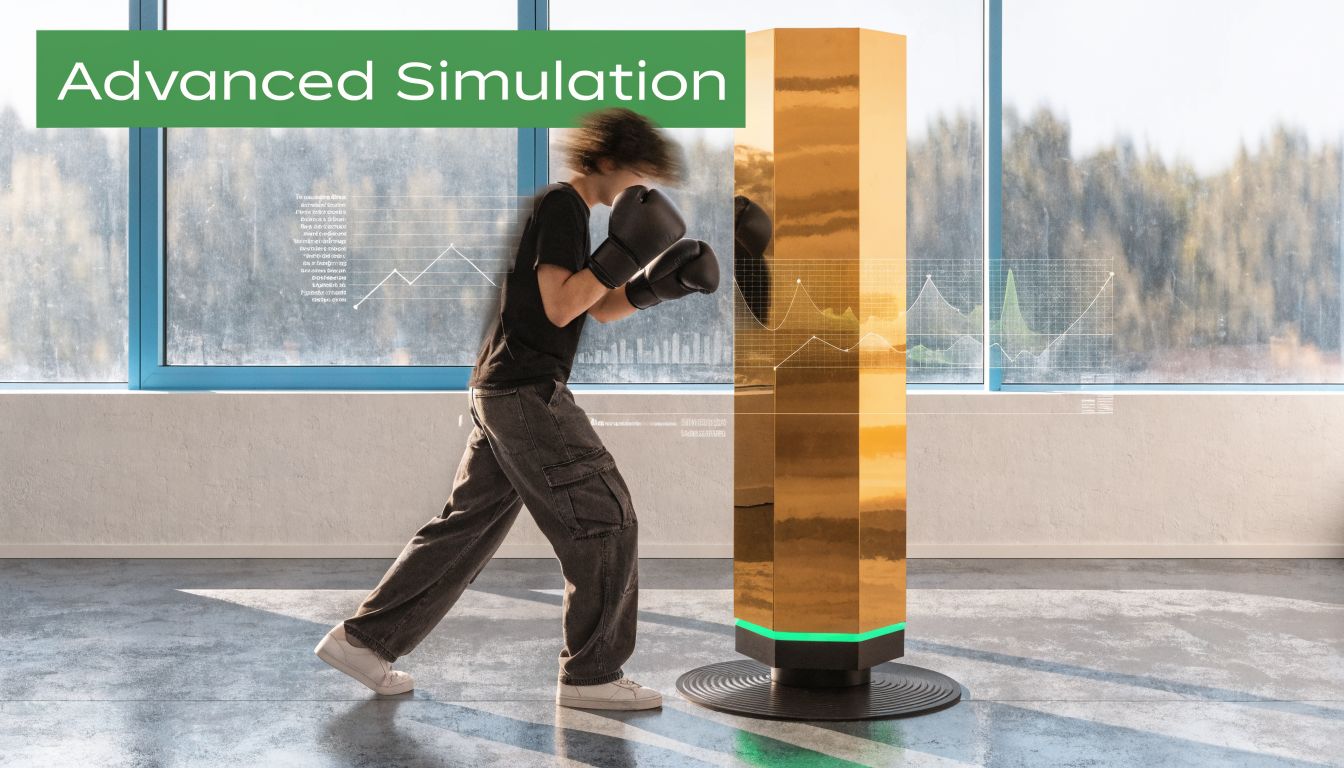
Under the surface, several components have to work together at the same time. The system tracks hand movement or impact, converts that input into an in-game action, displays the result with no noticeable delay, and layers in sound, scoring, and sometimes physical feedback. If one part falls short, guests feel it straight away. The experience starts to look like a novelty rather than a polished brand activation.
The core system under the bonnet
At event level, the simulator usually includes four working parts:
- Display hardware: A large screen or integrated display that gives the player immediate visual feedback and lets passers-by follow the action from the aisle.
- Input and tracking: This may use gloves, pads, controllers, or motion tracking, depending on the format and footprint.
- Software and physics response: This controls how punches register, how quickly the game reacts, and whether the movement feels convincing enough to keep people engaged.
- Feedback systems: Audio cues, score prompts, timers, and leaderboards help both the participant and the crowd understand what is happening.
The planner’s priority is response quality. Guests do not judge the setup by its spec sheet. They judge it by whether a jab lands when they expect it to land, whether the score updates clearly, and whether the session feels fair. Poor tracking shortens queues because people lose confidence in the game within one or two turns.
That is why event deployment standards matter more than feature lists. A simulator can look impressive in a product demo and still underperform on a live stand if resets are slow, sensors drift, or the interface needs too much explanation.
What smooth operation looks like on site
A trade show audience gives you very little tolerance. If the unit hesitates, freezes, or needs a staff member to rescue every session, the attraction stops serving the stand objective.
I use a simple operational check when assessing whether a boxing simulator is suitable for a corporate event:
- Fast reset between users: The next player should be ready to start almost immediately.
- Clear scoring and game state: Spectators need to understand the result without asking what just happened.
- Reliable movement detection: Obvious punches should register consistently.
- Stable visuals and audio: The game should hold attention without flicker, lag, or confusing sound cues.
These checks are not technical for the sake of it. They affect dwell time, queue length, and how much usable conversation your team can have around the activity.
For planners weighing up different interactive formats, the same operational logic applies to other crowd-pullers. Teams reviewing a boxing setup often compare it with interactive racing simulator hire for events because both attract attention, but they create different audience behaviour and require different staffing patterns.
A quick visual example helps show the kind of environment people respond to:
What guests feel, and what planners should design for
Participants are not thinking about processing speed or tracking architecture. They notice whether the game responds cleanly and whether the session gives them a result worth talking about.
The best boxing simulators create three feedback layers at once:
- Visual response that shows punch impact, score, or progress immediately
- Audio cues that reinforce timing, force, and success
- Physical interaction through gloves, pads, or the striking interface itself
That combination makes the format useful for event professionals. The player gets a short, satisfying challenge. The surrounding crowd can follow the action without needing context. Brand staff get a natural point to start conversations, capture data, or direct guests into the next step of the activation.
Practical rule: If spectators cannot understand the game within a few seconds, the simulator will struggle to produce strong stand-side energy or consistent lead opportunities.
The Science of Engagement Why Simulators Deliver Results
A busy exhibition aisle gives people seconds to choose where to stop. Static graphics rarely hold them for long. A boxing simulator changes that decision because it gives attendees a visible challenge, a score, and a reason to stay until the round ends.
For corporate planners, that matters because engagement is only useful when it turns into a business action. The strongest simulator activations create a short burst of effort, then give stand staff a workable window to qualify visitors, capture data, and connect the experience to the brand message. That is why interactive formats often outperform passive displays on dwell time and conversation quality.
Why passive stands lose momentum
Many stands still rely on cold interruption. Staff open with a question, hope the attendee pauses, then try to build interest from there. In a crowded hall, that approach puts too much pressure on the first five seconds.
A boxing simulator reverses the flow. The activity pulls people in first. Staff join a live interaction that already has energy and context.
That shift is practical, not theoretical.
At PSW Events, we plan around one simple truth. If guests are moving, watching, comparing scores, and waiting for their turn, your team has more natural openings to speak to the right people. That is the difference between footfall and usable engagement.
What longer dwell time gives your team
Extra time at the stand only matters if the team uses it well. A boxing simulator earns that time because the participant is focused, the crowd can follow the action, and the result is immediate.
In a stronger interaction window, your staff can:
- Qualify visitors properly: Ask what they are buying, reviewing, or planning this quarter.
- Match the message to the person: Connect the activation to their role, objective, or current challenge.
- Capture details in the right moment: Registration and lead capture feel like part of the experience rather than an interruption.
- Move prospects to the next step: Book a demo, set a follow-up meeting, or hand over to the right sales contact.
That is where return is built. The simulator creates attention. The stand team turns that attention into a measurable outcome.
Why competition works so well in live event spaces
Competition gives the experience shape. Guests understand a score, a countdown, and a leaderboard without explanation. That low learning curve matters at events because attention is fragmented and queues form quickly.
The public nature of the challenge is just as important. One participant throws punches, the screen responds instantly, and nearby visitors can judge the result in real time. A simple format like that helps build the same crowd logic planners look for in strong brand activation examples that keep people watching and participating.
A lot of tech looks impressive but struggles to hold a crowd once the first interaction ends. Boxing simulators tend to perform better because spectators understand what is happening from a distance and want to beat the visible score.
People do not queue for a brochure. They will queue for a challenge with a public result.
The operational trade-off planners should account for
High engagement formats need control. If turn-taking is unclear, if the scoring is not visible, or if no one is hosting the flow, the attraction can create noise without producing qualified conversations.
That is why staffing and AV design matter as much as the simulator itself. Clear screens, clean audio, and a visible user journey improve throughput and make the activation easier to manage. Conference teams that already work with integrated control environments will recognise the same principle in systems such as Automation Touchscreen AV Conference System. Good engagement depends on more than the hardware. It depends on how the whole experience is run.
Used well, a boxing simulator does three jobs at once. It stops traffic, holds attention, and gives your team a practical opening to do commercial work on the stand.
High-Impact Use Cases for Your Next Event
The most effective activations start with the event objective, not the equipment list.
A boxing simulator game can fit very different environments, but the setup should change depending on whether you need lead generation, internal engagement, crowd-building, or branded content. Used the same way everywhere, it underperforms. Tuned to the room, it becomes one of the hardest-working attractions on site.
Exhibition stands and trade shows
At an exhibition, the simulator’s job is to stop movement and create a reason for people to remain on the stand.
One strong format is a visible challenge mechanic. A participant takes a turn, the score appears instantly, and colleagues or passers-by gather to see whether it can be beaten. That gives your staff natural moments to step in, capture data, and frame the experience around your message rather than letting it become detached entertainment.
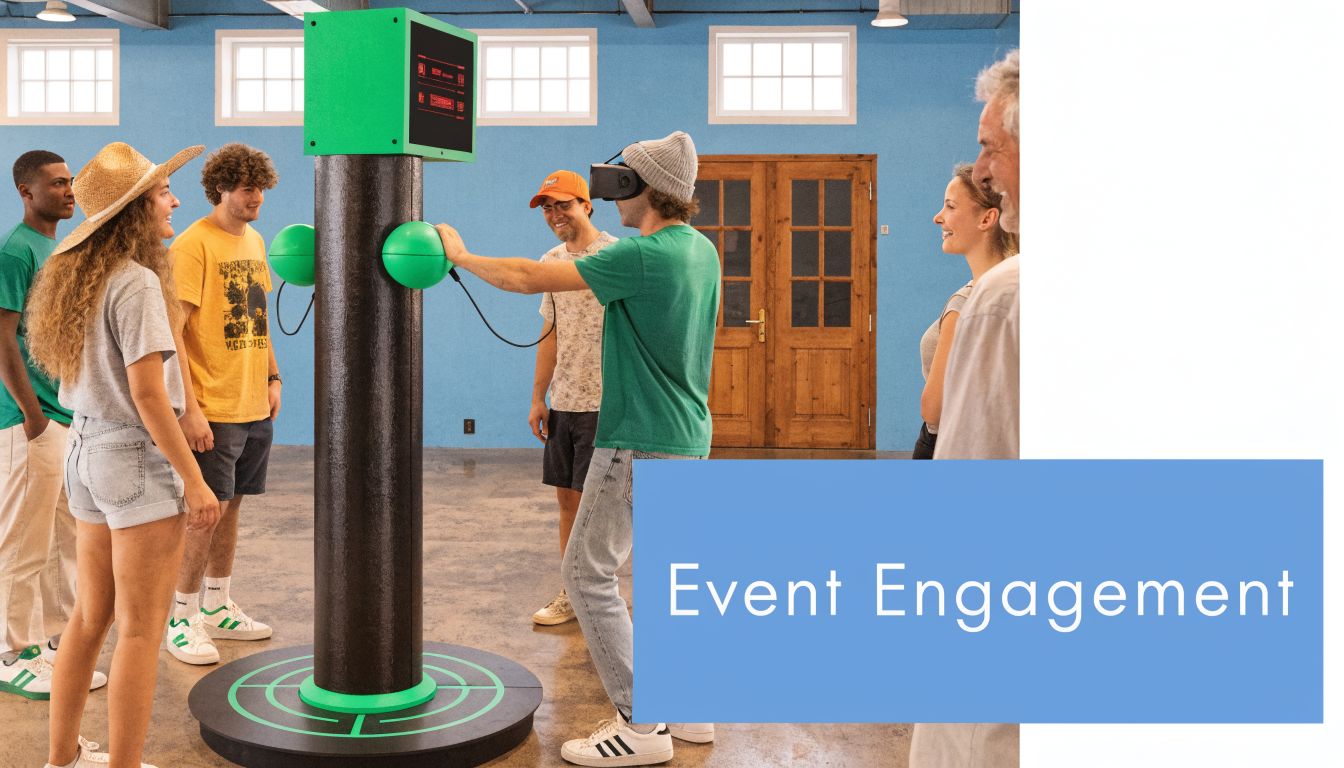
The difference between a good and poor trade show use is simple. In the poor version, the stand hosts a fun game. In the good version, the game is tied to registration, qualification, and a follow-up pathway.
Team-building and staff events
Internal events need a different tone. The goal usually isn’t data capture. It’s participation, shared energy, and getting departments to mix.
Boxing works well here because it’s easy to understand and doesn’t require specialist skill. Someone can step up cold, take part, and get a reaction from the room without needing a briefing. The challenge becomes social rather than technical, which lowers the barrier to involvement.
This format can work especially well alongside structured presentation environments. For planners coordinating both delegate sessions and interactive entertainment, projects such as this Automation Touchscreen AV Conference System are a useful reference point for how event technology and delegate flow can be designed to support each other rather than compete.
Brand activations and product launches
For consumer-facing launches, the simulator can act as a branded participation mechanic. The visual skin, score screens, and host scripting can all reflect the campaign.
Customisation is paramount. If the unit looks generic, the audience remembers the activity but not the sponsor. If the visual environment, prize trigger, and call-to-action are aligned, the attraction becomes a brand asset in its own right. Teams planning immersive campaign concepts often look at broader brand activation examples before deciding how hard to push the custom layer.
Fan zones and hospitality spaces
Sporting audiences already understand competition, status, and bragging rights. That makes boxing a natural fit for fan zones, sponsor lounges, and hospitality villages.
The crowd effect is stronger in these environments because spectators are predisposed to compare performances. The host can lean into that energy with mini-tournaments, guest challenges, or timed slots around the main programme. It feels less like a side attraction and more like part of the event atmosphere.
Private parties and mixed-audience events
Private functions need flexibility. A corporate summer party, wedding, or family day can include people with very different confidence levels and age ranges.
In those settings, the simulator works best when the operator keeps the tone light and the queue moving. You want enough competitiveness to create momentum, but not so much that casual guests feel excluded. The attraction succeeds when both the enthusiastic participant and the slightly hesitant guest feel comfortable taking a turn.
Your Complete Boxing Simulator Planning Guide
At 8:45am, the stand looks ready. By 10:30am, the queue is blocking the aisle, nobody is collecting details properly, and the venue manager is asking for the audio to come down. That is usually not a problem with the boxing simulator. It is a planning problem.
For corporate planners, the value of a boxing simulator game comes from what it helps the event achieve. More footfall. Longer dwell time. Better conversations. Stronger brand recall. The hire works best when those outcomes shape the setup from the start.
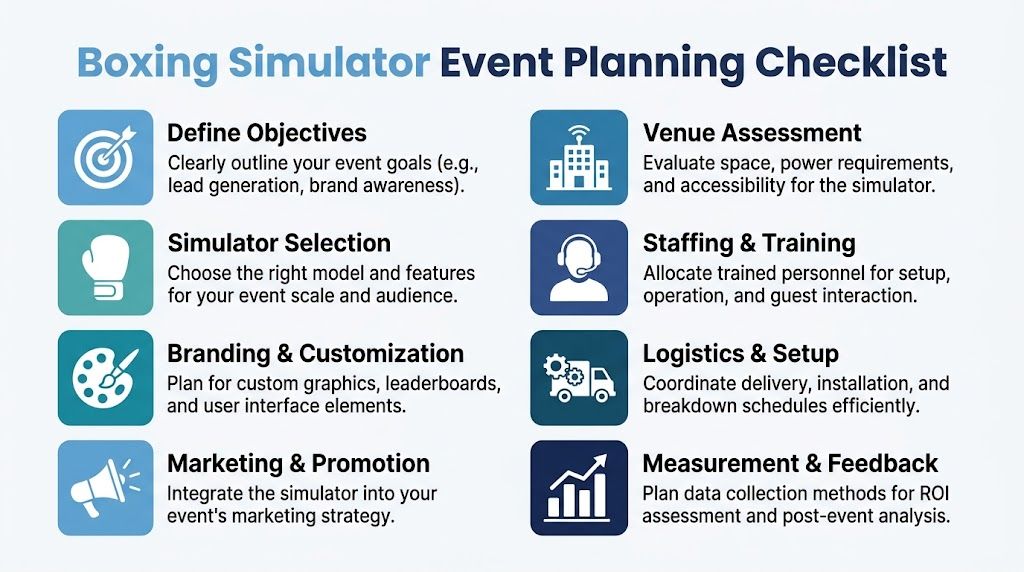
Start with the outcome, not the equipment
Before confirming the unit, define what success looks like in one sentence.
That brief changes the entire operating model. A lead generation activation needs a fast sign-up flow, a host who can qualify interest, and a score mechanic that gives people a reason to share details. A hospitality brief needs easy turnover, visible scoring, and low friction for guests who want to join in without much explanation. A brand campaign may place more weight on custom screen graphics, challenge naming, and photo moments.
A useful brief should cover four points:
- Primary goal: Lead capture, team engagement, brand awareness, hospitality, or traffic-building
- Audience: Trade attendees, employees, invited guests, or mixed public visitors
- Success measure: What the team will review after the event
- Constraint: Access times, floorplan limits, venue rules, staffing pressure, or sound restrictions
If that sentence is vague, the activation usually stays vague.
Check venue realities before sign-off
Frequently, strong ideas encounter practical limits. A boxing simulator is easy to place on a floorplan and harder to run well if the surrounding space has not been considered.
The unit needs enough room for safe striking, operator access, and spectators who can watch without blocking circulation. It also needs to be visible from the right angle. If the screen faces inward or the queue forms across a busy aisle, the attraction can still be busy while producing weak commercial results.
Confirm these points with the venue team early:
- Footprint and traffic flow: Allow for the machine, a safe operating area, and a queue that can be managed without disrupting neighbouring stands
- Screen sightlines: Make sure passers-by can see scores and activity from a distance
- Power location: Confirm supply points and cable routing before build day
- Sound limits: Audio adds energy, but some exhibition halls and conference venues apply strict controls
- Accessibility: Give non-participants a way to engage, watch, and understand the challenge without stepping into the striking position
I always advise planners to test the layout against peak traffic, not quiet periods. If it only works when the area is half empty, it is not properly planned.
Build staffing around throughput and conversion
A busy simulator needs more than someone to switch it on.
For a corporate event, there are usually two jobs to manage. One person keeps the equipment running, briefs participants, and controls session turnover. Another person works the crowd, handles registration, and turns waiting time into useful brand contact. Combining both roles can work for a low-traffic private event. It is a weak setup for an exhibition stand where every missed conversation has a cost.
A simple staffing model looks like this:
| Role | Main responsibility | What to watch for |
|---|---|---|
| Technical supervisor | Setup, reset, troubleshooting, safe operation | Downtime, slow turnover, poor player positioning |
| Brand ambassador or host | Queue management, participant briefing, lead capture | Drop-off in the queue, missed data capture, unclear call-to-action |
The trade-off is straightforward. Reducing staff lowers headline cost. It also lowers throughput and usually weakens lead capture quality.
Treat health and safety as an operating standard
Participants commit faster when the setup feels controlled and well run. That affects results as much as risk management.
As noted earlier, boxing simulator hire for UK events can be delivered within the standards corporate planners expect, including documented risk controls, supervised operation, and formal compliance support. The practical requirement is simple. Health and safety should be built into the experience, not added after the floorplan has already been approved.
From a planning point of view, cover these points in advance:
- Risk assessment completed before the event
- Clear participant briefing for every session
- Operator-controlled start and stop process
- Managed spectator distance and queue spacing
- Insurance and compliance documents available for the venue or client
PSW Events supplies boxing simulator hire with planning, branding, delivery, installation, on-site staffing, and compliance support for UK events. That matters for planners who want one supplier responsible for the full activation rather than splitting delivery across multiple contractors.
Use branding to shape behaviour
Branding should do more than decorate the casing.
The best customisation points change what participants do next. A branded leaderboard creates competitive repeat play. A named challenge makes the activity easier to talk about. An on-screen prompt can direct players to scan a QR code, claim a prize, or speak to the stand team. That is where a simulator starts contributing to measurable event objectives rather than acting as general entertainment.
Useful branding options include:
- External graphics that attract attention from the aisle
- On-screen score branding for photos and social sharing
- Challenge or leaderboard names linked to the campaign theme
- Prize or follow-up prompts that connect play to lead capture
If the only branded element is a logo panel on the side, expect weaker recall.
Run the day to a simple operating sequence
The most effective activations do not feel complicated to the guest, but they are usually tightly managed behind the scenes.
A practical event-day run sheet often includes:
- Load-in and final placement
- Power-up, testing, and calibration
- Branding check and staff briefing
- Soft open before traffic builds
- Peak-time operation with active queue control
- Scheduled resets and housekeeping
- Final competition push, prize draw, or leaderboard close
- Breakdown and data handover
That sequence keeps the attraction commercially useful throughout the day, not just busy during the first hour.
Sample budget for a one-day exhibition hire
Budget planning works better when the hire is treated as an operating project, not a single line item. The machine cost matters. The support around it usually decides whether the activation performs.
Use a framework like this for planning discussions:
| Item | Description | Estimated Cost (GBP) |
|---|---|---|
| Simulator hire | Core boxing simulator game unit for one event day | Quote required |
| Delivery and collection | Transport to and from venue | Quote required |
| Installation and breakdown | On-site technical setup and pack-down | Quote required |
| Operator staffing | Technical supervisor and/or event host | Quote required |
| Branding | External wrap, screen graphics, leaderboard customisation | Quote required |
| Lead capture integration | Badge scan workflow or QR-based registration support | Quote required |
| Venue services | Power, access passes, handling, or venue-specific requirements | Quote required |
| Contingency | Allowance for schedule, access, or custom requests | Quote required |
This approach avoids a common mistake. Planners approve the headline hire cost, then discover too late that staffing, branding, venue charges, and lead capture setup were the parts that determined ROI.
Measuring Success with Real-World Case Studies
A corporate planner usually hears the same post-event verdict after an interactive hire. "People loved it." That is not enough for a marketing director, a sales lead, or a sponsor. A boxing simulator earns its budget when it produces evidence of better stand traffic, longer conversations, stronger data capture, or more visible brand interaction.
Good reporting starts before the first punch. Set the success measures in advance, assign someone to record them, and agree what a useful result looks like for this specific event. Without that discipline, the team leaves with photos, opinions, and no clear case for repeating the activation.
The KPIs that actually matter
The right metrics depend on the brief. A lead-generation stand needs different reporting from a hospitality zone or an internal engagement day.
For most corporate bookings, these are the measures worth tracking:
- Traffic into the activation area: Did the simulator increase the number of people who entered the stand or stopped at the feature?
- Useful dwell time: How long did prospects stay, and did that time create a sales or brand conversation?
- Lead capture output: How many contacts were collected, and were they relevant to the commercial target?
- Queue retention and spectator interest: Did the activity hold attention long enough to create a visible crowd?
- Shareable brand exposure: Were guests filming, photographing, or posting branded moments from the experience?
The broader market supports the format, but planners should treat category data as context, not proof. The OpenPR market reference points to rising interest in boxing simulation games and interactive sports experiences. That helps explain why the format gets attention at live events. It does not replace event-specific measurement.
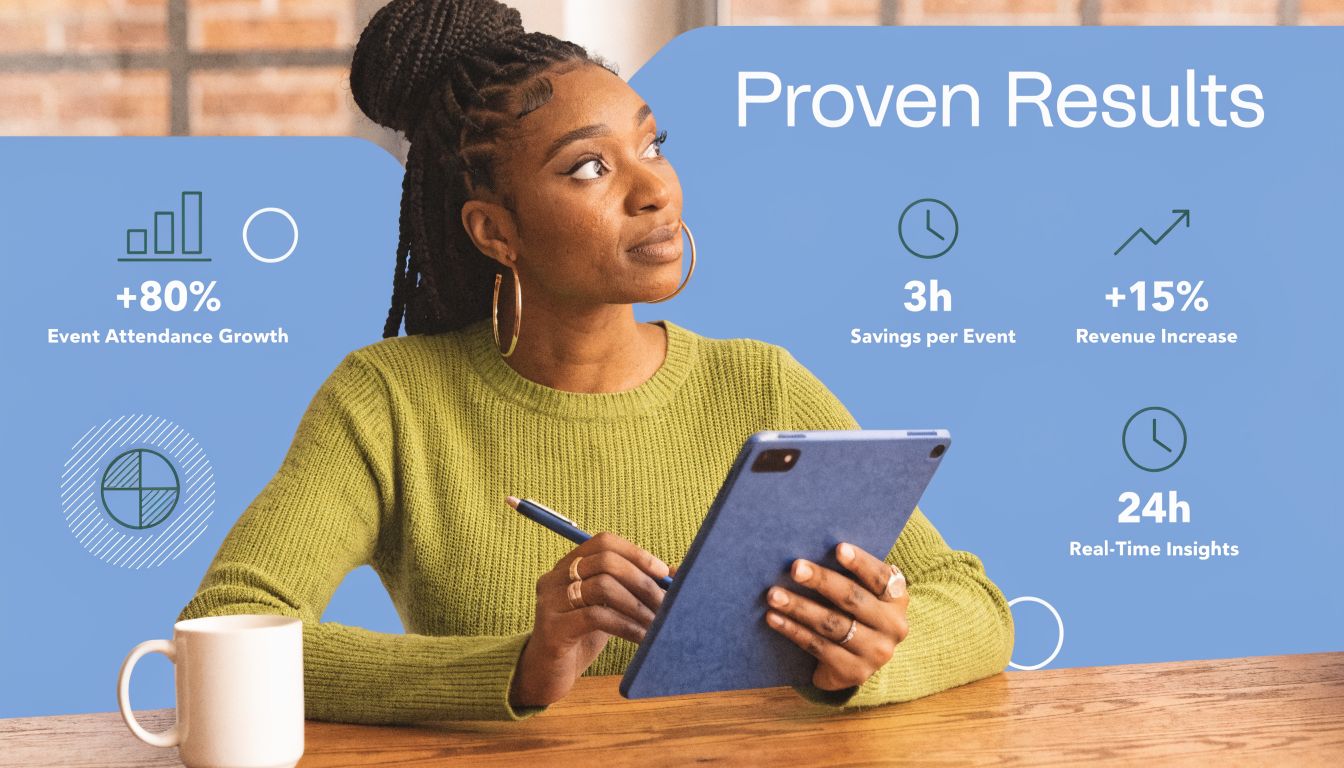
At PSW Events, we advise clients to report only the numbers they can act on later. Five useful metrics beat fifteen weak ones.
Case pattern one B2B exhibition stand
The best exhibition results usually come from a simple operating model. Place the simulator where it can be seen from the aisle. Keep the score visible. Give the host one job, pull people in and control the pace. Give the sales team a second job, turn that dwell time into a qualified conversation.
That setup works because each person on the stand has a defined role. It also exposes the common failure points quickly.
What tends to work:
- A host who owns the queue and explains the challenge fast
- A visible leaderboard that creates social proof from the aisle
- A clear handoff into lead capture or a short sales conversation
What tends to fail:
- Free play with no registration path
- A screen position that hides the score from passing traffic
- Sales staff trying to host, sell, and manage the queue at the same time
The trade-off is straightforward. A high-volume stand can process more participants with a shorter challenge format, but the sales conversation may become thinner. A slower format can improve qualification quality, but only if the footfall is right for it.
Case pattern two Fan zone or hospitality environment
In hospitality, the commercial target usually shifts from lead count to crowd energy, sponsor visibility, and memorable branded content. The simulator still works, but the operating style changes.
The host should behave like an MC. Commentary matters more than qualification questions. Score moments, head-to-head challenges, and short timed competitions give the crowd a reason to watch even when they are not participating. That spectator layer is what gives the sponsor repeated exposure rather than a single participant interaction.
A practical fix in these spaces is scheduled challenge windows. Set specific moments for best-of-the-hour attempts, VIP rounds, or prize sessions. That makes the activity easier to film, easier to promote on-site, and easier to evaluate afterwards.
Continuous background play often looks busy. Scheduled moments are easier to measure.
Case pattern three Team-building session
Internal events need a different success test. The question is usually not how many leads were captured. Instead, the question is whether the activity got people involved, mixed groups who would not normally interact, and gave the session some energy without making reluctant participants uncomfortable.
A boxing simulator can do that well because the task is easy to understand and quick to attempt. The planner still needs structure. A department challenge, paired format, or short team leaderboard usually performs better than leaving the machine open with no framework. People join more readily when the activity has context and a clear reason to take part.
As noted earlier, simulator-style activities are often used because they create repeat turns, visible scoring, and light competition. For internal sessions, those qualities matter more than raw intensity. The best result is broad participation across the room, not one highly competitive cluster dominating the feature.
Turn event activity into stakeholder evidence
The post-event report should be brief enough to use and specific enough to defend budget decisions.
A useful stakeholder summary includes:
- the event objective
- the metrics tracked on site
- what audience behaviour changed during the activation
- what commercial or brand result followed from that change
- what should be adjusted at the next event
That approach gives the planner something stronger than a positive impression. It gives sales, marketing, and procurement a record of what the simulator delivered.
Step into the Ring for Your Next Event
Corporate audiences don’t need more passive event furniture. They need a reason to stop, join in, and stay long enough for your team to create a real connection.
That’s where a boxing simulator game earns its place. It gives structure to engagement, creates visible energy around the stand, and supports practical outcomes such as stronger dwell time, better conversations, and cleaner lead capture. It also works across very different environments, from exhibitions and fan zones to internal events and private functions, as long as the planning is disciplined.
The biggest mistake is treating the simulator as the whole idea. It isn’t. The core idea is the event objective. The simulator is the mechanism that helps you deliver it when the venue is busy, attention is fragmented, and every brand around you is competing for the same few seconds.
If your next event needs more than decoration, build an activation that asks people to do something memorable. Then make sure the queue, host, branding, and follow-up process are strong enough to turn that moment into a result.
If you’re scoping a live event and want to test whether a boxing simulator fits the brief, gather the venue details, your audience type, and the outcome you need most. That’s enough to turn a fun concept into a workable event plan.