
You’re probably dealing with one of two briefs right now.
Either someone has asked for “something different” for a conference, launch, exhibition stand or staff event, with very little clarity on what different is supposed to achieve. Or you already know you want interactive entertainment, but you need to make sure it earns its place in the budget, fits the venue, and doesn’t create a technical headache on the day.
That’s where most corporate entertainment uk decisions go wrong. The market is full of idea lists. What planners usually need is a working framework. Not just what looks good in a pitch deck, but what will pull people onto a stand, keep them there, support conversations, and survive a live venue schedule without delays, complaints or safety issues.
The UK events market is large, commercially important, and still growing. The industry reached an estimated £68.7 billion in 2025, with 63% UK delegates, and it is forecast to grow at 3–5% annually through 2027 according to the UK Events Report 2025 coverage from the PSA. That matters because clients are no longer buying entertainment as a bolt-on extra. They’re investing in activations that have to justify themselves.
The strongest hires tend to have the same qualities. They’re easy for guests to understand, quick to enter, visually active from across the room, professionally staffed, and linked to a clear commercial objective. The weakest ones usually fail on one of three points. They don’t fit the audience, they don’t fit the venue, or nobody agreed what success looked like before booking.
Beyond Balloons Defining Your Event's Why
A lot of briefs start with the format. “We want a simulator.” “We need some entertainment for drinks.” “Can you put something interactive on the stand?” That’s backwards.
Start with the job the entertainment needs to do. A racing simulator at ExCeL London and a close-up magician at a hotel dinner can both be right choices, but only if they serve the event properly. Entertainment that isn’t tied to an outcome usually becomes background noise. It gets polite interest and then gets forgotten.
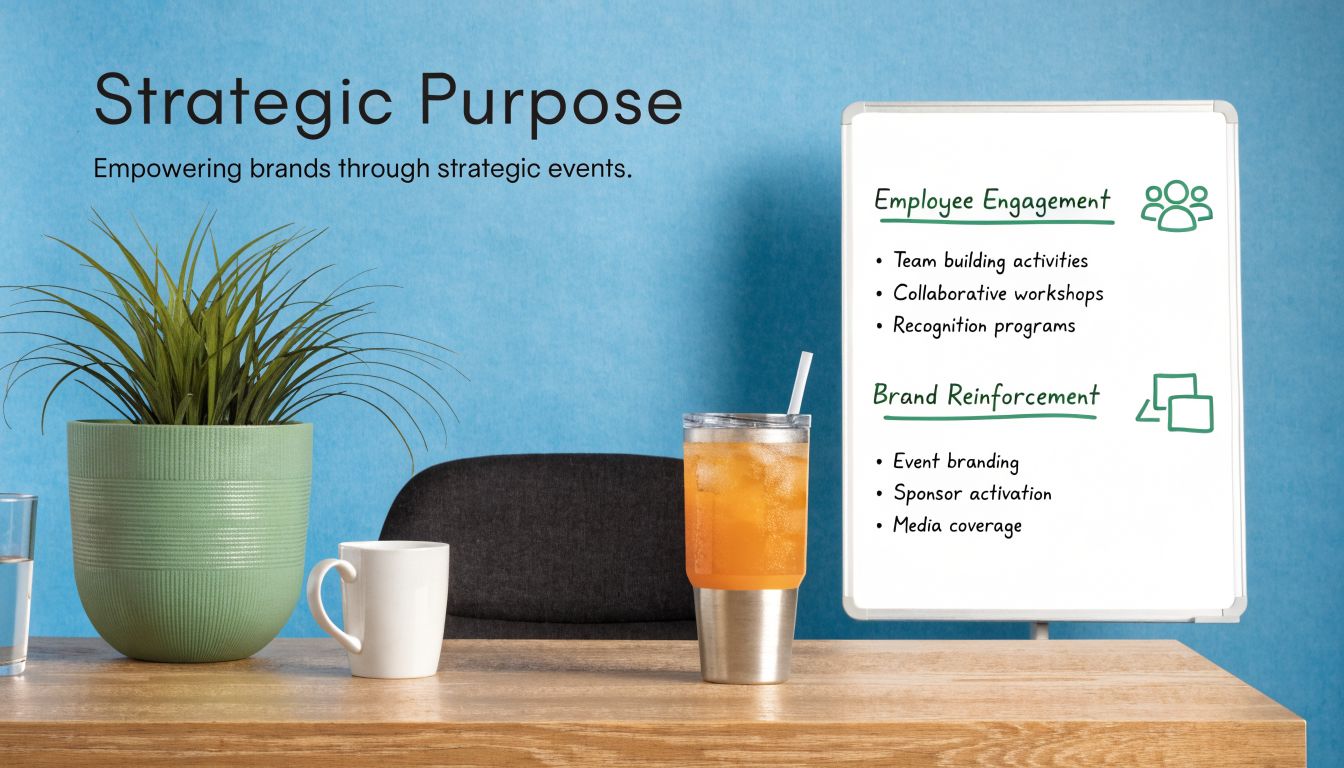
If you’re choosing from a wide range of corporate entertainment event formats, define the objective before you compare suppliers. That single step saves time, avoids overspend, and makes the brief sharper.
Four useful event objectives
Most UK corporate entertainment bookings fall into one of these buckets.
- Footfall: You need people to stop, look and walk over. This matters most at trade shows, exhibitions and public-facing brand spaces.
- Dwell time: You don’t just need people to notice the stand. You need them to stay long enough for a conversation, demo or qualification.
- Lead capture: The entertainment has to create a reason to engage, not a queue with no follow-up.
- Internal culture: The brief is about morale, reward, team interaction or shared experience rather than sales.
Those goals often overlap, but one should dominate. If the brief says “lead generation” and the chosen act doesn’t support conversation or data capture, it’s the wrong format. If the brief says “staff reward” and the activation feels like a sales stand dressed up as fun, guests will sense that immediately.
Practical rule: If you can’t explain in one sentence what the entertainment is supposed to change, you’re not ready to book it.
Set KPIs that match the real job
Planners often inherit vague success language. “Busy stand.” “Good energy.” “People loved it.” That isn’t enough when you need to report back internally.
Use event-specific KPIs instead.
For an exhibition stand, the useful questions are usually:
- Did it stop traffic?
- Did it hold people long enough for the team to engage?
- Did it create a smooth route into lead capture?
For a product launch, ask:
- Did the entertainment reinforce the product story?
- Did it create shareable moments without distracting from the launch message?
- Did guests remember the brand connection after the experience?
For a staff event or conference, the questions shift:
- Did different teams mix?
- Was it inclusive enough for varied personalities and confidence levels?
- Did it create a shared memory rather than passive watching?
What works and what doesn’t
What works is entertainment that gives guests a reason to participate quickly. Racing rigs, sports simulators, Batak Pro reaction games and giant Scalextric all do this well because the action is obvious. Guests understand the challenge in seconds.
What doesn’t work is entertainment that needs too much explanation, has a narrow audience fit, or creates a mismatch between effort and reward. If guests need a long briefing before they can join in, many won’t bother. If the setup looks expensive but only accommodates one person at a time with no visible scoreboard, the crowd around it often fades.
A simple test helps. Stand at the edge of the room and ask: would a guest understand what’s happening, why it’s fun, and how to join, just by looking?
If the answer is no, the activation is going to need stronger staffing, stronger signage, or a different format entirely.
Choosing Your Format From Simulators to Stage Acts
The right format depends less on taste and more on behaviour. What do you want people to do once they arrive? Compete, collaborate, mingle, watch, talk, post, stay, or sign up?
The wider market is pushing toward immersive experiences. The UK Entertainment & Media market is projected to reach £97 billion by 2029, growing at a 5% CAGR, according to the cited market forecast in this industry video reference. In practical event terms, that lines up with what planners already see on site. Passive entertainment still has a place, but interactive formats usually create more visible energy.
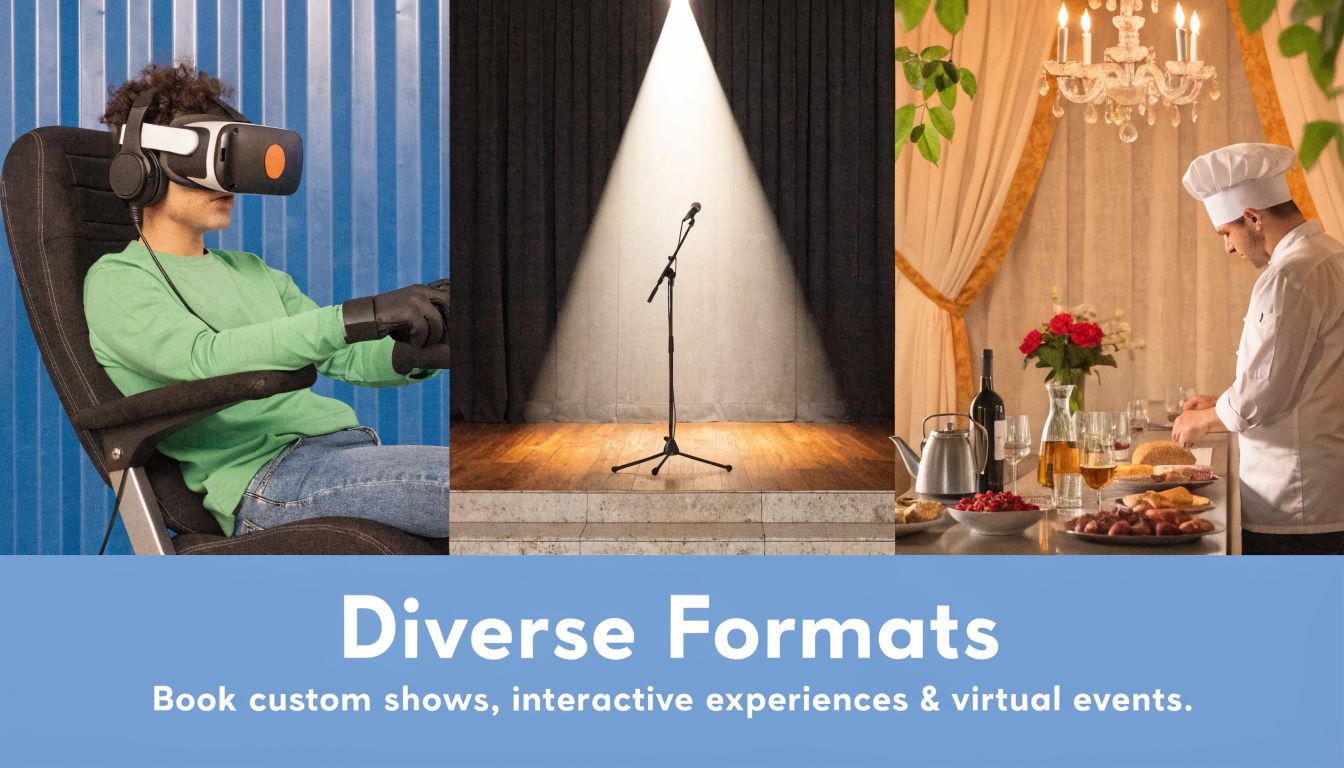
Interactive and tech-led formats
These are the strongest choice when the event has a commercial edge. Trade shows, conferences, fan zones, product launches and experiential campaigns all benefit from attractions that create movement and visible competition.
Examples include:
- F1 racing simulators
- Multi-racing rigs
- Flight simulators
- VR stations
- Batak Pro reaction walls
- Sports simulators for golf, rugby, boxing or American football
A good simulator setup does three things at once. It gives the guest a challenge, gives the crowd something to watch, and gives staff an opening line. That’s why these formats work well in halls like ExCeL London, Manchester Central and SEC Glasgow, where visual pull matters.
The trade-off is operational. Interactive tech needs proper planning. Power, floor loading, access windows, branding files, queue management and trained operators all matter. A simulator without staffing often underperforms because no one is there to convert curiosity into participation.
For planners comparing options, driving simulators for UK events are a good example of a format that suits both exhibition and hospitality environments. They can be dressed as competition, demo theatre, VIP challenge, or branded content opportunity depending on the brief.
Collaborative formats for team energy
Not every event needs a competitive leaderboard pointed at lead capture. For conferences, staff rewards and away days, collaborative entertainment often lands better.
Giant Scalextric is a strong example because it invites shared participation. People gather around, comment on each other’s driving, swap places naturally, and stay engaged without needing a hard sell. Portable climbing walls, reaction challenges and team tournaments can also work well when the aim is interaction between colleagues rather than brand messaging.
Use these formats when:
| Event need | Better format choice | Why it fits |
|---|---|---|
| Department mixing | Team challenges | They encourage conversation across groups |
| Staff reward day | Shared-play attractions | Guests can join casually without pressure |
| Internal conference breakouts | Light competition | It resets energy between sessions |
| Family fun day | Broad-access activities | They appeal across age ranges and confidence levels |
The warning sign here is overcomplication. Team-building entertainment fails when it feels forced or over-facilitated. People don’t want to spend half the session learning rules. They want to join in quickly, have a laugh, and keep moving.
The best collaborative entertainment gives guests permission to take part without making them perform in front of the whole room.
A giant game, simulator tournament or reaction challenge often beats a highly choreographed team exercise for exactly that reason.
Atmospheric and stage-based formats
There are still plenty of briefs where guests don’t want to queue up for a game. Gala dinners, awards nights, receptions and VIP hospitality usually need a different rhythm.
That’s where stage and ambient formats earn their place:
- Professional casino tables
- Close-up magicians
- Table games
- Hosted quiz elements
- Live performers that support, rather than dominate, the room
These formats are useful when conversation is the main event. They keep the room alive without turning it into a trade stand. Casino tables work especially well in evening settings because they create pockets of activity. A magician can move between small groups without changing the flow of the night.
This kind of entertainment is often underestimated because it doesn’t always create the same spectacle as a motion simulator. But if your KPI is guest comfort, networking flow or premium atmosphere, quieter formats can outperform louder ones.
A quick visual example helps show the contrast in style and energy:
A simple selection filter
When clients are torn between categories, this shortlist usually resolves it.
- Choose simulators and interactive tech if the event needs footfall, dwell time, visible competition or lead capture.
- Choose collaborative activities if the event needs shared participation, morale, or informal team mixing.
- Choose stage or atmospheric entertainment if the event needs elegance, low-friction interaction, or support for networking.
The mistake is trying to make one format do every job. A racing rig can be brilliant for a product launch and completely wrong for a black-tie dinner. A magician can be perfect for hospitality and almost invisible on a noisy exhibition floor. Match the format to the behaviour you need, not just the look you like.
Budgeting and Measuring ROI for UK Events
This is usually the point where entertainment decisions become serious. Interest is easy. Approval needs numbers.
Most planners don’t struggle because they can’t justify spending. They struggle because they’re asked to justify spending on something people still describe as “fun”, even when its primary role is lead generation, audience engagement or staff retention. The answer is to budget it like an activation, not like an afterthought.
What you’re usually paying for
Entertainment proposals often look similar on the surface and very different once you read the detail. One quote may only cover equipment hire. Another includes branding, transport, install, derig, staffing and technical support.
That difference matters because cheap-looking quotes can become expensive quickly if you later add crew, graphics, power distribution, waiting time, overnight security requirements or venue-specific delivery constraints.
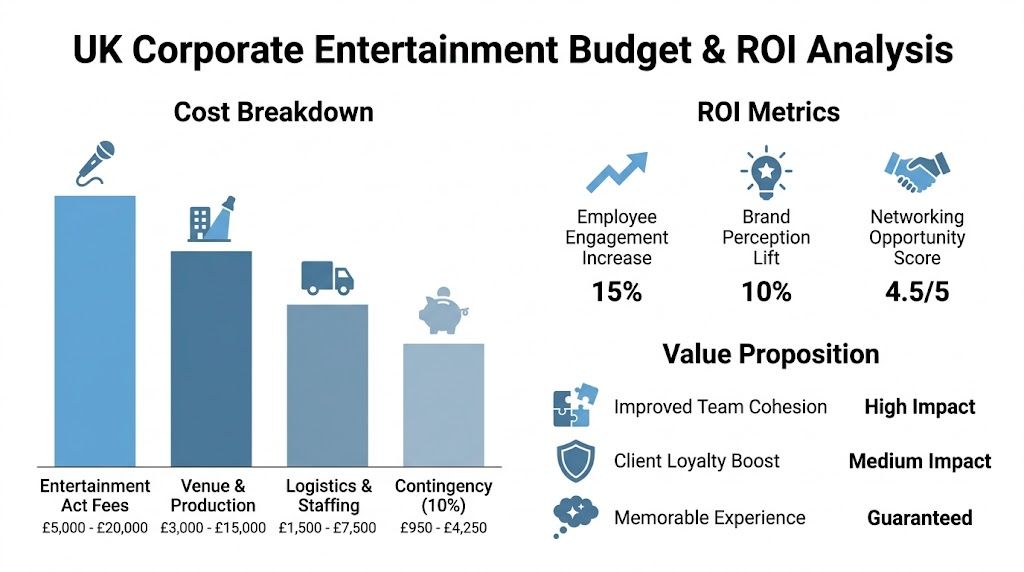
In practice, budgets usually break into these areas:
- Equipment or act fee: The attraction itself, whether that’s a simulator bank, casino tables or live performers.
- Production and venue integration: Branding, screens, sound, lighting, truss, drape or scenic dressing where required.
- Logistics and staffing: Transport, load-in labour, operators, hosts and technical supervision.
- Contingency: The bit planners hate cutting and almost always need.
A useful side benefit of planning logistics early is that travel and accommodation costs for crew can often be managed more tightly. For multi-city events or dispersed staff attendance, even practical tools like cheap train tickets can help trim the non-visible parts of an event budget that otherwise eat into activation spend.
Sample package table for planning
The table below is intentionally indicative. It’s for framing conversations internally and comparing quote structures, not for replacing a venue-specific proposal.
Sample Corporate Entertainment Packages (2026 Estimates)
| Event Type | Objective | Sample Package | Indicative Cost Range | Key Inclusions |
|---|---|---|---|---|
| Exhibition | Drive footfall and support lead capture | Two branded racing simulators, leaderboard screen, staffed operation | Quote based on venue, duration and branding scope | Delivery, installation, operator team, branding integration, on-site management |
| Product launch | Reinforce product story and create shareable guest moments | Motion simulator or themed sports simulator with branded challenge format | Quote based on technical complexity and scenic finish | Pre-event planning, setup, live hosting, guest flow management, derig |
| Staff rewards day | Increase participation and create a shared experience | Giant Scalextric plus reaction game or mixed simulator package | Quote based on attendance profile and session length | Delivery, installation, staffing, safety documentation, operation throughout event |
The reason to build packages this way is simple. You’re buying outcomes and operational coverage, not just hardware.
How to measure return without overcomplicating it
Entertainment ROI gets muddled when teams only look at applause or social comments. Use a tighter model.
For exhibition and launch environments, measure:
- Interactions
- Qualified conversations
- Leads captured
- Follow-up outcomes
If a simulator brings people onto the stand, but staff don’t capture details or book meetings, the entertainment did its part and the stand process failed. Separate attraction performance from sales follow-through.
For internal events, measure:
- Participation rates
- Session attendance patterns
- Feedback themes
- Whether guests stayed engaged during key parts of the programme
You don’t always need hard revenue attribution. You do need evidence that the activation changed behaviour in the room.
Commercial view: The strongest entertainment ROI usually comes from the format that gives the sales or event team a structured opening, not from the format that simply looks the most expensive.
Use ROI questions before approving the brief
Ask these before sign-off:
- What are we counting as success? Footfall, dwell, leads, morale, networking, content capture?
- Who owns the follow-up? Sales team, marketing team, HR, agency, event manager?
- What happens after the interaction? Scan badge, collect details, book demo, enter competition, move to hospitality area?
- What would failure look like? Long queues, low participation, poor fit with audience, technical friction, weak lead quality?
If the supplier can’t explain how the entertainment supports those answers, the quote may still be usable, but it isn’t commercially mature yet.
One more point matters in boardroom discussions. The entertainment itself is rarely what clients regret. They regret unclear objectives, weak staffing, or buying a format that didn’t suit the audience. Budget debates become much easier when the activation has a job, a follow-up process, and an owner on the client side.
The Nuts and Bolts Logistics Venues and H&S
Good entertainment can still fail long before guests arrive. It fails in the loading bay, on the venue floor, in the power plan, or in the RAMS file nobody reviewed properly.
That’s why operational planning matters so much in corporate entertainment uk bookings, especially with high-tech attractions. A flight simulator, motion racing rig or branded VR setup isn’t difficult to deliver when the groundwork is done. It becomes difficult when someone assumes the venue can “just handle it”.
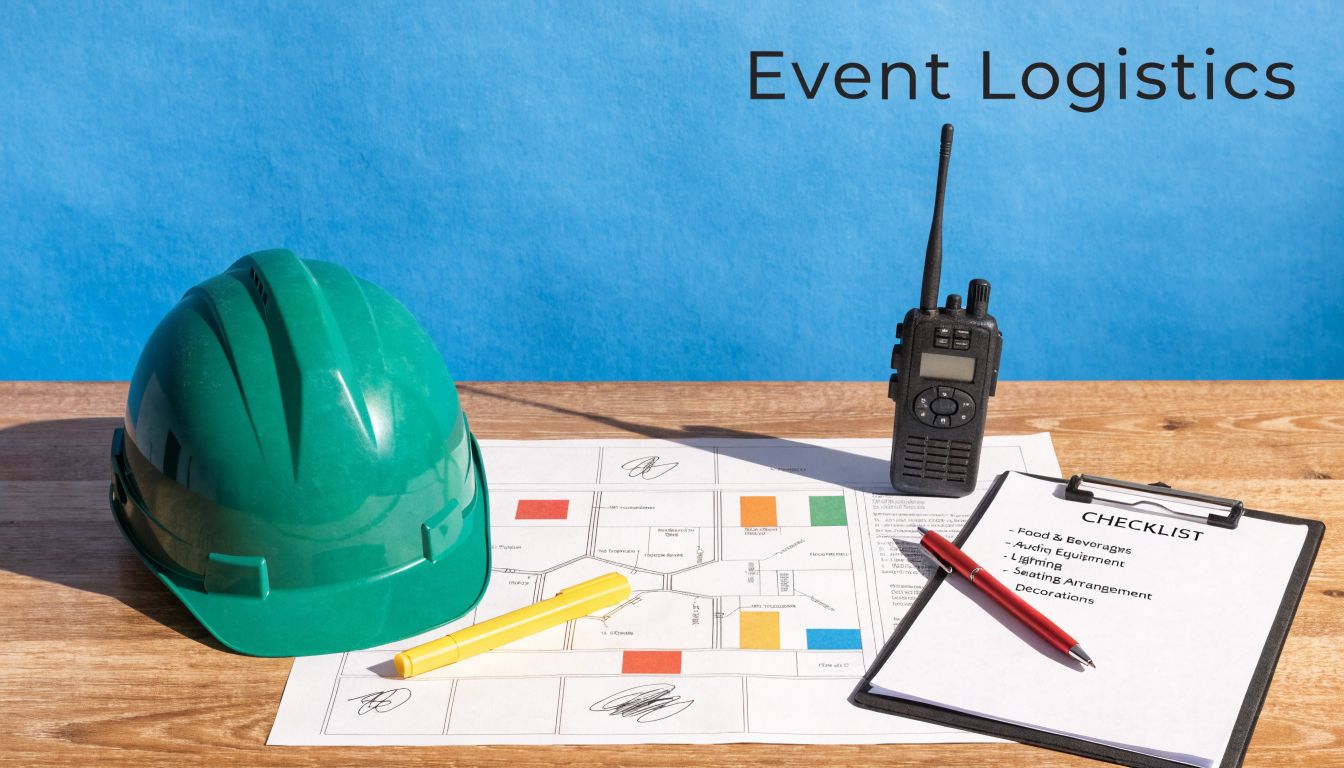
A proven deployment method for interactive simulators includes pre-event site surveys 2 to 4 weeks prior, branding and logistics 1 to 2 weeks prior, on-site installation in 4 to 6 hours, and live operation with trained staff. The same source notes that underestimating venue power causes 15% of event delays, as referenced in this Business of Events coverage.
Venue checks that matter first
Some venue questions sound dull and turn out to be decisive.
Start with these:
- Power supply: Motion platforms may require 32A 3-phase power. If the venue only has limited local supply near the stand position, the power plan changes immediately.
- Floor loading: Some rigs can place substantial load on a footprint. Floor limits, upper-level restrictions and temporary flooring all need checking.
- Access routes: A simulator may fit perfectly on the event floor and still be impossible to move through service corridors, goods lifts or dock doors.
- Build windows: If the venue has tight tenancy times, a complex install may need an earlier access arrangement or a simpler format.
- Noise environment: Reactive games and commentary-led activations need to sit well with neighbouring stands or room layouts.
At venues like Silverstone, Wembley and ExCeL London, none of these checks are unusual. But they can’t be guessed. They need to be confirmed against the exact hall, room or hospitality space.
RAMS, PUWER and insurance in plain English
A lot of clients hear safety terminology and assume it’s just paperwork. It isn’t.
RAMS means Risk Assessments and Method Statements. It tells the venue and client what the risks are, how the crew will work, and what controls are in place during load-in, operation and derig.
PUWER 1998 refers to work equipment regulations. In practical terms, if equipment is being used in a work environment, it needs to be suitable, maintained and operated properly. For event planners, that means the hire shouldn’t just look polished. It should arrive with the right documentation and trained crew.
Insurance is another area where shortcuts show up late. A serious supplier should be able to show public liability and related cover appropriate to the job. For larger venues and blue-chip clients, that paperwork is often reviewed before access is granted.
If a supplier is vague on documentation, they’re usually vague elsewhere too. Logistics discipline tends to be consistent, for better or worse.
Staffing is not optional
Clients sometimes ask whether a simulator can be dropped off as a self-run attraction. Sometimes the answer is yes for very simple equipment. For high-value, high-engagement setups, it’s usually a false economy.
On-site staff do much more than keep the queue moving. They brief guests, reset sessions, spot technical issues early, protect the equipment, keep the experience fair, and make sure the activation still feels premium at hour six, not just at opening.
A well-run operator team also improves guest confidence. Some attendees won’t approach an empty simulator because they don’t want to do it wrong in public. A host removes that friction immediately.
Common pitfalls that still catch planners out
Here are the issues that show up most often in live delivery:
| Pitfall | What it causes | Better approach |
|---|---|---|
| Power assumptions | Delays, replanning, compromised setup | Confirm venue supply early and match it to equipment needs |
| Tight build schedules | Rushed installation and poor testing time | Protect setup windows and agree access formally |
| Understaffed activations | Long waits, guest drop-off, weak engagement | Staff for participation pace, not minimum compliance |
| Weak brief integration | Busy attraction, poor business outcome | Tie the guest experience to a clear sales or event journey |
The planners who get the best results tend to involve the entertainment supplier early enough to flag these issues before the venue pack is finalised. That’s far easier than solving them on the loading dock.
The Booking Process and Crafting the Perfect Brief
A good booking process doesn’t feel dramatic. It feels boring in the right way. Dates are clear, files arrive on time, roles are understood, and nobody is asking for basic venue details three days before build.
Most entertainment problems begin with a weak brief. Clients often share the date, venue and rough budget, then expect a fully relevant proposal. Suppliers can still respond, but the quote will contain assumptions. Assumptions are where cost shifts and operational surprises start.
A practical booking timeline
For a substantial activation, it helps to think in stages rather than one booking moment.
Early enquiry phase
This is when you define the event purpose, likely audience, venue type and preferred format. You don’t need every detail, but you do need enough to separate realistic options from nice ideas.
Proposal and revision phase
The supplier should pressure-test the brief. Expect questions about access, branding, staffing, power, H&S and guest flow. If you don’t get those questions, the proposal may be too generic.
Contracting and pre-production
Once the format is agreed, the practical work starts. Branding assets, venue forms, insurances, RAMS, timings, contact lists and escalation points all need locking in.
Final confirmation
In the last run-up to the event, everyone should be checking the same version of the plan. This includes build times, named contacts on site, final rooming or stand layouts, and any venue restrictions that emerged late.
What your brief should include
A brief doesn’t need to be long. It needs to be useful.
Include these fields:
- Event name and date
- Venue and exact space
- Type of event such as exhibition, product launch, conference, staff day or hospitality
- Primary objective such as footfall, lead capture, morale or atmosphere
- Audience profile including who they are and how they’re likely to behave
- Expected guest flow whether steady, in waves, or concentrated around set times
- Preferred entertainment types if any
- Budget range
- Branding requirements
- Access limitations such as stairs, low ceilings, restricted loading or tenancy times
- Success measures such as lead capture, participation or feedback themes
- Decision deadline
The more honest you are in the brief, the better the response will be. If the venue is awkward, say so. If the budget is tight, say so. If the board wants something visually impressive but the room is on an upper floor with limited power, that’s exactly the sort of constraint that should be surfaced early.
Ask for the right solution, not validation of the first idea someone had in a meeting.
Questions worth asking every supplier
Can you explain what’s included in the quote, beyond the attraction itself?
Who will be on site during installation and live operation?
What do you need from the venue regarding power, access and floor loading?
How do you manage branding, guest flow and downtime if an issue appears during the event?
What documentation will you provide for insurance and safety review?
Those questions quickly distinguish experienced operators from businesses that mainly resell ideas.
What a strong supplier response looks like
A useful response is specific. It explains assumptions, flags constraints, identifies optional extras clearly, and gives you a sensible path if your first format choice turns out to be unsuitable.
This is also the point where one turnkey option may make sense. For example, PSW Events handles planning, branded simulator hire, delivery, installation, staffing and H&S paperwork for interactive attractions across UK venues. That type of model suits clients who want one supplier to own the operational side rather than splitting equipment, crew and compliance across multiple parties.
The main thing is clarity. By the time you approve the booking, you should know what’s being delivered, who is doing what, and what success looks like on site.
UK-Specific Trends and Considerations for 2026
Planning corporate entertainment uk in 2026 means paying attention to local realities that generic event advice often skips. The format might be right, the budget might be approved, and the creative might be strong. You can still run into friction if the event sits inside a Low Emission Zone, a listed building, or a regional venue with a very different operating rhythm from London.
That’s why national planning doesn’t mean one-size-fits-all delivery. Manchester Central, SEC Glasgow, a London exhibition hall and a country house venue each behave differently. Access windows, loading routes, overnight storage, noise tolerance and local crew availability all affect what’s sensible.
Sustainability is now part of the brief
Green considerations have moved from “nice to have” to procurement question. According to the cited trend summary, 68% of UK corporate planners are prioritising green events to meet 2025 ESG reporting rules, and interactive simulators can reduce travel emissions by up to 70% compared to live sports experiences, as noted in this corporate events sustainability reference.
That matters because sustainability choices are no longer limited to catering and badge stock. Entertainment formats are part of the same conversation. A simulator-based activation can bring the competitive experience to the venue instead of flying guests to a separate track or sports setting.
Catering and service materials should also be reviewed alongside entertainment planning. If your event team is updating ESG standards, practical reading on sustainable food packaging trends can help align front-of-house decisions with the broader sustainability brief.
Questions to ask with a UK lens
Use these checks before final approval:
- Will vehicle access be affected by city emissions rules or timed unloading windows?
- Does the venue have heritage or structural constraints that limit equipment choice?
- Can the supplier adapt the attraction for regional audience style and room format?
- Does the activation support your internal sustainability reporting requirements?
These questions are especially useful for touring campaigns and multi-city roadshows, where what works in one venue may be awkward in the next.
What’s likely to matter more this year
A few planning priorities are becoming more obvious across client briefs.
First, hybrid thinking remains useful. Even when the event itself is fully in-person, planners increasingly want digital layers such as branded leaderboards, post-event reporting, and cleaner integration with lead capture workflows.
Second, personalisation is becoming more important. Guests respond better when entertainment feels tied to the brand, the product or the audience identity. Generic activations still fill a space. Customized ones support the message.
Third, experiential value is being judged more strictly. Teams want activations that do something measurable. That’s one reason experiential marketing activations continue to sit closer to marketing budgets than to simple hospitality spend.
The planners who will get the most from 2026 events are the ones who treat entertainment as an operational tool with commercial and cultural value, not just a decorative extra.
Hiring corporate entertainment well comes down to a few disciplined choices. Define the job first. Match the format to the audience. Build the budget around the actual delivery model. Pressure-test the venue. Ask sharper supplier questions. Then measure what changed because the activation was there.
That approach won’t make the process flashy. It will make it work.