
You’re usually looking for the same thing when race seats hire lands on your shortlist. You need an attraction that stops people walking past, gives them a reason to stay, and still looks professional once procurement, venue operations, and brand teams start asking awkward questions.
A static display rarely does enough. A game console on a trestle table feels undercooked. A proper racing simulator, built around a dedicated race seat, changes the atmosphere around a stand or event space straight away. People understand it in seconds. They queue naturally. They compare lap times. Colleagues start challenging each other. Sales teams suddenly have a reason to begin conversations that don’t feel forced.
That appeal isn’t niche. The UK’s motorsport audience is broad and active, with the Formula 1 British Grand Prix attracting over 480,000 attendees in 2023, and interactive sports activations at UK exhibitions rising 22% between 2023 and 2025 according to Future Market Insights. For planners, that matters because it confirms something we see on live jobs all the time. People don’t need much explanation to join in. The interest is already there.
Race seats hire works best when it’s treated as an operational experience, not just a piece of kit. The seat, wheel, pedals, screens, staffing, branding, queue flow, risk paperwork, and lead capture all need to line up. That’s where many event plans either become slick and memorable, or frustrating and expensive.
If you’re weighing up options for an exhibition, launch, conference, staff event, or private party, it helps to look beyond the simulator spec sheet and think like an organiser. The practical side matters just as much as the visual impact, especially when you’re planning experiential marketing activations that need to perform in front of clients, stakeholders, and venue teams.
Introduction Fueling Engagement at Your Next Event
The brief usually sounds simple at first. Fill the stand. Start conversations. Give people something worth stopping for. Then the practical questions arrive. How many people can use it per hour, who supervises it, what happens if a guest spills a drink on the rig, what does the venue need for sign-off, and is the hire cost covering delivery, staffing, branding, and insurance or just the hardware?
That is the critical point at which race seats hire either works for an event or becomes a headache.
A simulator can earn strong attention quickly, but attention on its own does not pay for floor space. Event planners need an activation that can handle queues, keep session times under control, and give staff a clear way to turn a lap time into a sales conversation, a lead scan, or a social post. The best bookings are planned around throughput and outcomes, not just how impressive the seat looks in a render.
We see this regularly at PSW Events. Buyers often start by comparing wheel bases, screens, and cockpit style. The stronger question is operational. Is the setup right for the audience, the venue rules, the event timetable, and the standard of finish your brand team expects? That wider view is what makes simulators work well inside experiential marketing activations for exhibitions and brand events.
There is also a clear difference between hiring a race seat and hiring a managed event feature.
A managed setup covers delivery, positioning, cable runs, power planning, test procedures, cleaning between users, queue control, staff briefing, and pack-down. It also reduces common problems on live days, such as bottlenecks around the stand edge, guests sitting too long for the audience size, and venue teams raising last-minute questions about access or public liability cover. Those details are less glamorous than the simulator itself, but they shape attendee experience and protect your budget.
Hardware choices still matter, of course. Brands following sim racing trends, sponsor activity, or creator deals with Moza Racing often arrive with a preferred look or tech reference in mind. That can be useful. It should still be checked against the event brief, because the right rig for a content creator studio is not always the right rig for a busy exhibition aisle or a corporate hospitality suite.
A good race simulator booking gives you three things at once. Strong visual pull, controlled participant flow, and a format your team can use on the day.
Choosing Your Rig A Guide to Race Seat Simulator Types
The easiest way to choose a simulator is to think about it like choosing a vehicle for an event job. You wouldn’t send a city hatchback to do the work of a long-wheelbase van. The same applies here. Different rigs solve different event problems.
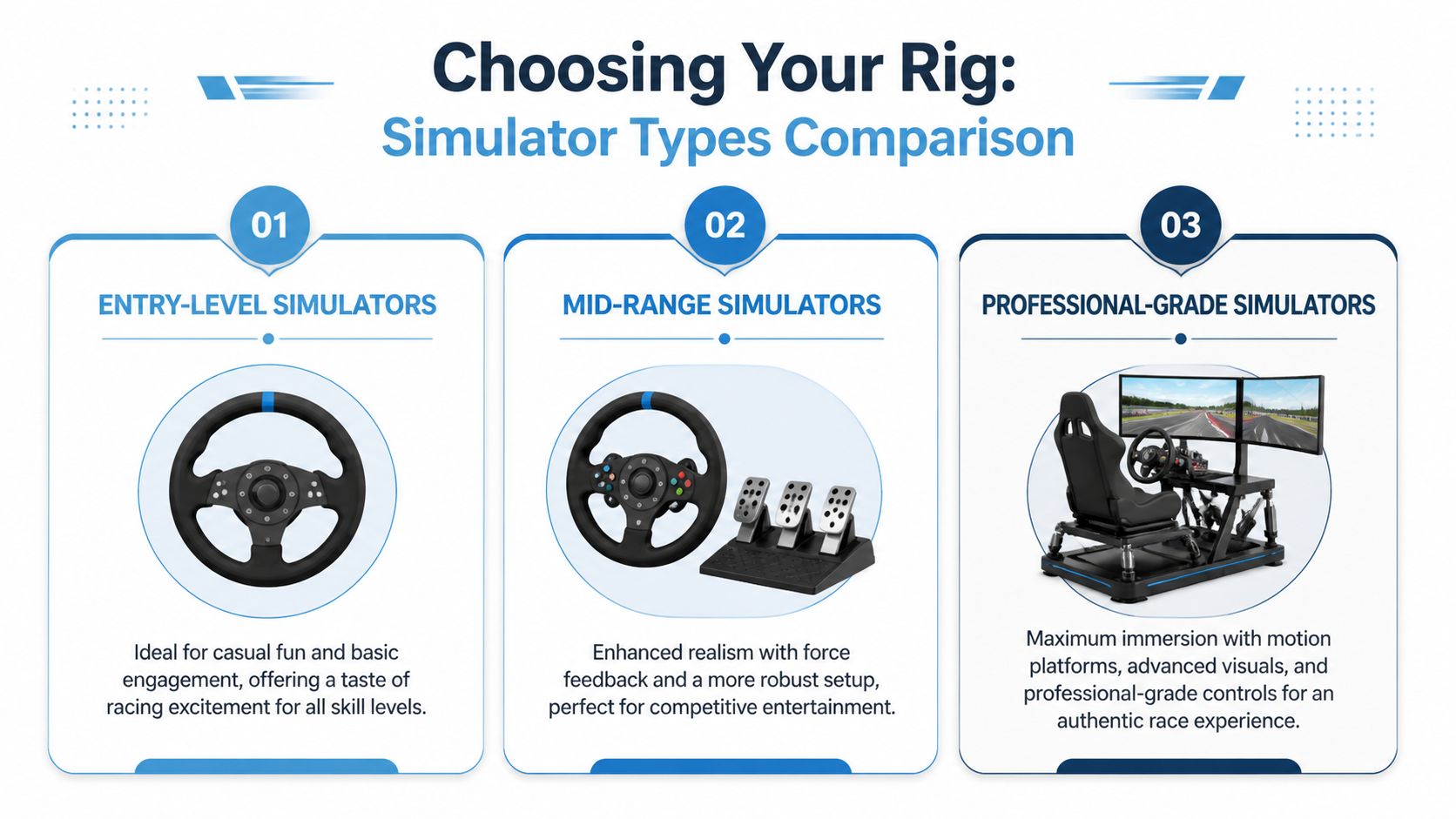
Static seats for light-touch engagement
A static race seat simulator is the simplest format. The seat is fixed. The guest uses a steering wheel and pedal set, and the unit is designed for easy access and steady throughput.
These rigs suit:
- Casual audiences: Guests can join in without needing prior experience.
- Mixed-use spaces: They fit well at conferences, hospitality areas, and family events.
- Photo-led activations: The cockpit look still gives you strong visual impact.
What they don’t do as well is deliver that physical sensation of weight transfer or chassis movement. If your objective is realism for keen drivers, a static unit may feel too light.
Force feedback rigs for competitive events
For many corporate bookings, force feedback is the sweet spot. The wheel pushes back through corners, kerbs feel more convincing, and braking takes more intent. That extra resistance changes the experience from “arcade fun” to “proper challenge”.
This is usually the tier that works best when:
- a leaderboard matters
- repeat attempts are likely
- the audience includes genuine motorsport fans
- you want enough realism to feel credible without the added complexity of motion platforms
A good force feedback setup also works well for staffed competition formats. Lap times are easy to explain, and guests quickly understand what they’re trying to beat.
Practical rule: If your event needs volume and quality in equal measure, start your conversation with force feedback rigs, not entry-level seats and not full motion.
Motion simulators for premium impact
A full-motion simulator adds seat movement through electric or motion-platform systems. That creates the most immersive option in race seats hire and usually delivers the strongest “watchability” from outside the rig. People don’t just notice the screen. They notice the whole cockpit working.
These are best for premium launches, media moments, motorsport-themed hospitality, and high-profile branded experiences where theatre matters as much as participation.
Trade-offs come with that uplift:
- More setup sensitivity: Floors, access, and power matter more.
- Longer install thinking: The venue needs to know what’s arriving.
- Higher staffing expectations: Guests often need a bit more guidance entering and exiting the seat cleanly.
A useful research step when comparing component ecosystems is looking at communities and sponsorship activity around sim racing hardware. For example, creator deals with Moza Racing on SponsorRadar can help planners or agencies understand where enthusiast credibility sits within the sim racing space.
If you want a turnkey motion option rather than sourcing separate parts, motion seat simulator hire is the category to review. It’s typically the right fit when realism, audience draw, and branded presentation all carry equal weight.
From Trade Shows to Team Building Proven Use Cases for Simulators
The most useful way to judge race seats hire is to ask what problem it solves in the room. The answer changes with the event.
At a trade show, the problem is usually attention. You may have a strong product and a good team, but visitors still need a reason to stop. A racing simulator gives them one. The seat creates the visual hook. The lap challenge creates the social proof. Once a small crowd forms, the stand feels active rather than static.
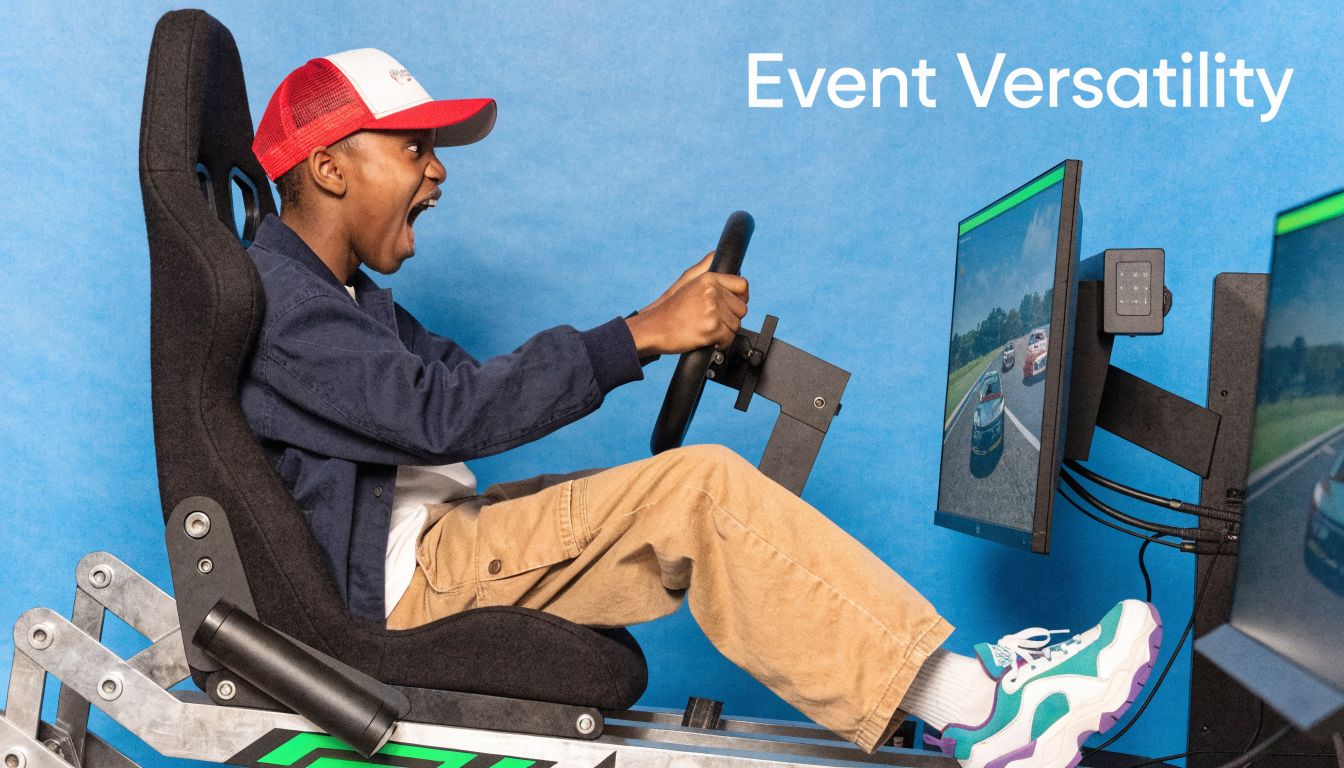
Exhibition stands that need a footfall magnet
A common exhibition format is simple. Guests register for a fastest-lap challenge, take their turn, then see their name on a leaderboard. While they wait, your team has time to qualify them properly. The simulator gives sales staff a natural opening line and keeps the stand from feeling like a cold approach zone.
What works:
- Short sessions: Quick turns stop queues becoming frustrating.
- Visible scoring: People stay longer when competition is public.
- Clear prizes: Even a simple reward sharpens participation.
What doesn’t work is burying the rig at the back of the stand or giving no one ownership of the queue.
Corporate events that need shared energy
For staff events, the simulator often works because it gives people a low-pressure way to compete. Not everyone wants to network around a drinks table. A race challenge creates interaction without forcing conversation.
It also suits mixed groups. Some guests will want serious lap times. Others will just want one fun attempt and a photo. Both can coexist if the format is managed properly. That’s why it sits well within broader corporate team building events, especially when planners want something more active than a quiz but less physically demanding than outdoor activities.
Launches and private events that need a centrepiece
At a product launch, the simulator can reinforce speed, control, engineering, or performance themes. In that setting, the seat isn’t just entertainment. It becomes part of the brand story.
At weddings, milestone birthdays, and family events, the role is slightly different. The rig becomes the attraction people talk about afterwards. The strongest setups are easy to understand, quick to operate, and positioned where guests can watch without blocking the room.
If the event needs one feature that both participants and bystanders enjoy, a race simulator usually outperforms attractions that only work for the person currently using them.
The Operational Blueprint Logistics Setup and Space Requirements
The first operational mistake is assuming a simulator can go anywhere a chair can go. It can’t. A race seat rig may look compact in photos, but live delivery involves frames, screens, cables, transport cases, operators, and safe circulation space around the user.
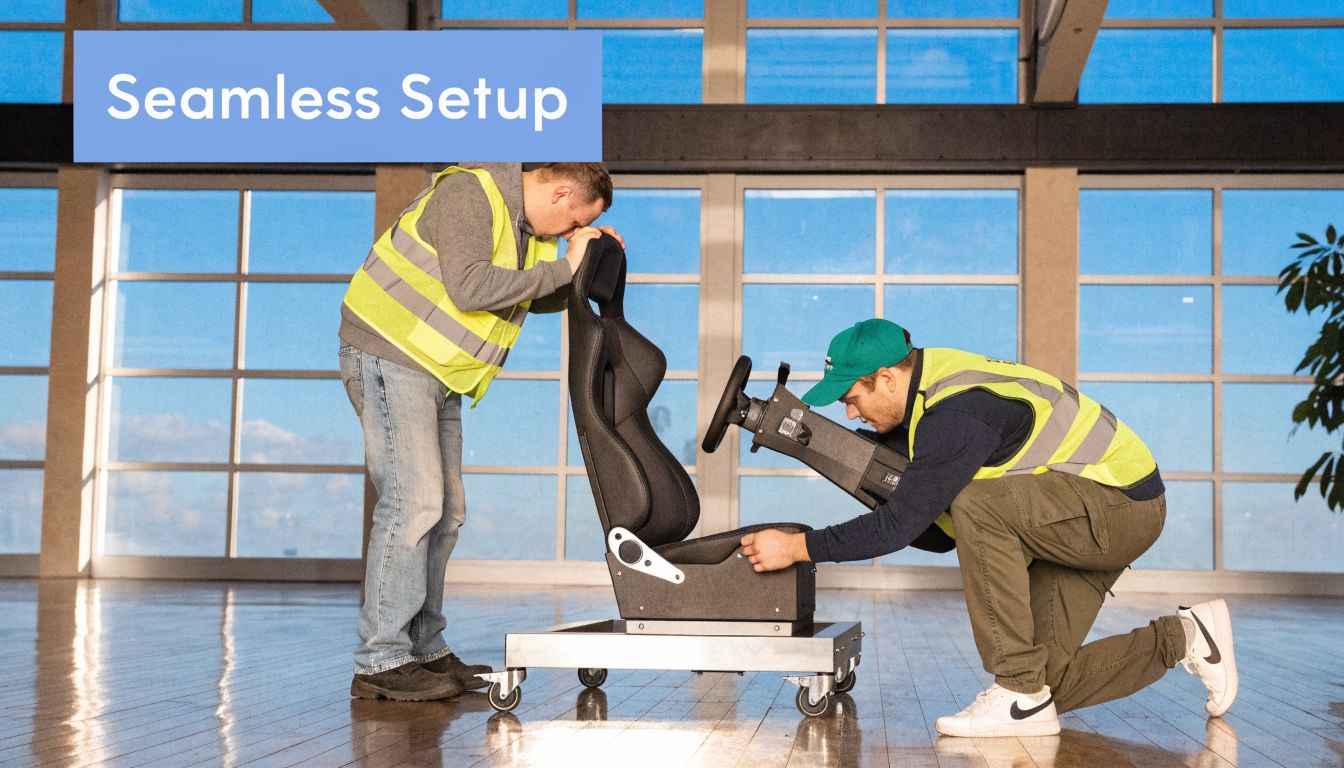
Access checks that prevent bad surprises
Before you sign off race seats hire, ask the venue the practical questions first:
- Loading route: Is there a loading bay, and can the supplier use it at your allotted time?
- Door and lift access: Can large components move from goods-in to the final event space without dismantling on the way?
- Build timing: Does the venue give enough access for install and de-rig without rushing?
- Floor conditions: Is the surface level and suitable for stable simulator placement?
This sounds basic, but these checks save more trouble than any spec comparison ever will. If the route from van to venue floor is awkward, setup becomes slower and riskier.
Space around the simulator matters as much as the rig itself
Planners often measure the footprint of the cockpit and stop there. The full footprint includes user entry and exit, operator position, cable management, queue space, and sightlines for people watching.
A rig squeezed into a corner creates three common problems:
- guests can’t get in and out comfortably
- staff can’t supervise properly
- the queue spills into neighbouring stands or fire routes
The cleanest layouts leave enough room for the attraction to breathe. That usually improves both safety and presentation.
Good simulator planning starts with the full operating footprint, not the seat dimensions.
Power, screens, and build order
Most venues will also ask about electrical needs. That should be confirmed with the supplier in plain terms, not guessed by the organiser. The same goes for screen positioning, cable runs, and whether any part of the setup needs its own dedicated area rather than shared stand infrastructure.
Build order matters too. Simulators are usually easier to install before surrounding furniture, counters, and branding pieces are locked in place. If you try to drop them into a finished stand at the end, access becomes tighter and cable routing gets messy.
For project teams, a short pre-event checklist is often enough:
| Check area | What to confirm |
|---|---|
| Venue access | Loading bay, goods lift, build window |
| Event space | Operating area, queue position, spectator flow |
| Power | Socket location and supplier requirements |
| Stand layout | Screen sightlines, branding position, staffing point |
| Schedule | Install time, live operation, de-rig access |
The planners who get smooth simulator installs aren’t lucky. They ask the venue questions early and treat the rig like an activation, not a prop.
Budgeting for Success Understanding Costs ROI and Inclusions
A planner signs off a simulator because the headline price looks reasonable. Two weeks later, the actual budget starts to appear. Delivery to a restricted venue. Operator hours. Branding production. Early access charges. Suddenly the cheap option is not cheap at all.
That gap usually comes from comparing purchase prices with event hire. They are different things. A buyer might see a basic seat advertised for a few hundred pounds online and use that as a mental benchmark, but a professional hire covers far more than the seat itself. It includes transport, install, testing, live operation, breakdown, paperwork, and support if anything needs attention during show hours.
What a professional quote should actually cover
A useful quote shows the full operating cost, not just the hardware line.
Look for clear detail on:
- Transport: Delivery, collection, crew time, and any venue-specific handling requirements.
- Installation and de-rig: Who builds the setup, tests it, and removes it at the end.
- On-site staffing: Whether trained operators are included for the full live period.
- Insurance and compliance: Liability cover and event documents if the venue requests them.
- Branding scope: What can be wrapped, skinned, or added, and what remains standard kit.
- Technical support: Who fixes issues on site, and whether standby equipment is part of the hire.
If any of that is vague, the organiser is carrying risk without seeing it on the quote.
We see this regularly with first-time simulator bookings. The supplier price looks low because several event-day costs have been left for the client to discover later. That usually shows up in one of three places: staffing, branding, or venue access.
Cheap headline prices often create expensive event days
The lowest quote can still cost more once the event goes live. If branding is excluded, the stand builder or graphics team has to pick it up. If no operator is included, event staff get pulled off lead capture or guest hosting to supervise the attraction. If access rules were not checked properly, install can overrun and start affecting other contractors.
A proper comparison needs to reflect how the attraction will run on the day:
| Quote feature | Low-detail quote | Operationally useful quote |
|---|---|---|
| Hardware | Included | Included |
| Delivery | Unclear | Stated clearly |
| Installation | Unclear | Included or itemised |
| Staffing | Often omitted | Defined by event hours |
| Insurance | Often assumed | Confirmed explicitly |
| Branding | Basic or absent | Scope explained |
| Venue coordination | Minimal | Planned in advance |
That last row matters more than many planners expect. A simulator that arrives without a clear access plan can create delays long before the first guest sits down.
How to judge return on the spend
Return depends on what the activation is supposed to do. For exhibitions, the measure is usually qualified conversations, dwell time, and how many visitors stay long enough for the sales team to engage them properly. For internal events, the value may sit in participation, energy in the room, and whether the experience gives people a reason to stay longer and talk to each other. For public brand work, content capture and repeat plays can matter as much as raw footfall.
This is why spec sheets never tell the full story. A premium-looking rig with poor throughput can disappoint at a busy trade show. A simpler setup with strong operator control can produce better lead opportunities because more people get a turn and more conversations happen around it.
Brand presentation also affects return. If the simulator is part of a wider campaign, planners should treat it like branded media as well as entertainment. The same thinking used in a guide to custom branded photo booths applies here. The visual finish, queue experience, and shareable moments all influence what guests remember.
At PSW Events, the most successful hires tend to come from clients who ask one straightforward question early: what will this cost us to run properly for the full event day? That question usually leads to a better brief, a cleaner quote, and a better result on site.
Beyond the Thrills Safety Compliance and Branding Your Experience
A simulator can look impressive on a show floor and still cause problems if the operational basics are weak. The ultimate test is whether the attraction gets venue approval, runs safely under pressure, and leaves guests with a branded experience that feels deliberate rather than improvised.
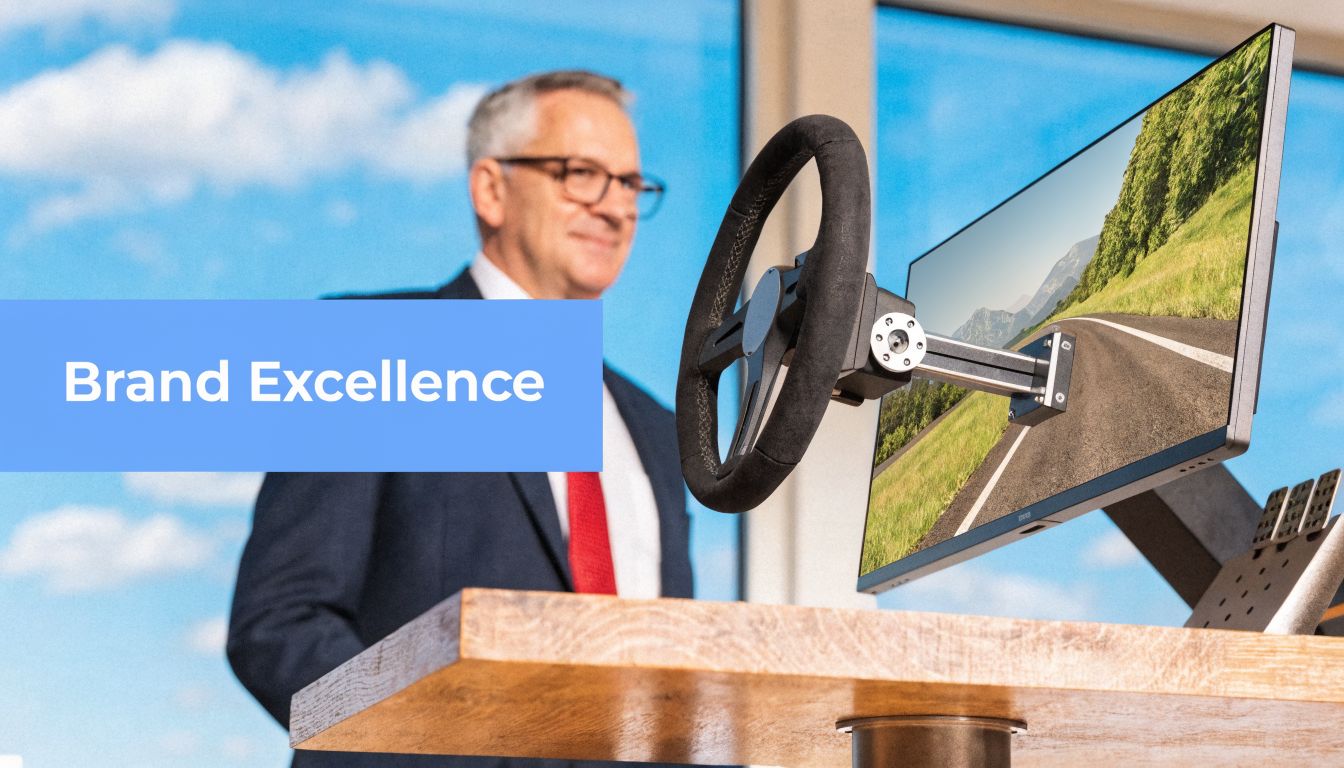
Compliance is part of the hire, not an add-on
Venues rarely worry about the idea of a race simulator. They worry about paperwork gaps, unclear responsibilities, and whether the supplier can operate the equipment safely with the public around it.
A proper hire should come with risk assessments, method statements, equipment testing records where applicable, and a clear operating procedure for live use. That matters most at corporate venues and exhibition halls, where approvals often sit with event teams who need documents in advance and clear answers on the day.
Insurance needs the same level of scrutiny. For example, the £10 million public liability insurance provided by PSW Events is the level many corporate clients and venues expect for peace of mind. The key point is not the headline figure alone. It is whether the cover matches the activation and whether the supplier can evidence it quickly when procurement, venue management, or an agency asks.
The practical questions are straightforward:
- Who provides the RAMS: The supplier should issue them, not leave your team to create them from scratch.
- Who stays with the simulator during operation: A live attraction needs supervision, queue control, and guest briefings.
- Who handles incidents or technical stoppages: The answer should be clear before the first session starts.
- How quickly can documents be resent or updated: Late venue requests are common.
Poor paperwork delays approvals. Poor supervision creates avoidable risk.
Accessibility needs planning at quote stage
Accessibility is often treated as a last-minute consideration, even though it affects layout, staffing, and who can take part. A standard cockpit will not suit every guest, and planners should ask that question early rather than discovering the limitation once the event is live.
The useful discussion is practical, not theoretical:
- Access into the seat: Can a guest get in and out safely and with dignity?
- Space around the rig: Is there enough room for approach, turning, and observation?
- Operator assistance: Can trained staff help appropriately if needed?
- Alternative ways to join in: If one seat format is not suitable, can the activation include another play format, leaderboard role, or parallel experience?
This is also where event design affects guest comfort. An inclusive setup supports Equality Act 2010 considerations, but it also avoids an awkward public moment where a guest is invited to participate and then cannot do so easily. That is a preventable planning failure.
Branding should cover the full guest journey
Branding works best when it is built into the operating plan. A logo on a screen is only one part of the job. The stronger approach covers what guests see while waiting, what the driver sees while playing, and what gets photographed or shared afterwards.
That can include branded bodywork or seat vinyls, on-screen graphics, leaderboard identity, branded staff clothing, surrounding set dressing, and photo moments near the rig. The result is stronger when all of those pieces use the same campaign language and visual style.
If you want a good reference point for that broader approach, this guide to custom branded photo booths makes a useful comparison. The format is different, but the principle is the same. Branded event kit performs better when the branding is part of the experience flow, not something added to the casing at the end.
Good branding also improves commercial value. It gives bystanders a reason to stop, makes queue time feel part of the activation, and produces cleaner content for social sharing, internal comms, or post-event reporting.
Your Final Checks and Next Steps with PSW Events
By the time you’re ready to book race seats hire, most of the important decisions aren’t about whether simulators are exciting. They are. The key question is whether the supplier can run the activation cleanly in your venue, within your schedule, and in a way that supports your event goal.
The simplest way to protect your event is to vet suppliers with the same discipline you’d apply to staging, AV, or stand build.
Supplier vetting checklist
| Category | Question to Ask |
|---|---|
| Event objective | What format do you recommend for our audience and why? |
| Rig type | Is the simulator static, force feedback, or motion, and what are the trade-offs? |
| Footprint | What operating space is needed, including queue and staff area? |
| Venue access | What do you need from loading bay, lift, and doorway access? |
| Power | What power supply does the setup require on site? |
| Installation | Who handles build, testing, and de-rig, and when do they need access? |
| Staffing | Will trained operators remain on site throughout the event? |
| Safety paperwork | Can you provide RAMS and equipment compliance documents for the venue? |
| Insurance | What liability cover is in place for the activation? |
| Accessibility | How can the experience be adapted for participants with different physical needs? |
| Branding | What parts of the simulator and surrounding experience can be branded? |
| Quote clarity | Does the price include delivery, setup, staffing, and collection? |
| Support | If there’s a technical issue during live hours, who fixes it? |
| Measurement | How can the activation support lead capture, competition, or engagement tracking? |
A supplier should answer those questions directly and without hand-waving. If they can’t, the risk usually lands back on your team.
That’s the practical standard to use when comparing options. If you want to pressure-test a brief, sense-check a venue, or discuss the right rig type for your audience, contact PSW Events for a personalized, no-obligation conversation. A good race simulator booking starts long before the first lap. It starts with clear answers.