
You've got a date pencilled in, a venue asking for decisions, suppliers waiting for a brief and stakeholders pulling the event in different directions. One person wants more spectacle, another needs tighter costs, and the audience still expects an experience that feels well organised. The challenge isn't completing a checklist. It's making every decision work together.
To plan corporate events effectively, treat the event as one connected operation: objectives shape the budget, the budget shapes the experience, and the experience has to fit the venue, supplier plan, safety controls and measurement approach. A practical playbook helps you make those links early, before late changes turn into avoidable costs or operational risks.
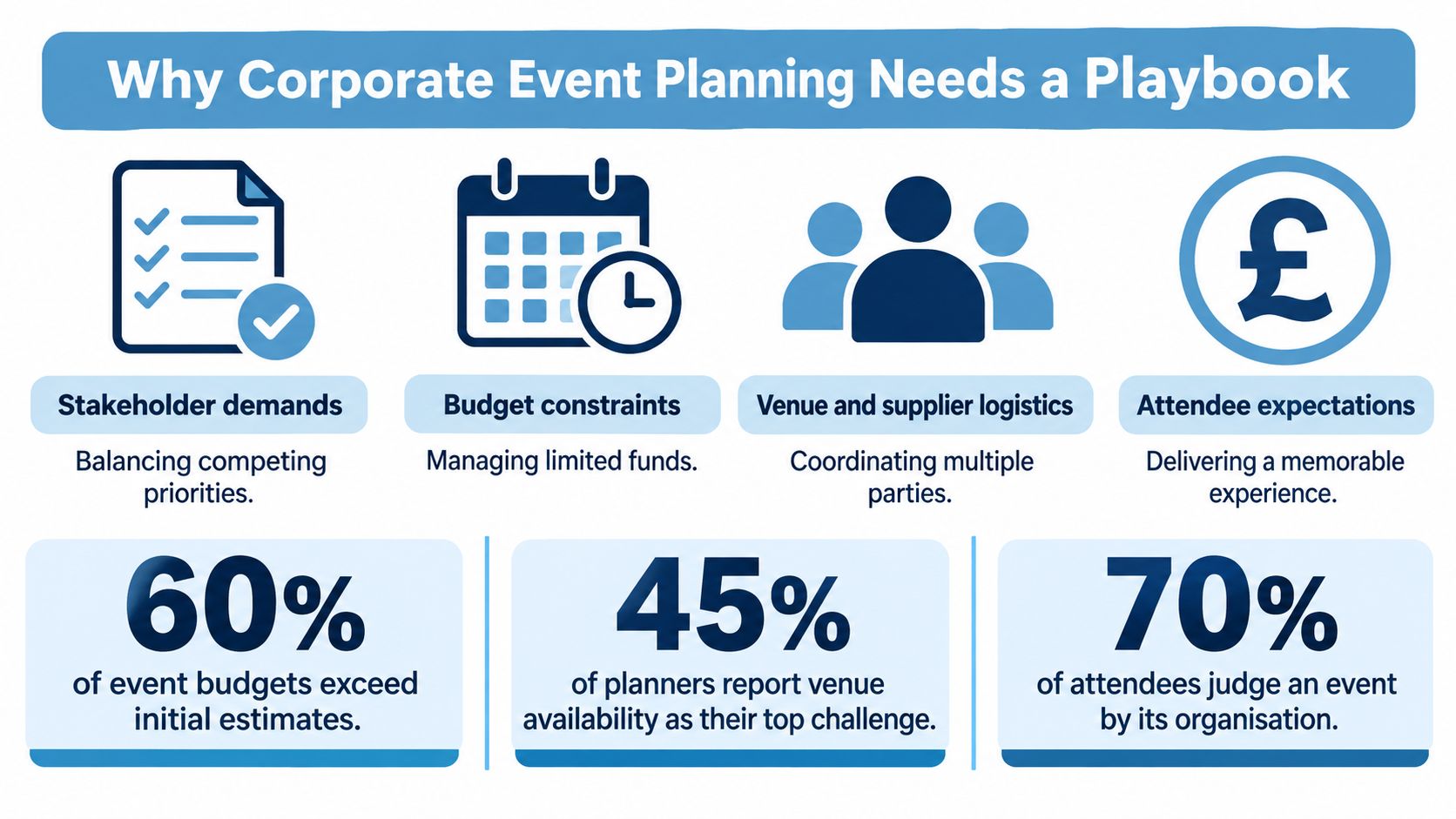
Why Corporate Event Planning Needs a Playbook
A supplier books loading bay access for 7am. The venue's own crew doesn't start until 8. Neither side knew the other existed, and the planner spends the first hour of build day mediating instead of managing. I've watched versions of this play out at conferences, exhibitions and brand activations across the UK, and the cause is always the same: separate teams making reasonable decisions that were never joined up.
The scale of the UK market raises the cost of each disconnect. In 2024, UK venues hosted an estimated 1.08 million conferences and meetings, attracting approximately 95.4 million delegates and generating around 144.8 million delegate days. Direct expenditure in venues and the wider destination was estimated at £19.3 billion (UK Events Report). Those figures cover conferences and meetings rather than every type of corporate activation, but they show how many people, suppliers and services sit inside each event decision.
Exhibitions raise the stakes further. In 2023, an estimated 1,016 exhibitions took place at the UK's main exhibition venues, generating approximately 6.9 million visits and contributing an estimated £2.6 billion in direct GDP. Median attendance was 3,000 visitors (VisitBritain's business events research). On a floor that busy, a queue that blocks a neighbouring stand might increase dwell time at your own activation while creating friction with the organiser and disrupting visitor flow. Coordination problems stop being internal headaches and start affecting everyone around you.
The dependencies repeat across formats. Guest movement shapes registration, catering queues and access to activities. A supplier's delivery slot shapes the venue's build schedule. An interactive attraction's power draw and footprint shapes the site plan. Treating these as separate tasks produces events that look organised on paper and unravel on the day.
Build one shared operating picture
A playbook doesn't need to be a heavyweight manual. It gives everyone one dependable version of the plan: purpose, audience, budget, site layout, supplier responsibilities, schedule, risks and success measures. Assign an owner to decisions that affect other teams, and keep changes visible. When a speaker slot moves by twenty minutes, check the impact on catering, room turnover, technical checks and any scheduled attraction before confirming it.
For the meetings that feed into the plan, Fluidwave's meeting planning guide offers a useful structure for agendas and responsibilities when several internal teams are involved. Pair it with an event-specific document that records operational dependencies rather than discussion topics alone.
Practical rule: If a change affects the floor plan, schedule, supplier brief or safety controls, update the shared plan and tell the people who rely on it.
Setting Objectives, Budgets, and Timelines
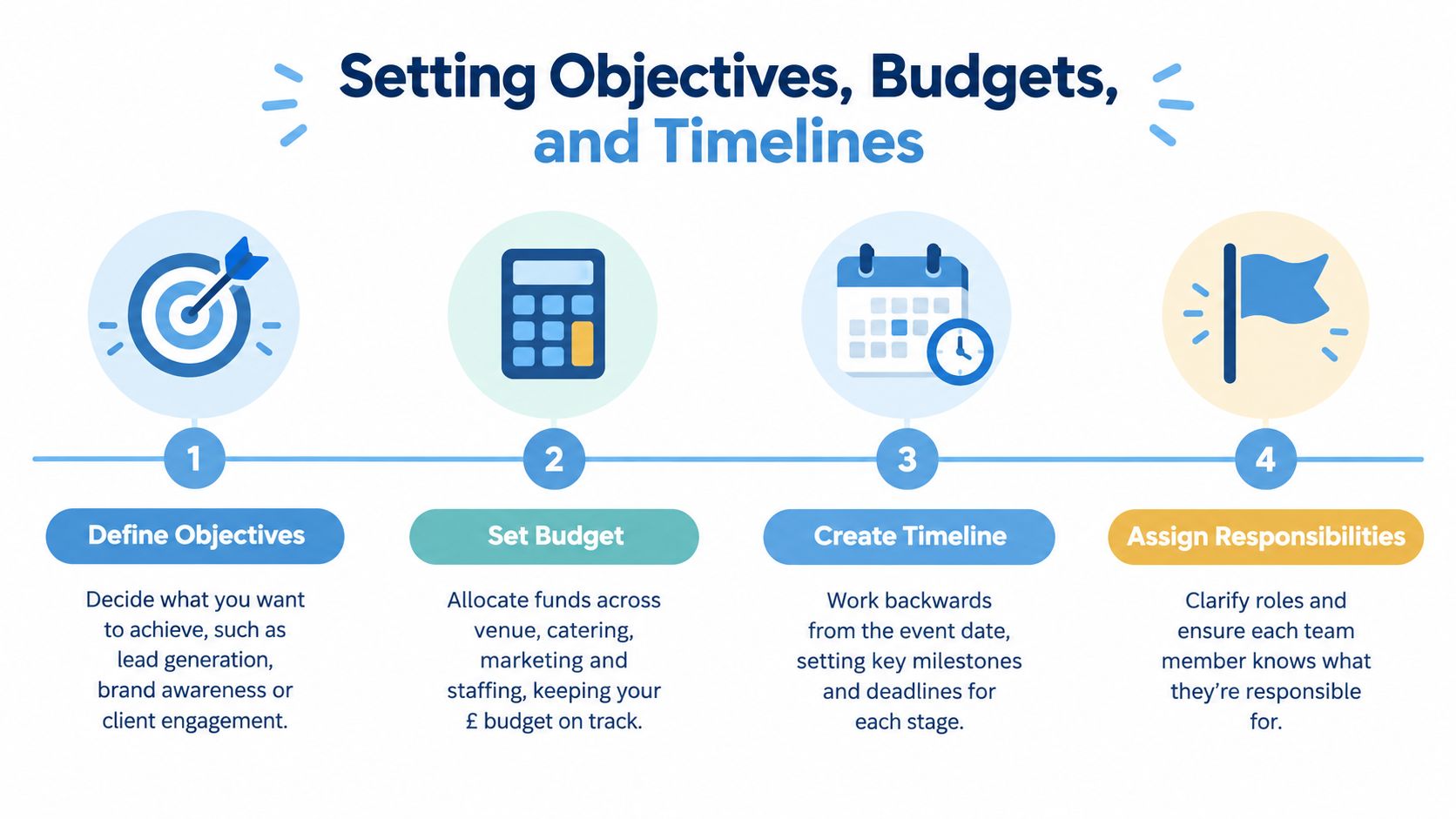
Start with the result the business needs, not the activity you'd like to book. A product launch might need to introduce a new offer to the right prospects, create useful sales conversations and give existing customers a reason to engage. “Make it memorable” can guide creative decisions, but it isn't specific enough to tell the team what success looks like.
Work backwards from the outcome
Write a short objective, then decide what evidence would show progress. For a launch, that could mean tracking attendance from priority accounts, meaningful product demonstrations and sales follow-up. Keep the distinction clear: an entertaining experience is a format; the business outcome is why you're investing in it.
Build the budget around the full operating plan. Account for the venue, production, catering, staffing, marketing, transport, attractions and contingency. Compare supplier proposals on what they include, not only the headline fee. A lower quote can become the more expensive choice if it excludes delivery, installation, on-site operation or breakdown.
Put dates and owners against the work
Create a timeline by working backwards from the event date. Include decision deadlines, contract approvals, venue checks, supplier briefs, promotion, access requirements, technical rehearsals and post-event evaluation. Show dependencies: the attraction supplier can't finalise a safe layout until the venue confirms usable space, and marketing shouldn't promise a feature before its delivery is agreed.
A corporate event planning timeline can help turn those milestones into a working schedule. Keep the main plan in one shared document or project board, and assign one owner to each deliverable. For example, name the person responsible for venue approval, supplier access, registration data and final sign-off. That makes it easier to spot a stalled decision while there's still time to resolve it.
Choosing the Right Venue and Coordinating Suppliers
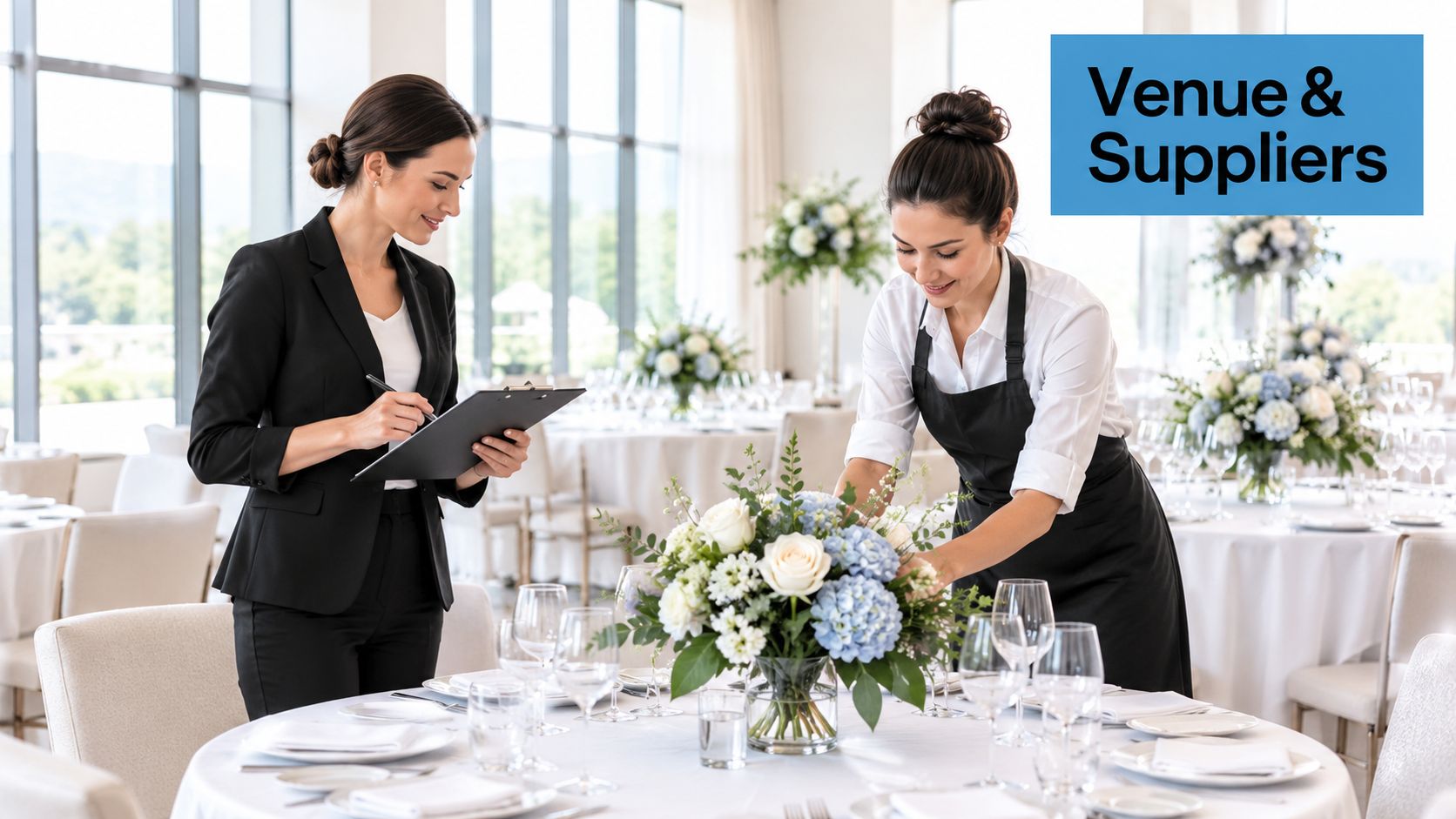
A venue can look right in a brochure and still be wrong for the event. Capacity and hire cost matter. So do step-free routes, loading access, power availability, storage, visitor circulation and the space each activity needs. For interactive attractions, check sightlines and queue space as carefully as the equipment footprint. An installation that blocks an exit or narrows a busy route is a problem, whatever it looks like on the floor plan.
Test the venue against the actual operation
Walk the route from delivery entrance to installation point, then from registration to the event's main features. Ask who supplies power, when contractors can access the space, what the venue needs for approval, and how the room changes between set-up, live use and breakdown. If you can't visit, request plans and arrange a detailed call with the venue contact. Confirm assumptions in writing.
Exhibitions make these checks especially important. Attractions must fit a real visitor-flow plan, not just the stand design, because a queue that spills into a neighbouring aisle creates friction with the organiser and the exhibitors around you. I've watched a well-built activation lose most of its impact because its waiting area pushed footfall into a route the venue needed kept clear, and the organiser asked for it to be moved mid-event.
Brief suppliers as one team
Give every supplier the same core information: arrival and departure windows, site contact, access rules, technical requirements, operating hours and escalation route. Then document what each party supplies and what the venue or organiser must provide. For a simulator or VR experience, agree the footprint, power, queue management, staff responsibilities, branding approval and contingency for equipment issues before the event opens.
Where two suppliers share a resource, such as power, rigging points or a loading bay slot, put them in contact early. A short call between the AV contractor and the attraction supplier before build day can prevent an hour of negotiation over the same distribution board while guests are arriving.
A MyPerfectStay corporate event guide can help you keep venue and supplier tasks visible. It won't replace a production schedule or a supplier-specific brief. What it does is keep the administrative side organised while you build those documents. The practical test is simple: every supplier should know where to be, when to arrive, what they're responsible for and whom to contact if the plan changes.
Staffing, Health and Safety, and Accessibility
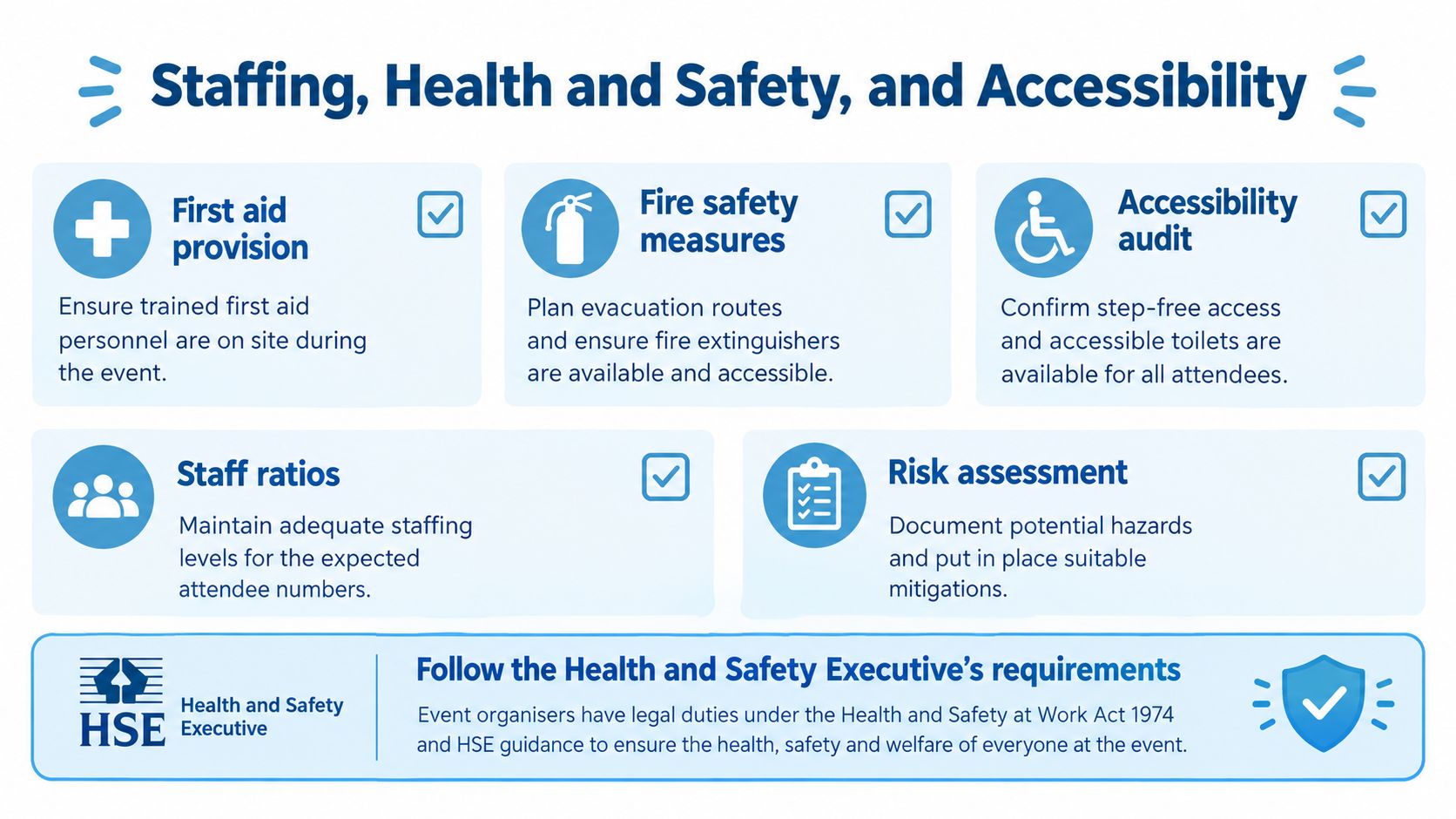
Safety belongs in the design of the event, not in a document completed after the entertainment and floor plan are fixed. The Health and Safety Executive says organisers should identify the event's scale, type and scope, audience, location, duration, and time of day and year, then use risk assessment to shape a documented safety plan. It also advises involving workers and liaising with venue management, emergency services and, where appropriate, the local-authority Safety Advisory Group (HSE guidance on getting started).
The organiser retains responsibility for suitable arrangements through build-up, live operation and breakdown. That includes coordinating work, communicating relevant risks, checking staff competence, monitoring controls and reviewing how they worked (HSE guidance on managing an event). For an interactive attraction, define who supervises it, how participants queue, what happens if equipment stops working and how the area stays clear. The venue layout should account for attractions, work areas, access points and audience routes as connected parts of the site (HSE venue and site design guidance).
Make participation accessible
A UK accessibility report found that 52% of disabled people struggle to attend live events because of accessibility barriers, while 33% said environmental solutions weren't easy to use or didn't meet their access needs (Conference News on accessibility challenges). A step-free venue is important, but it doesn't automatically make an activity usable.
Ask suppliers how attendees can take part if an experience relies on standing, fast reactions, physical controls, visual displays or loud sound. Consider alternative controls, seated participation, clear sensory information, quiet options, companion access and an accessible queue. Brief temporary staff on how to offer support without making assumptions about what someone needs.
Assign named staff to registration, guest support, activity supervision and incident escalation. For an event-specific overview of planning considerations, use this health and safety compliance guide as a reference, then confirm the actual controls with the venue and competent safety advisers.
Promoting Your Event to UK Audiences
Promotion should follow the event objective. A trade event aimed at business decision-makers needs a different message from a staff celebration or customer activation. Start with who you want to attend, what would make them act, and which channels can reach them. Then make registration straightforward and track where sign-ups come from.
For UK search visibility, Google deserves first attention. StatCounter's September 2026 UK figures report 91.39% search-engine market share for Google, compared with 6.08% for Bing, 1.32% for Yahoo, 0.65% for DuckDuckGo and 0.30% for Ecosia (StatCounter's UK search-engine market-share data). These figures support a Google-first approach, while basic visibility on other search engines remains worthwhile.
Make the event easy to find and understand
Build a search-optimised landing page around the terms your audience is likely to use, such as the event topic, location and intended audience. State the benefit clearly, include practical details and make the registration action obvious. Don't rely on a social post to explain venue access, programme information or what attendees can expect.
Use segmented email rather than sending every contact the same message. A past attendee, a prospective client and an industry partner may each need a different reason to register. LinkedIn can support B2B promotion, while venue, speaker or industry-body partnerships may introduce the event to relevant audiences. Track registration sources and attendance against the plan, not just clicks or impressions.
Promotion also affects operations. If an advert promises an interactive attraction, confirm its availability, access requirements and capacity before publishing. That prevents marketing from creating expectations the event team can't deliver.
Measuring ROI and Proving Event Success
Activity is easy to count. Commercial value takes a plan. UK business events generated approximately £33.6 billion in 2022 across conferences, meetings, exhibitions, business-travel meetings and incentive travel. Within that total, exhibitions and trade shows contributed £10.9 billion, while conferences and meetings contributed £16.3 billion (UK Events Report summary). Those different formats don't share one universal measure of success, so define the event's purpose before selecting KPIs.
Use a five-stage workflow:
- Define the objective. Decide whether the event is intended to generate leads, support customer relationships, improve employee engagement or achieve another business result.
- Establish a baseline. Record the position before the event, using the relevant sales, attendance, customer or employee information.
- Instrument data collection. Decide how registration, attendance, participation, dwell time and lead information will be captured.
- Calculate financial outcomes. Reconcile event costs with attributable commercial value, using agreed assumptions.
- Evaluate afterwards. Compare results with the objective, record what worked and change the plan where evidence supports it.
Separate outputs from outcomes
Registrations, attendance, participation and qualified leads are outputs. Pipeline value, sales meetings, customer retention and employee-performance indicators are outcomes. Both matter, but a busy activation doesn't prove business impact unless engagement leads to an agreed result.
Assign each KPI an owner and data source before procurement. For instance, the exhibition team might own scan-based lead capture, production might record participation, and sales might report pipeline attribution. After the event, reconcile CRM records against scan data, remove duplicates, classify lead quality and compare cost per qualified lead with the target set before the event.
For a practical way to assess whether an idea can make commercial sense, this step-by-step commercial viability method can help frame the decision. For event-specific measurement considerations, see this guide to experiential marketing ROI. The important discipline is to report what the data supports, not to present footfall as a substitute for revenue or relationship outcomes.
Final Tips for a Flawless Corporate Event
The strongest event plans make creative ambition and operational discipline support each other. Before you confirm suppliers, check that the experience serves a clear objective, fits the venue, works for the intended audience and can be delivered safely. If one of those conditions is unresolved, treat it as a planning decision, not a detail to leave for the event day.
A sustainability claim needs the same care as an ROI claim. UK event businesses surveyed identified cost as the biggest obstacle to sustainability improvements in 66% of responses, while 32% lacked a formal sustainability plan (Conference News on the venue trend report). Visible features such as EV charging or reusable materials don't, by themselves, show the impact of a particular event. Ask suppliers to explain assumptions about transport, power, shipping, re-use, staffing travel and waste, and distinguish measured information from unverified claims.
Run a final operational check
Before the event, confirm the owner and current status of each decision that can affect delivery:
- Objective and budget: Check that the programme, venue and attraction choices still serve the agreed business outcome.
- Site and suppliers: Confirm access, installation, power, schedule, responsibilities and contact details with the venue and every supplier.
- Safety and access: Review the risk assessment, staff brief, routes, queues and participation options against the final layout.
- Promotion and data: Make sure public information matches what the team can deliver, and that registration and measurement processes are ready.
- Evaluation: Schedule the post-event review while the team can still capture decisions, supplier performance and attendee feedback accurately.
Afterwards, record what caused friction as carefully as what went smoothly. Update the run sheet, supplier briefs and measurement plan while the details are fresh. That's how each event becomes a more reliable starting point for the next one, rather than another set of lessons held only in someone's inbox.
PSW Events provides corporate event planning and delivery, including interactive attractions, branding, logistics, installation and on-site staffing for exhibitions, conferences and brand activations. If you're shaping an event where entertainment, visitor flow and operational delivery need to work together, visit PSW Events to discuss your requirements.