
At 7:30, the first guests are arriving. By 8:15, one group wants a proper activity, another wants a drink and a catch-up, and a few are standing back waiting for something to pull them in. That is the fundamental planning problem with a 50th birthday. It is not choosing a theme. It is giving the room enough energy and structure that the night never goes flat.
The strongest party ideas 50th birthday hosts choose tend to have one thing in common. They give people something to do, not just something to look at. A professional attraction such as a racing simulator, flight simulator, golf set-up, or VR station gives the event a centre of gravity. Guests can compete, watch, comment, rotate in and out, and keep talking without the entertainment feeling forced.
That matters with a mixed-age, mixed-interest guest list. Some people want competition. Some want conversation. Some will only join in once they have seen someone else go first. A good interactive format covers all three. It gives confident guests a stage, gives quieter guests an easy entry point, and gives the host a practical framework for timing food, drinks, prizes, and speeches.
The trade-off is straightforward. Passive entertainment is easier to book, but it often leaves dead time between key moments. High-energy attractions take more planning, space, and supervision, but they solve the harder problem of how to entertain everyone for a full evening.
If you want extra low-pressure activity around the main event, add a few outdoor party games for adults as an arrival option or side station. That works well when guests will arrive in waves and you need the room to feel active before the headline experience starts.
The ideas below are built as a playbook, not a theme list. Each one is designed to help you run a 50th that feels lively, social, and properly memorable, without leaving half the room wondering what to do next.
1. Racing Simulator Championship Party
Doors open, the first drink is poured, and within ten minutes a lap time is already on the screen. That is why a racing simulator party works so well for a 50th. It gives the room an immediate focal point and solves a common hosting problem. Guests always know what is happening, whether they are driving, watching, or talking about the leaderboard.
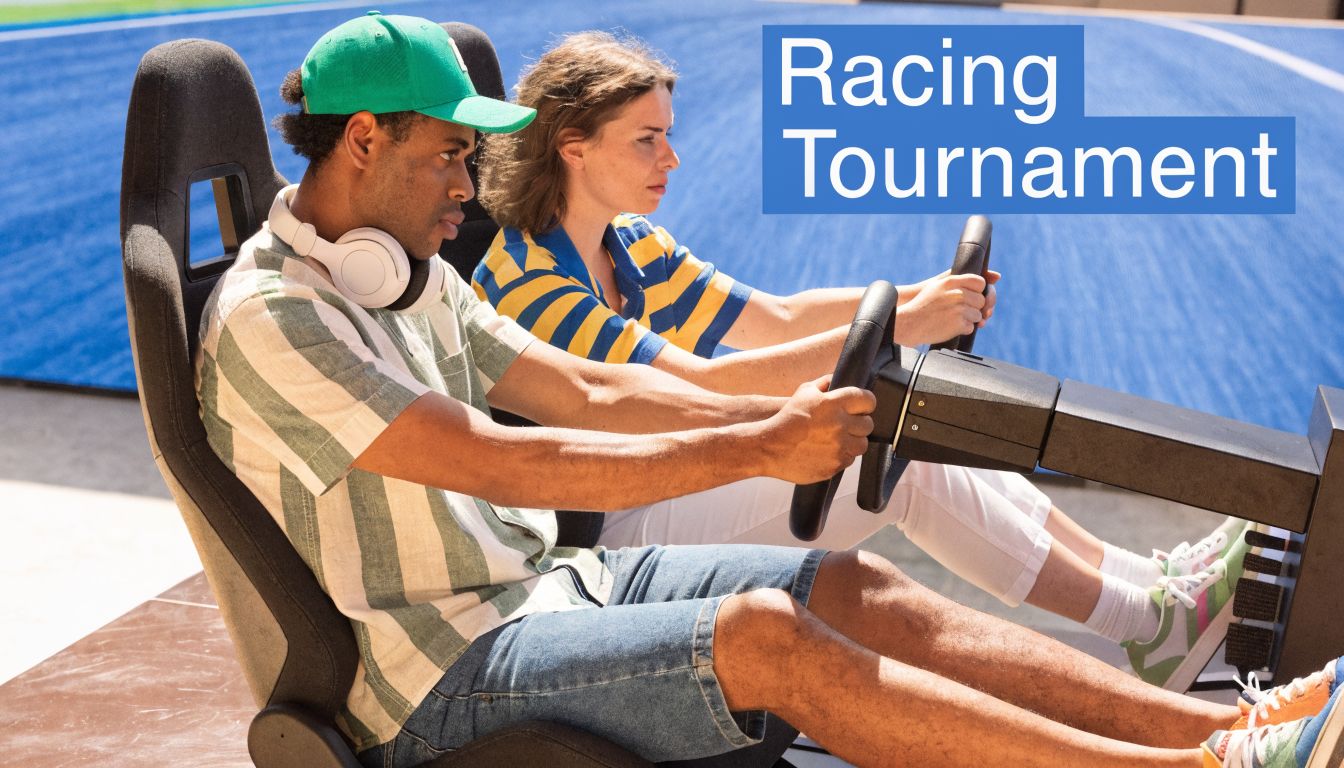
The difference between a professional rig and a home console is obvious the moment guests sit down. Proper seats, pedals, force feedback, and a visible timing screen create pressure in a good way. A single lap at Silverstone or Monaco becomes a shared moment because the whole room can follow the result.
The format matters as much as the equipment. Free play sounds relaxed, but for milestone parties it usually creates a messy queue, long waits, and the same confident guests jumping back in first. A championship structure fixes that. Run short qualifying heats, post the standings after each round, then bring the top drivers back for a final.
Use a structure like this:
- Keep heats short: Three to five minutes per driver is enough to keep the pace up and stop backups.
- Use two prize categories: Fastest lap rewards the competitive crowd. Best improvement gives hesitant guests a reason to join.
- Put the leaderboard on a main screen: Spectators stay engaged when they can see positions update live.
- Assign a host or compere: Someone needs to call drivers up, explain the rules, and keep the banter going between runs.
- Plan overflow activity: If guests arrive in waves or the venue has outside space, a few outdoor party games for adults help keep the energy up while race slots rotate.
One practical rule makes a big difference. Never hide the action in a side corner. Racing simulators need sightlines, noise, and a bit of theatre, so place them where seated guests can still watch comfortably without blocking service.
I'd also keep food simple. Finger food works better than plated dining because guests do not want to miss their heat while waiting for a course to clear. Put the bar near the racing area, keep speeches between rounds, and avoid scheduling the final too late, when concentration drops and people start leaving.
Done well, this is more than a car theme. It is a high-energy event format with built-in entertainment, easy spectator value, and a clear rhythm for the whole evening.
2. Flight Simulator Adventure Package
A flight simulator party suits guests who want something unusual rather than loud. It still has adrenaline, but the energy is different. More curiosity, less chest-beating.
This works especially well when the birthday crowd includes a mix of ages and confidence levels. Some guests will love trying a difficult landing. Others will be happy doing a scenic route with an operator talking them through the controls.
Set the tone early
You need a proper briefing. Not a long technical one. Just enough to stop first-time users freezing in the seat while everyone watches. When guests know they can choose beginner mode, they're much more willing to have a go.
A good flight format includes:
- Beginner and advanced slots: Start with easy flights, then offer tougher landing challenges later in the evening.
- Visible spectator screens: People stay interested when they can watch the cockpit view live.
- Comfort planning: Motion simulation is brilliant for some guests and too much for others. Give people the choice of static or lower-intensity experiences if available.
- Themed staging: Aviation styling, boarding-pass invitations, and “captain's table” catering enhance the whole thing.
Later in the night, you can show guests what the experience looks like before they commit:
The attraction isn't just novelty. It gives people a personal moment. A successful landing gets applause. A chaotic one gets laughter. Both are useful at a party.
Some of the strongest birthday entertainment isn't the loudest. It's the experience that gives each guest a story to tell on the drive home.
I'd use this for a host who's travelled widely, works in engineering or aviation, or wants something more memorable than another tribute band.
3. Golf Simulator Tournament with Prize Pool
Half the room wants a proper competition. The other half just wants something fun to do between drinks, dinner, and catching up. A golf simulator handles that mix well, but only if the format is built for a party rather than a golf club.
The mistake I see most often is making it too serious. If guests are waiting through full virtual rounds, beginners switch off and better golfers take over. The stronger set-up is a fast tournament with short turns, visible scoring, and more than one way to win.
The atmosphere matters as much as the hitting bay. Dress the space like a clubhouse, not a trade-show stand. Use warm lighting, good stools or lounge seating, a clear leaderboard screen, and drinks close to the action. If spectators are comfortable, they stay engaged, and that keeps the simulator from turning into a one-person attraction.
Build the tournament for mixed ability
A good birthday golf format gives confident players something to chase and nervous guests a reason to step up. Nearest-the-pin works because one clean shot can beat the strongest golfer in the room. Longest drive adds noise and bragging rights. A team challenge keeps the social side alive and stops the night becoming a private contest between three low handicappers.
Use these adjustments:
- Run short, repeatable challenges: Three to five shots per guest is enough to keep pace high.
- Offer recognisable courses or famous holes: Guests engage faster when they know the setting.
- Pair guests in mixed-ability teams: Better players bring confidence. New players bring surprise results.
- Put a host or coach beside the simulator: A 20-second tip on stance and swing path makes a big difference.
- Show the prize from the start: Trophy, premium bottle, pro-shop voucher, or a joke award for the wildest shot.
Prize structure is where this idea gets better. Don't put everything on one winner. Split it into categories such as best shot, team champions, longest drive, and best first-timer. That keeps more guests invested for longer, which is the primary job of the entertainment.
This works especially well for a 50th because it feels polished without becoming formal. Guests can play in a jacket, chat between rounds, and join in without needing fitness, specialist kit, or prior experience. If the host likes golf, it feels personal. If they don't, it still works as a smart, competitive centrepiece that gives the evening shape.
You do not need a huge production budget to make it land well. You need quick rotation, strong hosting, and a room layout that rewards spectators as much as players. That is what turns a simulator into a party, rather than a piece of equipment in the corner.
4. Combat Sports Experience Boxing or MMA Simulator
The room changes fast with this one. A guest lands a clean combo, the screen flashes a score, and suddenly the people who said they were “just watching” want a turn. That is why boxing and MMA simulators work at a 50th. They create a focal point, give spectators something to react to, and solve the dead patch between drinks, dinner, and dancing.
The format needs control. If you run it like a hard training session, half the room will opt out. If you run it like a quick-fire scoring challenge, it becomes one of the best energy spikes of the night.
Set it up as entertainment, not a test of fitness
Guests need one clear objective and a short turn. Score-based rounds work best because people understand them instantly and spectators can follow along without explanation. I usually keep each attempt to 20 to 30 seconds, then rotate the next player straight in.
A strong set-up includes:
- One host who can demo the basics fast: Stance, target, and scoring should take less than a minute to explain.
- Short rounds with visible results: Combo count, reaction score, or accuracy all work better than raw power alone.
- Multiple ways to win: Best technique, quickest hands, highest score, best entrance, or top team total.
- A viewing zone close to the action: This attraction needs noise around it, not empty space.
- Water, seating, and a breather nearby: Guests enjoy it more when they can step out and watch between turns.
That last point matters more here than with a golf or racing simulator. Combat experiences burn people out faster, especially in party clothes.
The safest version for a mixed 50th birthday crowd is boxing-led rather than full MMA styling. It feels easier to read, easier to host, and less intimidating for guests who do not want anything that looks too technical. If you want to pair it with another active attraction later in the night, an interactive American football game works well because it keeps the competitive mood but changes the movement and pace.
Tone decides whether this idea succeeds. Keep the language playful, keep the rounds short, and avoid turning the scoreboard into a test of who is toughest in the room. The job is to create cheers, rematches, and good photos.
For most 50th parties, this works best as a featured station for 60 to 90 minutes, not the whole evening. Used that way, it gives the event a real peak without exhausting the guest list.
5. American Football Experience with Skills Challenge
A 50th birthday crowd usually includes one group ready to compete, another happy to watch, and a few guests who join only if the rules are obvious. American football works well because the format is easy to strip down into one clear job: hit the target, score the points, move on. You get energy in the room without needing guests to know the sport.
The best version is built like a live party contest, not a sports lesson.
Set up one core challenge and make it easy to follow
Passing accuracy is the anchor activity because it is quick to explain and quick to judge. Guests can step in, take a few throws, see their score immediately, and hand over to the next person. That pace matters. Long turns kill the queue and flatten the crowd.
A practical set-up usually includes:
- One headline challenge: Three or five throws at marked targets is enough for a strong competition.
- A visible scoreboard: Put scores where the whole room can follow the ranking.
- Team and solo entry options: Some guests want their own moment. Others will join more readily as part of a table or family team.
- A timed final: Bring back the top scorers later in the night when the room is fullest.
- Simple styling touches: Team names, referee-style hosting, and a small trophy do more than expensive decor here.
If you want to see the kind of attraction that suits this format, an interactive American football game for events gives you the right starting point.
There is a real trade-off with this theme. Kicking and more technical drills can look good on paper, but passing games usually perform better at a mixed birthday event because they are easier for guests in party clothes and easier for spectators to read from across the room. Keep the challenge broad, fast, and repeatable.
The finish matters too. Announcer-style intros, a short playoff round, and a clear winner turn a simple skills station into a proper shared moment. That is the difference between hiring an attraction and building entertainment around it.
6. VR Gaming Lounge Party
A VR party works when the room reacts as much as the player. The weak version is a queue for one headset. The strong version is a hosted lounge where people rotate in fast, the crowd watches the screen, and every turn gives the room something to laugh at or compete over.
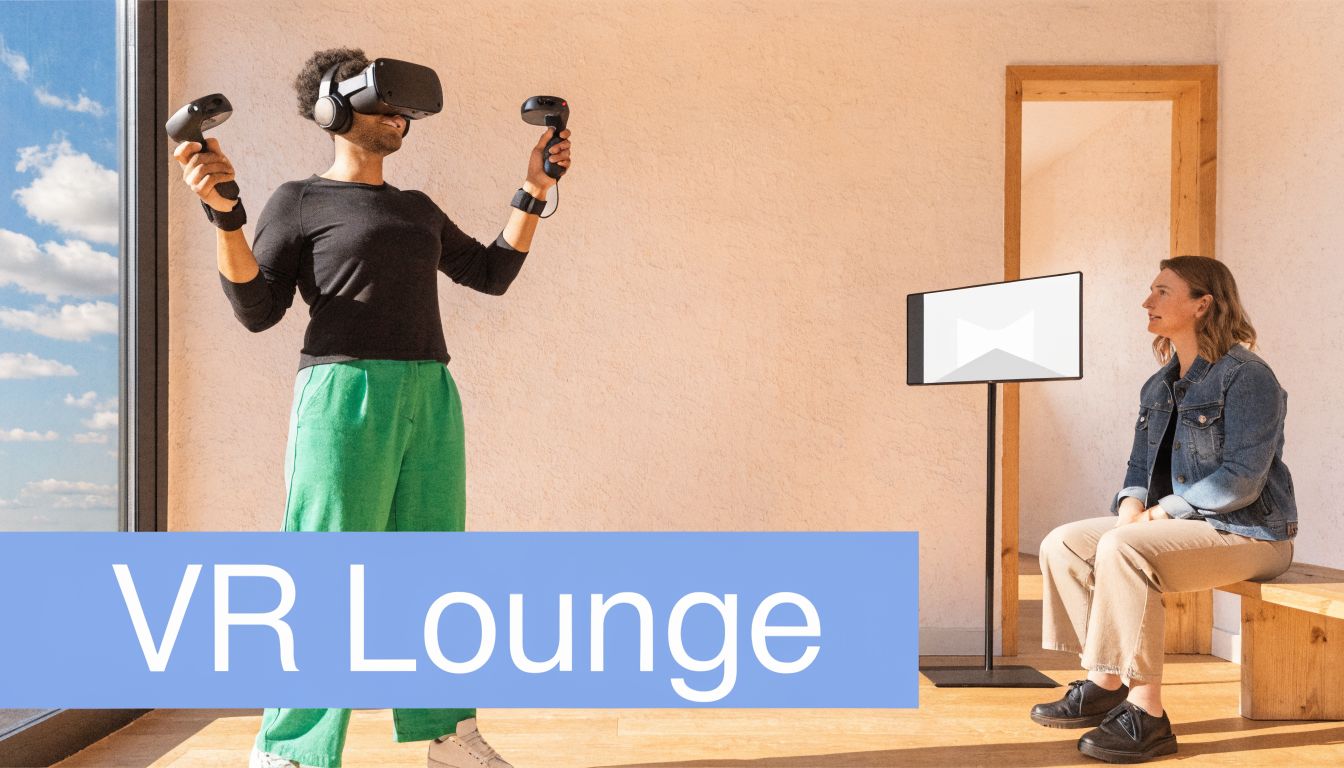
The planning decision is simple. Build it as a shared attraction, not a personal gaming setup. That means one host controlling rotations, one large screen mirroring gameplay, and seating close enough that spectators stay involved instead of drifting to the bar.
Choose games that create a crowd
For a 50th birthday, short and readable beats impressive. Guests do not need a complex story or a ten-minute tutorial. They need games they can understand in seconds. Rhythm titles, reaction tests, shooting galleries, sports challenges, and short adventure rounds usually perform best because the audience can follow the action immediately.
Use a setup like this:
- Two to four minute turns: Short rounds keep the line moving and let more guests join in.
- A mirrored display: Put gameplay on a TV or projector so the room can watch every miss, win, and near disaster.
- One staff member or confident host: Someone needs to reset games, fit headsets properly, and keep the pace up.
- Cleaning between users: Face covers, wipes, and a clear routine matter with shared equipment.
- A mixed game menu: Offer one active title and one lower-motion option so guests can choose what suits them.
There is a real trade-off here. High-movement VR looks exciting, but it can exclude guests in formal clothes, heels, or anyone who feels unsteady. Static or light-movement games get broader participation and usually keep the energy higher across the whole evening because people are more willing to have a go.
VR also works better as part of an entertainment mix than as the only feature. If the group is large, add lounge seating, a side game, or another quick participation activity nearby. That solves the biggest problem with milestone parties. You need something interactive for the competitive guests and something easy for everyone else to join without pressure.
Done properly, a VR lounge stops being a novelty corner and becomes a live part of the party. That is the goal. Keep turns short, keep the screen visible, and keep the crowd involved.
7. Multi-Sport Tournament Day
A mixed crowd is where this format earns its keep. The sporty guests want competition. The quieter guests want something low-pressure. A well-run multi-sport tournament gives both groups a reason to join in without forcing everyone into the same activity.
The strongest version is not a random pile of games. It is a structured circuit with clear scoring, short rounds, and one visible leaderboard. Racing, golf, boxing, football skills, and reaction games can work well together because they test different strengths. That matters at a 50th. You are not trying to find the fittest person in the room. You are building enough variety that every guest has a realistic shot at one standout result.
Build it like a live event, not a free-for-all
Poorly planned multi-activity parties lose energy fast. Guests drift. Queues form at the popular station. Half the room stops caring about the score.
Set it up with discipline:
- Run timed rotations: Eight to twelve minutes per station is usually enough.
- Group guests into small teams: Teams of four to six keep people moving and give the less confident guests some cover.
- Mix skill types: Pair one precision activity with one fast-reaction or strength-based game.
- Keep one master score sheet: One running leaderboard makes the whole room pay attention.
- Protect the social space: Keep seating, drinks, and food away from the active lanes so spectators can watch without blocking play.
The trade-off is simple. More stations create more choice, but they also increase staffing and floor-space pressure. In smaller venues, three strong stations usually outperform five cramped ones. In larger rooms or marquees, a wider circuit works because guests can move without bunching up.
One extra station often solves a practical problem. Add a side area with games console hire for casual head-to-head play and you give waiting guests something easy to join between rounds. That keeps the energy up and stops the tournament from becoming a queue.
If your guest list includes sporty friends, non-sporty relatives, and colleagues who barely know each other, variety beats purity every time.
This format works best in venues with clear zoning, such as a country house, sports club, large function room, or marquee. Give each activity its own footprint, keep the scoring visible, and appoint one person to call rotations. Do that, and the party feels less like scattered entertainment and more like a proper shared event.
8. Retro Gaming Arcade and High-Tech Gaming Hybrid
A mixed-age 50th can lose momentum fast if half the room wants nostalgia and the other half wants something more competitive. This format fixes that by giving guests two easy entry points. Older guests spot games they know in seconds, and younger guests still get modern kit with quicker pacing and stronger replay value.
Done properly, this is not a décor exercise. It is an entertainment layout. Classic arcade cabinets, giant Scalextric, and reaction games such as Batak Pro give you different speeds of play, which matters because not every guest wants the same level of intensity. The room feels active when people can drift between a quick score attempt, a head-to-head race, and a longer console match.
The mistake is turning the party into a tribute display. Good retro styling helps, but gameplay has to carry the night.
Set it up like this:
- Start with games guests can read instantly: Pac-Man, pinball, air hockey, and slot racing need almost no explanation.
- Add one modern skill game with crowd appeal: Reaction walls, digital targets, or motion-based games give spectators something to watch.
- Create short scoring windows: Highest score in 20 minutes, fastest lap before dinner, knockout final later in the evening.
- Use consoles as the social buffer: A small bank of games console hire for casual multiplayer matches keeps guests involved while they wait for arcade turns.
- Zone for sound: Put retro cabinets and music in one area, then place consoles and lounge seating nearby so conversation does not disappear.
There is a real trade-off here. The more authentic you go with vintage machines, the more maintenance and floor space you usually need. Older arcade units look great, but they can be less forgiving on power, access, and reset time than newer digital attractions. For private homes and tighter venues, I would usually cut the number of cabinets and spend that budget on two or three stronger hero pieces that stay busy all night.
Music and food should support the room, not hijack it. A retro playlist, simple throwback snacks, and visible scoreboards do enough. Once guests are competing, the experience carries itself.
The strongest version of this party gives every guest an easy first go, a reason to stay for one more round, and enough variety that the event keeps moving instead of peaking in the first hour.
9. Interactive Team Building Challenge Events
The room gets tricky when the guest list includes work colleagues, old friends, siblings, neighbours, and a few people meeting for the first time. A team challenge format fixes that fast. Instead of leaving the energy to chance, you give people a shared job, a scoreboard, and a reason to talk to someone outside their usual circle.
This format works especially well for a 50th with a mixed crowd or a corporate crossover. I use it when the host wants the event to feel lively without forcing everyone onto a dance floor or centring the whole night on one activity.
The mistake is making it too athletic, too complicated, or too serious.
Good team building for a birthday should feel like entertainment first. The best setup combines quick-fire physical games, simple skill stations, and one or two problem-solving tasks that let different personalities contribute. Competitive guests get their moment. Quieter guests still have a role. That balance is what keeps the whole room involved.
A practical line-up might include reaction games, digital target challenges, timed puzzles, buzz-wire or coordination stations, and a relay-style scoring format across several zones. Keep each challenge short. Five to eight minutes per station is usually enough. Long rounds create queues and drain momentum.
Use these rules to keep the format working:
- Build teams with intention: Mix ages, friendship groups, and confidence levels instead of letting one table stack all the competitive guests.
- Score more than speed: Add points for accuracy, teamwork, and decision-making so the result is not decided by the fittest group.
- Keep instructions visible: A printed scorecard and clear station brief stop staff from repeating the same explanation all night.
- Use facilitators as referees: They should keep rounds moving, settle scoring questions, and bring energy without hijacking the room.
- Finish with a proper final: A last challenge or short awards presentation gives the party a payoff and stops the format from fading out.
Staffing matters here more than people expect. Team events can look simple on paper, but they fall apart if nobody is managing timing, reset, and score collection. If the budget allows, pay for experienced event staff. If it does not, cut the number of stations and run fewer challenges well.
There is also a trade-off between variety and flow. More stations sound better, but too many can make the event feel scattered. In most venues, four strong activities with live scoring will outperform eight average ones. Guests remember the moments where the room reacts together. They do not remember every station equally.
Done properly, this becomes the answer to the hardest 50th birthday question. How do you entertain everyone at once without making the night feel staged? Give people teams, keep the rounds short, and make sure every guest has a fair way to help win.
10. Celebrity or Professional Coach Clinic Experience
A guest steps up, gets two minutes of real instruction from a former pro, tries the skill again, and the whole room sees the difference. That is what makes this format work at a 50th. It gives guests a live experience to watch, a personal challenge to take part in, and a clear reason to stay engaged between drinks, dinner, and speeches.
The best version is built like a clinic, not a meet-and-greet. Guests need short coaching turns, a simple activity they can attempt straight away, and a format that keeps people rotating. A racing driver reviewing lap lines, a golf coach fixing one swing fault, or a retired player running a skills drill all work because the interaction is specific and quick. Long demos kill momentum.
This idea suits hosts who want high perceived value without filling the room with lots of separate attractions. One strong name, paired with the right simulator or skills setup, can carry the entertainment if the session design is tight.
Build the experience around access, not just the booking
The common mistake is spending most of the budget on the name and too little on how guests will interact with them. If 40 people are all expecting one-to-one coaching, disappointment starts early. Set the format first, then book the talent to match it.
A clinic usually runs well if you:
- Book early and confirm deliverables in writing: Specify arrival time, session length, photo allowance, signing limits, and whether the guest will coach, demonstrate, or appear.
- Keep coaching groups small: Six to ten people per rotation is usually enough for personal feedback without slowing the event down.
- Use a host or MC to control flow: Someone needs to call up groups, keep the queue moving, and stop photos from taking over the session.
- Pair the expert with an interactive setup: A simulator, reaction wall, swing bay, or skills station gives guests something to do while they wait and something to improve after the advice.
- Protect the premium feel: Good lighting, clear sightlines, decent sound, and a managed photo area matter more here than extra decor.
There is a real trade-off with this format. Exclusivity improves the experience, but it limits how many guests get meaningful time with the headline name. For that reason, I use it most often for smaller parties, private dining rooms, luxury hospitality spaces, or guest lists where the host would rather give 30 people a strong memory than give 80 people a brief glimpse.
Done well, this solves the entertainment problem in a different way from a standard party. The expert gives the room a focal point, the coaching gives guests a reason to join in, and the activity setup stops the night from turning into passive spectating. That combination is what makes the spend worth it.
Top 10 50th Birthday Party Ideas Comparison
| Experience | Implementation 🔄 (complexity) | Resources ⚡ (requirements) | Expected outcomes 📊 (results/impact) | Ideal use cases 💡 | Key advantages ⭐ (quality) |
|---|---|---|---|---|---|
| Racing Simulator Championship Party | Moderate–High: multi-rig setup, calibration & live scoring | High: pro rigs, AV, power, technical crew; 8–16 concurrent | Competitive engagement, strong social/media moments | Milestone parties, brand activations, corporate socials | Highly engaging, professional presentation, scalable |
| Flight Simulator Adventure Package | High: motion platforms, safety briefings, trained operators | Very High: motion sims, certified pilots/instructors, safety gear | Immersive, memorable experiences with educational value | Aviation fans, VIP experiences, incentive events | Unforgettable wow-factor, premium perceived value |
| Golf Simulator Tournament with Prize Pool | Moderate: full-swing bays, handicapping and tournament setup | High: simulators, swing analysis, space for full swings | Upscale networking atmosphere, weather-independent play | Golfers, corporate hospitality, country club celebrations | Inclusive via handicaps, detailed performance metrics |
| Combat Sports Experience (Boxing/MMA) | Moderate: safe movement zones, coaching, monitoring | Moderate: punch-reactive tech, supervisors, space | High-energy engagement, photo/video moments, fitness focus | Active groups, team-building, sports-minded celebrations | Physically engaging, great for competitive personalities |
| American Football Skills Challenge | Moderate: multiple skill stations and rule briefings | Moderate–High: interactive screens, space, multiple stations | Educational entertainment, skills-based competition | NFL fans, large-scale activations, corporate events | Scalable format, unique themed entertainment |
| VR Gaming Lounge Party | Moderate: headset stations, network, hygiene protocols | Moderate: multiple headsets, controllers, support staff | Broad appeal, varied experiences, strong wow-factor | Mixed-age crowds, tech events, exhibitions | Diverse game selection, quick onboarding for players |
| Multi-Sport Tournament Day | High: complex logistics, rotation scheduling, scoring | Very High: many simulators, staff, long setup time | Extended engagement, team bonding, overall winner narrative | Large corporate incentives, multi-team competitions | Wide appeal, sustained activity and team engagement |
| Retro Gaming Arcade & High‑Tech Hybrid | Low–Moderate: install cabinets and a few modern attractions | Low–Medium: arcade cabinets, reaction games, Scalextric | Nostalgia-driven socializing, cross-generational fun | 50th birthdays, casual networking, themed parties | Cost-effective, strong nostalgia resonance |
| Interactive Team Building Challenge Events | High: curated activities, professional facilitation | High: facilitators, varied stations, scoring systems | Measurable team development, improved communication | Corporate teams, HR development days, incentives | Tangible team-bonding outcomes, inclusive formats |
| Celebrity / Professional Coach Clinic Experience | Very High: talent coordination, scheduling, controlled interactions | Very High: celebrity fees, contracts, security, insurance | Premium memories, media buzz, elevated event status | VIP milestone parties, high-end corporate hospitality | Exclusive access, high-impact storytelling and reach |
Your Blueprint for an Unforgettable 50th Celebration
At 8:30 p.m., the room tells you whether the party is working. If guests are still glued to their tables, checking phones, or waiting for the next round of drinks, the plan was too passive. A strong 50th keeps people involved. It gives them something to join, watch, talk about, and try again.
That is why the best milestone parties are built around participation, not just presentation. Styling, food, and music set the tone, but they do not carry a five-hour event on their own. A racing final on a leaderboard does. So does a nearest-the-pin golf challenge, a VR knockout round, or a coached skills session that gets guests laughing and competing within minutes.
The planning job is not choosing a theme. Instead, it is solving the entertainment problem for a mixed crowd. At a 50th, you often have old friends, family, work contacts, and different age groups in one room. Some guests want to compete. Some want to watch before joining in. Some are happy socialising until a host or screen gives them a reason to step forward. Professional-grade attractions work well because they create activity for all three groups at once.
Start with the centrepiece. Pick one main experience that fits the guest of honour and gives the event a clear rhythm. Racing simulators suit competitive groups and create a natural tournament format. Flight simulators are better for hosts who want something rarer and more conversational. Golf simulators are reliable for polished hospitality because they are easy to understand and easy to rotate. Retro arcade and hybrid gaming setups usually perform best when the priority is broad appeal across generations.
Then pressure-test the format before you book anything. A great idea can fail if throughput is poor. One boxing machine for 80 guests creates queues and dead time. One golf bay can work if the event is built around shorter challenges, spectator screens, and a host keeping score. This is the trade-off I look at first. Novelty gets attention, but guest flow keeps energy up.
Budget decisions get easier once that is clear. Spend properly on the attraction people will remember, then keep the supporting elements tight. Good staffing, clear scoring, proper power access, and enough space around the experience usually matter more than adding extra decor pieces that guests will barely notice.
A practical plan usually follows four rules:
- Choose one lead attraction: Give the night a focal point and build the schedule around it.
- Plan for watchers too: Screens, commentary, leaderboards, and prize moments keep non-players engaged.
- Set the difficulty level correctly: Guests should be able to join without a long briefing or specialist skill.
- Sort logistics early: Access, setup time, insurance, staffing, and power should be confirmed before you sign off the run sheet.
The goal is simple. Create a party where guests never have to ask what happens next.
For a premium finishing touch outside the event itself, some hosts also pair the celebration with unique luxury gifts for women to make the milestone feel complete.