
You're probably weighing the same question many event planners face when a stand, conference break area, or brand activation still feels flat on paper. The shell scheme is booked, the messaging is sorted, but the live experience doesn't yet give people a reason to stop, join in, and stay long enough to remember your brand.
That's where iWall hire starts to make sense. It isn't just another arcade-style add-on. It's a motion-controlled interactive gaming wall that gets people moving without handing them a controller or asking them to learn anything technical first. At busy events, that matters. If people can understand the experience instantly, you remove friction. If they can see others playing from across the hall, you create interest before your team even starts a conversation.
The practical question isn't whether an iWall looks fun. It does. The primary question is whether it fits your event goals, venue constraints, staffing plan, and budget once delivery, setup, support, and regional logistics are included. That's the part many guides skip.
Stop Crowds with Unforgettable Interactive Experiences
A busy exhibition hall creates a common problem. Footfall looks healthy on the event report, but delegates keep walking because nothing on the stand gives them a reason to pause for more than a glance. Your team then has to start every interaction from cold.
An iWall changes that by putting live participation in full view. People can see someone playing, understand the challenge in seconds, and decide whether to join without needing a host to explain the format first. On a crowded floor, that matters because visible activity does part of the attraction work for you.
It also suits corporate audiences better than many novelty activations. Guests can step in for a quick round, colleagues can watch without committing, and the experience works across a wide age range because interaction is based on natural movement rather than a handset or controller. For planners weighing it against other interactive games for events, that balance of visibility, accessibility, and throughput is usually the deciding factor.
Placement is where results are won or lost.
For exhibition stands, the strongest setups usually angle the screen about 45 degrees to the main aisle so passing visitors catch the motion in their peripheral vision before they reach the stand. Keep enough clear space for two layers of audience behaviour: the active play zone directly in front of the wall, and a loose spectator area to one side so watchers do not spill into aisle traffic. If the iWall is pushed to the back of a shell scheme, screened by furniture, or boxed in by meeting tables, you lose the spectacle that makes it effective in the first place.
There is also a planning reality many articles skip. An iWall may be simple for guests to use, but the event cost is not just the hire fee. For shows outside London, Birmingham, or Manchester, access times, crew travel, delivery windows, and on-site staffing can materially change the total spend. The right question is not whether the unit will attract attention. It is whether the full setup, including logistics and support, still delivers value for your venue, audience size, and event schedule.
Practical rule: If attendees cannot understand the activity from the aisle within a few seconds, engagement drops fast on a busy show floor.
What Is an iWall and How Does It Work
An iWall is a full-body interactive game system designed for fast participation in live event environments. A player stands in the active zone, the motion sensor reads their movement, and the screen responds in real time. That direct input is what makes it work well on busy stands, conferences, and brand activations where guests need to understand the experience within seconds.
That simplicity has operational value too. Guests do not need a headset, handset, login, or tutorial before taking part, which keeps queues moving and reduces the amount of staff intervention needed on site.

The core system in plain English
The system normally consists of a large display, a pre-loaded industrial computer, and a dedicated motion sensor array calibrated to a defined play area. The software is already installed before the unit arrives on site, so setup is mainly about positioning, calibration, power, and testing rather than building anything from scratch. In venue terms, planners should usually allow access to a standard 13A power supply and enough clear depth in front of the screen for the sensor to track movement properly.
If you are comparing formats on a broader interactive gaming wall for events shortlist, this is the practical difference. iWall is built around body movement rather than taps, button presses, or controller input.
According to the iWall technical overview, the platform uses motion tracking that can improve player reaction speed by approximately 15% compared with traditional joystick-based simulators. In practice, the bigger event benefit is reliability and speed of turnover. There is nothing to distribute, collect, charge, pair, or sanitise between players.
Why the no-controller format matters
For corporate audiences, the barrier to entry is often social rather than technical. Guests will join in if the activity looks obvious and low-risk. They hesitate when it looks like they might need instructions, special equipment, or a practice round.
A no-controller setup helps because:
- The interaction is visible from a distance. People can see the movement and understand the objective quickly.
- Changeovers are faster. One player steps out, the next steps in.
- Support is lighter. Staff can focus on queue flow, lead capture, or brand conversation instead of device handling.
- Touchpoints are reduced. That makes hygiene and reset procedures easier during long event days.
There is a venue planning angle that gets missed in lighter guides. iWall does not usually need a dedicated internet connection to run pre-loaded games, which is helpful in exhibition halls where venue Wi-Fi is expensive or unreliable. The hidden cost question is different. If your event is outside London, Birmingham, or Manchester, crew travel, delivery timing, waiting time, and on-site operator cover can affect total cost more than connectivity ever will.
At PSW Events, that is usually the point we clarify early. The hardware is straightforward. The primary planning work is making sure the screen size, play area, access window, staffing level, and transport plan all fit the venue and the event schedule.
Why iWall Hire Elevates Your Event ROI
A corporate planner usually asks the same question after the first stand drawing is approved. If this unit takes up floor space, crew time, and budget, what does it return?
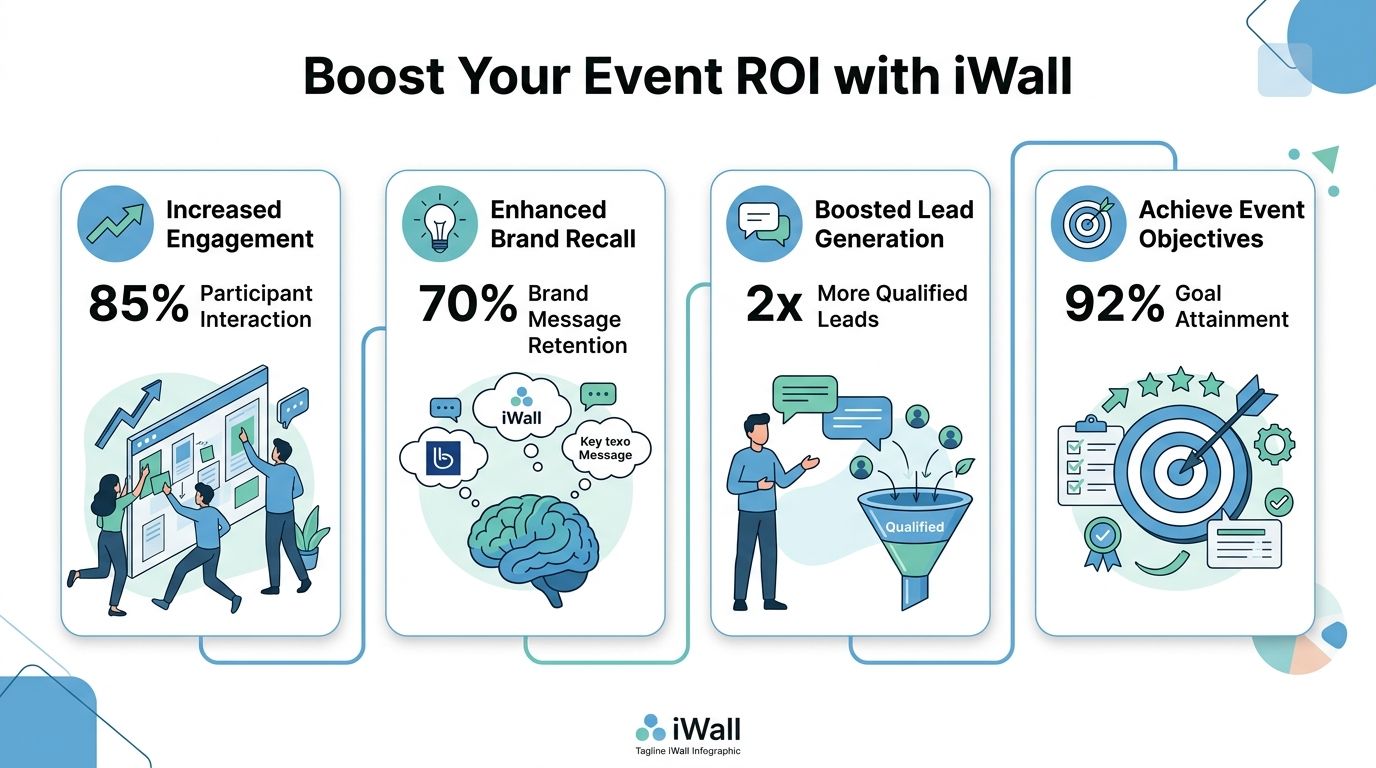
The answer is rarely just "more engagement". Return comes from a chain of practical outcomes. People notice the activity, step into the space, stay long enough for staff to speak with them, and leave with a clearer memory of the brand. If one of those steps breaks, the result weakens quickly. That is why experiential marketing ROI depends on measurable event behaviours, not just a busy-looking stand.
It turns attention into usable dwell time
An iWall earns its keep when it creates visible activity that your team can work around. Spectators watch a round, players wait for their turn, colleagues encourage each other, and staff get a natural opening to start conversations without forcing them.
That matters more than raw footfall. A fast-moving attraction can pull people in, but the commercial value comes from what happens around the play cycle. Short rounds, clear scoring, and repeat attempts give staff several clean moments to qualify interest, explain a product, or invite a scan.
It supports measurable event goals
The format suits event teams that need more than a novelty feature. Used properly, it can support traffic, dwell time, lead capture, and brand recall in the same footprint.
| Event goal | How the iWall supports it |
|---|---|
| Booth traffic | Visible movement and competition draw attention from the aisle |
| Longer dwell time | Short rounds and repeat play keep guests in the area |
| Lead capture | Staff can speak to players after a score, challenge, or leaderboard moment |
| Brand recall | The brand becomes attached to a physical, memorable activity |
The operating model matters. A queue on its own is not a result. Staff need a plan for who manages player rotation, who starts conversations, and where data capture happens so momentum is not lost between rounds.
It can justify premium floor space, if throughput matches the brief
Exhibition space is expensive, so every feature has to earn the square metres it uses. iWall is usually strongest at events where fast participation matters more than long individual sessions. That makes it a sensible choice for busy trade shows, conference break zones, and internal events with timed peaks.
There is also a total cost question that lighter guides tend to skip. The hire fee is only one part of the decision. For events outside major hubs such as London, Birmingham, or Manchester, transport mileage, crew travel, overnight stays, access restrictions, waiting time, and operator cover can change the actual cost more than the hardware specification does.
At PSW Events, we usually advise planners to judge ROI against the full delivery model, not the headline rental figure. A lower day rate can become poor value if it arrives with weak staffing, awkward build timing, or extra logistics charges that only appear late in planning.
Strong return usually comes from a simple setup. Keep gameplay easy to understand, keep rounds short, and give staff a defined point to step in.
There is a staffing angle as well. An iWall can handle a high volume of interaction without needing a large team to explain controls or reset equipment between every player. That helps contain operating costs, especially on longer show days where labour budget can drift just as fast as stand budget.
Perfect Placements Maximising Your Impact
Where an iWall works best depends less on the product itself and more on the event behaviour you need to change. The same unit can solve very different problems in an exhibition, a conference, or a team event.
Exhibitions and trade shows
At exhibitions, the challenge is usually interruption. You need something that cuts into established traffic patterns and gives people a reason to step off the aisle.
An iWall does that well when it faces outward, leaves viewing room around the play area, and sits close enough to your message that spectators can see both at once. If the game is active but your brand story is tucked away behind a wall, you've split the experience in two. That weakens the result.
A better setup turns the attraction into the front edge of the stand. Spectators watch, players rotate, and staff pick up conversations on the perimeter instead of dragging prospects in manually.
Conferences and internal events
Conferences have a different problem. People aren't usually hard to attract, but their energy drops at predictable points: registration, mid-morning transitions, post-lunch, and networking breaks.
In those moments, an iWall gives people a reason to move and interact without changing the tone of the event. It can act as an ice-breaker in a breakout zone or as a reset between content-heavy sessions. The strongest use here is usually short-form play, not a loud prize-led competition.
Brand activations and team building
For consumer-facing activations, the value is memorability. A physical, body-led experience tends to land harder than something purely passive because people feel part of it. If a campaign needs social energy, visible play helps.
For team building, the decision comes down to game selection and facilitation. Some groups respond best to head-to-head competition. Others need a more collaborative setup that gets people laughing without putting anyone on the spot.
What doesn't work is using the same game logic for every audience. Fast reflex games can be excellent for energetic crowds and a poor fit for a reflective networking audience. Matching the mode to the event matters more than choosing the flashiest option.
Branding and Game Customisation Options
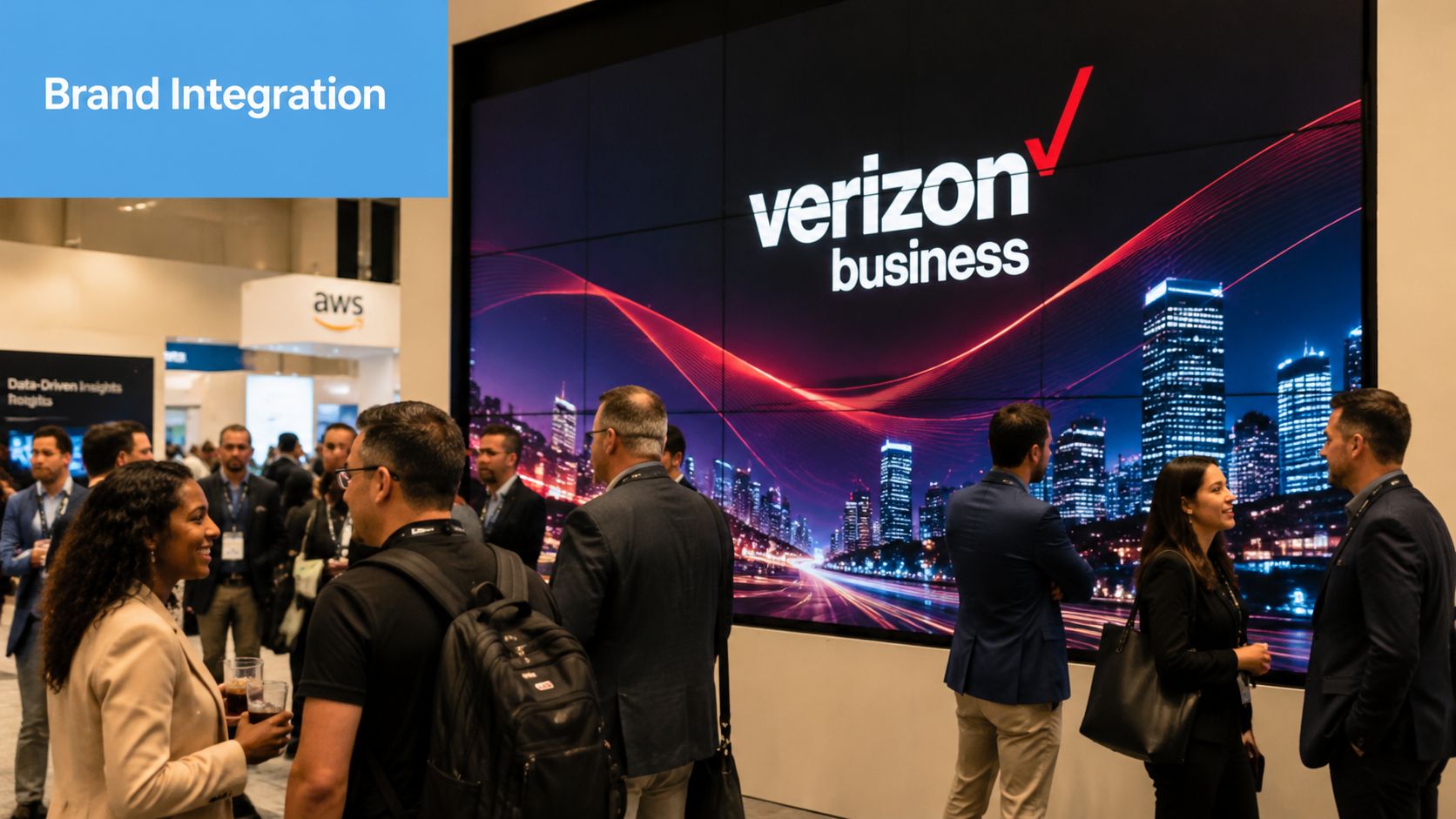
A hired attraction only feels integrated when it reflects the event identity instead of looking dropped in at the last minute. With iWall hire, that usually comes down to two layers: the physical presentation and the game environment around it.
Physical branding that feels intentional
The unit should sit comfortably inside the wider stand or event design. For corporate use, that often means branded panels, vinyl treatment, surrounding graphics, or a coordinated floor area that makes the attraction look like part of the activation rather than an extra rental.
Planners commonly draw a useful distinction. If the iWall is there mainly to increase traffic, broad visual branding may be enough. If it's central to a campaign launch or sponsored zone, the look and messaging need tighter alignment.
A few practical checks help:
- Match the event environment. Exhibition branding can be bolder than conference networking branding.
- Keep the message readable at distance. The attraction already provides movement. The surrounding branding should provide clarity.
- Plan for spectator sightlines. Branding placed only where players stand won't do much for the audience gathering around them.
Choosing games that suit the room
Game selection matters more than is commonly expected. Not every event needs maximum intensity.
A sensible way to choose is by audience behaviour:
| Audience need | Better fit |
|---|---|
| Quick crowd build | Simple, instantly understandable reaction or movement games |
| Competitive energy | Head-to-head score formats and leaderboard play |
| Inclusive networking | Lower-pressure games with easy turn-taking |
| Internal engagement | Team challenges that encourage shared participation |
The phrase “for everyone” is often used too loosely in event hire. In reality, suitability depends on how the session is run, which game is selected, and whether the operator adjusts the experience to the audience.
That's why accessibility and inclusion shouldn't be treated as a line in a brochure. They should shape the practical setup, from how rounds are introduced to how sensory load and mobility requirements are considered during planning.
Your Complete Guide to iWall Hire Logistics
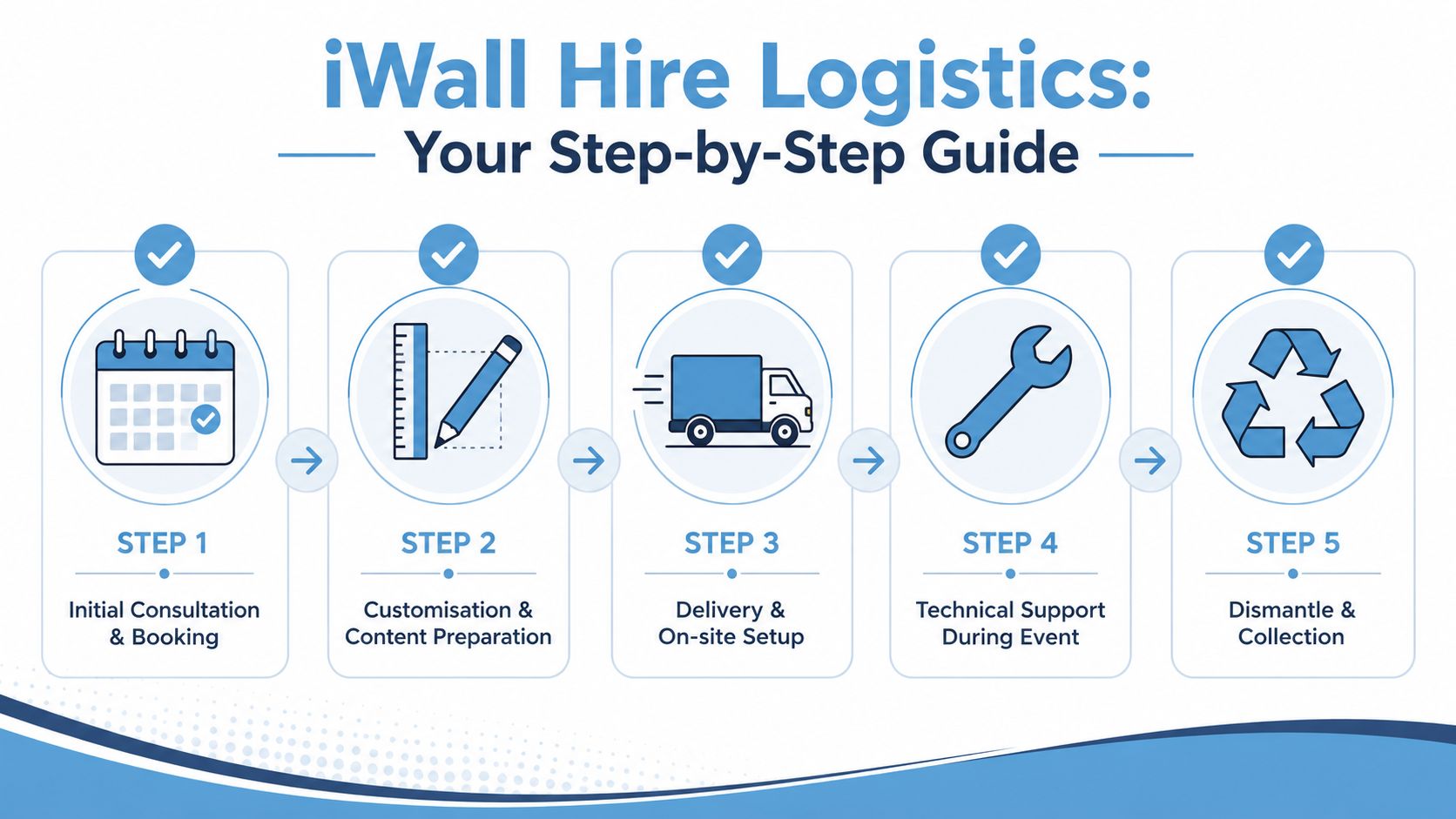
A planner signs off the creative, the games are chosen, and the venue looks ideal on paper. Then the practical questions start. How does the unit get in, where does the audience stand, who is operating it, and what happens to the budget once travel, crew time, and restricted access hours are added.
That is usually where iWall hire is won or lost.
Space and placement requirements
The manufacturer footprint guidance gives you a starting point, as noted earlier. It does not tell you how the attraction will behave in a live event hall with queues, passing traffic, nearby stands, and people stopping to watch.
In practice, planners should allow for four separate zones:
- The play area, where motion tracking needs a clear field
- The approach, so participants can enter and exit without crossing active gameplay
- The audience area, because people will gather even at business-focused events
- The safety buffer, especially where aisles, cables, pillars, or low ceilings create risk
A setup can meet the minimum technical requirement and still perform badly. I see this most often at exhibitions where the unit is pushed too close to an aisle. Tracking can be affected by people cutting through the active zone, and the experience feels cramped before the first queue even forms.
Ceiling height, lighting spill, reflective surfaces, and speaker placement also matter. None of these points are difficult to handle, but they should be checked at planning stage, not during load-in.
Hidden cost areas planners should ask about
The headline hire fee rarely reflects the full operational cost.
For London, Birmingham, Manchester, and other major event centres, delivery and staffing are often simpler to price because crew and stock are easier to position. For events in Cornwall, Cumbria, North Wales, the Scottish Highlands, or multi-stop roadshows, the primary cost shifts into transport time, accommodation, crew scheduling, and out-of-hours venue access.
That is the part many quotes leave vague.
Ask these questions before approving any iWall hire booking:
- Is delivery priced for your exact postcode and venue access conditions?
- Are setup and derig included, or charged as separate crew calls?
- Does the quote include an on-site technician for live support?
- If the event is outside a major hub, are travel and hotel costs fixed in advance?
- Do weekend, evening, or early-morning access windows change the labour cost?
- Is branding production separate from installation time on site?
- If the event overruns, what are the standby or late collection charges?
The broad market often lacks cost transparency outside London and other major cities, which is one reason planners struggle to compare like for like, as noted on this iWall market overview page.
A quote only becomes comparable when you can see the equipment, crew, travel, install time, on-site cover, and collection costs broken out clearly.
A clean operational checklist
Good logistics work is usually quiet. The unit arrives on time, access is straightforward, the operator knows the running order, and the event team is not chasing answers during build.
A practical planning sequence looks like this:
- Confirm venue access details early. Loading bay rules, goods lifts, stairs, carpet protection, and build windows all affect crew time.
- Check the floor plan against live footfall. A position that looks fine on a CAD drawing can fail once queues and spectators appear.
- Agree the operating model. Some activations need a technician throughout. Others need a trained operator plus technical backup on call.
- Lock artwork and game choices to a real deadline. Last-minute changes can affect print production, testing, and show-site timing.
- Put support responsibilities in writing. If a problem occurs, the planner should already know who is fixing it and how quickly.
- Review regional delivery costs before sign-off. This matters most for UK-wide events where mileage is only one part of the cost.
For planners booking across multiple venues or outside major city centres, this level of detail protects both budget and delivery. PSW Events offers iWall hire as part of a broader interactive event equipment service, including planning, branding, logistics, installation, staffing, and health and safety support.
Frequently Asked Questions About iWall Hire
How is iWall hire usually priced
Most suppliers structure iWall hire around the event duration, the location, the level of branding, and whether on-site support is included. A single-day exhibition booking won't be scoped in the same way as a multi-day roadshow or a longer-term installation.
The practical point is to budget for the full operational package, not just the equipment. Delivery, setup timing, crew time, and regional support can change the actual cost more than planners expect.
Is iWall suitable for inclusive team-building
It can be, but suitability depends on planning choices rather than generic claims. While many providers describe iWall as being “for everyone”, the 2024 UK Government Inclusion in Events Guidance mandates accessible options, and one practical approach is to discuss specific game choices and operational adjustments in advance to support attendees with varying mobility or sensory needs, as reflected in this accessibility-related iWall reference.
That means asking the right questions before the event:
- Who is attending and what participation barriers might exist?
- Which game formats are lower pressure and easier to adapt?
- Can rounds be moderated to reduce pace, noise, or complexity where needed?
- Will there be an operator who can guide participants supportively?
How long do setup and breakdown take
The exact timing depends on venue access, floor conditions, loading distance, and whether branding is being applied on site. What matters most is that setup isn't treated as an afterthought.
If the unit sits in a live exhibition environment, allow enough time for positioning, testing, and safe zoning before visitors enter. The same applies to breakdown. Venues often compress derig windows, so the schedule needs to be realistic from the start.
Do you always need a staff member on site
Not always. Some events use the iWall as a largely self-contained attraction, while others need a technician or event host because the unit is central to lead capture or scheduled gameplay.
The deciding factor is usually the event objective. If active audience management matters, build staffed support into the plan from the beginning.
If you're comparing iWall hire options, the strongest brief is a practical one. Share the venue, event type, audience, operating hours, branding requirements, and whether you need on-site support throughout. That's how you get a quote that reflects the actual total cost of ownership, not just the equipment line.