
You are probably looking at a floorplan, a stand build, or a conference agenda and asking the same hard question every planner asks. What will make people stop?
Most exhibition spaces are full of decent-looking stands that blur together by mid-morning. A branded backdrop, a looping screen, a bowl of sweets, a brochure rack. None of it is wrong. It just rarely gives people a reason to stay.
That is where giant scalextric hire earns its place. Done properly, it is not filler entertainment. It is a live attraction that pulls people in, gives them something to do, creates natural conversation, and gives your team time to qualify interest while the race is happening. It also cuts across job titles and age groups in a way many activations do not. People understand racing instantly. They do not need a briefing before they get involved.
The difference between a track that becomes the centre of the event and one that sits there as a novelty comes down to planning. The commercial value is in the details. Format, branding, staffing, access, quote structure, lead capture, and what you measure afterwards all matter.
Beyond the Standard Exhibition Stand An Introduction
A typical brief sounds familiar. A marketing team has paid for stand space, committed budget to design and travel, and now needs something that will create movement around the stand rather than just decorate it.
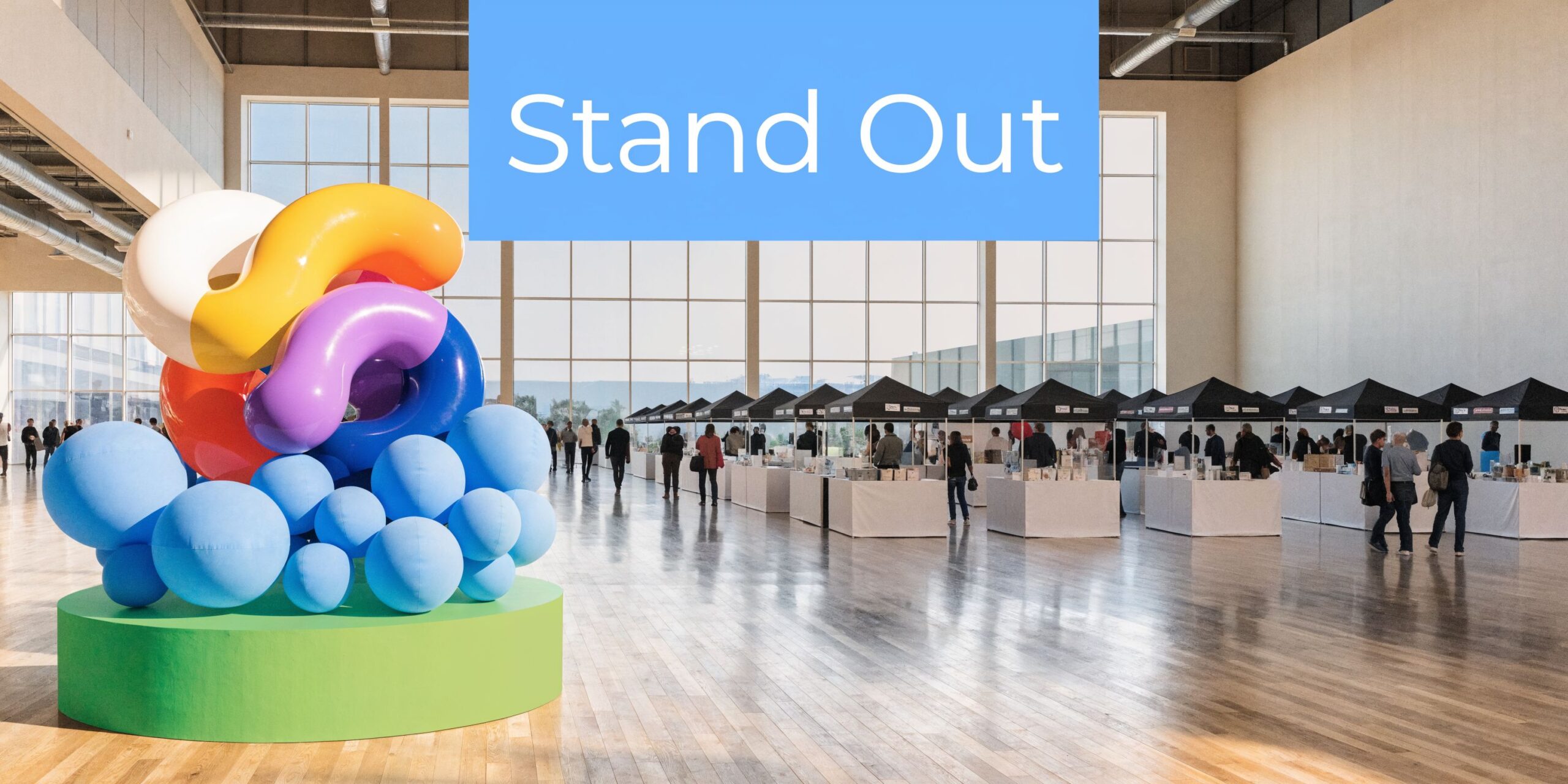
At that point, giant Scalextric usually enters the conversation for one of two reasons. Either the team wants a high-energy attraction that feels more memorable than a standard game, or they need something practical that can support dwell time, lead capture, and natural sales conversations without forcing them.
Both are valid reasons. The strongest activations do both at once.
A giant track works because it combines nostalgia with instant competition. Senior decision-makers recognise it. Junior attendees jump in without hesitation. People waiting for their turn start watching the leaderboard, commenting on lap times, and talking to the stand team. That is a much stronger operating environment than asking passing visitors if they would like a brochure.
If you are still shaping the wider event plan, a good corporate event planning checklist helps pressure-test the basics before you lock in entertainment, especially venue timings, staffing, and supplier coordination. For brands comparing formats, these interactive exhibition stand ideas are also useful for understanding where giant Scalextric fits against other live engagement options.
Practical takeaway: Giant Scalextric works best when you treat it as part attraction, part traffic driver, and part conversation starter. If you buy it only as “something fun”, you often miss the commercial upside.
Is Giant Scalextric the Right Fit for Your Audience?
Not every event needs a racing track. Some do. The right decision depends less on whether the game is fun and more on what behaviour you want from attendees.
If the aim is to pull people into a space, keep them there for long enough to talk, and give them a low-pressure way to engage with your team, giant Scalextric is often a strong fit. If the event requires quiet reflection, long-form presentations, or a highly formal tone throughout, it may be better placed in a breakout zone rather than as the central feature.
Where it works best
The strongest use cases tend to fall into a few categories.
Exhibitions and trade shows
The track creates visible activity. People stop because they hear commentary, see cars moving, or notice a queue forming. That social proof matters.Team building and internal events
Racing gives structure without forcing people into awkward participation. Teams can play casually, or you can run timed heats and a final.Client networking evenings
A track breaks the usual small-talk pattern. People start by talking about the race, then move naturally into business conversation.Product launches and brand activations
If the product story has any link to speed, precision, engineering, technology, or performance, the track becomes more than entertainment. It becomes thematic.Private functions with a mixed guest list
This format tends to bridge age groups well. Guests do not need prior experience to enjoy it.
Where it can struggle
There are cases where giant scalextric hire is not the cleanest answer.
| Event type | Fit | Why |
|---|---|---|
| Formal awards dinner | Conditional | Better as a pre-dinner or reception attraction than during speeches |
| Quiet conference foyer | Conditional | Works if sound and crowd flow are managed carefully |
| Compact venue with tight circulation | Weak | Spectators and queueing can block movement if space is limited |
| Highly regulated or delicate environments | Conditional | Extra care needed around access, approvals, and floorplan layout |
A poor fit is usually not about the audience disliking the activity. It is usually about traffic flow, event tone, or operational pressure.
The audience test I use
Before approving a racing activation, I ask three practical questions.
Will attendees understand it immediately?
Giant Scalextric scores well because the format is obvious. Pick a controller up, race, watch the board.Does it create the right kind of energy?
Some clients want buzz. Others want calm, focused conversation. Racing gives movement, noise, reaction, and repeat participation.Can your team use the interaction commercially?
If the stand team can greet racers, capture details, and follow up afterwards, the track becomes useful beyond the event itself.
For brands considering track-based activations specifically, this overview of slot car racing is a helpful reference point for how the format is typically positioned at live events.
Use giant Scalextric when you want people to gather, compete, watch, and talk. If your event objective depends on passive attendance, it is probably the wrong centrepiece.
Decoding the Costs and What to Expect in a Quote
The pricing question is where most planners lose time. Many suppliers ask you to enquire, then send back a figure with very little breakdown. That makes comparison difficult and budgeting harder than it needs to be.
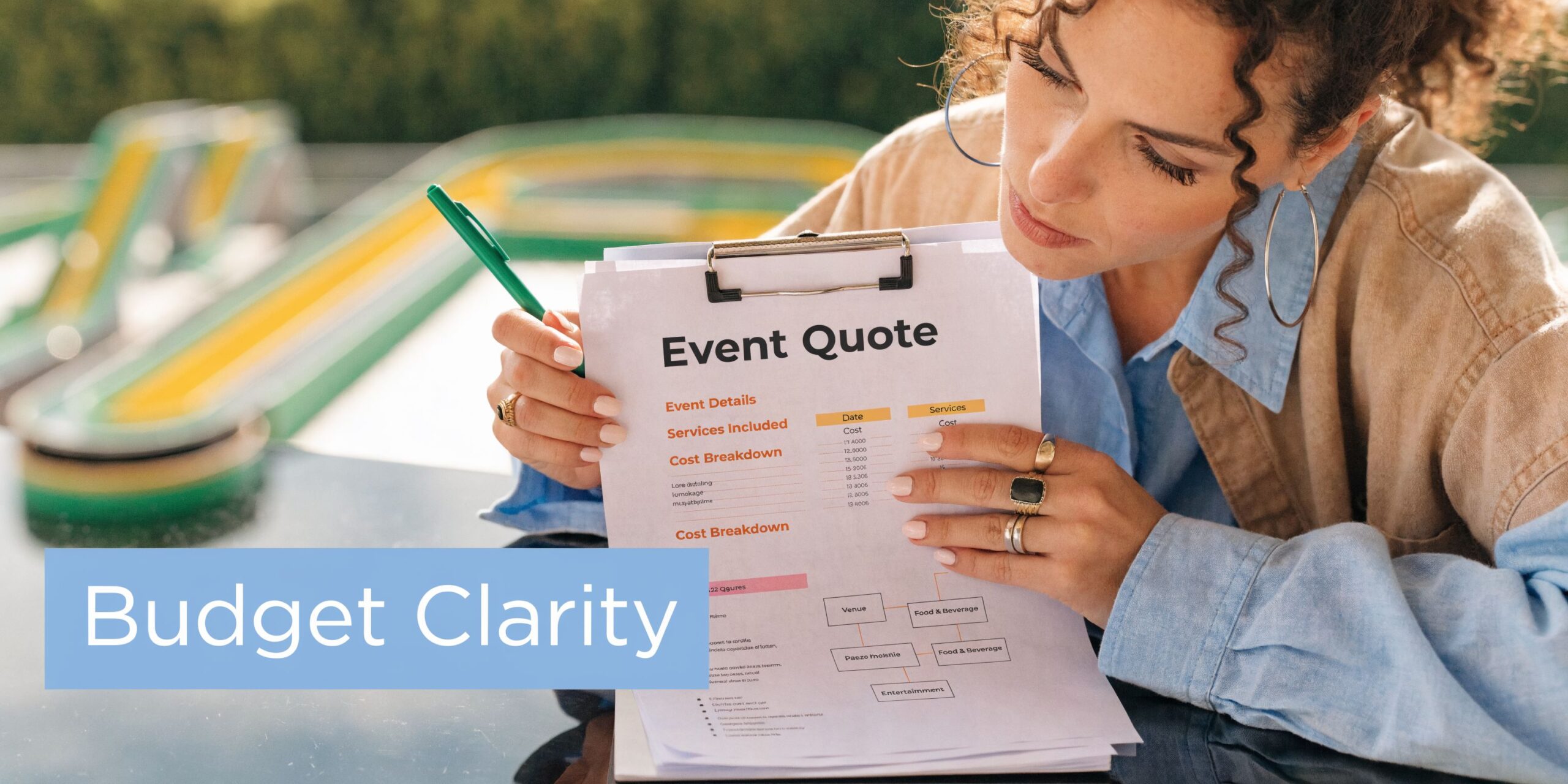
Public pricing detail in this category is limited, but industry norms for corporate events suggest average costs between £500 and £1,500 per day, while interactive entertainment at major UK venues averages £800 to £2,000 per attraction, according to the pricing discussion referenced by Pro Slot Racing. That range is wide because the quote is rarely just about the track.
What changes the price
A proper quote should reflect operational variables behind the hire.
Track size and format
A simple setup and a large-format racing experience are not the same product. More lanes, more hardware, and more competition management increase the cost.
A basic requirement from the client side is to decide whether the attraction is mainly for casual play or for a structured competition. That single decision affects staffing, scoring, branding, and event flow.
Hire duration
A short evening hire, a conference day, and a multi-day exhibition have different labour and logistics demands. Even when the equipment is the same, the delivery schedule, operating hours, and breakdown plan change the quote.
Branding
This is one of the biggest cost swings and one of the least clearly explained items in many proposals.
Branding can include track surrounds, printed backdrops, branded race graphics, leaderboard visuals, and car customisation. If branding is important to your campaign, ask to see exactly what is included, not just a line item labelled “branding package”.
Staffing
Do not assume staffing is included. Some quotes cover delivery only. Others include setup and collection, but not live operation. The best event outcomes usually involve active supervision because someone needs to manage driver rotation, explain controls, keep the event moving, and maintain energy around the track.
Travel and venue logistics
Mileage, parking, congestion charges, loading restrictions, overnight storage, early access requirements, and out-of-hours venue rules can all affect the final figure.
These costs are not inflated extras. They are often the difference between a smooth event and a stressed setup crew trying to solve problems on the day.
What a good quote should include
Use this checklist when reviewing giant scalextric hire proposals.
Equipment detail
State the track format clearly, plus any scoring system, leaderboards, barriers, or display elements included.Delivery and collection
The quote should spell out whether both are included and whether timing restrictions affect the price.Installation and derig
This should not be vague. Ask who is responsible for setup, testing, and pack-down.Staffing during the event
Confirm whether operators stay on-site and what they do.Insurance and compliance
You want written confirmation that the supplier carries the required cover and provides event paperwork where needed.Branding scope
Ask for visuals or a written list. “Branded” can mean anything from a simple logo panel to a fully integrated race presentation.
How to compare quotes properly
Do not compare the headline number first. Compare the operating model.
A lower quote may exclude staffing, branding, or event management. A higher quote may include everything needed to run the attraction properly. The cheapest supplier is often the one that leaves the organiser holding the most risk.
A clean quote should answer these questions in plain language.
| Question | Why it matters |
|---|---|
| What exactly is being delivered? | Prevents assumptions on track size and spec |
| Who manages setup and testing? | Reduces day-of-event confusion |
| Is the attraction staffed live? | Affects queue flow and guest experience |
| What branding is included? | Determines whether the attraction supports the campaign |
| Are travel and venue charges included? | Stops late budget surprises |
One factual point worth keeping in mind is that detailed cost breakdowns are rarely provided publicly in this market. That is one reason planners often struggle to budget giant scalextric hire accurately.
Nailing the Logistics Venue Access and Setup
Most event problems with giant Scalextric do not start at the track. They start with the venue.

The key operational fact is straightforward. A standard 8-lane track requires a minimum operational area of 6m x 3m and 50W of power from a domestic plug, and 25% of event setups face delays due to inadequate space planning, including discovering there is no 6ft x 5ft lift for upper floors, as noted by Rodeo Bull Hire.
That single point explains why some hires run smoothly and others become difficult before the first car even leaves the start line.
Start with the venue survey
The venue survey should happen before sign-off, not after deposit.
I want answers to practical questions, not general reassurance. “Yes, it should fit” is not useful. I need measurements, loading details, access timings, floor level, and confirmation of whether the route from loading bay to event space includes ramps, lifts, narrow turns, or stairs.
Use a checklist covering the route, not just the final footprint.
Track area
Confirm the usable event space, not the empty floor space before furniture, staging, and barriers are added.Access path
Measure doors, corridors, loading routes, and lift size. Upper-floor venues are where assumptions usually fail.Power location
A domestic plug requirement is simple, but the plug still needs to be in the right place and available to you.Venue restrictions
Ask about build windows, noise limits, carpet protection, and who signs off supplier access.
What good setup planning looks like
A smooth install usually follows a predictable sequence.
Pre-event paperwork
The supplier should provide risk assessments, electrical testing documentation where required, and insurance details here. The event team should match those documents against venue requirements early.
Delivery slot confirmation
Book a delivery window that gives enough time for unloading, transit to hall, assembly, testing, and contingency. Tight build windows create pressure quickly, especially at large exhibition venues.
On-site assembly
Modular tracks are built on site. That is a benefit because they can work in a wide range of indoor spaces, but it still requires clear floor access and room to work safely during installation.
Test run
No track should open to guests without a live test. Cars, controllers, scoring, displays, and race flow all need checking under event conditions.
Tip: Ask the venue for photos of the full delivery route, not just the event room. A beautiful event hall is no help if the service lift is too small or unavailable during build time.
The access mistakes that cause trouble
Most setup failures are avoidable. They usually come from assumptions.
A common one is focusing only on the final room dimensions. The room may be suitable, but the loading path is not. Another is forgetting what else shares the space. A track that technically fits can still feel cramped once registration desks, catering points, and guest circulation are added.
The third mistake is leaving responsibility unclear. If the organiser assumes the venue has approved everything, and the venue assumes the supplier has already checked, nobody owns the detail.
A practical venue checklist
If you want a short version to send to a venue manager, use this.
| Check | What to ask |
|---|---|
| Footprint | What is the usable clear floor area once all other event items are in place? |
| Access | Are there stairs only, or is there lift access for equipment? |
| Loading | Where can the vehicle unload, and at what times? |
| Power | Is a domestic power source available close to the operating position? |
| Build window | When can the supplier start setup, and when must they be clear? |
What I would not leave until event week
Three things should never be unresolved a few days before the event.
First, final placement on the floorplan. Second, the approved access route. Third, the named venue contact on the day.
If those points are loose, the event team spends build-up solving operational issues that should already have been settled.
For example, PSW Events handles planning, delivery, installation, on-site staffing, and health and safety compliance for interactive attractions including giant Scalextric. That kind of turnkey support matters most when the venue has tight access rules or the activation is part of a larger production.
Designing a High-Impact Race Day Experience
A track on its own is not the experience. The race format is the experience.
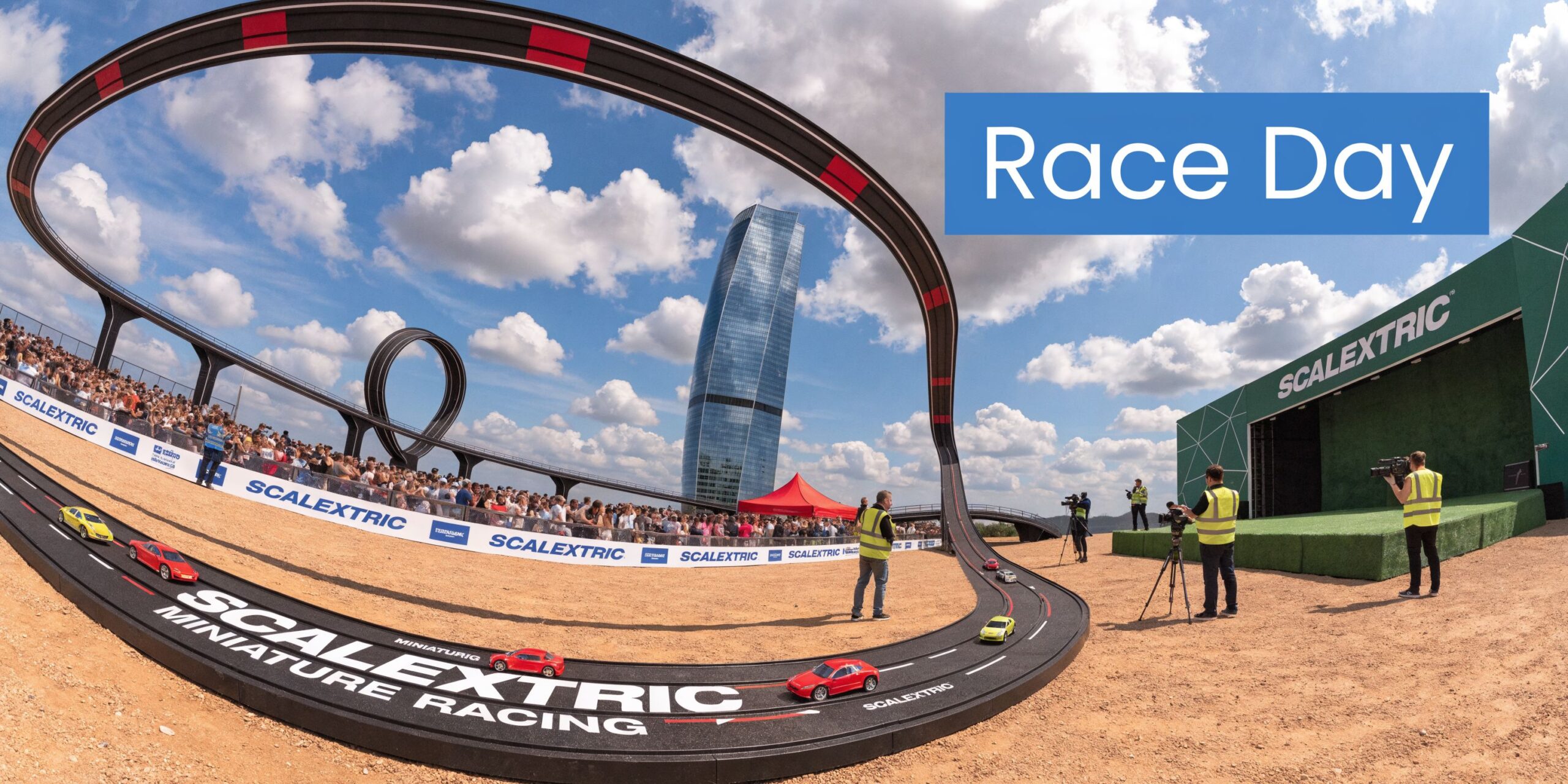
The strongest setups use 8-lane tracks with computerised scoring and structured competition formats such as 8 qualifying heats per participant, with the top 8 drivers advancing to a final, according to the giant track format outlined at giantscalextrichire.co.uk. The same reference notes provider standards that include £10 million public liability insurance. That tells you two things. Serious suppliers think in terms of event delivery, not just equipment, and the best race formats are built to keep people involved over time rather than giving them one quick go and moving on.
Casual play versus organised competition
Casual play has its place. It is easy to understand and easy to run.
But if the attraction is important to the event, structured competition usually performs better. It gives people a reason to come back, encourages spectators to stay longer, and creates a natural climax when the final begins.
A simple competition flow works well:
Qualifying rounds
Guests get their first race and post a time or points result.Leaderboard tracking
Visible rankings create interest for people not currently driving.Final round
A scheduled final gives the activation a peak moment and rewards repeat engagement.
The role of the Race Director
This is often overlooked. A staffed track feels alive. An unstaffed track feels like equipment.
A good operator or Race Director does more than hand out controllers. They keep rounds moving, explain the rules quickly, call out leader changes, manage the queue, and maintain pace when the event floor gets busy. Live commentary also helps nearby attendees understand immediately that something is happening.
Branding that matters
Branding should support the race, not just sit around it.
The strongest applications usually include some combination of:
Track surround branding
Keeps the attraction visually tied to the stand or campaign.Leaderboard graphics
Sponsor identity often lands best here because everyone watches it.Backdrops and winner photos
Useful for social content and post-race sharing.Branded cars or race naming
Best used when it fits the campaign story rather than as a bolt-on detail.
The mistake is branding only the edges and forgetting the guest journey. The participant should feel your brand at registration, during the race, on the leaderboard, and in the follow-up.
Practical rule: If someone sends a winner photo to a colleague, your branding should already be in the frame without looking forced.
Keep the energy up all day
Race day momentum drops when sessions feel repetitive or too slow. To avoid that, vary the rhythm.
Run open qualifying during busy periods. Schedule a final at a fixed time. Let the stand team invite key prospects to challenge the current leader. Use commentary to call out close races and fast laps.
That turns the attraction from a static game into a live programme. People begin asking when the next race is, not just whether they can have a turn.
From Fun to Footfall How to Measure Event ROI
The commercial question is simple. Did the giant scalextric hire help the event team produce results that matter?
If you do not decide that in advance, you usually end up with a vague conclusion that “people enjoyed it”. Enjoyment matters, but it is not enough for a marketing report.
Start with one primary objective
Teams should pick one main objective and one supporting objective.
A common pairing looks like this:
| Primary objective | Supporting objective |
|---|---|
| Lead capture | Dwell time |
| Footfall to a stand zone | Brand visibility |
| Client entertainment | Relationship building |
| Internal engagement | Team interaction |
This is important as the operating model changes. If lead capture is the priority, entry to the competition should require badge scanning or a simple registration step. If relationship building matters more, the team may choose lower-friction participation and focus on conversation quality instead.
Lead capture that feels natural
The best lead capture method is one that fits the race format.
A few practical options work well:
Fastest lap entry
Guests register to post a time and appear on the leaderboard.Scheduled final qualification
Contact details are taken so finalists can be called back later.Prize draw for racers
A simple post-race entry route works if the stand already has high traffic.Hosted challenge sessions
Sales staff invite selected prospects into mini-competitions, then continue the conversation afterwards.
The key is that the data capture should feel like part of the event, not an interruption bolted onto it.
What to measure on the day
If the attraction is being used for marketing, the team should track event performance live, not rely on memory afterwards.
Useful measures include:
- How many people stopped to watch
- How many raced
- How long people stayed in the activation area
- How many qualified leads were captured
- How many follow-up conversations were booked
- What content was created from leaderboard moments, winner photos, or live clips
For teams planning broader branded engagement, these experiential marketing activations show how interactive attractions are often integrated into measurable campaign activity rather than treated as standalone entertainment.
The post-event piece many teams miss
The leaderboard is not just for the event floor. It is follow-up material.
A shortlist of finalists, winner announcements, challenge results, or fastest-lap recaps can all support post-event communication. The sales team can reconnect with strong prospects by referencing the interaction they had, rather than sending a generic “great to meet you” message.
Best practice: Decide before the event who owns the data, who follows up, and what message they will send. If nobody owns the next step, good event engagement disappears quickly.
Your Giant Scalextric Hire Questions Answered
These are the questions planners usually ask once the idea moves from concept to booking.
How much insurance should a supplier carry
For corporate venues and public-facing events, insurance should not be an afterthought. You want a supplier that can confirm suitable cover in writing and provide supporting documentation when the venue requests it.
Ask for insurance confirmation early. Do not leave it until production week when approvals are already under pressure.
Can giant Scalextric be used outdoors
It can be used in outdoor environments in some cases, but outdoor use is never the default assumption. Surface conditions, weather exposure, power routing, and guest management all become more complicated outside.
If the event is outdoors, confirm this at enquiry stage. The supplier needs to assess whether the setting is appropriate and what additional protection or infrastructure may be required.
What happens if there is a technical problem on the day
Supplier support matters here. A live attraction needs active supervision, troubleshooting capability, and a clear process for keeping the event running if equipment needs adjustment.
Ask specifically whether the track is staffed for the duration and who handles technical issues on site. If the answer is unclear, keep asking.
How far in advance should I book
The honest answer depends on event timing, branding requirements, and venue complexity.
If you need custom branding, supplier paperwork, coordination with a stand builder, or a major exhibition venue sign-off, earlier is better. Last-minute bookings can work, but your options narrow quickly when logistics and branding both need approval.
What should I send a supplier before asking for a quote
The better your brief, the better the quote.
Include these points:
- Event type and date
- Venue location
- Ground floor or upper floor access
- Approximate operating times
- Whether branding is needed
- Whether the attraction is for casual use or competition
- Whether lead capture is part of the plan
That allows the supplier to quote the specific job rather than a rough placeholder.
Is giant Scalextric suitable for serious business events
Yes, if the execution matches the setting.
The attraction works at conferences, exhibitions, networking receptions, launches, and internal events because it gives people a structured reason to engage. The professionalism comes from the delivery, not from stripping the fun out of it.
What separates a good hire from a disappointing one
Usually the difference is not the track. It is the planning around it.
A good hire has a clear floor position, proper access checks, a race format that suits the event, active staffing, and a simple way to connect the attraction to your commercial objective. A poor hire is often just a game placed in a corner with no flow, no ownership, and no follow-up.
A well-run giant scalextric hire gives you more than a busy stand. It gives people a reason to stop, stay, compete, talk, and remember who they met. That is why it keeps earning its place at exhibitions, conferences, launches, and private events across the UK.