
You’re likely weighing the same question most marketing managers ask before signing off an experiential budget. Will this attraction pull people in, or will it become an expensive photo prop that people glance at and walk past?
That’s the right question to ask about f1 simulators.
At a busy exhibition, conference or brand activation, attention is scarce. Stands compete on screens, freebies, coffee bars and noise. An F1 simulator changes the energy when it’s planned properly. It gives people a reason to stop, a reason to stay, and a reason to talk to your team while they’re waiting, watching or comparing lap times. The value isn’t just that it looks impressive. The value is that it creates a measurable interaction around your brand.
The mistake I see most often is treating simulator hire as entertainment first and marketing second. In practice, the order should be reversed. The event objective comes first. The simulator should then be configured to support that objective, whether that means lead capture, longer dwell time, stronger brand recall, team engagement or social content.
Driving Engagement in the Experience Economy
Walk through a typical trade show hall and the pattern is familiar. Branded walls. A looped promo video. A counter with brochures no one asked for. Staff standing ready, but not many reasons for attendees to stop.
Then you hear a car launch off the line, see a small crowd forming, and notice people watching a leaderboard.
That’s where f1 simulators work differently. They don’t ask attendees to passively consume a message. They invite people to take part in it. That shift matters because active participation gives your team more time to start a real conversation.
From static stand to live attraction
At venues such as ExCeL London, Silverstone or Wembley, the most effective activations usually have one thing in common. They create movement around the stand. A simulator does that by giving visitors a clear action. Sit down, drive, compete, watch, share.
The wider market direction supports that demand. The racing simulator market, which includes F1 simulators, reached a global valuation of USD 1.8 billion in 2023 and is projected to reach USD 2.5 billion by 2032, according to Global Market Insights on the racing simulator market. For corporate events, that matters less as a headline number and more as a signal that brands, venues and suppliers are investing in higher-quality, more immersive formats.
A good activation doesn’t feel like a game dropped into a stand. It feels integrated with the campaign. Brand the car bodywork. Put the client’s visual identity onto the leaderboard. Let waiting guests watch the live lap feed on a screen. Build a small competition around the experience. Tie the result to a product message, a prize draw or a sales conversation.
That’s where experiential planning matters more than hardware alone. If your objective is footfall, the simulator needs visibility and queue management. If your objective is lead generation, the pre-race registration and post-race follow-up need to be built into the activation. If your objective is broader brand impact, the whole experience should sit inside a wider experiential marketing activation strategy.
A simulator earns its keep when it becomes the reason people engage with your team, not just the reason they take a photo.
Why the format works in the UK market
The UK is a natural fit for this category. There’s strong motorsport recognition, a large exhibition circuit and a corporate audience that responds well to live competition formats.
That doesn’t mean every event needs a full Formula-style centrepiece. Some do. Others need a compact rig that fits into a tighter footprint and keeps throughput moving. The strategic point is the same in both cases. The simulator isn’t there to decorate the space. It’s there to turn attention into interaction.
What Makes a Professional F1 Simulator Tick
There’s a big difference between a professional F1 simulator and an arcade racing seat. From the outside, both may look similar to a non-specialist. At event level, the difference shows up in guest reaction almost immediately.
A basic setup gives people a quick novelty. A professional rig gives them a convincing driving experience. That distinction affects queue appeal, repeat attempts, social sharing and how credible the whole activation feels.
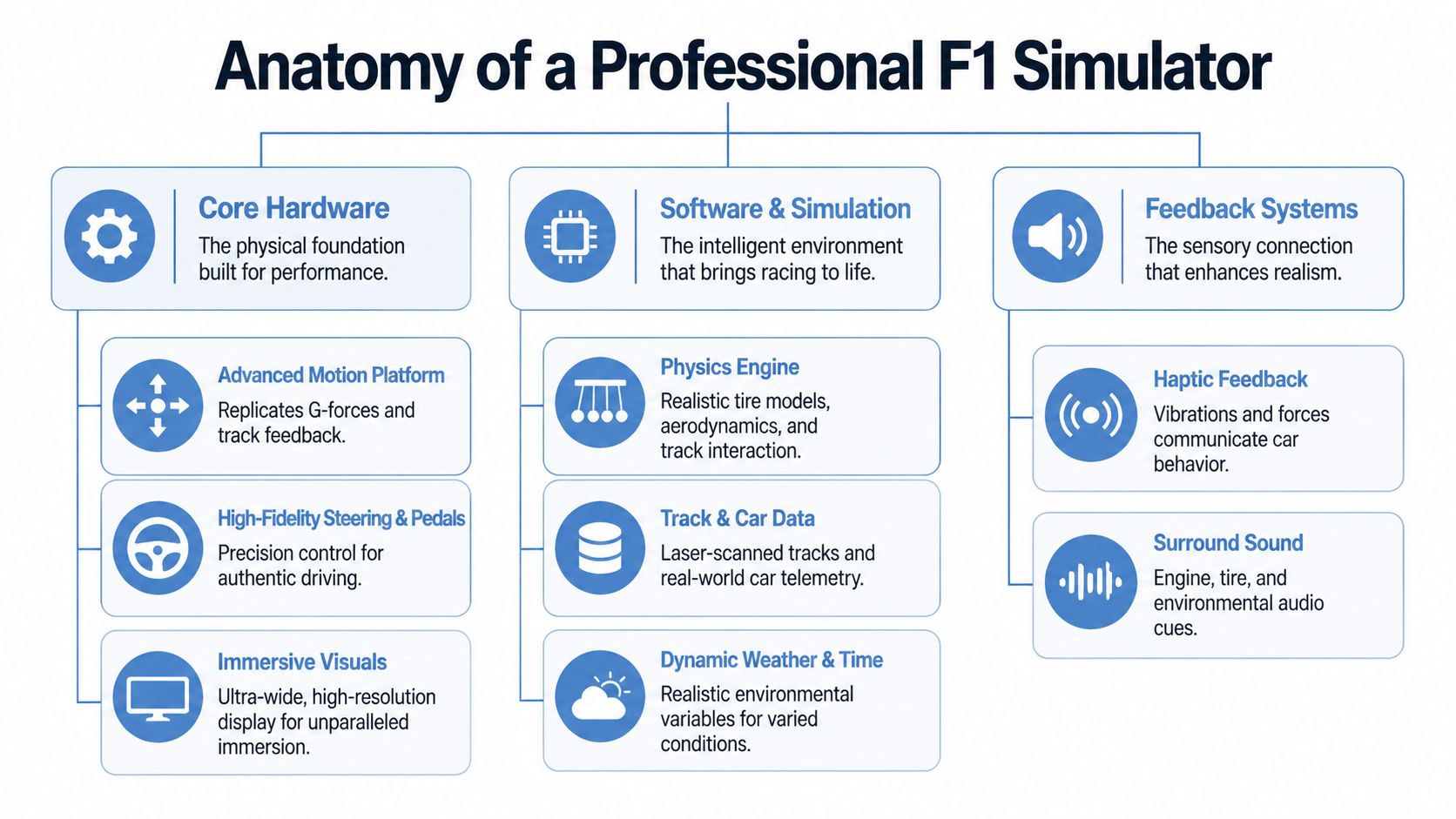
To make that easier to visualise, the core system looks like this:
Hardware that people can feel
Most guests won’t ask what wheelbase is fitted or how the pedals are calibrated. They will notice if the steering feels vague, the brakes feel toy-like, or the seating position breaks the illusion.
Top-tier F1 simulators use Leo Bodnar Simsteering 2 FFB systems with hydraulic pedals calibrated to 150kg of pressure, matching real F1 brake forces, as noted in Retail Focus coverage of top F1 simulator hardware. That level of resistance and feedback is one of the reasons professional drivers report muscle memory transfer between sim and real car. For a corporate audience, that translates into something simpler but important. The experience feels real enough to be memorable.
The components that matter most
When I assess a rig for event use, I’m usually looking at five practical elements.
- Steering feedback: Direct-drive force feedback is what gives the wheel weight, detail and responsiveness. Cheap systems feel light and disconnected. Strong force feedback makes understeer, kerb strikes and traction changes more believable.
- Pedal realism: Brake feel changes behaviour. If the pedal is too soft, guests can stab at it with no discipline. A hydraulic system creates a more committed input, which makes the challenge feel serious rather than casual.
- Cockpit design: A Formula-style seating position helps with immersion, but it also changes access. It looks fantastic, though it isn’t always the fastest option for high-throughput exhibitions.
- Display setup: Wide, high-quality visuals help spectators as much as drivers. If the screen presentation is poor, the crowd loses interest even if the simulator itself is strong.
- Motion platform: Motion can enhance the experience, but only when matched to the audience and event format. It adds drama and realism. It also adds operational considerations.
What works and what doesn’t
Motion is one of the most misunderstood parts of simulator hire. Buyers often assume more movement always means a better event. It doesn’t.
For some product launches or fan-zone moments, a motion rig is exactly right. It turns the simulator into a centrepiece and gives onlookers something dynamic to watch. For a packed trade stand with constant turnover, too much complexity can slow the line, increase reset time and reduce total guest participation.
Practical rule: Choose the rig that fits the event flow, not the one with the longest specification sheet.
That same logic applies to cockpit authenticity. A full-size Formula car shell is visually powerful. It’s excellent when the attraction itself is part of the brand statement. But if your real aim is to process more people through a competition while collecting data cleanly, a more accessible professional rig may outperform it operationally.
Software and feedback do the unseen work
Guests feel the hardware first, but software decides whether the whole experience hangs together. Physics modelling, track choice, session length, reset behaviour and driver aids all affect usability.
Event planning for simulators contrasts with enthusiast sim racing. At an event, the best setup isn’t the hardest or most “pure”. The best setup is the one that lets a first-time guest get into the experience quickly while still feeling challenged. If people spin every lap and leave frustrated, the activation underperforms.
The strongest event setups balance authenticity with accessibility. They preserve the sensation of driving an F1-style machine while removing just enough friction to keep guests engaged and competitive.
Event Use-Cases for F1 Simulators
An F1 simulator can do very different jobs depending on the event. The mistake is booking one because it sounds exciting, then trying to work out later what it was supposed to achieve.
The better approach is to start with the business objective and build the use-case from there.
Exhibitions and trade shows
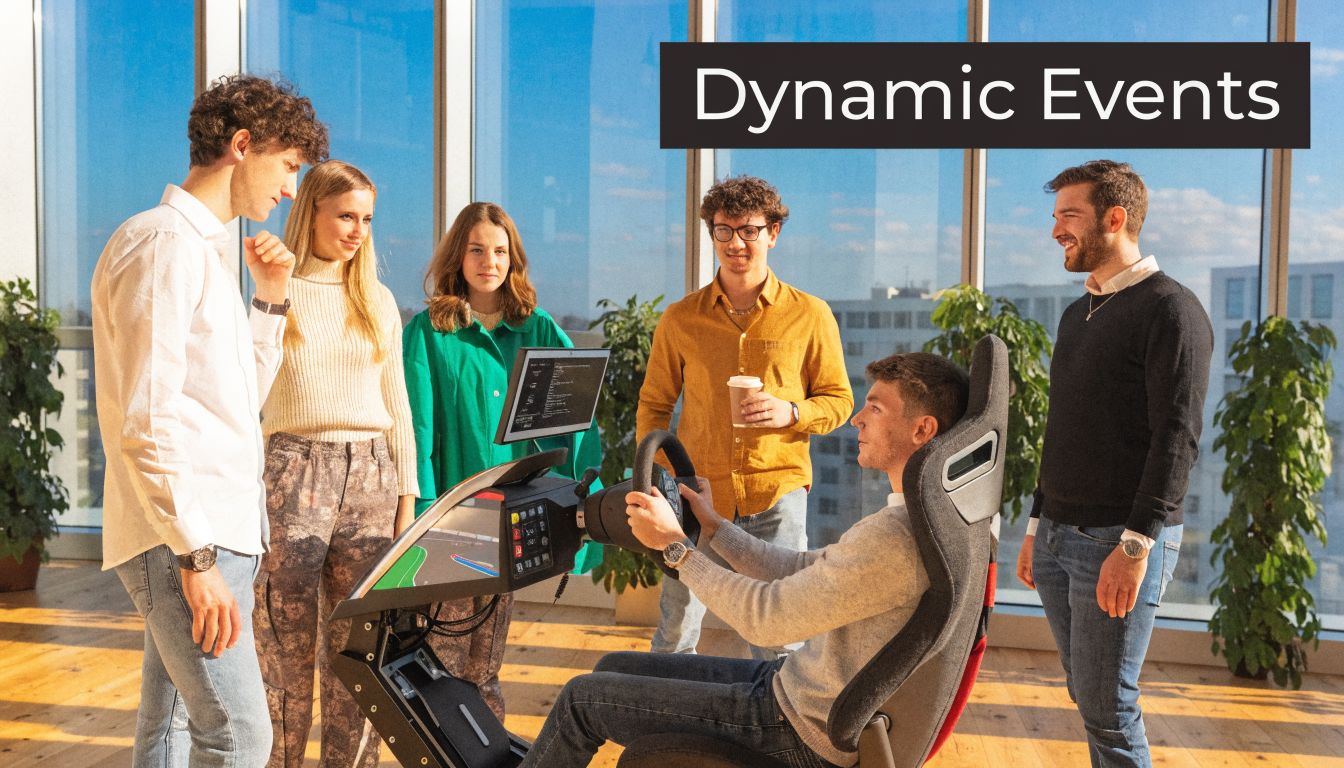
At exhibitions, f1 simulators are strongest when they operate as live lead magnets. They stop foot traffic, create a visible queue and give your team a natural opening line that doesn’t feel forced.
A well-run exhibition activation usually includes:
- A visible competition mechanic: Fastest lap, daily winner, or beat-the-time challenge.
- A branded results flow: Names on screen, leaderboard visibility and a reason for spectators to stay.
- A data capture point: Registration before the drive, or result delivery afterwards.
- Staff prompts: People need guidance into the queue, into the seat and into the next conversation.
This format suits brands that need warmer first contact. Rather than asking someone to hear a pitch cold, you invite them into an experience and continue the conversation while interest is already high.
Product launches and brand activations
For launches, the simulator often becomes the centrepiece. That’s especially effective when the product has any connection to performance, engineering, speed, precision or innovation.
The simulator works well here because it compresses those qualities into one clear physical interaction. Guests don’t just hear that your brand is dynamic or technically advanced. They experience something that supports the message.
What doesn’t work is bolting on generic branding at the last minute. If the activation is meant to reinforce a campaign, the visual treatment, trackside graphics, host scripting and results screens all need to feel intentional.
Team building and internal events
The format becomes more flexible. A simulator can support head-to-head competition, relay-style challenges, timed tournaments or mixed-format activity zones.
For teams that want something more structured than casual entertainment, motorsport mechanics help. Qualifying rounds, live finals and leaderboards create momentum. They also give quieter delegates a clear role, whether they’re driving, spectating or discussing strategy.
If you’re planning a wider staff event, some of the strongest ideas sit inside broader effective team building strategies rather than relying on one activity alone. A simulator often works best when it’s part of a mix that includes social interaction, shared goals and varied participation styles. For companies looking at a more complete staff engagement day, this usually fits within a wider corporate team building event.
Don’t judge team-building success by who set the fastest lap. Judge it by how many people stayed involved after their own turn ended.
Fan zones, hospitality and office events
In hospitality spaces, fan zones and office roadshows, the simulator does a different job. It gives people a high-recognition attraction that doesn’t need much explanation. Motorsport fans want to try it. Non-fans still understand the challenge immediately.
That makes it useful for broad audiences. You can run it as a premium one-to-one experience, a casual drop-in attraction or a branded competition. The right choice depends on whether the event prioritises exclusivity, throughput or atmosphere.
How to Choose and Book the Right F1 Simulator
Choosing a simulator isn’t mainly about picking the most advanced rig. It’s about choosing the setup that matches your audience, venue and objective with the fewest operational compromises.
The easiest way to get this wrong is to shop by appearance alone. The most photogenic unit isn’t always the best one for a long exhibition day, a compact conference floor or a mixed audience with varying confidence levels.
Start with the event outcome
Before comparing models, answer one question clearly. What does success look like?
If success means attracting attention from across the hall, the visual footprint matters. If success means processing a steady stream of prospects, seat access and reset speed matter more. If success means a premium hospitality moment, realism and presentation carry more weight than throughput.
I usually reduce the choice to a few practical categories:
- Full Formula car shell: Strong visual impact. Best when the simulator itself is the headline attraction.
- Professional open rig: Easier to access, easier to run, often better for high-volume events.
- Motion setup: Adds spectacle and realism, but needs more planning around guest flow and comfort.
- Static setup: Simpler operationally, often the better choice where speed and consistency matter.
Match the rig to the audience
At this point, many bookings improve or fall apart.
A motorsport-savvy audience may want stronger realism and less assistance. A broad corporate audience usually needs a setup that feels impressive without becoming intimidating. For family days or public activations, accessibility becomes even more important.
A few useful filters help:
- Experience level: Are guests likely to be confident drivers, total novices, or a mix?
- Demographic spread: Are you planning for senior executives, exhibition visitors, mixed-age guests or staff teams?
- Time per participant: Shorter sessions need a fast learning curve.
- Queue tolerance: Some audiences will happily wait. Others won’t.
Branding options that actually add value
Branding is one of the biggest advantages of hiring professional f1 simulators for events. Done properly, it turns the activity from generic entertainment into a campaign asset.
The options typically include branded liveries, trackside digital graphics, intro screens, leaderboard overlays and event signage. In some formats, the simulator bodywork itself can carry campaign visuals.
The important point is relevance. Branding should support recognition and recall, not clutter the experience.
If every surface is shouting, none of it lands. The strongest branded simulators keep the driving experience clear and the campaign message visible.
Booking questions to ask suppliers
You don’t need to become a technical buyer. You do need to ask practical questions that reveal whether the setup will work in your environment.
Here’s a useful planning checklist.
| Consideration | Key Question | Why It Matters |
|---|---|---|
| Event objective | What outcome is the simulator meant to support | This decides whether you need spectacle, throughput, data capture or premium presentation |
| Audience profile | Who will be using it and how confident are they likely to be | The right difficulty and access level depend on guest type |
| Rig format | Is a full shell, open rig, motion setup or static unit the best fit | Different formats solve different event problems |
| Venue footprint | How much floor space is realistically available | A simulator that looks right on paper can overwhelm a stand in practice |
| Access and build | How will it get into the venue and onto the stand | Load-in routes, lifts and timing affect what can be installed |
| Power requirements | What power supply does the unit need on site | This needs confirming early with the venue or production team |
| Branding | What can be customised physically and digitally | Branding determines whether the experience feels campaign-led |
| Throughput | How many guests do you want to put through the attraction | Session design and staffing need to support the target flow |
| Leaderboard integration | Do you want timed competition and live ranking | Competitive formats usually increase spectator interest |
| Staffing | Will trained operators be supplied on site | Good staffing protects safety and keeps the queue moving |
| Data capture | How will names, scores or contacts be collected | This links the experience to ROI rather than just entertainment |
| Insurance and H&S | What documentation is included with the hire | Venues often require these before sign-off |
If you’re comparing suppliers, ask to discuss the rig in the context of your event rather than as a standalone product. A provider offering simulator hire for events should be able to talk through branding, staffing, logistics and guest flow, not just hardware.
What a good brief looks like
The strongest client briefs are short and specific. Include the venue, date, audience type, target outcome, likely guest volume, branding needs and whether you want a competition mechanic.
That gives the supplier enough to recommend the right format. Without that context, you’ll tend to get a generic proposal, and generic proposals usually lead to average event performance.
The Complete Hire Process Logistics and Compliance
Most problems with simulator hire don’t start on event day. They start earlier, when logistics, staffing and compliance are treated as admin rather than part of the experience design.
A simulator can be visually striking and technically impressive, but if the install is awkward, the queue is unmanaged or the seating setup causes fatigue across a long activation, the quality drops quickly.
What the hire process should include
A proper hire process is usually straightforward when it’s handled early and in the right order.
Scoping the event requirements
The supplier needs venue details, timings, audience type, access constraints and branding requirements.Confirming the right rig and format
In this step, throughput, accessibility, and visual impact are balanced.Planning delivery and installation
Load-in timing, venue rules and stand readiness all affect setup.On-site operation
Staff manage guest flow, explain the experience, troubleshoot and keep the attraction moving.De-rig and collection
Breakdown needs to fit the venue schedule and protect surrounding production.
That may sound routine, but it’s exactly where event outcomes are protected. Good on-site operators don’t just supervise the simulator. They shape the guest journey around it.
Throughput is an operational issue, not a hardware issue
Many clients focus first on the simulator itself. On live events, I’d argue that queue management is just as important.
If sessions run too long, the queue feels stagnant. If sessions are too short, the experience loses value. If nobody is clearly managing the line, you get confusion, missed opportunities and frustrated guests who leave before taking part.
That’s why staffing matters. A trained operator can reset sessions quickly, brief the next guest while the current one is finishing, encourage spectators to stay engaged and hand the participant back to the client team at the right moment.
The simulator may attract the crowd. Staff determine whether that crowd becomes an orderly, valuable interaction.
Ergonomics and guest welfare
For longer UK corporate events, ergonomics isn’t optional. Fanatec’s guidance on F1 sim seat position and posture aligns with the point that UK HSE expectations require posture assessment for motion sims, particularly when events run for extended periods. In practical terms, that means seat position, access, driver briefing and operator judgement all matter.
This is particularly relevant for events running across the day. The simulator has to work for many users, not just the most enthusiastic one. A posture that feels dramatic for a short demo can become uncomfortable in a prolonged activation if it isn’t managed properly.
Insurance and compliance
Corporate venues want confidence that the attraction is properly insured and operated. So do agencies and in-house event teams.
From the client side, the checklist is simple:
- Public liability cover: Confirm the supplier’s documentation is current and suitable for the venue.
- Risk assessments: These should reflect the actual activation, not generic wording.
- Method statements: Useful for venue approvals and production coordination.
- Trained staffing: The operator is part of the safety plan, not an optional extra.
- Equipment suitability: Motion and seating choices should match the audience and event format.
The best logistics plans are usually the least noticeable on the day. Guests see a polished experience. The event team sees that timings are being met, the venue team has the paperwork they need, and the attraction is running cleanly.
Measuring the True ROI of Your Simulator Hire
If a simulator creates a crowd but doesn’t create a result, it hasn’t done enough.
That’s the shift many event teams still need to make. They know the attraction worked because it was busy, people took photos and the stand felt lively. But when the post-event review starts, they struggle to connect that energy to business value.
Why KPI tracking matters
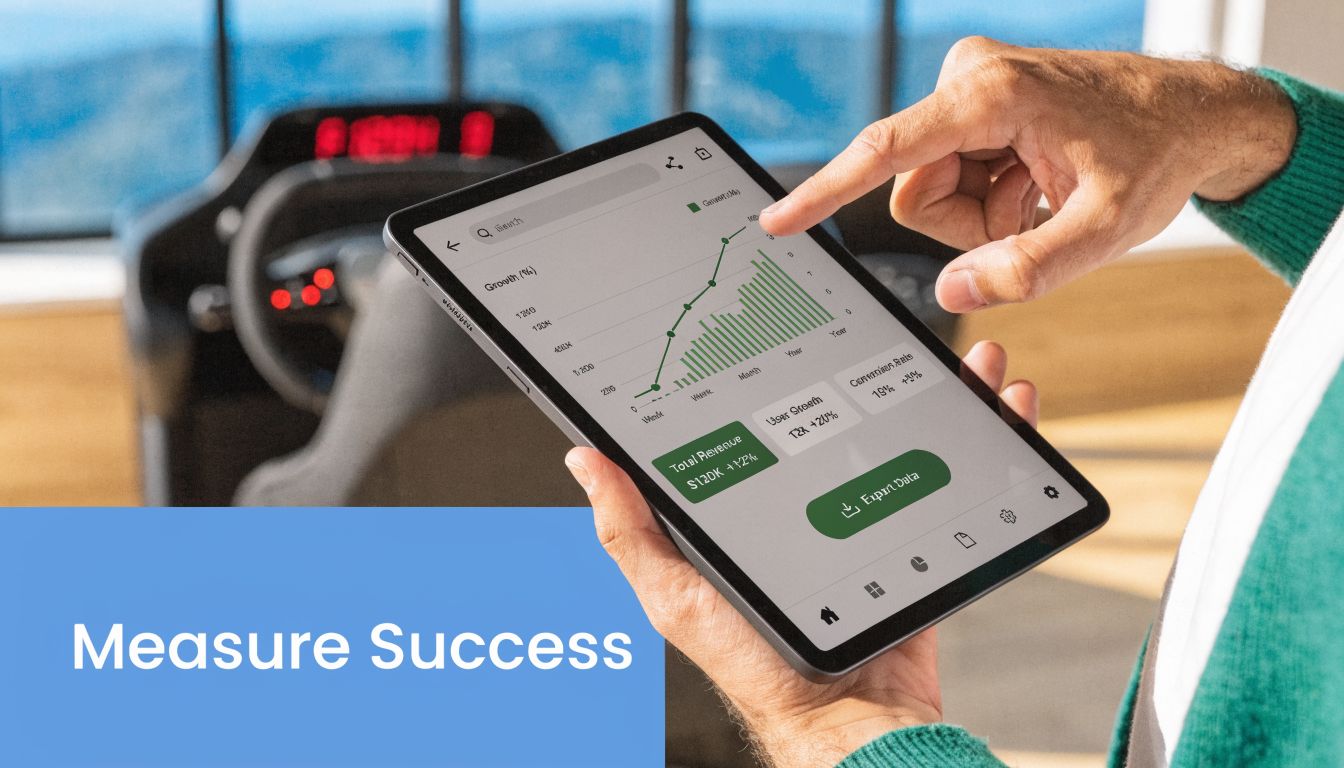
That gap is bigger than it should be. A UK event industry survey cited in this discussion of interactive simulator engagement and KPI tracking notes that interactive simulators boost attendee engagement by 35%, yet only 12% of planners track simulator-specific KPIs.
That tells you two things. First, interactive formats clearly hold attention. Second, many teams still aren’t measuring them properly.
The metrics worth tracking
For corporate f1 simulators, the most useful KPIs are usually practical rather than exotic.
- Footfall quality: Not just how many people approached, but how many fit your target audience.
- Dwell time: How long participants and spectators stayed within your activation area.
- Lead capture: How many usable contacts entered before or after the drive.
- Conversation rate: How many participants then spoke with your sales or account team.
- Content value: How much shareable media the activation created.
- Brand recall: Whether guests remembered the sponsor, message or product linked to the experience.
These are easier to collect when measurement is built into the format from the start. A leaderboard with registration, a hosted competition, a result screen, a follow-up email, or a prize mechanic all create natural data points.
A practical way to judge performance
I’d separate simulator ROI into three layers.
Attraction
Did it stop people and create a visible audience?
You’ll know this from queue length, spectator behaviour and stand traffic around the unit.
Engagement
Did people stay involved long enough for the brand interaction to mean something?
Dwell time, repeat attempts, staff conversations and leaderboard participation become useful.
Conversion
Did the experience contribute to a commercial or strategic outcome?
This could be qualified leads, booked meetings, product demos, internal engagement or sponsor value. The exact outcome depends on the event type, but it should be defined before the rig arrives on site.
Measurement habit: If you can’t say what action should happen after the lap ends, you’re still measuring entertainment rather than ROI.
Telemetry can support the business case
One advantage of simulator-based activations is that they naturally generate performance data. Professional rigs can log large volumes of telemetry. In event settings, that can be simplified into visible engagement tools such as lap times, sector comparisons or braking data. Those live performance elements keep spectators interested and give participants a reason to return, compare and talk.
That’s why the same attraction can support both atmosphere and measurable outcomes. The strongest event teams don’t treat those as separate goals. They use the excitement to create a cleaner route into data capture and follow-up.
Put Your Next Event in Pole Position
The commercial case for f1 simulators is straightforward when the activation is planned properly. They create attention in crowded environments, give attendees a reason to stay longer, and provide a practical platform for brand interaction, competition and lead capture.
They also reward proper decision-making. The right rig is the one that suits your venue, audience and event objective. The right setup balances realism with usability. The right operator turns a queue into a managed guest journey. And the right measurement plan proves whether the attraction delivered more than just excitement.
There’s another reason these activations continue to work. They combine spectacle with data. Professional F1 simulators can generate substantial telemetry, and at event level that can be translated into real-time leaderboards, braking data and lap-time comparisons that increase engagement and can lift lead capture by up to 30%, as discussed in F1 Metrics’ simulator analysis and event telemetry applications. That’s the difference between a passive display and an interactive tool with a clear commercial role.
If you’re planning an exhibition stand, product launch, hospitality event or internal engagement day, treat the simulator as part of the event strategy rather than an add-on. Ask what it needs to achieve. Build the branding and data flow around that. Then run it with the same discipline you’d apply to any other marketing channel.
If you want a simulator activation that’s built around outcomes, not just hardware, speak to a supplier that can cover rig selection, branding, staffing, logistics and compliance as one joined-up brief.