
Your inbox has the brief. The stand build deadline is close. Sales wants leads, brand wants impact, leadership wants proof it was worth the spend, and the venue manual is already thicker than the creative deck. That's where most first major activations start.
The mistake is thinking this is mainly a branding exercise. It isn't. Strong event planning and execution sits at the point where commercial intent, guest experience, logistics, staffing, safety, and measurement all meet. If one of those pieces is weak, the event still goes ahead, but it won't perform the way your stakeholders expect.
When we run corporate activations, especially with interactive attractions like racing simulators, reaction games, leaderboards, or flight experiences, we don't treat the event as a one-day production. We treat it as an operating system. That's what turns attention into dwell time, dwell time into conversations, and conversations into commercial value.
From Brief to Blueprint
You've probably been handed a deceptively simple instruction. “Make us stand out at the show.” That sounds creative. In practice, it's operational.
In the UK, the business visits, conferences, and exhibitions ecosystem is part of the wider visitor economy, and major venues such as ExCeL London and SEC Glasgow function as national infrastructure rather than just event spaces. That matters because delivery standards are shaped by venue throughput, transport coordination, staffing, and delegate movement, not only by how good the activation looks on a render. That context is outlined in this overview of data-led event performance in the UK events ecosystem.
A first-time corporate planner often starts with the stand footprint, branding wall, and hospitality count. We start one layer deeper.
Read the brief like an operations document
A usable brief answers questions such as:
- What commercial job is the event doing. Lead generation, product education, relationship building, launch visibility, or account-based engagement.
- What behaviour do you want on site. Queue, watch, compete, register, scan, book a demo, stay longer, or bring colleagues back.
- What constraints already exist. Venue access windows, shell scheme limitations, union rules, internet restrictions, loading schedules, sponsor obligations.
- Who must sign off. Marketing, sales, compliance, procurement, venue operations, and sometimes legal.
If those answers aren't written down early, the event gets pulled in different directions by different teams.
A great activation doesn't begin with “what can we fit in the space?”. It begins with “what outcome must the space produce?”.
Think beyond the stand
Your event sits inside a wider chain of movement. Delegates arrive by rail, tube, taxi, shuttle, or on foot from nearby hotels. Crew access follows venue rules. Suppliers compete for dock time. Staff need breaks, storage, briefing space, and a clear route to escalate problems. If you're planning at scale, reviewing a practical guide to corporate event logistics can help you pressure-test the transport and coordination side before it bites you on site.
That's the shift that separates amateur planning from professional delivery. You're not organising a fun corner of an exhibition. You're directing a live operation inside a crowded, time-bound environment with multiple stakeholders and no appetite for mistakes.
Defining Success with Objectives Budget and Timelines
Most event problems start long before build-up. They start when the team agrees a vague ambition and mistakes it for a plan.
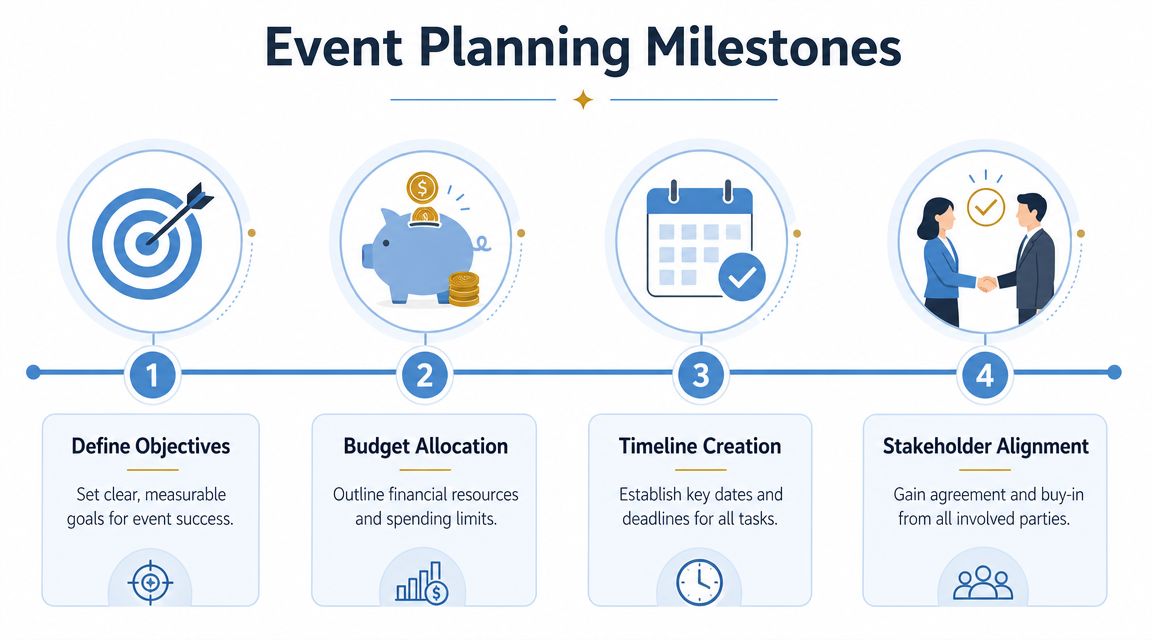
“Raise awareness” is not a working objective. It doesn't tell your supplier what to build, your staff what to do, or your finance team how to judge success. In UK event planning, the benchmark workflow is concept and objectives, budgeting and funding, venue selection and setup, promotion and marketing, then execution and evaluation. Strong teams also treat the event as a full project with initiation, planning, execution, monitoring, and closure, managed through a master timeline and a live run-of-show, as described in this five-stage event planning framework.
Set objectives that drive behaviour
If you're using an interactive attraction, write objectives around what the attraction is supposed to do.
A simulator might:
- Stop traffic by creating visual movement and crowd energy
- Hold attention long enough for a sales conversation to begin
- Capture data through a registration flow or leaderboard entry
- Segment interest by product line, region, or buyer type
- Create content for follow-up and social reuse
Those are different jobs. One unit can do several, but only if the format supports them. A fast-play reaction game works well when you need turnover and competition. A seated simulator works better when you want longer engagement and richer conversations. If your brand story is about precision, speed, engineering, performance, or control, a racing or flight experience usually has stronger thematic alignment than a generic giveaway counter.
Build a budget that reflects reality
The obvious costs are easy to spot. Space, build, graphics, AV, entertainment, and catering usually make it onto the first spreadsheet. The hidden costs are what cause stress later.
Budget lines that need proper visibility include:
- Staffing and travel. Crew transport, accommodation, meals, and call times.
- Venue technicals. Power, internet, rigging restrictions, forklift rules, early access charges.
- Insurance and compliance. RAMS preparation, certificates, and venue-mandated documentation.
- Branding production. Last-minute print changes are common and expensive.
- Data capture tools. Tablets, scanners, registration workflow, leaderboard screens, CRM handling.
- Contingency. If it isn't budgeted, it isn't a contingency plan.
A common pitfall for planners is buying the visible activation and underfunding the delivery structure around it.
Practical rule: If a cost sits between “great idea” and “live on site”, put it in the budget at the start.
Run one master timeline
A timeline is only useful if it controls dependencies. We map backwards from live date and tie milestones to decisions, approvals, payments, artwork deadlines, transport bookings, venue submissions, staff briefings, rehearsals, and install windows.
Use one central document, not five competing versions in email threads. A solid event planning timeline should show who owns each task, what the dependency is, and what happens if that date slips.
Get stakeholder alignment before procurement
A lot of wasted spend comes from buying before alignment. Before you confirm suppliers, lock four points:
- Decision-maker. Who has final approval.
- Success criteria. What leadership will ask after the event.
- Operational constraints. What the venue and organiser will or won't allow.
- Follow-up path. Who owns the leads and how quickly they'll act.
If those aren't fixed, the event will still happen. It just won't be controlled.
Assembling Your Event Dream Team
Supplier selection is where good strategy becomes either executable or fragile. You don't need the biggest roster of vendors. You need the right ones, clearly briefed, with no ambiguity about scope.
The first test is simple. Can the supplier understand the event you're trying to run, or are they only responding to the line item they've been asked to quote?
Write a brief people can price properly
Weak briefs produce misleading quotes. A venue might look competitive until power, access restrictions, stewarding rules, and build timings appear. An attraction supplier might seem expensive until you realise another quote excludes delivery, branding, staffing, and install.
A good brief includes:
- Event context. Trade show, conference, roadshow, internal launch, fan zone, or client hospitality.
- Commercial purpose. Lead capture, dwell time, education, hospitality, or PR content.
- Audience profile. Trade visitors, decision-makers, existing clients, general public, mixed groups.
- Site details. Venue, stand size, ceiling restrictions, access times, power availability, internet provision.
- Operating hours. Not just show open. Include load-in, rehearsal, pre-opening checks, and load-out.
- Brand requirements. Custom graphics, uniforms, digital overlays, leaderboard branding, language tone.
- Data needs. Registration flow, consent process, scoring output, reporting expectations.
Match the attraction to the objective
Not every interactive element does the same job.
A racing simulator usually works when the brand wants a premium, competitive, technology-led experience. A Batak Pro style reaction challenge is stronger when you need high throughput and quick crowd engagement. A flight simulator can support education, training, engineering narratives, or a travel and destination theme more naturally than a motorsport setup.
If you need one supplier that can provide attractions alongside planning and delivery support, PSW Events staffing and activation support is one example of an option in the UK market. The right partner should be judged on fit, not novelty.
Vet suppliers like an operator, not a buyer
The quote is only one part of the decision. Reliability sits in the details.
| Criteria | Why It Matters | What to Ask For |
|---|---|---|
| Experience in similar environments | Exhibition halls, roadshows, and corporate venues all run differently | Examples of comparable event types |
| Insurance cover | You need protection before equipment enters the hall | Insurance certificates and scope of cover |
| Staffing model | Great equipment fails with weak on-site staffing | Who staffs it, who briefs them, who supervises |
| Branding capability | Poor branding integration makes attractions feel bolted on | Artwork specs, mock-ups, production process |
| Technical requirements | Power, access, floor loading, and network needs can kill a plan | Full technical spec sheet |
| Data capture process | Lead handling must fit your compliance and sales flow | Registration journey and export format |
| Contingency support | Breakdowns and delays happen | Backup plan, support contact, spare equipment policy |
| Venue familiarity | Teams who know the venue move faster and ask better questions | Previous delivery experience at the venue |
One note on insurance. It isn't a formality. It tells you whether the supplier is set up to work in serious venues under real client scrutiny. Ask early, not the week before the event.
If a supplier is slow to answer operational questions before contract, expect slower answers when something goes wrong on site.
References matter too, but ask precise questions. Did the team arrive on time? Did they handle venue rules well? Did they handle problems smoothly? That's the standard that counts.
Designing a Safe and Seamless Experience
Guests don't separate branding, flow, accessibility, and safety into neat categories. They experience them as one thing. If the queue feels chaotic, the signage is unclear, the simulator looks off-brand, or a guest can't participate comfortably, the whole event feels less professional.
That's why the design phase has to unify creative ambition with practical delivery.
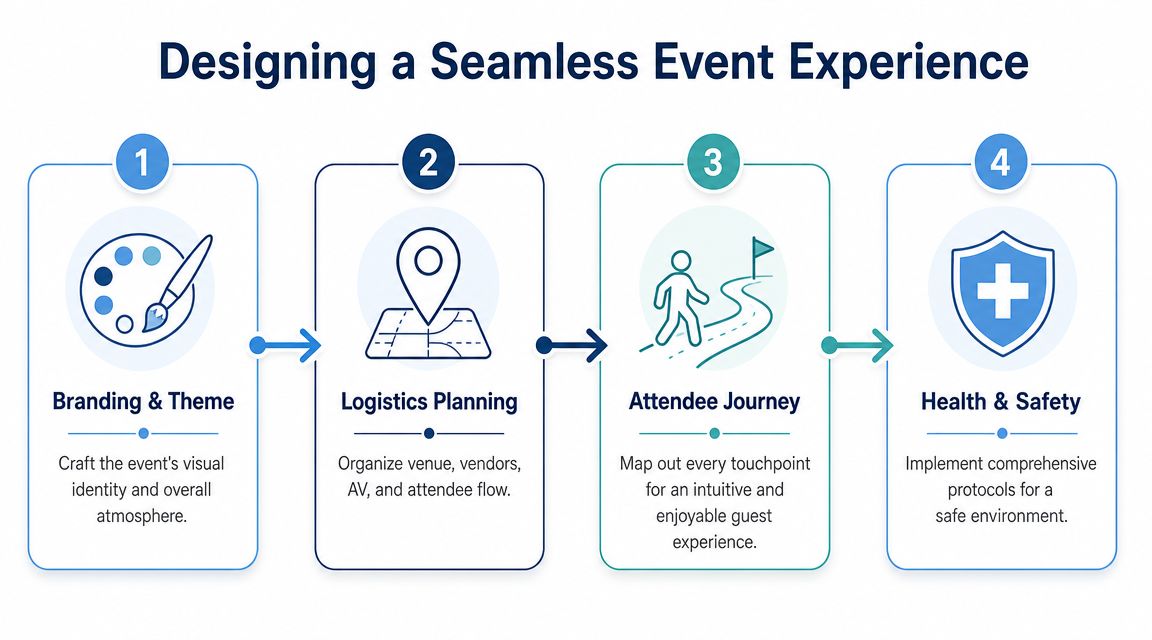
Brand every touchpoint that earns attention
Interactive attractions only create value when they feel integrated into the activation, not rented in at the last minute.
That means thinking about:
- Visible surfaces. Simulator bodywork, stage fascia, plinths, barriers, and counters
- Digital layers. Leaderboards, holding screens, registration tablets, score displays
- Staff presentation. Uniforms, scripts, tone, and how they invite people in
- Content capture. Photo moments, winner graphics, post-play emails, and branded clips
The strongest branded experiences don't shout. They align. The interaction should feel like an expression of the campaign, not a distraction from it.
Design guest flow before you design excitement
A crowd around an attraction looks good from a distance. It's a problem if nobody can understand where to stand, register, watch, or leave.
During site planning, map:
- Approach route. Where people first notice the activation
- Decision point. Where they choose to join, observe, or walk past
- Queue shape. Keep it visible but contained
- Viewing area. Spectators create energy, but they can't block neighbouring stands
- Sales position. Staff need a natural point to start conversations without interrupting gameplay
- Exit path. Guests should leave with a clear next step, not drift off anonymously
One site visit usually reveals what the CAD plan hides. Pillars, low fascia, cable paths, poor sightlines, awkward service doors, and weak Wi-Fi zones all affect delivery.
Safety and accessibility are part of the experience
In the UK, the Equality Act 2010 requires reasonable adjustments, and accessibility should be treated as a venue-specific operational matter rather than a generic checklist item. That gap is often missed in mainstream planning advice, as noted in this discussion of accessibility and duty-of-care in event planning.
Accessibility changes real design decisions. Can someone approach the activation comfortably? Can they engage without standing for long periods? Is signage readable? Can staff adapt the experience? Is there an alternative route to participate if the core attraction has physical limits?
Safety works the same way. If your team treats risk paperwork as paperwork, the event will show it.
A useful way to sharpen your thinking is to review common critical mistakes in event risk assessment. Then build your own planning around a proper event risk assessment template that covers people flow, equipment use, trip hazards, staffing responsibilities, emergency response, and venue rules.
What should be ready before build day
- RAMS completed. Specific to venue, equipment, and audience.
- Power confirmed. Don't assume. Verify supply, location, and load.
- Connectivity checked. Especially if registration or leaderboards depend on it.
- Staff briefed. Not just on script, but on guest welfare and escalation.
- Floor plan approved. Including cable routes, queue barriers, and access space.
- Accessibility adjustments agreed. With venue and client, in writing where needed.
When all of that is in place, the event feels easy to the guest. That's the point.
Flawless On-Site Event Execution
Event day is won in the first hour. Not because guests are watching everything, but because the operating rhythm gets set early. If crew are still guessing, if kit is in the wrong place, if staff don't know who owns what, small issues become public very quickly.
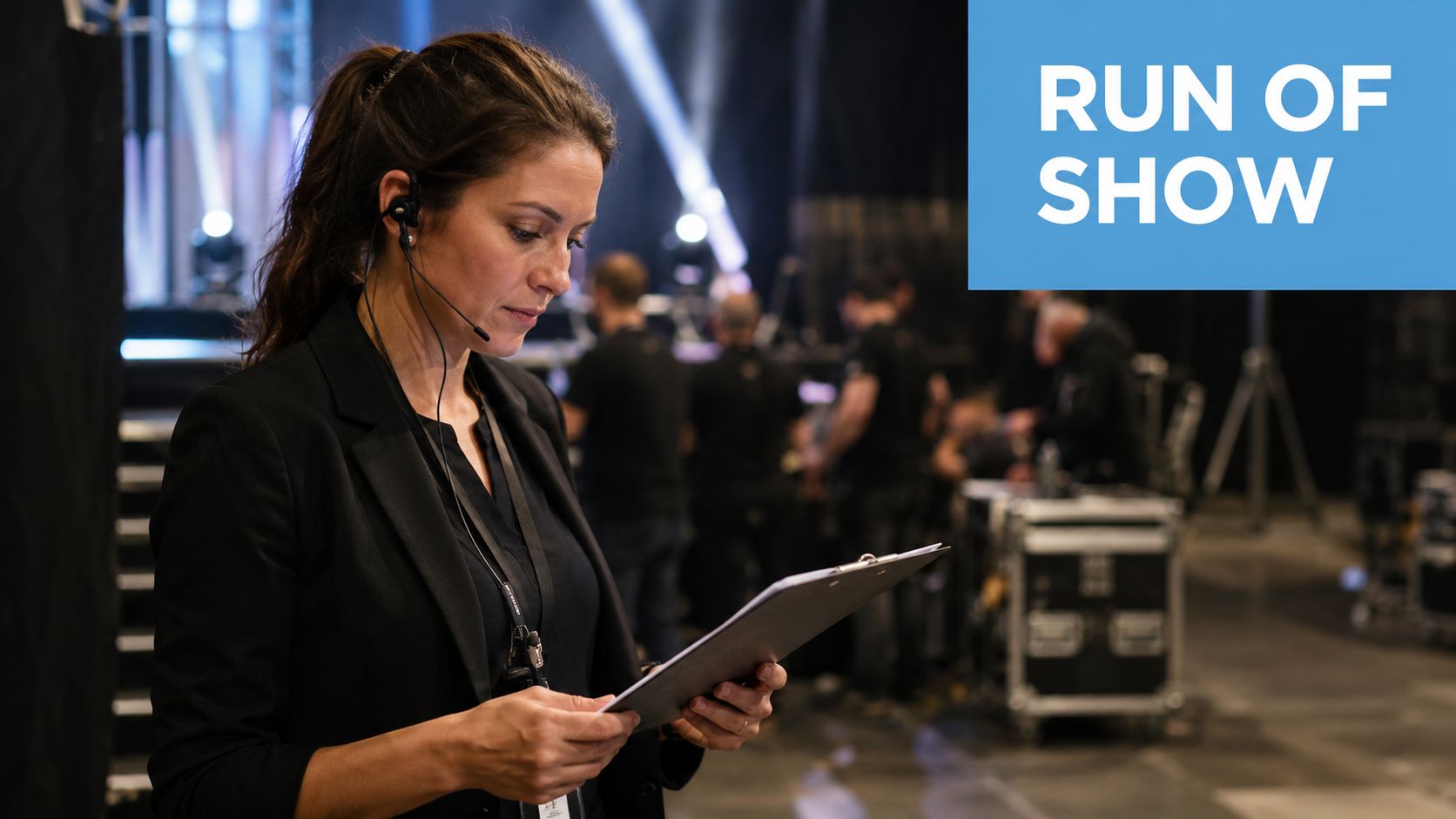
The strongest control document on site is the run of show. Not a vague schedule. A live operational sheet that tells every team member where they should be, what happens when, who calls each change, and how issues are escalated. Good UK planning practice also puts contingency at the centre from the start, with buffers, fallback plans, and continuous spend tracking. One repeated failure point is inadequate lead time, because teams routinely underestimate the slack needed for supplier, venue, or staffing delays, as explained in this guide to event planning buffers and contingency.
What the morning should look like
By the time doors open, you want these questions answered:
- Is every asset where it should be
- Has each piece of equipment been tested in live conditions
- Do staff know their first position and backup position
- Is guest flow marked clearly
- Who makes the call if timings shift
- How are leads flagged to sales during the day
That last point matters. If your activation is generating serious conversations, don't leave them trapped in a notebook or waiting for an end-of-day debrief.
How we manage the floor in practice
A simulator activation is a good example because it creates both attraction and pressure. People gather. Some want to play. Some want to watch. Some are decision-makers pretending they're only browsing. Staff have to read that correctly.
One person should own queue and registration. One should host the attraction. One should watch for commercial opportunities around the edges. If the same person tries to do all three, they'll do each one poorly.
Keep the energy high at the front of the activation and the decision-making calm behind it.
A branded leaderboard helps, but only if someone actively uses it. Staff should announce scores, invite rematches, and create reasons for bystanders to stay. At the same time, your sales team needs a clean handover point. The attraction opens the door. It shouldn't trap the conversation inside the game.
A short behind-the-scenes look at live event operations can help teams visualise that pace and coordination:
Troubleshoot quietly and fast
Things do go wrong. A delivery turns up late. A cable route changes. Venue security closes an access point. Wi-Fi drops. A staff member gets pulled into the wrong task. Guests don't care why. They only notice whether the event still feels under control.
That's why we use:
- One command channel for operational decisions
- One on-site lead with authority to make quick calls
- One visible version of the live schedule
- One backup plan for every critical experience element
What doesn't work is committee decision-making on the floor. If three people are debating while guests are waiting, control has already slipped.
Measuring Real Event ROI
If your post-event report says the stand was busy, the branding looked strong, and the team had good conversations, you haven't proved much. You've described activity.
The harder question is the one leadership will ask. What commercial value came out of the activation, and what should we repeat, improve, or stop next time? That's especially important in the UK market, where organisers are under pressure to prove outcomes beyond attendance, with greater focus on data capture such as dwell time, footfall quality, and lead capture, as discussed in this piece on measuring event outcomes beyond logistics.
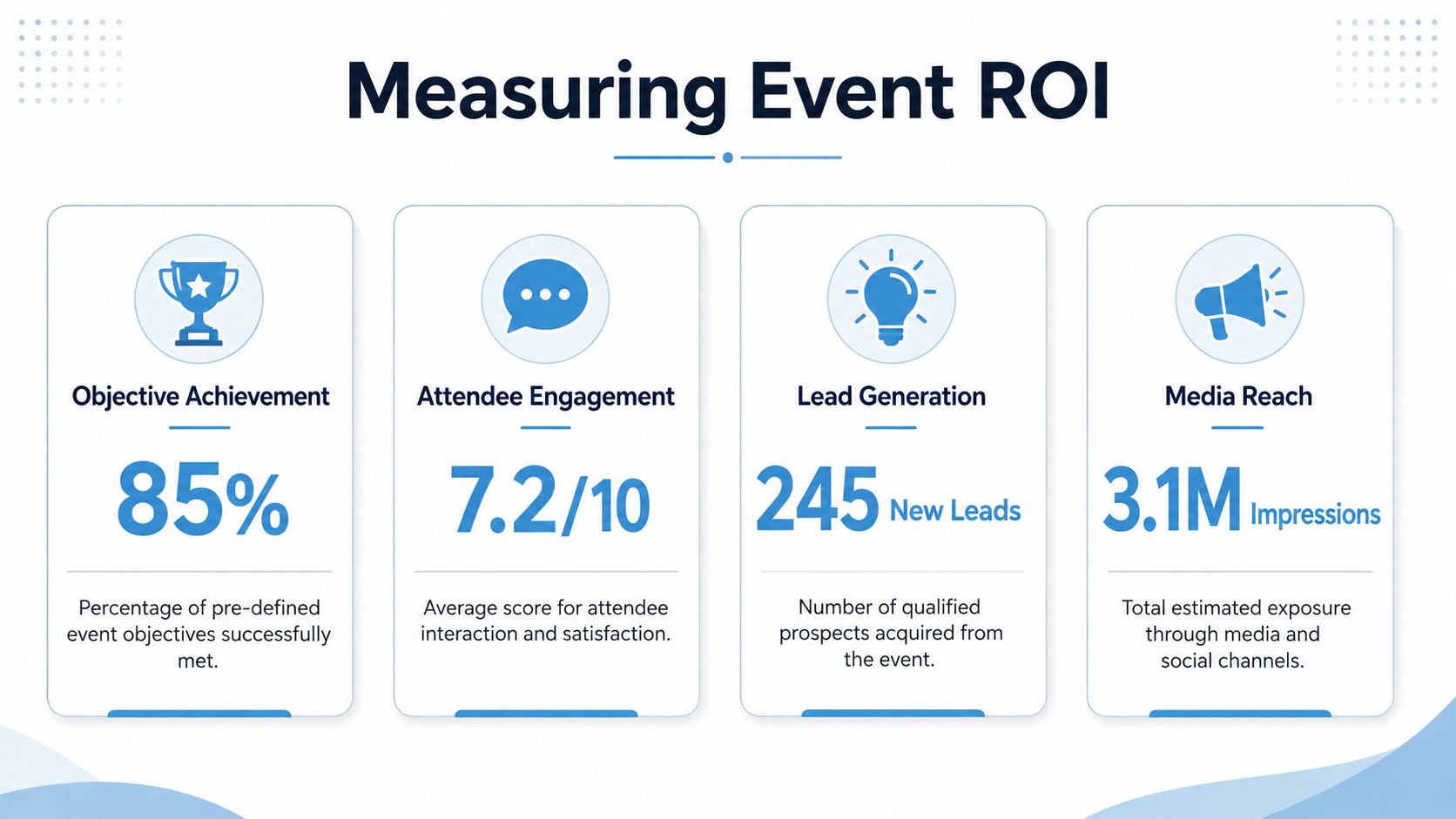
Measure behaviour, not just traffic
For experiential activity, the useful metrics usually sit in four groups:
- Attention. Who stopped, watched, or entered the space
- Engagement. How long they stayed and whether they interacted
- Commercial quality. Whether they matched your target audience and moved into a sales process
- Follow-through. What happened after the event
A packed stand can still underperform if the wrong people engaged, if staff captured poor-quality data, or if no follow-up process existed.
Build the report around the original brief
Your post-event review should answer the same questions your planning phase established.
Use a structure like this:
| Reporting area | What to include |
|---|---|
| Objective review | Which goals were met, partly met, or missed |
| Attraction performance | Which experiences drove attention, dwell, and conversation |
| Lead quality | What types of contacts were captured and how they were qualified |
| Operational notes | What affected delivery, flow, staffing, or compliance |
| Commercial next steps | What sales and marketing should do immediately after the event |
Add qualitative observations where the data doesn't tell the whole story. For example, did the simulator create stronger conversations with technical buyers than the demo screen did? Did a leaderboard drive repeat visits from the same teams? Did the queue help create social proof, or did it become a barrier at busy times?
The best ROI report doesn't defend the budget. It helps the next budget get allocated more intelligently.
Translate experience into value
Interactive attractions earn their place when they produce measurable movement toward a business outcome. That might mean better lead capture, stronger dwell time, richer conversations, repeat visits, or easier follow-up because the brand moment was memorable.
Attendance alone won't show that. A disciplined measurement framework will.
If you're planning a corporate activation and need simulator-led engagement that can be integrated into logistics, branding, staffing, and reporting, PSW Events supports event planning and execution for exhibitions, conferences, launches, and experiential campaigns across the UK.