
A simulator can be the most talked-about feature in a corporate activation and still underperform on the day. If guests can't find it, the queue blocks registration, the supplier arrives before the power is ready, or staff aren't confident handling a safety incident, the creative idea becomes an operational problem. The attraction isn't the event. It's one part of a connected delivery system.
That matters in a UK market with substantial operational demands. The UK events industry was estimated at £61.653 billion in 2024, with around 1.08 million conferences and meetings held at UK venues, generating 95.4 million delegates and approximately 144.8 million delegate days. The scale makes small improvements in timing, signage, staffing and crowd movement commercially meaningful across the sector. The UK Events Industry report provides useful context for planners working across corporate events, exhibitions and brand activations.
The strongest event management tips turn an attractive concept into a controlled plan. The ten areas below cover UK venue logistics, risk management, guest flow, exhibitions, suppliers, analytics, brand alignment, weather, team building and sustainability. They also show where interactive attractions and simulator-based experiences need to fit into the wider event rather than operate as isolated entertainment.
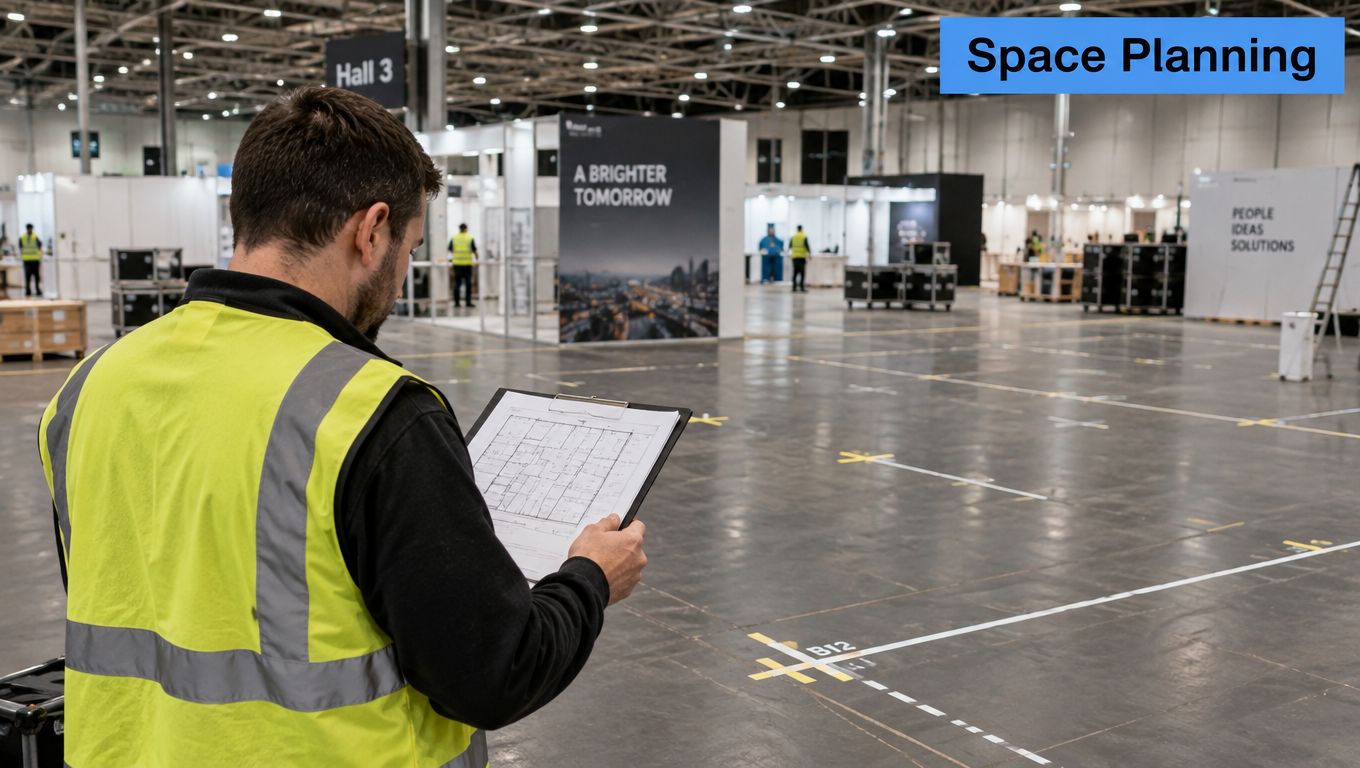
1. Mastering UK Venue Logistics and Space Planning
Venue planning starts with the building, not the attraction. ExCeL London, Manchester Central, Wembley Stadium, Silverstone and SEC Glasgow each present different access routes, loading procedures, ceiling conditions, power arrangements and restrictions on working hours. A simulator that fits comfortably on a drawing may be difficult to manoeuvre through a service corridor, or may need a different rigging approach once the venue's technical rules are applied.
Visit the venue in person at least six to eight weeks before the event. Walk the route from vehicle access to the final position, photograph turns and doorways, and ask the venue team to confirm lift dimensions, floor loading, power availability, backup systems, Wi-Fi expectations and any restrictions on noise or branding.
Build the plan around movement
Draw the guest journey separately from the equipment plan. Mark registration, attraction entry, waiting areas, exits, staff positions, emergency routes and nearby sponsor messaging. At Silverstone, outdoor fan-zone logistics may need to coexist with active track operations. At Wembley, several events or venue functions can create competing demands on access and security. ExCeL's modular hall system can support flexible layouts, while SEC Glasgow's varying ceiling heights may require a customised approach to simulator rigging.
Use a technical pack that includes:
- Scaled floor plans: Show the attraction footprint, queue length, staff operating zone and clear access routes.
- Utility requirements: Confirm electrical supply, cable paths and any distribution equipment in writing.
- Alternative positions: Prepare a second equipment location if the preferred space becomes unavailable.
- Load-in responsibilities: Name the person responsible for access passes, dock bookings and venue sign-off.
Practical rule: A venue plan isn't finished until someone has walked the equipment route and the guest route.
For detailed technical preparation, use the PSW Events installation requirements guidance alongside the venue's own technical documentation. Space planning works when production, venue operations and attraction suppliers approve the same version of the plan.
2. UK Health, Safety, Risk Mitigation and Insurance Management
A temporary front-of-house team member freezes when a guest feels unwell during a motion sequence. That response is decided weeks earlier, in the risk assessment and operating file. UK event guidance places responsibility on organisers to protect visitors as far as reasonably practicable, while venues must protect people working on site. The Health and Safety Executive's event guidance covers permissions, venue suitability, insurance, site layout, pedestrian and vehicle separation, and movement control.
The assessment must match the attraction. A motion simulator should address motion sickness, physical strain, participant height and ability, supervision, emergency stops, cleaning and equipment inspection. It should also state how staff respond when someone feels unwell. Flight experiences need suitable aviation-related operating controls. Boxing activities and other physical challenges require activity-specific briefings, equipment checks and clear limits on participation.
For complex activations, complete the file well before the event, leaving time for the organiser, venue and supplier to resolve gaps. Include the method statement, attraction instructions, staff training record, insurance certificates, emergency contacts, incident forms and escalation process. Write it for the person operating the attraction, not only for a safety consultant.
Assign each control to a named owner, then test the arrangements during the pre-opening briefing:
- Insurance scope: Confirm that the policy covers every activity, venue and operating condition, including simulator use and physical challenges.
- Participant controls: Use waivers or medical screening where the attraction and legal advice justify them. Record any eligibility limits in the staff briefing.
- First aid: Confirm the qualified cover required by the venue and local authority. Do not assume venue staff cover is sufficient for an interactive attraction.
- Incident response: State who stops the equipment, supports the guest, records the incident and informs the client.
- Staff briefing: Rehearse these actions before doors open, including accessibility arrangements and evacuation procedures.
Keep the file accessible at the control point and make sure temporary staff know where to find it. The PSW Events event risk assessment template can help organise the required information. A signed document alone does not manage risk. Staff must understand the controls, suppliers must follow them, and the event lead must check that they remain practical during live operation.
3. Strategic Guest Experience Mapping and Dwell Time Optimisation
A guest who spots an activation should know what to do next. Map the journey before equipment arrives, from first sight of the attraction through queueing, registration, briefing, participation, scoring, social content, lead capture and exit. Each stage needs a clear purpose, an owner and enough space to keep people moving.
Queue design affects both capacity and engagement. A visible leaderboard can build anticipation, while a briefing screen or staff demonstration answers questions before guests reach the front. F1 racing simulators can support repeat attempts through live competition. Batak Pro can offer different difficulty levels for mixed-skill audiences. Boxing simulator tournaments and American football skill challenges can create social moments that extend engagement beyond a single turn.
Design for different time budgets
Build two participation routes. An exhibition visitor with a meeting in a few minutes needs a quick option, while a hosted customer may want a longer experience. The express route should use the same core attraction and message, rather than feeling like a reduced version. Set the route lengths with the operator, then test whether briefing and reset times make the promise realistic.
Track the operating signals that show whether the experience is working:
- Queue length: Move staff or adjust the format when waiting becomes visibly uncomfortable.
- Turn time: Measure the full cycle, including briefing, participation and reset.
- Repeat participation: Check whether leaderboards or tournaments generate another attempt.
- Exit behaviour: Observe whether guests move towards the intended message, meeting area or lead-capture point.
- Feedback themes: Ask about clarity, enjoyment, accessibility and waiting, rather than relying only on overall satisfaction.
Place staff at decision points. They can explain the route, set expectations about delays and offer alternatives when capacity tightens. Mobile ticketing or an event app can support that communication, but it cannot replace a visible, informed operator. Use customer experience enhancement guidance from PSW Events when the attraction needs to support the wider guest journey.

4. UK Exhibition and Trade Show Integration Strategy
At a trade show, an attraction must do more than create a crowd. It should help the exhibitor start useful conversations, demonstrate a product idea or qualify a prospect. Place a racing simulator at the edge of a stand and visitors may stop there without understanding the brand. Place it within a planned route, connect participation to a message and train booth staff to follow up, and the same attraction can become part of the sales process.
UK exhibition demand makes this distinction important. In coverage of the 2025 market, the UK events industry was estimated at £68.7 billion, exhibitions contributed £11.5 billion, and major venues hosted 1,154 exhibitions and conferences with exhibition elements, generating about 6.8 million visits. The same report says trade shows represented 42% of the market, trade attendees were up 10% year on year, and total visitor numbers remained 24% below pre-Brexit levels. Exhibition News coverage of the SASiE report shows why planners need to connect footfall with dwell time and lead quality.
Make participation useful to sales teams
Book prime exhibition space at least six months ahead where possible, then agree the attraction's role with marketing and sales. A technology business might use an F1 simulator to express precision. An automotive brand can connect racing performance to product features. A financial services firm could use a tournament to create a structured conversation about competitiveness or decision-making.
Use QR codes or digital badges to record participation, consent and follow-up status. Give booth staff a simple handover question, such as what the visitor found most interesting, rather than asking them to deliver a long product pitch. Report attraction visits, qualified conversations, captured contacts and follow-up actions separately. High footfall isn't proof of exhibition ROI unless the visitor journey produces a business outcome.
5. Comprehensive Vendor and Supplier Coordination Framework
A simulator may be ready while the venue is still waiting for its power plan. At the same time, the production company may be heading to the wrong loading bay, catering may arrive on a revised schedule, and security may not recognise a contractor. These handover failures can delay doors opening and disrupt the guest route.
Build one run-of-show document for the full operation, not only the stage programme. Record supplier arrival times, access contacts, setup milestones, testing windows, approval points, breakdown duties and escalation routes. Issue every supplier the same controlled version, with all changes logged centrally.
One operational owner should coordinate the venue, logistics partners, security, catering, medical services, technical crews and attraction staff. This person does not complete every task. They do need authority to settle clashes, confirm priorities and assign decisions quickly.
Use the following controls as a working schedule:
- Pre-event call: Bring the key vendors together two to three weeks before the event to confirm dependencies and unresolved decisions.
- Written delivery confirmations: Record delivery dates, times, vehicle details and access requirements.
- Punch list: Assign an owner to every incomplete task and close each item before handover.
- Rotation plan: Schedule staff breaks while keeping the attraction and guest route supervised.
- Fallback contacts: List alternative transport, technical support and equipment providers for critical services.
- Debrief record: Document delays, avoided problems and changes required for the next event.
For work across Silverstone, Wembley, ExCeL London or other UK locations, apply the same controls at every site. Multi-venue delivery adds travel, access and communication dependencies, so informal reassurance is not enough. A shared plan with named owners gives the event manager a visible record of who must act, by when and what happens if a supplier misses its commitment.
6. Real-Time Event Analytics and Measurement Framework
A full queue, a failed QR scan or an unsafe crowding point can undermine an otherwise effective activation. Set measurement requirements before selecting the attraction, then connect them to the operational decisions the event team must make. Decide whether the client needs lead capture, brand interaction, dwell time, repeat participation, attendee satisfaction, social content or a defined combination.
Event technology is already widely used by UK organisers. One industry roundup reports that 78% use event management software, 70% use cloud-based collaboration tools, 90% use mobile ticketing, 35% use AI for attendee personalisation and 22% use VR or AR for virtual or hybrid experiences. The UK event technology roundup points to a practical requirement: connect registration, attraction activity, queue information and reporting rather than creating separate dashboards that no one owns.
Choose measures that support a decision. An electronic leaderboard can show F1 simulator participation and competition metrics. QR tracking can connect an attraction to a consented lead record, while mobile check-ins may help compare activity engagement with booth locations. A short post-activity survey captures satisfaction while the experience remains fresh. Queue length, dwell time and participation changes can also indicate when staffing, spacing or session capacity needs attention.
Before launch, test the complete data journey. Confirm how consented contacts and activity data enter the existing CRM, including duplicate handling and poor connectivity. Assign a live owner to monitor the dashboard and alert operations when queues or participation change. Use GDPR-compliant consent language, collect only information with a clear purpose, and separate reach, engagement, leads and qualitative feedback in the client report.
Event software budgets are shifting from one-off registration tools towards longer-term analytics infrastructure. The UK event management software estimate is a projection rather than a guarantee, so use it only as context. Select tools that can support reporting, lead capture and hybrid delivery as requirements change, not registration alone.

7. Brand Activation and Experiential Marketing Alignment
An interactive attraction needs a brand reason to exist. A racing simulator can express performance, control and competition for an automotive campaign. A flight simulator can support a technology company's message around precision and innovation. American football, rugby and boxing activities can suit sports-led fan engagement, while competitive gaming can help a financial services brand present a more forward-looking personality.
Start with the marketing brief, not the equipment catalogue. Ask who the audience is, what they should understand, what action should follow and what the brand must avoid. Then present two or three attraction concepts, explaining the audience fit, operational requirements, visual treatment and measurement plan for each.
Make the experience recognisably yours
Branding should appear across the parts guests use, not only on a backdrop. Consider simulator skins, screens, leaderboards, staff clothing, queue signage, scorecards, photography points and post-participation messages. A branded tournament can produce social content, but only if guests understand how to share it and consent arrangements are clear.
Train attraction staff on the campaign message and the handover to sales or hospitality. They don't need to deliver a scripted presentation. They do need to answer basic questions, identify a relevant conversation and direct the guest to the next step.
Review social content during the event, but don't confuse mentions with impact. Report user-generated content alongside participation, sentiment, qualified conversations and follow-up activity. A visually impressive installation that produces no meaningful interaction may be less effective than a simpler activity tightly connected to the campaign objective.
8. Weather Contingency Planning and Outdoor Event Management
UK outdoor events run on pre-agreed weather thresholds. Define wind, rain, lightning, temperature and surface limits for each attraction before signing the contract, then name the person who can pause operation. Weather can affect comfort, queue safety, equipment, staff welfare, electrical protection and transport. A racing simulator in a fan zone may need weatherproof cover, while a flight experience may require a protected operating position. A park or estate team-building activity may need marquee coverage and a different surface plan.
Put the response in the proposal and supplier agreement. Assign forecast monitoring, approval for changes and guest communications. Record the equipment-specific thresholds and the decision time for reviewing them.
Prepare an alternative operating plan
A canopy addresses rain and sun, but it may leave wind, ground damage, access and comfort unresolved. Reserve indoor space for the key attraction, or define a reduced programme that can run safely. Test the weatherproofing before event day, including cable protection, flooring, lighting and signage.
Build these checks into the run sheet:
- Forecast monitoring: Review conditions weekly during the final month, then more often as the event approaches.
- Budget provision: Hold a weather contingency of 10 to 15% where outdoor exposure is material.
- Guest messaging: Prepare email, app, SMS and on-site wording for schedule or location changes.
- Staff instructions: State when to stop, where guests should move and how equipment is secured.
- Revised flow: Map the indoor route so registration and emergency access remain clear.
The plan also needs an escalation sequence. The event lead should receive the forecast decision, confirm any operational change with the client and brief suppliers before guests arrive. Staff should never debate safety at the queue while people wait. A clear trigger protects the experience and makes the decision accountable.
9. Team Building and Corporate Engagement Strategy
Team building works best when the activity reflects the client's people and purpose. A racing tournament may suit a technology team that enjoys structured competition. American football simulators can support group challenges. Batak Pro can create a fast coordination exercise. Boxing simulators may work as a staff reward or wellness activity, while flight simulators can provide an aspirational recognition experience.
Start with the client's HR or people team. Ask whether the event is designed to build trust, reward performance, welcome new colleagues, improve communication, or provide an enjoyable shared experience for employees. Those objectives require different formats. Individual scoring can energise a competitive group, but it can also exclude people who dislike public comparison.
Design participation around inclusion
Use beginner, intermediate and advanced routes. Create team scores that reward collaboration as well as individual performance, and explain the rules before anyone starts. Offer an observer or supporter role without pressuring people to participate. Check physical access, seating, sensory needs, hearing or visual requirements and the suitability of the briefing for different communication preferences.
Recognise different types of success. Awards for teamwork, improvement, encouragement or creative problem-solving can prevent one fastest participant from dominating the whole experience. A post-event survey should ask whether people felt included, whether the activity supported the intended objective and what they'd change.
A corporate venue can also combine an attraction with a wider challenge format. Chronos One Escape Rooms corporate team building is an example of how collaborative problem-solving can sit alongside other team experiences in a planned programme. The principle is simple: select the activity because it supports the group outcome, not because it happens to be available.
10. Sustainable Event Practices and Environmental Responsibility
Sustainable event decisions begin before the floor plan is approved. Review the venue, travel, power, equipment, catering, materials, waste and supplier transport. For each area, ask what can be removed, reused, consolidated or measured. A digital leaderboard can replace printed scorecards, while digital ticketing and event apps reduce paper. Energy-efficient screens and simulator equipment may also lower operational demand without changing the guest experience.
Document every environmental action and its boundary. Record what the venue measures, what the supplier changed and what evidence exists. If a claim cannot be supported, leave it out. Ask venues with sustainability programmes for their measurement methods and records. Log packaging changes and consolidated transport across sites in the event report.
Build evidence into supplier coordination
Use a baseline carbon assessment where the client requires one, then request supplier information in a consistent format. Local or ethical catering can fit the brief, but confirm food waste, packaging and collection arrangements before booking. Check whether stand materials, branded structures and interactive attraction components can be hired, reused or stored for another activation instead of produced for one appearance.
Build these controls into the event plan and contracts:
- Energy selection: Specify LED displays and lower-power equipment where they meet the experience requirement, including simulator installations.
- Waste planning: Assign recycling and disposal responsibilities to named suppliers in writing.
- Travel coordination: Consolidate deliveries and assess lower-impact transport options for multi-site work.
- Digital delivery: Use apps, QR codes and digital registration where print adds no operational value.
- Reporting: Include completed actions, supplier evidence and available measurements in the client's event report.
- Standards: Consider recognised frameworks such as ISO 20121 or B Corp requirements where they fit the organisation.
UK clients increasingly expect sustainability reporting, while budgets and supplier costs remain under pressure. The practical test is whether the plan protects guest impact and operational reliability while producing credible evidence. A simulator activation, for example, still needs power, transport and equipment records alongside its engagement measures.

Top 10 Event Management Tips Comparison
| Item | Complexity 🔄 | Resources ⚡ | Expected outcomes & Ideal use cases ⭐📊 | Key advantages ⭐ | Quick tips 💡 |
|---|---|---|---|---|---|
| Mastering UK Venue Logistics and Space Planning | High, intensive coordination, site visits, venue rules | Moderate–High, technical drawings, electrical planning, staged crew | Smooth installs, optimal guest flow, H&S compliance, ideal for large exhibitions, stadiums, modular halls | Prevents delays, maximises space use, strengthens venue relationships | Visit 6–8 weeks prior; confirm power in writing; prepare contingency layouts |
| UK Health, Safety, Risk Mitigation and Insurance Management | High, regulatory documentation and approvals | High, H&S consultants, training, insurance premiums (£10m+) | Reduced incidents, legal protection, venue access, essential for simulators, motion rigs, public attractions | Protects people, lowers long‑term risk, builds client/venue trust | Conduct risk assessments 8–10 weeks out; engage specialist broker; keep waivers current |
| Strategic Guest Experience Mapping and Dwell Time Optimisation | Medium, analysis, testing and flow design | Moderate, tracking tools, staff positioning, leaderboards | Higher dwell time and engagement, improved lead capture, ideal for multi‑attraction exhibitions and gamified activations | Increases ROI per attraction, reduces queue frustration, generates social moments | Use digital leaderboards; monitor metrics live; provide express routes |
| UK Exhibition and Trade Show Integration Strategy | Medium–High, advance planning and venue negotiation | High, premium attractions, CRM integration, trained staff | Increased booth traffic and measurable leads, best for trade shows, sponsor activations, B2B events | Differentiates brand, delivers measurable ROI, creates shareable content | Book prime space 6+ months ahead; integrate lead capture with CRM |
| Comprehensive Vendor and Supplier Coordination Framework | Medium, administrative load and communication protocols | Moderate, portals, specification sheets, single point of contact | Fewer errors, on‑time delivery, clearer accountability, suited to multi‑vendor or multi‑site events | Reduces miscommunication, improves reliability, simplifies troubleshooting | Distribute run‑of‑show; hold pre‑event calls 2–3 weeks prior; assign one POC |
| Real‑Time Event Analytics and Measurement Framework | Medium, technical integration and data governance | High, analytics software/hardware, connectivity, trained staff | Immediate insights, real‑time optimisation, robust post‑event reporting, ideal for data‑driven campaigns and ROI‑focused events | Enables mid‑event adjustments, provides objective ROI evidence | Test systems pre‑event; assign dashboard monitors; ensure GDPR consent |
| Brand Activation and Experiential Marketing Alignment | Medium–High, creative strategy and customisation | High, branded production, strategy, content capture | Strong brand recall, social amplification, emotional engagement, ideal for product launches and consumer activations | Creates authentic brand experiences, drives UGC and consideration | Obtain marketing brief; offer 2–3 attraction options; design Instagrammable moments |
| Weather Contingency Planning and Outdoor Event Management | Medium, triggers, escalation and alternate plans | Moderate–High, shelters, covers, backup venues, monitoring tools | Continuity and safety in adverse weather, critical for outdoor fan zones, festivals, semi‑outdoor activations | Protects guests and equipment, reduces weather‑related risk | Include 10–15% contingency budget; set weather thresholds; source covers early |
| Team Building and Corporate Engagement Strategy | Low–Medium, activity design and facilitation focus | Moderate, mixed‑skill attractions, facilitators, awards | Improved team bonding and engagement metrics, best for corporate retreats, HR events | Fosters morale, cross‑hierarchical interaction, measurable outcomes | Interview HR for objectives; vary difficulty; enable optional participation |
| Sustainable Event Practices and Environmental Responsibility | Medium, sourcing, measurement and supplier alignment | Moderate–High, energy‑efficient kit, sustainable suppliers, certification costs | Reduced carbon footprint, enhanced reputation, potential cost savings, ideal for ESG‑focused clients | Meets ESG demands, differentiates brand, can command premium pricing | Baseline carbon footprint; choose low‑power equipment; pursue recognised certifications |
Turn Planning Checks Into Better Results
A successful corporate activation doesn't begin with choosing the most impressive simulator. It begins with a clear purpose, a suitable venue and a budget that can support the proposed guest experience. Once those foundations are secure, the attraction can be selected for a reason, whether that is lead generation, product demonstration, staff recognition, team connection, fan engagement or dwell time.
The UK market rewards planners who treat operations as part of the creative work. With 1.08 million conferences and meetings held at UK venues in 2024, the UK Events Industry report illustrates the scale at which venue flow, registration throughput, staffing and crowd movement matter. A simulator placed in the wrong location can slow an entire stand. A weak handover can delay the programme. An undocumented safety control can affect the organiser, venue, supplier and guest at the same time.
Use the ten areas as a pre-event review rather than a last-minute checklist. Confirm the equipment route and power plan. Approve the risk assessment, method statement, insurance and incident process. Map the guest journey, including queues, accessibility and alternative routes. Give every supplier a named responsibility and a shared run-of-show. Define the data you need before you build the lead-capture journey. Then test the full experience with the same devices, staff roles and access conditions that will apply on the day.
Budget decisions also need to reflect the actual trade-offs. A cheaper attraction may require more staffing, more space or more explanation. A complex leaderboard may create stronger competition but require better connectivity and data controls. A weatherproof outdoor experience may offer visibility but need an indoor fallback. A sustainable choice may change the production schedule or supplier network. Compare options by total delivery requirement, not hire price alone.
For UK search engines, make the event page as operationally clear as the event plan. Include the event name in the title tag, H1, meta description and body copy, then add the venue address, city and region so search engines can understand local relevance. Guidance on SEO for events supports this location-specific approach. Make the page responsive and test the booking journey on smaller screens, because mobile event SEO guidance identifies mobile speed and ticket purchasing as practical discovery and conversion requirements.
A specialist such as PSW Events can support the connected delivery model, including planning, branding, site visits, logistics, installation, on-site staffing and Health and Safety documentation for interactive corporate activations. The team's portfolio includes sports, racing and flight simulators, American football, rugby, golf and boxing activities, F1 and multi-racing rigs, Batak Pro, giant Scalextric, VR, electronic leaderboards, climbing walls and casino tables. PSW Events states that it provides £10 million in products, employee and public liability insurance, which should still be checked against the specific event brief and venue requirements.
For specialist planning, a golf event logistics checklist can also prompt useful questions about timing, participant movement, supplier coordination and contingency planning, even when the final activation uses a different format. The important point is to turn creative intent into accountable actions, then review the evidence after the event. That is how teams improve the next layout, the next briefing, the next supplier handover and the next client report.
PSW Events plans and delivers interactive corporate entertainment across the UK, covering attraction selection, branding, logistics, installation, on-site staffing and Health and Safety coordination. Visit PSW Events to discuss a simulator, sports challenge or attraction-led activation built around your venue, audience and measurable event objectives.