
You’re probably here because you need an attraction that does more than fill space.
Maybe you’ve got an exhibition stand that needs stopping power. Maybe your team-building brief needs something competitive that doesn’t feel forced. Maybe you’re planning a conference, product launch, fan zone or private party and want an activity guests will queue for, talk about and replay.
In these scenarios, batak hire earns its place.
A Batak Pro is simple to understand, fast to operate and strong at one thing that matters at live events: getting people involved quickly. It works because nobody needs instructions longer than a few seconds. Lights flash. Players react. Scores go up. Rivalries start. Crowds gather.
Used well, it’s not just a game. It’s a traffic magnet, a dwell-time tool, a data-capture mechanic and, in the right setting, a branded centrepiece. Used badly, it becomes background noise. The difference is usually in the planning, the positioning and the way the experience is wrapped around your event goals.
What Is a Batak Pro and Why Is It an Event Staple
A guest steps onto your stand between conference sessions. Within seconds, nearby delegates stop, watch the lights fire, and start comparing scores. That speed of engagement is why Batak Pro keeps turning up at exhibitions, conferences, hospitality spaces and brand activations.
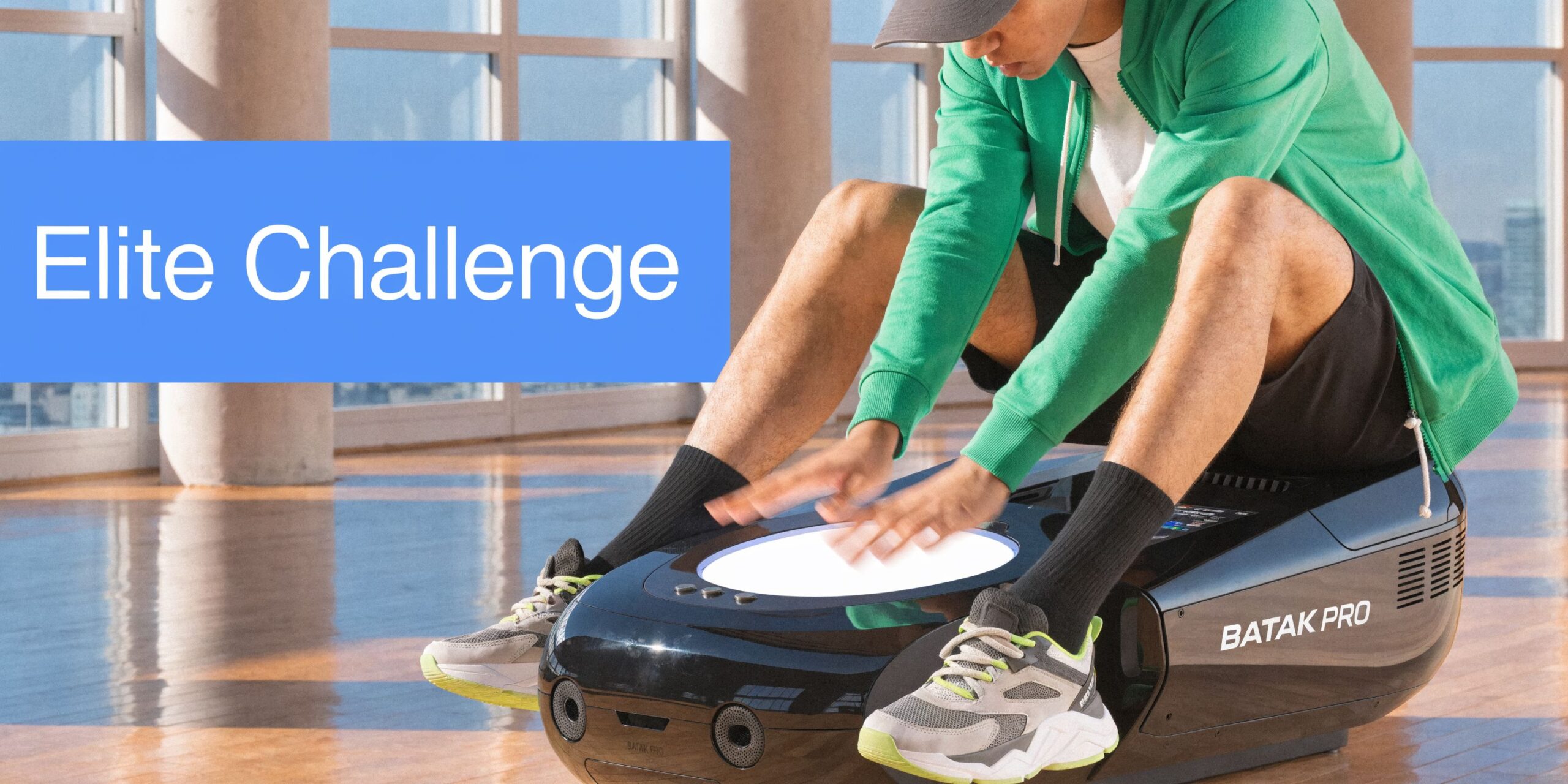
The Batak Pro is a reaction challenge built around a frame of illuminated targets. Players hit the lights as they appear against the clock. The format is easy to grasp, but the effect at live events is more useful than the simplicity suggests. It creates instant participation without a long briefing, and that matters when you have limited time to win attention.
Why it carries more weight than a standard game
Batak has credibility because it comes from reaction training, not from a generic arcade concept. That changes how people respond to it. Guests treat it as a real test of speed and coordination, which is exactly what you want at an event where participation needs to feel earned.
The Guinness World Records listing for Jenson Button’s Batak result gives that competitive edge a clear reference point (batak.com.au Guinness World Record page). In practice, the value for event planners is not the record itself. It is the sense of legitimacy around the challenge. People are more likely to step up when the activity looks credible, measurable and public.
That matters for corporate planners who need more than casual entertainment. Batak works well inside a broader experiential marketing strategy for live brand engagement because it gives your team a visible performance mechanic, a natural conversation starter and a reason for attendees to return for another attempt.
How the machine works in event use
The Batak Pro uses LED-lit targets mounted on an aluminium frame, with a computer controlling the light sequences, as described on Leisure Hire’s Batak Pro equipment page. The technical design matters because it produces randomised challenges, fast resets and short play cycles without complicated operation.
For event delivery, four things make it reliable:
- The challenge is visible from a distance, so it pulls attention even before someone joins the queue.
- Rounds are short, which keeps footfall moving and stops the activation from becoming a bottleneck.
- Scores are immediate, giving staff an easy way to prompt competition or award prizes.
- The setup is flexible, so it works as a standalone feature or as part of a wider branded space.
I’d also look at it through a planner’s commercial lens. If you are measuring stand performance against lead volume, dwell time or even downstream cost per acquisition, Batak has an advantage over slower attractions. It creates a quick, repeatable interaction that sales teams can build around.
Why it remains a staple
Planners keep hiring Batak because it suits mixed audiences and different event objectives without much reinvention. A sales team can use it to start stand conversations. An internal events team can use it to add light competition without excluding less confident participants. A hospitality client can use it to raise energy between scheduled moments.
It also fits current event requirements better than many older attractions. In hybrid formats, Batak scores can be fed into live leaderboards for remote audiences, remote-hosted prize draws or team-versus-team challenges across multiple locations, provided the event platform and moderation plan are set up properly. For ESG-focused events, the practical win is that one compact, reusable piece of equipment can deliver repeated engagement without the disposable waste that often comes with one-use giveaway mechanics.
That mix of speed, visibility and adaptability is what makes Batak Pro an event staple. It does not need heavy explanation. It needs good placement, the right staffing and a clear job within the event plan. That is where the hire becomes productive rather than decorative.
The Measurable ROI of Hiring a Batak Pro
If you’re assessing batak hire purely as entertainment, you’ll undervalue it.
For corporate events, exhibitions and activations, the stronger case is operational. A Batak Pro can help draw people in, hold them for longer and give your team a clean reason to start conversations while the energy is high.

Throughput is what makes the numbers work
The strongest measurable advantage is capacity. Batak Pro has a throughput of up to 60 users per hour, which means it can engage 480 users during a standard 8-hour corporate event according to Big Fun Hire’s technical listing (bigfunhire.com).
That’s important because some attractions look impressive but only handle a small number of participants. They create a bottleneck. Batak doesn’t, when it’s run properly.
For planners, that creates practical value:
- More participants means more conversations started by your stand team.
- More turns means more chances to attach a score, a name or a follow-up action.
- Short cycles reduce drop-off because queues keep moving.
A queue can be useful at an event, but only if it’s moving. A static queue frustrates attendees and blocks your stand frontage. Batak’s pace usually avoids that.
Dwell time improves when competition has a purpose
A guest who stops for a quick try often stays longer than expected. Not because the machine is complicated, but because score-chasing changes behaviour.
One attempt becomes two. Colleagues challenge each other. Spectators wait to see whether someone can top the board. That extra dwell time gives your team a window to qualify interest naturally instead of forcing a hard open.
In this context, the attraction supports event ROI better than passive giveaways. A bowl of sweets creates a brief stop. A live leaderboard creates a reason to remain in the space.
The best event games don’t interrupt commercial conversations. They make those conversations easier to start.
It can lower waste in lead generation
Not every player becomes a useful lead. That’s normal. The value comes from filtering interest through engagement rather than collecting names with no context.
When planners review exhibition spend, they should look beyond volume and consider quality against metrics such as cost per acquisition. A Batak activation can support that thinking by tying each interaction to a visible action, a score and a direct exchange with staff.
That doesn’t guarantee better leads on its own. The setup matters. If the game sits on one side and the sales team sits elsewhere, the opportunity gets lost.
What works and what doesn’t
A Batak Pro delivers ROI when the surrounding activation is designed properly.
| Approach | What happens |
|---|---|
| Leaderboard near the stand edge | Passers-by notice activity early and stop |
| Staff invite play, then continue the conversation | Engagement flows into lead capture |
| Prize mechanic linked to a score threshold | Competition feels purposeful |
| Machine hidden at the back of the space | You lose footfall from aisle traffic |
| No visible score display | Spectator interest drops |
| No staffing plan | Guests play and walk away without follow-up |
The machine does the attraction work. Your event team still needs to do the commercial work.
Brand impact goes beyond the player
A useful Batak setup performs in two layers. It engages the participant directly, then it signals energy to everyone nearby.
That second layer matters more than many planners expect. People don’t just remember playing. They remember where the buzz was. In a crowded exhibition hall, that’s often the difference between a stand people pass and a stand people seek out.
Creative Use-Cases for Batak Activations
Batak hire works best when it’s matched to the mood and objective of the event. The same hardware can feel competitive, playful, premium or informal depending on how you frame it.
The mistake is treating it as a one-size-fits-all add-on. The better approach is to decide what role it needs to play.
Exhibition stands that need a crowd
At trade shows, Batak is often most effective as a front-edge attraction. Place it where the aisle can see the movement and the scoreboard, not buried behind furniture or a meeting table.
The game creates a natural theatre effect. One person plays. Two colleagues watch. A few more stop to see the score. Your stand instantly looks active.
For this use-case, the strongest format is usually:
- Fast invitation language from stand staff
- Visible leaderboard positioning
- A prize, bragging right or timed challenge
- Clear next step once the round ends
These conditions allow Batak to outperform quieter interactive tools. It announces itself without needing a pitch.
Team-building that doesn’t feel forced
A lot of team-building activities fail because they make people perform socially before they feel comfortable. Batak avoids that problem. The task is external, simple and competitive.
Teams can use it in different ways:
- head-to-head contests between departments
- relay-style score accumulation
- tournament brackets over the course of a conference day
- personal-best challenges during a break period
Because the mechanic is familiar so quickly, it works well with mixed groups. You don’t need everyone to be sporty. You just need to be willing to have a go.
A good team-building activity breaks the ice without making people self-conscious. Batak does that well because the challenge is obvious and the effort is short.
Sports fan zones and branded hospitality
Batak has a natural place in fan-facing environments because it already feels rooted in performance. That link to reflexes, fitness and competitive speed makes it a good fit for sports hospitality, race-day activations and sponsor areas.
In those settings, the attraction doesn’t need much explanation. Guests understand immediately why reaction speed matters. The visual style also fits comfortably alongside simulators, timing games and performance-led brand messaging.
For premium spaces, presentation matters more than raw gameplay. Clean branding, tidy queuing and a host who can keep the pace up will make the setup feel polished rather than noisy.
Private events that need a shared activity
Weddings, family fun days, milestone birthdays and Bar or Bat Mitzvahs often need one thing: an activity that different age groups can enjoy without splitting the room.
Batak handles that well. Guests can play casually, compete seriously or spectate. It gives people something to do between formal moments and helps conversations start between guests who don’t already know each other.
If you’re planning a private celebration and want broader inspiration around pacing, guest engagement and side activities, these memorable celebration ideas are useful as a planning reference.
Hybrid event extensions
The underused opportunity is hybrid.
Batak is a physical attraction first, but it can still support hybrid formats when the event team builds a digital layer around it. That might mean remote score updates, streamed challenge rounds, scheduled live competitions between locations or a hosted segment where in-room participants play on behalf of online attendees.
What doesn’t work is pretending the online audience is fully sharing the same physical experience. They aren’t. Hybrid Batak needs a companion format, not a copy.
The better model is to make the physical gameplay the anchor and the digital audience part of the narrative, the voting, the live scoring or the team challenge.
Technical Venue and Staffing Requirements
Good intentions often meet venue reality when considering technical venue and staffing requirements.
A Batak Pro is straightforward to operate, but it still needs the right space, power and access plan. If those details are missed early, install day becomes harder than it needs to be.
The venue checklist
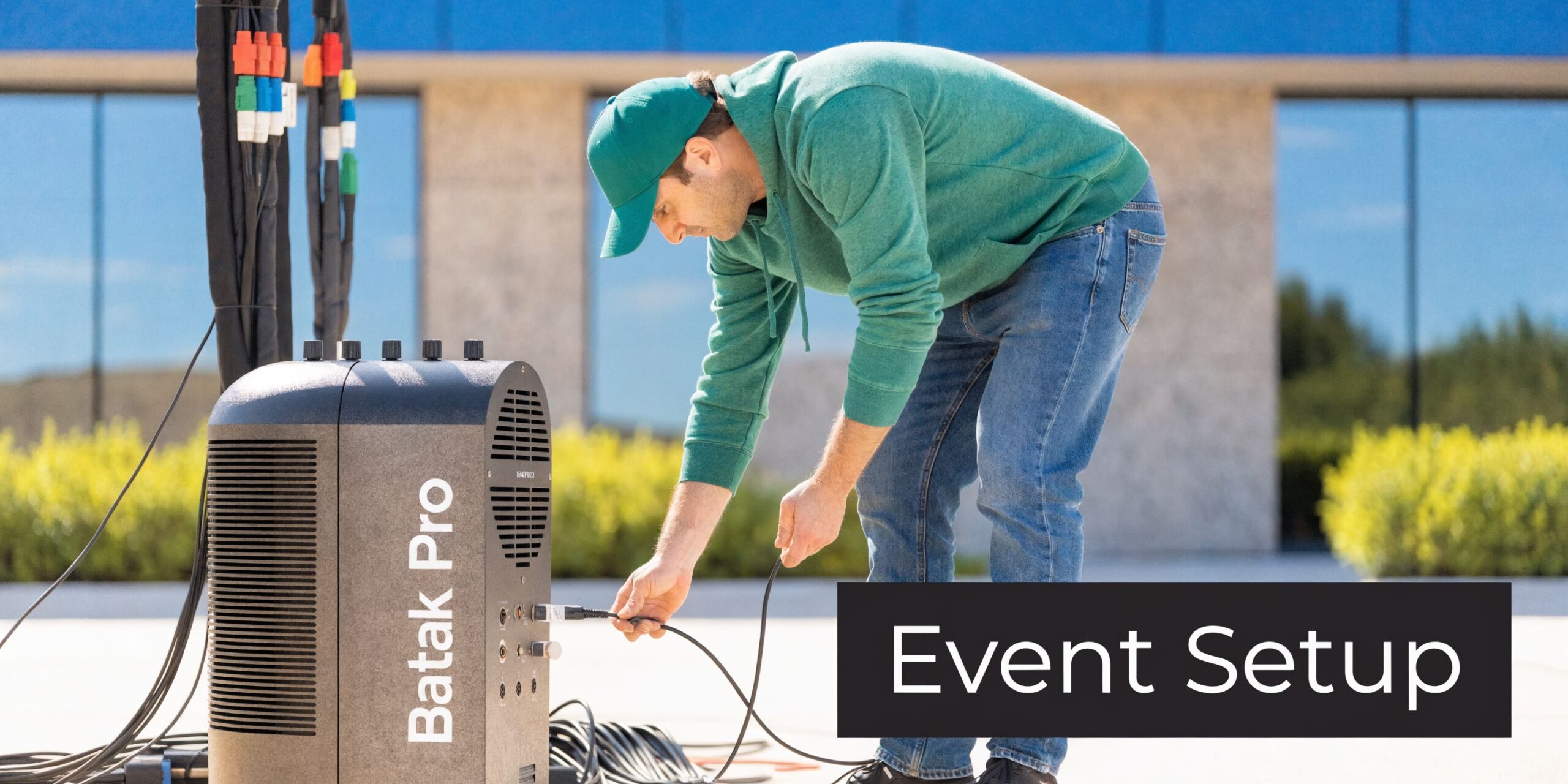
According to JS Fun Event Hire, the Batak Pro requires an operational footprint of 2.6m width × 2m depth × 2m height and runs from 1 × 13-amp standard socket. The equipment is also designed to fit through minimum door widths of 0.60m and standard venue lifts, which is useful for venues such as ExCeL and Manchester Central (jsfuneventhire.co.uk).
Those figures matter because planners often think only about the machine itself, not the operating zone around it.
Use this as your practical checklist:
- Floor space: Allow the full operating footprint, not just a tight equipment footprint.
- Power location: Keep the power source within easy reach so cable runs stay neat and safe.
- Access route: Check loading bay route, doors, lifts and any awkward corners.
- Head height: Don’t assume low ceilings, decorative rigging or signage won’t interfere.
- Surface condition: Stable, level ground gives a better player experience and cleaner install.
Outdoor setups need more thought
Outdoor batak hire is possible, but it’s rarely as simple as moving the machine outside.
The core questions are environmental. Is the unit sheltered? Is there a weather plan? Is the surface suitable? If mains power isn’t practical, outdoor events can operate via 12V battery supply with gazebo provision, as noted in the same venue guidance.
That flexibility is useful for roadshows, summer parties and marquee activations. It still needs proper planning. Wind, rain, guest flow and cable management all affect how well the setup performs.
Outdoor events don’t usually fail because of the attraction. They fail because nobody planned for shelter, power routing or crowd management.
Why staffing changes the experience
A staffed Batak setup almost always performs better than an unstaffed one.
An operator or event host keeps rounds moving, explains the challenge quickly, manages safe participation and keeps the mood energetic. They also help prevent the common drift where one confident guest dominates the machine while everyone else hangs back.
For larger events, staffing does more than supervise. It protects throughput.
A strong operator will:
- reset the machine quickly
- call out scores to build crowd interest
- encourage hesitant guests to join
- manage any queue fairly
- coordinate with brand staff if data capture is part of the activation
If you need support around operator-led delivery across attractions, specialist event staffing solutions make a noticeable difference.
Safety and compliance basics
Corporate clients shouldn’t have to chase basic compliance paperwork on the eve of an event.
The standard expectations for this type of hire include:
- PAT testing certification
- Public liability insurance
- Step-free access planning
- Safe cable management
- Clear operating supervision
The source above notes that UK-based operators provide £10 million Public Liability Insurance and PAT certification as standard. That level of cover is one of the reasons Batak is widely used in formal corporate environments, not just informal parties.
Branding Data Capture and Package Options
A Batak activation at a busy exhibition usually has two jobs. It needs to pull people onto the stand, and it needs to give the sales or marketing team a sensible way to continue the conversation after the event.
That only happens when branding, data capture and package design are planned together. If they are treated as add-ons, the result is often a queue with no qualification, weak brand recall and a post-event spreadsheet full of names nobody can use.
Branding that supports the experience
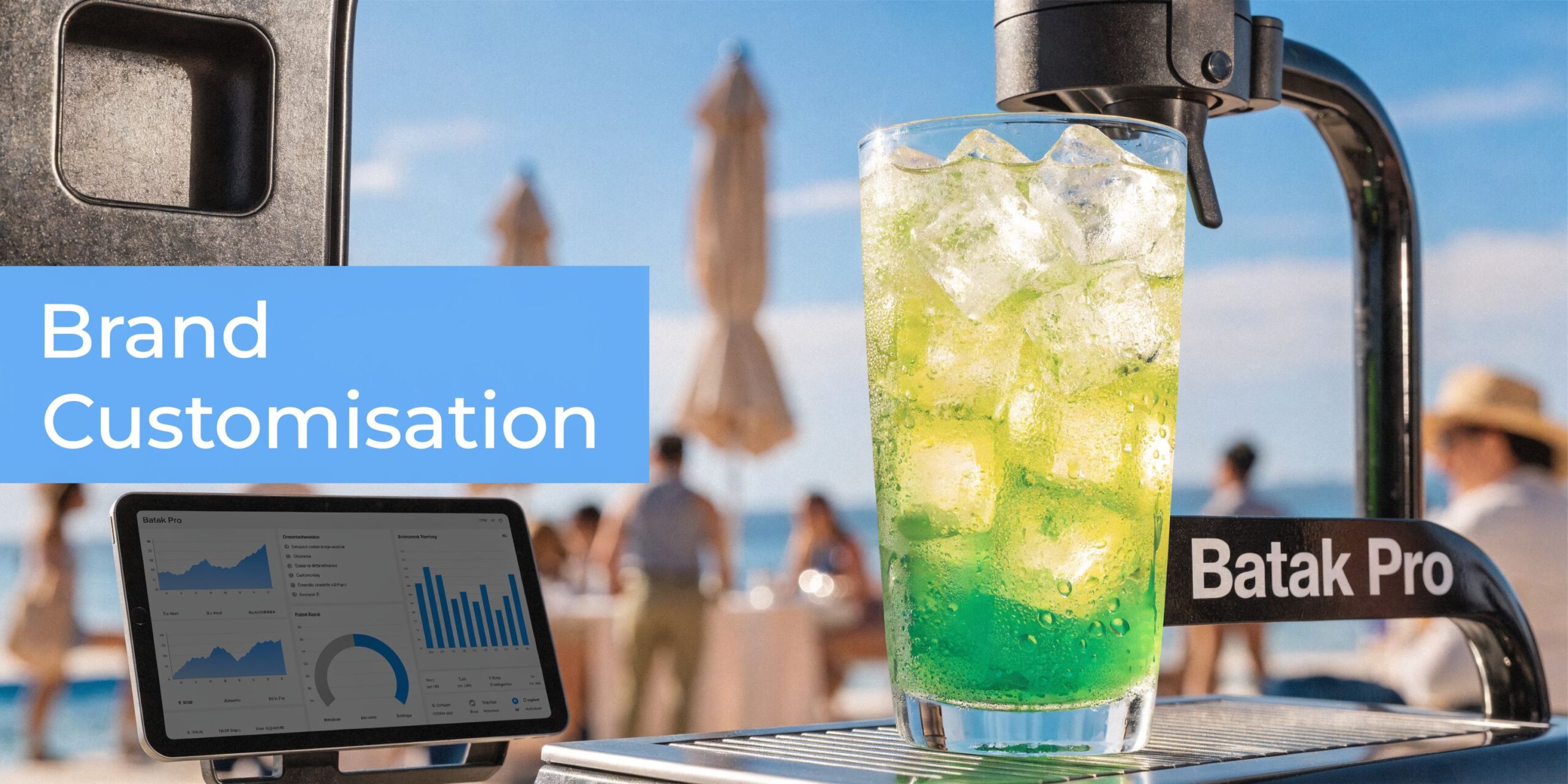
Good branding makes the unit recognisable from a distance and readable in seconds. It does not bury the game under copy.
For corporate events, I usually advise clients to choose one of three approaches:
- Light-touch branding: Logo placement, colour-matched panels or simple header graphics. Best for multi-sponsor environments or stands where the Batak needs to sit neatly within a wider design scheme.
- Campaign-led branding: Product visuals, launch messaging and stronger colour application. Best for single-brand activations where the Batak is a visible part of the campaign.
- Leaderboard branding: Branded score screens, finals boards or winner displays. Best for events where crowd build, repeat plays and social visibility matter.
Short messages work best. A guest can understand a challenge line, prize prompt or campaign hashtag instantly. They will not stop to read a block of marketing copy while the next player is waiting.
For ESG-conscious events, branding choices also affect waste. Reusable panels, non-date-specific graphics and digital score displays reduce one-off print production and make more sense for roadshows, annual conferences and hybrid event programmes that repeat across several venues.
Data capture works best after the game starts
The strongest Batak activations earn the data rather than demanding it upfront.
A guest sees the challenge, has a quick go, posts a score, then chooses whether to join the leaderboard, enter a prize draw or qualify for a final. That sequence feels fair because the participant has already received something. They have had the experience first.
A practical flow looks like this:
- Invite the play
- Record the score
- Offer a reason to stay involved
- Collect only the details you need
- Make consent and follow-up clear
That last point matters. For UK corporate events, data capture has to be useful and compliant. If the goal is sales follow-up, ask for the minimum relevant fields and state what happens next. If the goal is footfall and engagement, a first name and score may be enough for the live board.
There is also a clear trade-off here. The more fields you add, the lower your throughput tends to be. At a packed exhibition stand, a short form often outperforms a detailed one because more people can play, more people gather to watch and the stand feels active throughout the day.
Hybrid and multi-mechanic setups
Batak fits hybrid event formats better than many planners expect.
For an in-person audience, the machine creates live energy. For remote teams, the same activation can feed into a hosted leaderboard, timed finals reveal or event app update, provided the scoring and moderation process is planned in advance. That gives corporate planners a way to connect office attendees, field teams and livestream viewers around one simple competitive mechanic.
A second activation can also help structure the journey. Pairing Batak with a branded spinning prize wheel for exhibition engagement works well when the Batak drives attention and high scores trigger a prize, a bonus play or a qualification stage. Used properly, each mechanic has a clear role instead of competing for the same moment.
Here’s a quick look at the product in action:
Package structure and budgeting
Hire cost depends on the event objective, not just the hire duration.
A Batak booked for staff entertainment is usually simple to scope. A Batak booked for lead generation, hybrid engagement or a branded product launch needs more planning, more coordination and often more on-site support. That is why package thinking works better than chasing a single headline price.
| Package | Duration | Includes | Price Range (GBP) |
|---|---|---|---|
| Standard dry hire | Half day | Batak Pro unit, delivery, setup, collection | Custom quote |
| Event day package | Full day | Batak Pro unit, delivery, setup, collection, on-site operator | Custom quote |
| Branded activation package | Full day | Batak Pro, operator, branded panels or leaderboard options, delivery and collection | Custom quote |
| Roadshow package | Multi-day | Batak Pro, logistics planning, repeat deployment, operator support as required | Custom quote |
Choosing the right package for the outcome
The best-value package is the one that matches the job.
If the machine is there to entertain guests for a short internal event, a straightforward hire may be enough. If the stand needs to attract traffic, capture qualified data and report performance back to stakeholders, operator support, branded assets and a clear scoring mechanic usually justify the extra spend.
I usually advise clients to put budget into the parts that affect results on the day: visible branding, fast score handling, queue management, and a data capture method that suits the audience and the event target. Decorative extras come after that.
For corporate planners with ESG reporting requirements, package design should also cover reuse, transport efficiency, print volumes and whether the activation can be redeployed across multiple dates. Those details matter more now than they did a few years ago, especially for national roadshows and internal engagement programmes where procurement teams want both audience impact and cleaner operational decisions.
Planning Your Batak Hire Timeline and Logistics
Most Batak bookings go smoothly when the event team answers the practical questions early. The problems usually come from last-minute assumptions about venue access, branding approvals or power.
A clean planning timeline fixes that.
What to prepare before requesting a quote
A good brief saves time on both sides. Before you ask for pricing or availability, gather the core information:
- Event type: exhibition, conference, team-building day, hospitality event or private celebration
- Venue details: city, access notes, indoor or outdoor setting
- Date and timing: build window, live hours, breakdown timing
- Purpose: entertainment, lead capture, staff engagement or branded activation
- Support needs: staffing, branding, leaderboard, prize mechanic
If you can answer those clearly, the supplier can scope the right package much faster.
The timeline that tends to work best
For straightforward hires, the sequence is usually simple. Confirm availability, review venue details, approve branding if needed, lock in delivery timings, then finalise the on-site contact and operating plan.
For bigger exhibitions or multi-day activations, add more time for:
- venue paperwork
- graphics production
- risk assessment review
- coordination with stand builders or production teams
- digital leaderboard or hybrid integration planning
Hybrid use deserves special attention. If the Batak challenge is feeding into a remote audience experience, agree early how scores will be displayed, who updates them and what the online audience is meant to do with that information.
ESG planning is now part of logistics
The verified planning point here is that UK corporate event budgets are increasingly prioritising ESG, and planners are asking more often about factors such as energy efficiency, biodegradable branding options and carbon offset choices.
That doesn’t mean every event needs a complex sustainability framework for one attraction. It does mean the questions should be asked early enough to influence decisions.
The practical ESG points to consider are:
- Power planning: use the attraction efficiently rather than leaving kit running unnecessarily
- Branding materials: ask whether graphics can be reused or specified with lower-impact materials
- Transport logic: combine deliveries where possible rather than treating each unit as a standalone move
- Reporting readiness: know what your client may ask for after the event
A supplier who can answer those questions clearly will save time later.
Logistics that clients often overlook
The small details tend to cause the most friction:
- final delivery contact not confirmed
- loading bay times not booked
- stand plan changed without updating attraction space
- branding artwork approved too late
- no one assigned to own the leaderboard or prize process
None of these issues are dramatic on their own. Together, they create stress that’s easy to avoid with an earlier checklist.
When Batak hire is planned as part of the full event flow, it feels effortless on site. That’s the goal. Guests should only see a busy, well-run attraction. They shouldn’t see the logistics behind it.
Frequently Asked Questions and Booking Your Batak
A common late-stage problem goes like this. The stand design is signed off, the client wants a competitive feature to pull traffic, and Batak Pro gets approved, but no one has yet confirmed sightlines, staffing ownership, or how remote attendees will see any of it. Booking well means answering those points before the machine arrives.
Is Batak Pro suitable for exhibitions?
Yes. Exhibition stands are one of the strongest uses for Batak Pro because the activity is visible, quick to grasp and naturally competitive.
Placement matters more than planners often expect. Put it where aisle traffic can see the lights and the player reaction, and it starts conversations. Tuck it behind furniture or a meeting area, and performance drops because passers-by do not realise a live challenge is happening.
Is it only for sporty audiences?
No. Batak Pro has obvious links to sport and performance, but the event value is broader than that.
At corporate events, it works well because guests can engage at different levels. Some want a serious leaderboard attempt. Others want a fast, low-pressure challenge between meetings. That range is why it fits conferences, exhibitions, staff events and brand activations.
What’s the difference between Batak Pro and Batak Lite?
The main difference is presence and footprint. Batak Pro gives you a larger visual feature and usually makes more sense for exhibition stands, conferences and busy public-facing spaces. Batak Lite is the better fit where access, floorplan limits or lower ceilings make a smaller unit the safer choice.
The right decision depends on the brief. If the attraction needs to stop traffic, Pro is usually stronger. If space is restricted and the activity only needs to support a smaller guest flow, Lite can be the more practical option.
How long does a typical game last?
Short rounds usually work best. They keep energy high, make queue management easier and give the host more chances to reset the challenge for the next guest.
That also helps with content capture. A short, repeatable game format is easier to film, score, announce and share across event channels than a longer activity with uneven pacing.
Does it need to be staffed?
For most corporate events, yes.
A good host does more than explain the rules. They control queue flow, keep the area safe, encourage hesitant guests, manage the leaderboard properly and connect the gameplay to your campaign objective. That objective might be lead capture, social content, prize qualification or timed stage callouts.
If the event is hybrid, staffing matters even more. Someone needs to cue remote score updates, coordinate with the show caller or AV team, and make sure online audiences understand what is happening on site.
Can it be used outdoors?
Yes, provided the setup is planned properly.
Outdoor use needs shelter, stable ground, protected power and a clear bad-weather process. I would also check audience flow carefully. An outdoor Batak unit can attract a crowd quickly, so the play area and queue line need to stay clear of entrances, catering routes and emergency access.
What power does it require?
The Batak Pro runs from a standard 13-amp socket. That is usually straightforward, but the key issue is not the socket itself. It is where that socket sits in relation to the activation space, cable runs and the rest of the stand build.
Ask for that to be confirmed against the final floorplan, not an early draft.
Is it accessible for a broad audience?
It has broad event appeal and works for a wide range of guests. A suggested minimum age may still apply, so check that against the audience profile before the event.
Accessibility should be reviewed as part of the live layout. The unit needs clear approach space, sensible positioning and enough room for guests to watch without blocking access. For corporate events with ESG reporting requirements, that planning matters because inclusive participation is often scrutinised alongside environmental considerations.
Can it support lead capture?
Yes, if the data journey is planned properly.
The strongest setups make the exchange clear. Guests enter details for a leaderboard place, prize draw, timed competition slot or post-event follow-up, and the brand team can explain that in one sentence. If the data capture process feels bolted on, completion rates usually suffer and the host ends up slowing the queue.
Is Batak a good fit for hybrid events?
It can be, if the hybrid layer is designed deliberately rather than added at the last minute.
The on-site challenge is only one part of the experience. Remote attendees need their own reason to care, whether that is live score updates, hosted cross-site competitions, MC-led challenge windows, streamed finals or social voting tied to the activation. The best hybrid Batak programmes treat the physical unit as the anchor point, then build digital moments around it for audiences who are not in the room.
That approach also helps justify the hire internally. A single activation can serve stand engagement, content capture, remote viewing and post-event reporting if the format is planned early enough.
What should you confirm before booking?
Before approving the hire, confirm:
- event date and live hours
- venue access and loading details
- final space allocation and sightlines
- power location
- staffing responsibility
- branding and artwork deadlines
- leaderboard, prize or data-capture process
- hybrid requirements, if remote attendees are involved
- on-site decision-maker
- any client ESG or reporting requirements
Those checks prevent the usual avoidable problems on install day.
PSW Events handles delivery, logistics, setup, branding, staffing and compliance for corporate events, exhibitions, conferences and private functions across the UK. We also help clients shape the activation around real event constraints, including venue access, hybrid production and sustainability reporting requests. That is usually where the difference shows. Guests see a fast, well-run competition. The planning behind it stays in the background.
If you’re planning an event and want to check availability, venue suitability or branding options for a Batak Pro, contact PSW Events for a custom quote and practical advice on the best setup for your brief.