
A full-size air hockey table usually needs about 2.2m x 1.3m x 1.0m for the unit, plus 3.2m x 2.3m of clear operational space, a 0.82m doorway width, and a standard 13A socket. In practice, air hockey table hire for a UK event is rarely about the deposit first, it's about confirming that the table can get into the room, sit level, and be run safely once it's there.
That's where many bookings go sideways. The table looks simple on paper, but the venue route, loading point, floor finish, and power position can make a hire straightforward or impossible before guests even arrive.
Why Air Hockey Table Hire Needs More Than a Booking Form
The most common mistake is treating an air hockey table like a piece of decorative furniture. Someone books it for a staff party, the venue approves the idea, and the problem only appears when the delivery team starts asking about stairs, lift access, or the width of the doorway into the function room.
The real issue is movement, not the game
Air hockey works because it feels immediate. Two players, a puck, and no explanation needed. That simplicity hides the fact that the table itself is bulky, heavy, and awkward to manoeuvre through real venues with service corridors, fire doors, or heritage constraints.
The UK rental market exists to handle that complexity. The Office for National Statistics reported £6.1 billion in 2023 UK business turnover for the “renting and leasing of other machinery, equipment and tangible goods” industry, with about 28,000 people employed across the UK in that sector. That scale matters because event hire sits inside a mature logistics environment, not a casual side hustle. For planners, that means the provider should be able to think beyond the product and into access, staffing, and compliance. The official market context is one reason short-term game hire can work reliably at scale, if the setup is checked properly.
Practical rule: if the venue can't confirm access, the booking isn't ready yet.
A lot of friction comes from assumptions. A room can look large enough for play and still fail at the delivery stage because the route in is too tight, the floor is uneven, or the table can't be turned safely on arrival. In other words, the buying decision is really a site-readiness decision in disguise.
Assessing Your Venue Space and Access Requirements
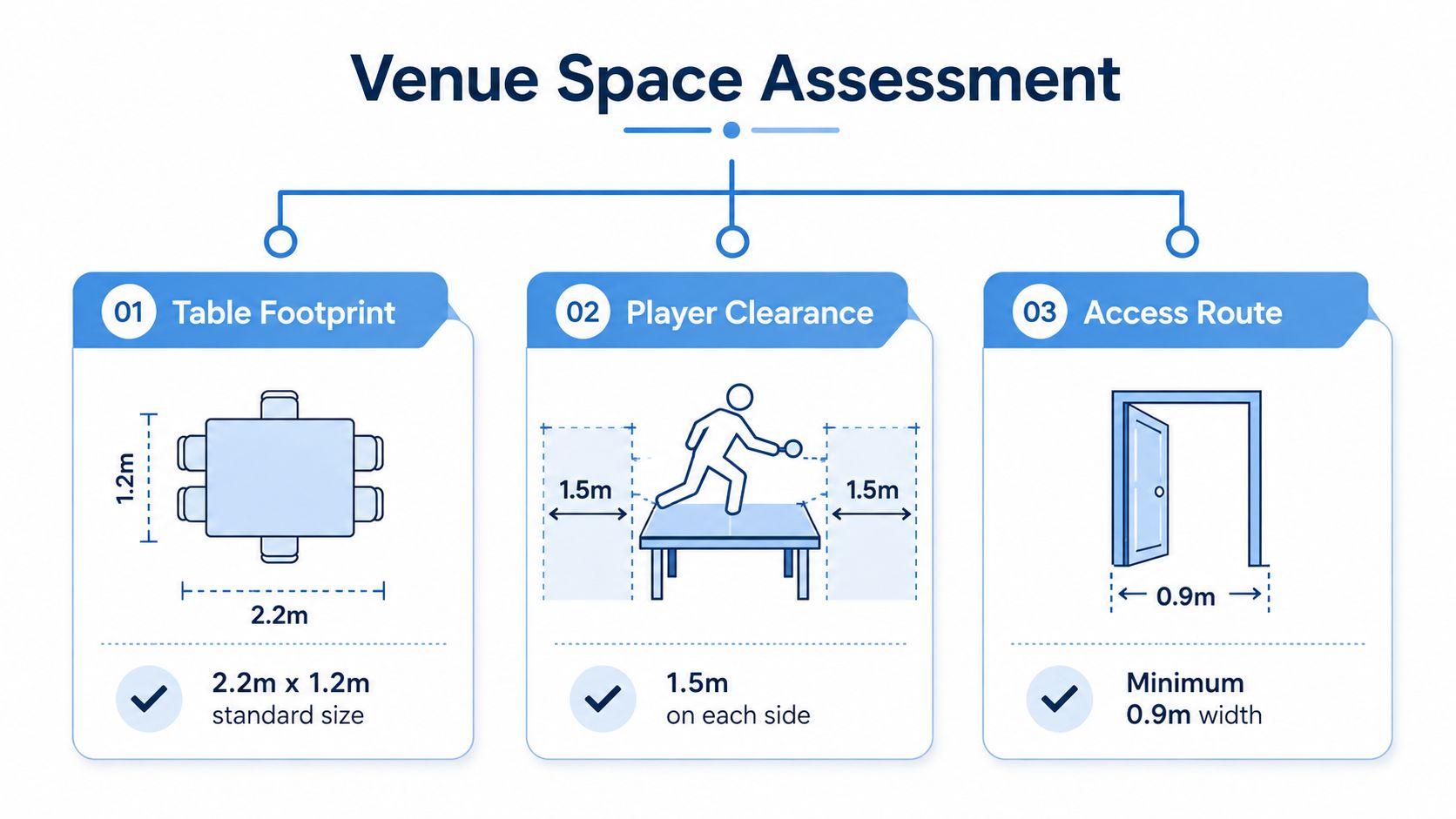
Start with the footprint of the table itself, then test the route, then verify the operating zone. That order matters, because a room that seems generous can still be unusable once you account for player movement, circulation, and delivery handling.
Measure the room the way the hire team will use it
A full-size unit is typically around 2.2m x 1.3m x 1.0m, but the working area matters more than the cabinet dimensions. You need 3.2m x 2.3m of clear space for practical play, and that space has to stay clear once people start queuing around it. If your event is busy, corners close to doorways are a bad idea because spectators tend to collect there and block movement.
The delivery route is just as important. The table needs to pass through a doorway of at least 0.82m and travel along corridors, lifts, or loading areas that can handle the movement. One provider notes that access has to be checked carefully in advance because these units are very heavy and can't be taken up or down stairs, which is exactly the sort of detail that catches planners out when they only measure the room itself.
Check the venue like an installer would
Look at the floor finish, not just the floor area. A flat, even surface is what keeps the table stable and the puck behaving properly, and that becomes even more important if the unit is going into a hotel suite, conference room, or temporary hospitality structure. If there's a lift, confirm its size and whether the hire team can use it without a complicated key or service restriction.
The other key consideration is power. A standard 13A socket is the usual requirement, so the question isn't “does the room have electricity”, it's “is the socket close enough to the final position to be practical?” Once you've answered that, you're in a much stronger place to confirm the hire.
Understanding UK Pricing and Booking Timelines
Price on its own doesn't tell you much. For air hockey table hire, the key question is what's included, what's extra, and how early you need to lock it in so the delivery team can plan around your venue.
What you're actually paying for
Leisure King lists UK air hockey hire from £350 + VAT, with optional staffing at £35.50 + VAT per hour. That's a useful benchmark because it shows the base hire and the labour around it aren't always bundled together. If your event needs branded visuals, on-site operation, or managed turn-taking, those extras can matter more than the table price itself.
Air hockey is often booked alongside other interactive games, so it's worth comparing package structure rather than just headline price. A broad games rental overview from PSW Events can help you think about where air hockey sits inside a larger event mix, especially if you're planning a shared entertainment zone rather than a single stand-alone attraction.
Book earlier than you think you need to
Corporate events, exhibitions, and trade shows often need longer lead times because venue access, load-in schedules, and production schedules have to line up. In practice, that means a late enquiry can be rejected not because the game is unavailable, but because the installation window no longer fits the event plan.
Branding also affects timing. If you want custom graphics, you need enough time for artwork sign-off and production, which means the hire conversation should start well before the event week. The safest way to approach it is simple, get the logistics reviewed first, then finalise the commercial terms once the provider has confirmed the venue is workable.
A cheap hire that can't get into the room is expensive once the event starts.
Delivery, Setup, and On-Site Coordination
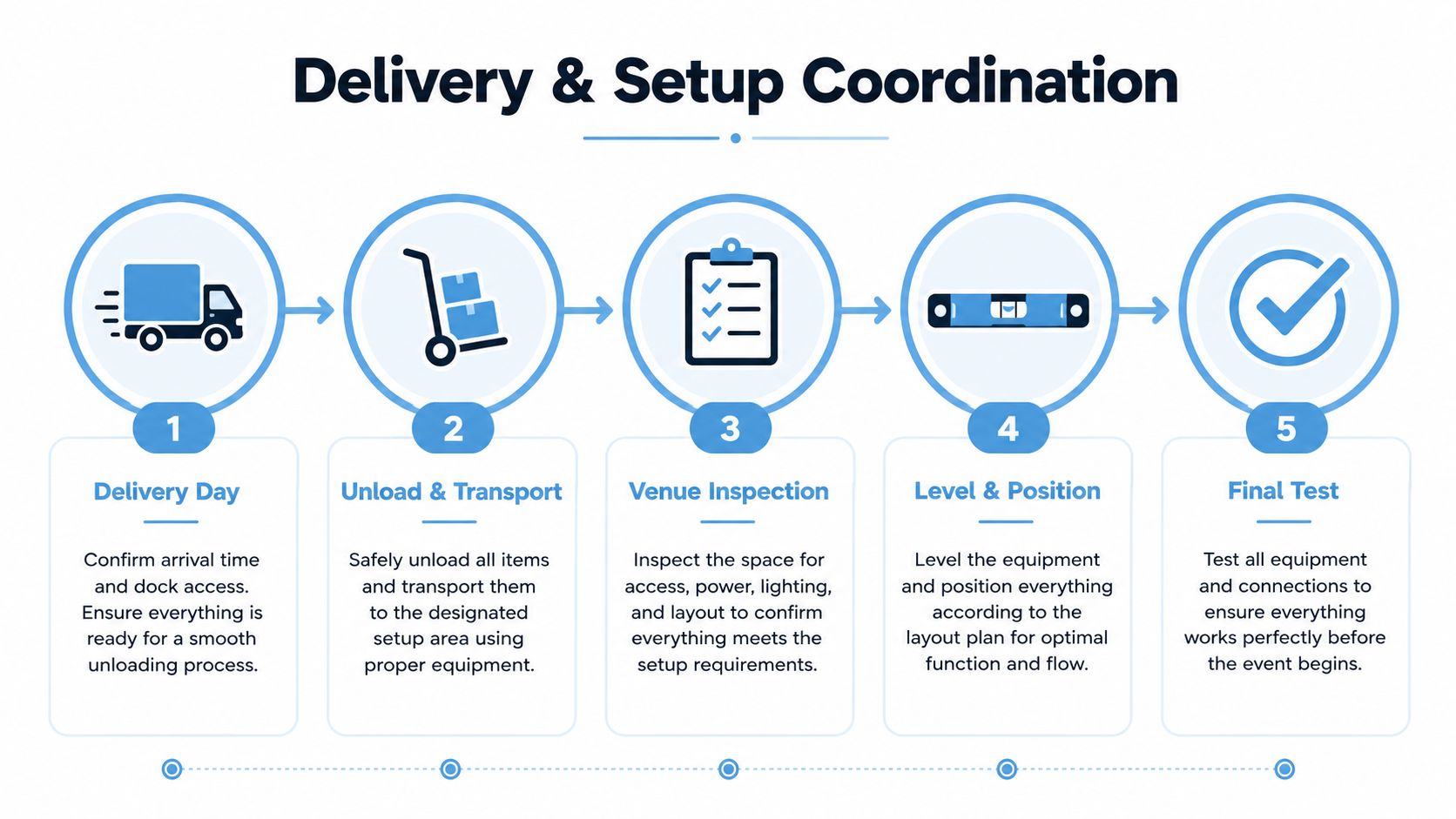
The day the table arrives is where all the prep gets tested. If you've cleared access, confirmed the floor, and briefed the venue, setup usually feels routine. If you haven't, the hire team can spend valuable time doing obstacle management instead of installation.
Delivery succeeds or fails on the route in
The best operators ask about narrow doorways, stairs, lifts, and carry distances before they commit to a slot. That's not bureaucracy, it's practical risk control, because a heavy unit that fits the room may still fail the journey into it. If the table has to be wheeled through a service route, the loading path needs to be clear, level, and available at the agreed time.
Outdoor use is another trap. A provider may allow use only if the table is undercover and on a stable, level surface, which is a very different setup from putting it on open paving or grass. The same logic applies to final position, if the venue team wants it in a corner after delivery, that corner still has to be accessible and workable for the equipment crew.
Coordinate the setup like a venue handover
Build buffer time into the schedule. The hire team needs space to unload, position, test, and brief the people running the activation, and that usually matters more than squeezing the delivery into the last available minute. PAT testing is also a standard expectation for reputable UK providers, particularly for corporate and exhibition environments where compliance paperwork matters.
For planners dealing with awkward transport conditions, there's a useful parallel in safe piano transport in London, because the same principle applies, measure the route, not just the room.
If you're comparing interactive games, the practical setup questions are similar across formats, which is why it helps to review options like pool table hire with the same access-first mindset.
Health, Safety, and Insurance Considerations
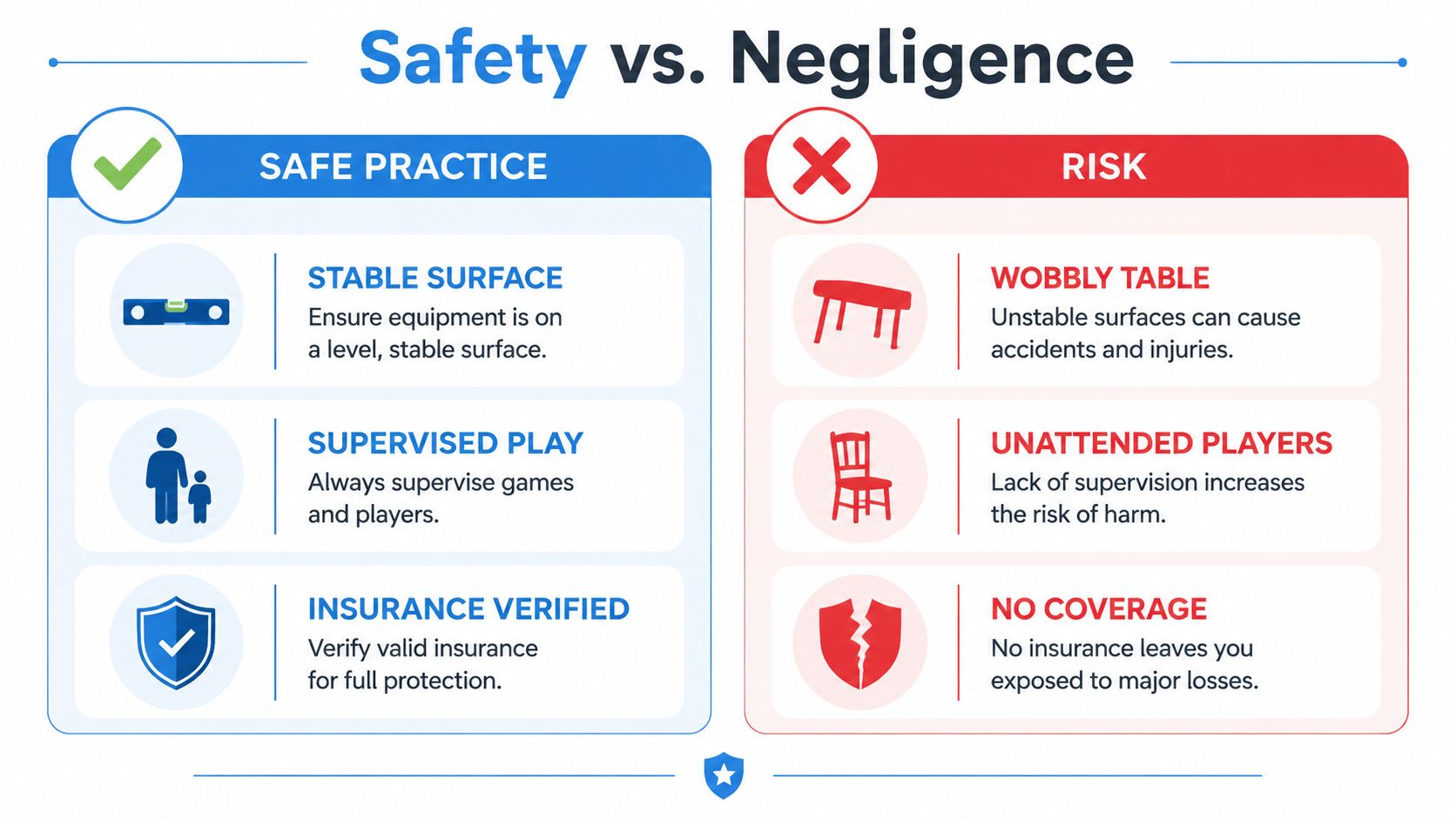
The safest events feel boring behind the scenes, and that's a good thing. If the table is stable, the players understand the boundaries, and the provider is properly insured, nobody at the event has to think about risk management at all.
Insurance is part of the service, not a bonus
PSW Events says its coverage stands at £10 million across products, employee, and public liability insurance, supported by more than 50 years of combined experience. That kind of coverage is a strong indicator of what professional delivery looks like in this sector, and it shows why corporate buyers should always ask for insurance confirmation before they sign.
A proper risk review doesn't need to be dramatic. It just needs to answer three questions. Is the table stable on the surface provided? Is the play area supervised? Is the provider covered for the type of event you're running? If any of those answers is unclear, the booking isn't ready.
The safest events keep the playing zone clear, especially around the ends where people lean in or celebrate a score. That matters even more if the table is in a mixed-use space with pedestrians moving past the game.
Use PSW Events' event risk assessment template as a reference point if your venue asks for documented checks before the hire arrives.
Simple safety checks still matter
Age suitability should be stated clearly, and Leisure King lists its air hockey hire as suitable for ages 7+. That's useful because it reminds planners that the table may be shared by guests with very different heights, confidence levels, and play styles. A short briefing on turn-taking and no-climbing rules avoids most avoidable problems.
Insurance doesn't replace common sense. It backs up the provider's responsibilities, but the venue team still needs to keep walkways clear, manage crowding, and make sure the equipment is used in the way it was intended.
Your Air Hockey Hire Booking Checklist
Good bookings are usually the ones where someone checked the awkward details early. If you use a simple checklist before you confirm, you're far more likely to end up with a hire that works on the day rather than one that looks good in the email thread and fails in the room.
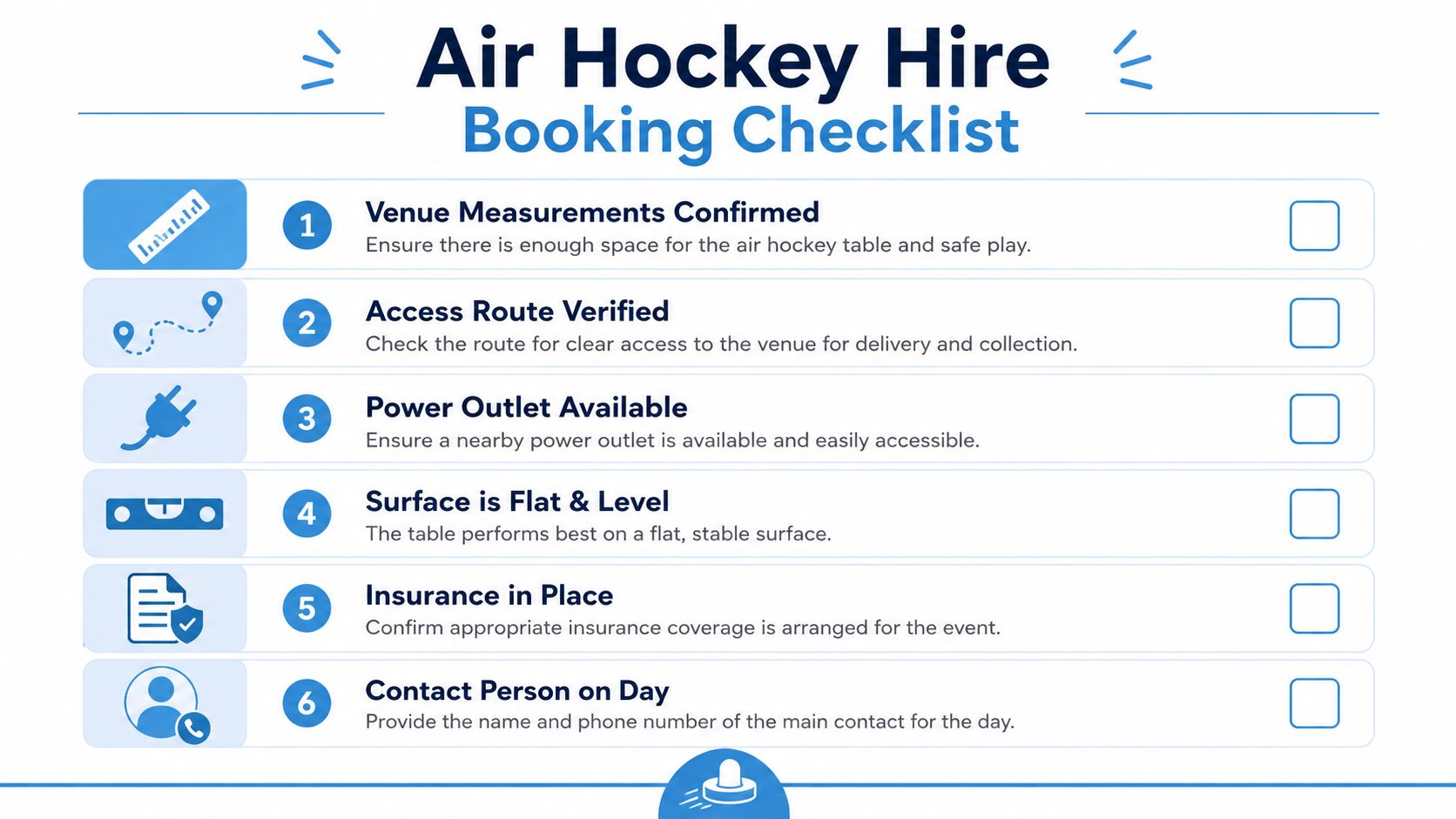
The six checks that save the most trouble
- Venue measurements confirmed. Match the room against the table size and the clearance zone, not just the area on the floor plan.
- Access route verified. Check door widths, corners, lifts, and whether the table can move from delivery point to final position without stairs.
- Power outlet available. Confirm a nearby 13A socket so the cable run stays practical and tidy.
- Surface is flat and level. Uneven flooring is one of the fastest ways to make a hire feel amateur.
- Insurance is in place. Ask for proof before the event, not after the invoice.
- Contact person on the day. One named person should handle venue access, supplier questions, and last-minute decisions.
Treat the checklist like a go or no-go test
If any one of those checks comes back uncertain, pause the booking until it's resolved. That's not being difficult, it's protecting the event from avoidable disruption. The providers that make this easy are usually the ones that ask the right questions early and give clear answers about access, delivery, and installation.
You'll also want to clarify what happens after the event ends. Removal timing, collection access, and who signs the handover all need to be agreed before the table arrives, because the breakdown is part of the booking, not an afterthought.
Moving Forward with Confidence
A smooth air hockey hire rarely happens by accident. It usually comes from a planner who measured the route properly, asked about the lift, checked the floor, and treated delivery as part of the event design rather than a last-minute logistics task.
The game itself is easy. Two players, quick rounds, and instant engagement across mixed audiences. What makes the experience feel smooth is the work done before the table ever reaches the venue, from confirming power and access to making sure the provider can deliver, install, and collect without surprises.
Confidence comes from the boring details being settled early.
That's true whether you're planning a corporate exhibition, a team day, a fan zone, or a private celebration. The same checks still apply, and the same standards still separate a dependable activation from a stressful one.
If you're planning air hockey table hire and want a provider who can handle the logistics as carefully as the entertainment, visit PSW Events to explore the range and discuss your venue requirements before you book.