
You've invested in the venue, the stand design and the guest list. Then the exhibition opens, delegates drift past, and the entertainment attracts a glance rather than a conversation. A polished performance can create atmosphere, but a premium activation has to do more if it sits inside a product launch, corporate exhibition or brand experience.
The strongest luxury event entertainment gives guests a reason to participate, creates a clear operational flow and produces evidence of engagement. That might mean an F1 simulator that keeps visitors returning to improve their score, a flight simulator that starts a conversation with a prospective buyer, or a VIP hospitality zone that gives senior guests space to connect. The creative idea matters, but so do capacity, accessibility, safety documentation, carbon impact and lead capture.
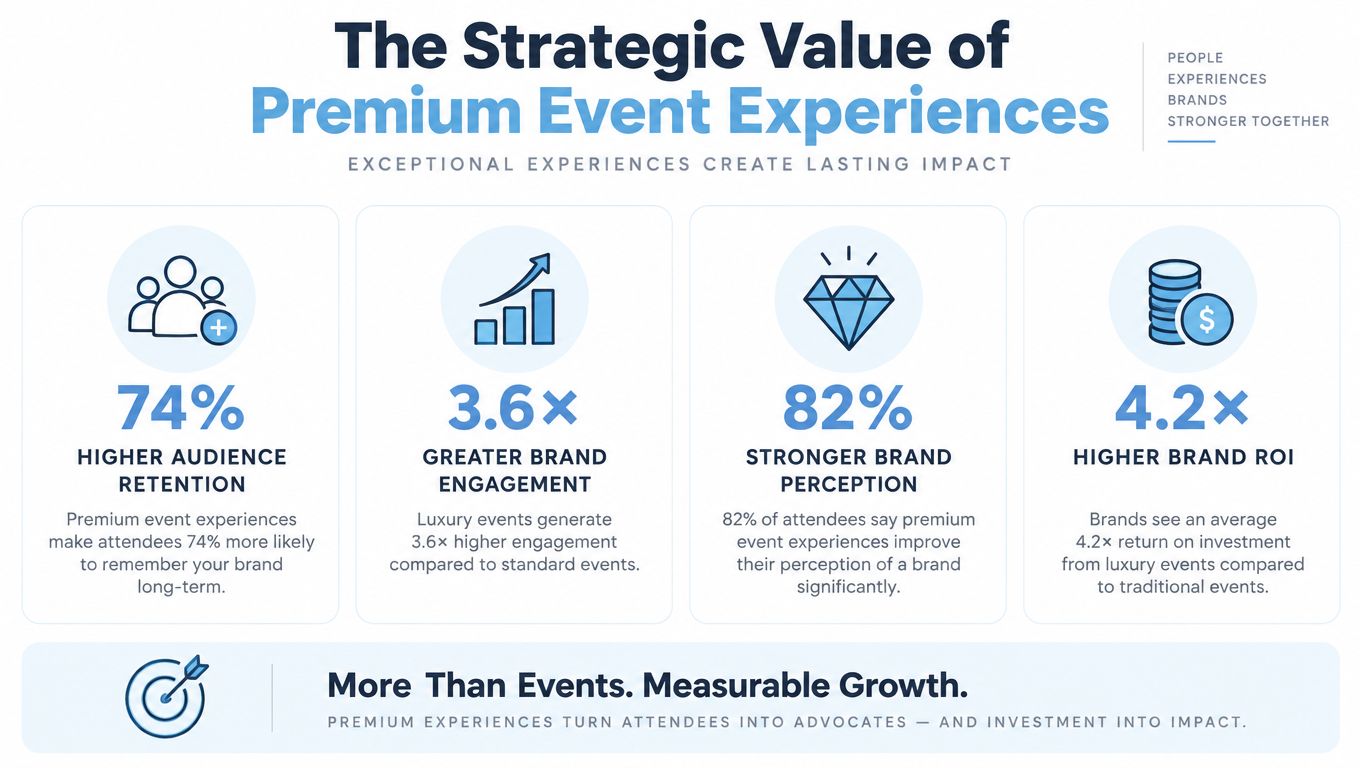
The Strategic Value of Premium Event Experiences
At a high-stakes corporate event, standard background entertainment can disappear into the room. Guests hear the music while checking their phones, watch a performance while waiting for a meeting, or pass a decorative installation without stopping. A well-designed interactive experience changes the behaviour you need to influence. It gives people a task, a reason to stay and a natural prompt to speak with your team.
The commercial context is substantial. The UK Events Report 2024 executive summary estimates the UK events economy at £61.653 billion annually, including £16.3 billion from conferences and meetings, £10.9 billion from exhibitions and trade fairs, £4.0 billion from business-travel meetings, £2.4 billion from incentive travel, and £28.053 billion from leisure and outdoor events. That spread matters because premium experiences work across corporate and consumer settings, not only at private celebrations.
Entertainment with a commercial job
Exhibitions make the opportunity particularly clear. The same report records approximately 1,016 UK exhibitions in 2023, with exhibitions contributing £10.9 billion to the economy. The Events Industry Alliance's exhibition figures put 2024 exhibition output at £11.5 billion, supported by more than 126,000 jobs and over 7.2 million visitors. Its index also records 1,145 exhibitions, 132,000 exhibiting companies and approximately £87,000 of output associated with each exhibitor.
Those figures don't prove that every simulator generates a sale. They do show why planners should treat visitor attention as a valuable event resource. A branded attraction can support footfall, dwell time, exhibitor visibility, social interaction and qualified conversations, provided the experience is connected to a clear objective.
VisitBritain reported an estimated 1.08 million conferences and meetings in the UK in 2024, welcoming 95.4 million delegates and generating £19.3 billion in direct expenditure in venues and destinations. The same VisitBritain business-events reporting records 6.8 million inbound business visits, contributing £5.9 billion in spending. For a planner presenting a premium entertainment budget, the sensible argument isn't “this looks impressive”. It's “this format helps us create and measure more valuable interactions during a fixed event window”.
A corporate entertainment supplier such as PSW Events' UK corporate entertainment service can be assessed against that logic. The relevant questions are whether the attraction fits the audience, handles the expected flow, reinforces the brand and records useful participation data.
Defining Luxury Event Entertainment Categories
Luxury doesn't mean every guest must watch a headline act from a seated position. In a corporate environment, luxury is often the quality of the interaction, the control of the environment and the confidence that the experience has been designed around the guest rather than placed in spare floor space.
A string quartet, jazz trio or live DJ can establish tone effectively. These formats work well when guests need to talk, dine or move through a reception. Their limitation is measurement. You can observe atmosphere and response, but you won't automatically know who engaged, how long they stayed or whether the performance prompted a commercial conversation.
Interactive technology creates a different operating model. An F1 racing rig, multi-racing simulator, American football challenge, golf simulator, rugby experience or flight simulator gives the visitor a defined action. Electronic scoring can create repeat visits, while a facilitator can connect the activity to the product, campaign or meeting programme.
Match the format to the event
A trade show floor usually needs high throughput, visible competition and an easy route into a sales conversation. A giant Scalextric layout, Batak Pro, VR station or sports simulator can attract passing traffic because the challenge is legible from a distance. A leaderboard adds a reason to return, but it also creates a duty to manage queues, participant consent and data collection properly.
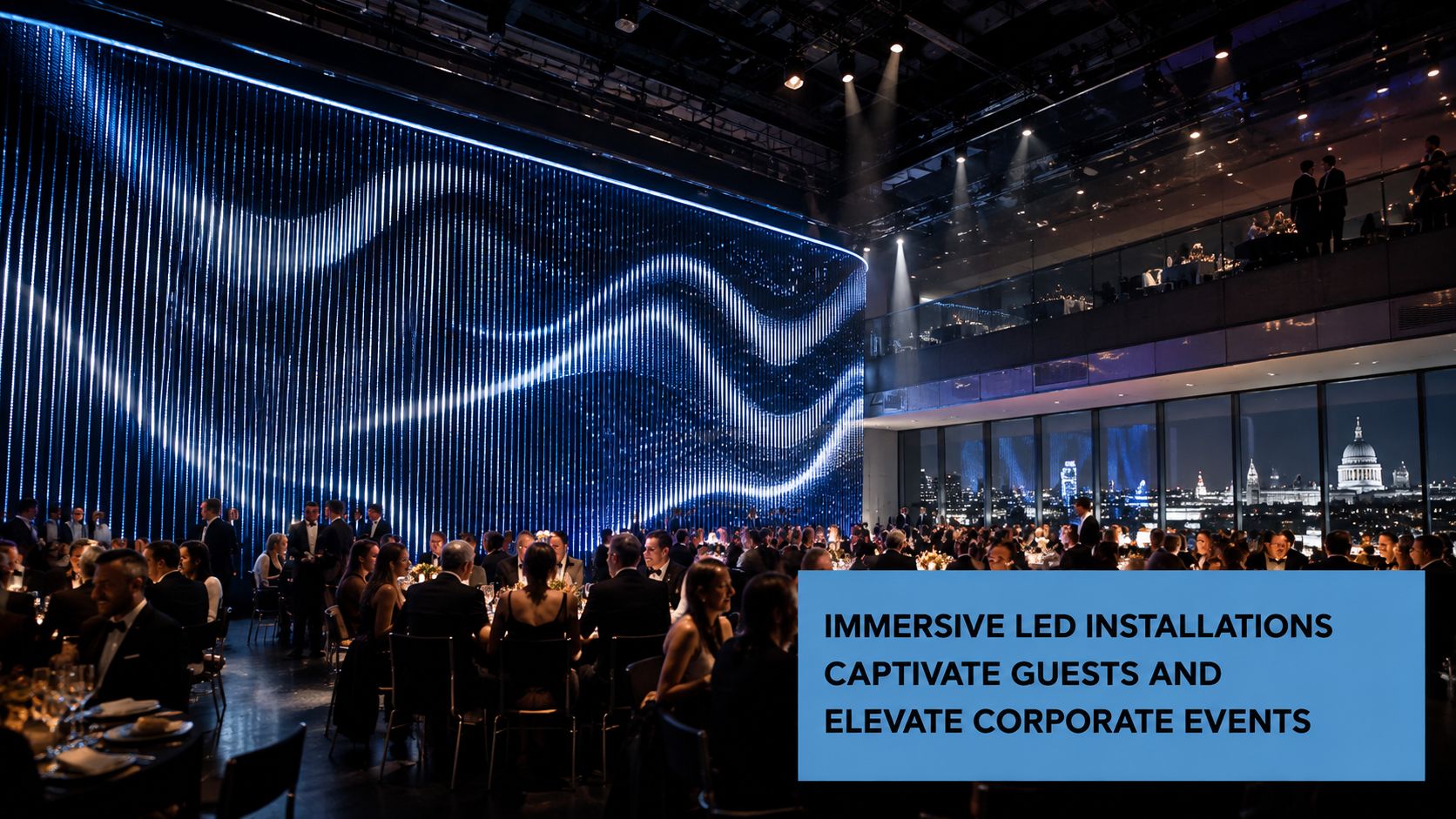
A gala has different requirements. An LED installation, live music, casino tables, a bespoke interactive act or a carefully staffed VIP zone may suit a lower-volume audience where conversation and visual refinement matter more than rapid turnover. A casino-style experience can encourage networking, while fine-dining entertainment, tableside cocktail preparation or a curated soundscape can make hospitality feel participatory without becoming noisy.
The portfolio scale claimed by PSW Events, including £10 million of products, employee and public liability insurance, is useful context when comparing suppliers, but the figure shouldn't replace checking the actual insurance documentation and scope for your event. Supplier capability needs to match the attraction, venue and risk profile.
Premium means controlled participation
The distinction between passive and active entertainment is practical:
- Passive performance: creates mood, ceremony and visual polish, but usually offers limited individual engagement data.
- Interactive attraction: creates a participation event, with opportunities to record attempts, scores, dwell time and lead details.
- Hospitality experience: supports deeper conversations and relationship building, but normally serves fewer guests at once.
- Immersive visual production: delivers a strong reveal or brand moment, although it can consume power, rigging capacity and installation time.
Food and drink should be planned with the same care as the attraction. For a useful reference on combining service design with guest flow, BeeHive Mobile Bar event planning tips offers practical ideas around bar placement, interaction and event atmosphere. The lesson is broader than mobile bars. Every element should have a deliberate place in the guest journey.
Selection Criteria for High-Impact Activations
Start with the event objective, not the most photogenic equipment. A premium activation for a product launch might need qualified conversations and data capture. An exhibition stand may prioritise footfall and repeat participation. A staff reward event may value competition, shared memories and ease of use more than lead volume.
Use this sequence before approving a supplier.
Define the audience action. Write down what you want a guest to do, such as complete a timed challenge, scan a badge, book a meeting or share a result. If the desired action is vague, the attraction will be judged on appearance alone.
Check brand fit. A flight simulator may support an aviation or engineering message naturally, while a racing rig could suit performance, speed or innovation. Poor alignment creates a disconnect, particularly when the branding is applied after the equipment has already been chosen.
Model capacity. Theoretical throughput depends on operating minutes, average session duration, reset time and the number of stations. If an attraction has several parallel stations, each additional station can increase potential capacity, but the available floor space, staffing and power load also rise.
Design the queue. A visible leaderboard can encourage patience, but a long unmanaged queue creates abandonment. Give the supplier a plan for waiting guests, accessibility needs, briefings, consent and lead capture. Don't let the queue block emergency routes or neighbouring exhibitors.
Specify the data. Ask whether the system can record attempts, scores, timed performance, registrations, scans, enquiries or booked meetings. Define a qualified lead before the event, otherwise a large participation number may obscure weak commercial value.
Entertainment Selection Matrix
| Entertainment Type | Throughput Capacity | Space Requirement | Primary Objective |
|---|---|---|---|
| F1 or multi-racing simulator | Medium to high, depending on station count and session design | Dedicated footprint with queue and viewing space | Competition, dwell time and lead conversations |
| VR experience | Medium, constrained by briefing, headset hygiene and reset | Clear operating zone plus safe boundary | Immersion, product storytelling and participation |
| Live music | High audience reach, with no individual participant queue | Stage or performance area, sound and power provision | Atmosphere, hospitality and programme transitions |
| Casino tables | Medium, with flexible participation | Hospitality area with circulation around tables | Networking, themed engagement and guest dwell |
| LED installation | High visual reach, low direct participation | Wall, rigging or scenic zone with suitable power | Brand reveal, visual impact and event mood |
| Climbing wall | Lower throughput, with safety checks and supervised turns | Significant height, exclusion zone and controlled access | Challenge, team activity and spectacle |
Floor plans should show more than the equipment's footprint. Include operator positions, power distribution, cable routes, queue barriers, accessible approaches, emergency access and the space needed to reset or service the attraction. Ask for a technical drawing rather than relying on a brochure photograph.
Practical rule: If the supplier can't explain how the activation will handle its busiest period, it isn't ready for a high-footfall event.
Navigating UK Safety and Compliance Standards
A luxury finish doesn't transfer safety responsibility to the venue or the supplier. The organiser still needs to coordinate duty holders, confirm the scope of work and make sure the attraction can be installed, operated and removed safely.
The HSE model event-safety guidance assigns responsibilities across the delivery chain. Organisers should coordinate health-and-safety management, while a temporary-demountable-structure contractor is responsible for designing, supplying and building the structure in line with the agreed concept. Site rules should cover vehicle movements, personal protective equipment, emergency procedures, drugs and alcohol.
Treat installation as construction activity
Temporary structures used for stages, marquees, exhibition stands and audio-visual or public-address systems can bring Construction (Design and Management) Regulations 2015 duties into the set-up and dismantling phases. Runnymede's event-planning guidance states that these installations require inspection and sign-off before the event opens.
That applies to a simulator zone built into an exhibition stand, a branded hospitality structure or a stage environment. Your documentation should identify duty holders, include the construction sequence, provide technical information and record the competent inspection before guests enter.
The HSE event-safety FAQs explain that local authorities generally enforce health-and-safety legislation at events, while the HSE retains responsibility for erecting and dismantling temporary demountable structures such as stages and grandstands, apart from small marquees and similar tents. The enforcement split should appear in the event plan rather than being left to assumption.
Control the attraction, not only the structure
Interactive machinery brings its own checks. Depending on the activity, the relevant framework may include the Provision and Use of Work Equipment Regulations, Lifting Operations and Lifting Equipment Regulations, Work at Height Regulations, Personal Protective Equipment Regulations and Manual Handling Operations Regulations.
Local guidance adds practical controls. Buckinghamshire Council's event-planning advice recommends deciding who will supply and erect temporary equipment, carrying out safety checks after installation and using barriers where the public could be exposed to moving machinery, vehicles or hazardous displays. Lighting, emergency lighting and suitable entrances and exits still apply to temporary structures.
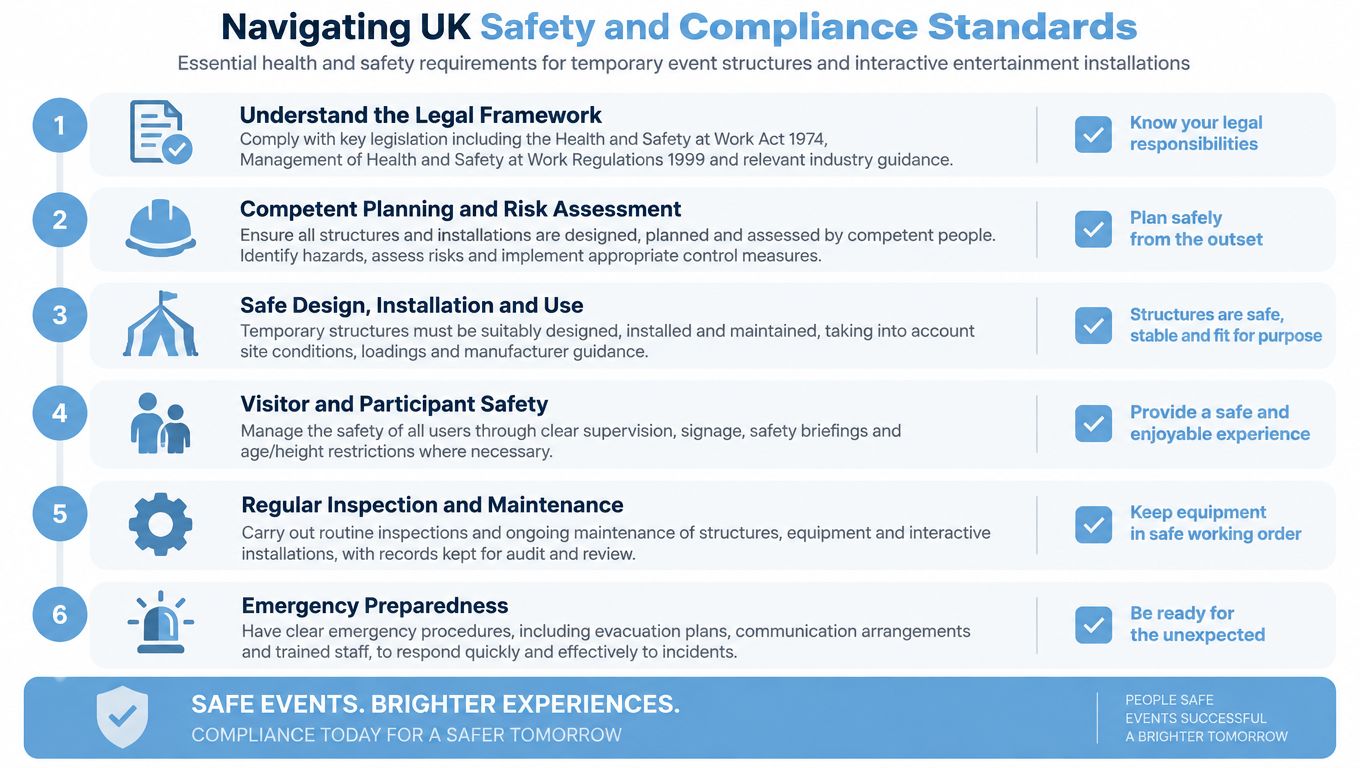
A supplier should provide risk assessments, method statements, equipment inspection records, operator competence information, electrical requirements, emergency procedures and insurance evidence. The organiser should review them with the venue and confirm that the proposed operation matches the approved plan.
Sustainability belongs in the same procurement conversation. The Green Events Code of Practice recommends a minimum 50% reduction in greenhouse-gas emissions by 2030 across Scopes 1 and 2, with additional Scope 3 targets, annual carbon-impact reporting and a transport-emissions reduction plan. Equipment power, freight, crew travel, packaging and reuse all sit within the entertainment supply chain.
Designing Inclusive and Sustainable Premium Experiences
A premium activation is judged before the first guest takes part. If a wheelchair user cannot reach the simulator, a neurodivergent guest cannot manage its sensory load, or the team cannot explain its environmental impact, the production has created friction rather than value. Accessibility and sustainability belong in the experience brief from the outset.
Recent UK research found that 93% of disabled delegates experienced barriers at events, including inaccessible layouts for 28%, overstimulating environments for 27%, untrained staff for 25% and inaccessible toilets for 24%. The Micebook report on disabled delegates also records that 52% found accessibility information only sometimes clear, while 17% said it was absent.
Build flexibility into the mechanic. A simulator or competitive game should offer alternative controls where possible, a step-free route, adjustable intensity and a dignified spectator role. VR may require quiet or low-stimulation sessions, clear warnings about sensory effects and a facilitator who can explain the experience without rushing anyone. These choices can widen participation while preserving the premium feel.
Build access into the guest journey
Publish practical information before the event. State the attraction's physical requirements, sensory characteristics, seating options, access route, session format and contact point for adjustments. On site, train facilitators to offer choices discreetly, rather than asking guests to disclose needs in front of a queue.
The strategic expectation is rising. 67% of Events Industry Council respondents considered accessibility very or extremely important to the future of events, according to the Events Industry Council Global Outlook. A polished activation that excludes part of its audience is neither premium nor well managed.
Sustainability needs the same level of detail. Specify LED lighting and efficient displays, measure equipment kWh through venue or portable metering, consolidate freight, use local crew where practical, and record transport mileage and load factors. Durable equipment can make a stronger long-term case when hired repeatedly, branded modularly and moved efficiently. Digital immersion is not automatically low impact, because headsets, displays, servers, transport and specialist crews still consume resources.
Ask for evidence after the event
Require a post-event impact sheet covering energy, freight, travel, waste and reuse rates. The PSW Events event carbon footprint resource can help structure that request in supplier discussions. Avoid unsupported claims such as “eco-friendly activation”. Ask what the supplier measured, what was reused and what will change next time.
Accessibility and sustainability also intersect. Attitude is Everything research found that 66% of disabled respondents considered sustainability important, yet 50% felt excluded from participating in environmental efforts at live events and 33% said environmental solutions were difficult to use or didn't meet their access needs, as reported in the FIXR Event Industry Trends Report. Lower-impact production must remain usable, clearly explained and dignified for every guest.
Vendor Management and Turnkey Delivery Timelines
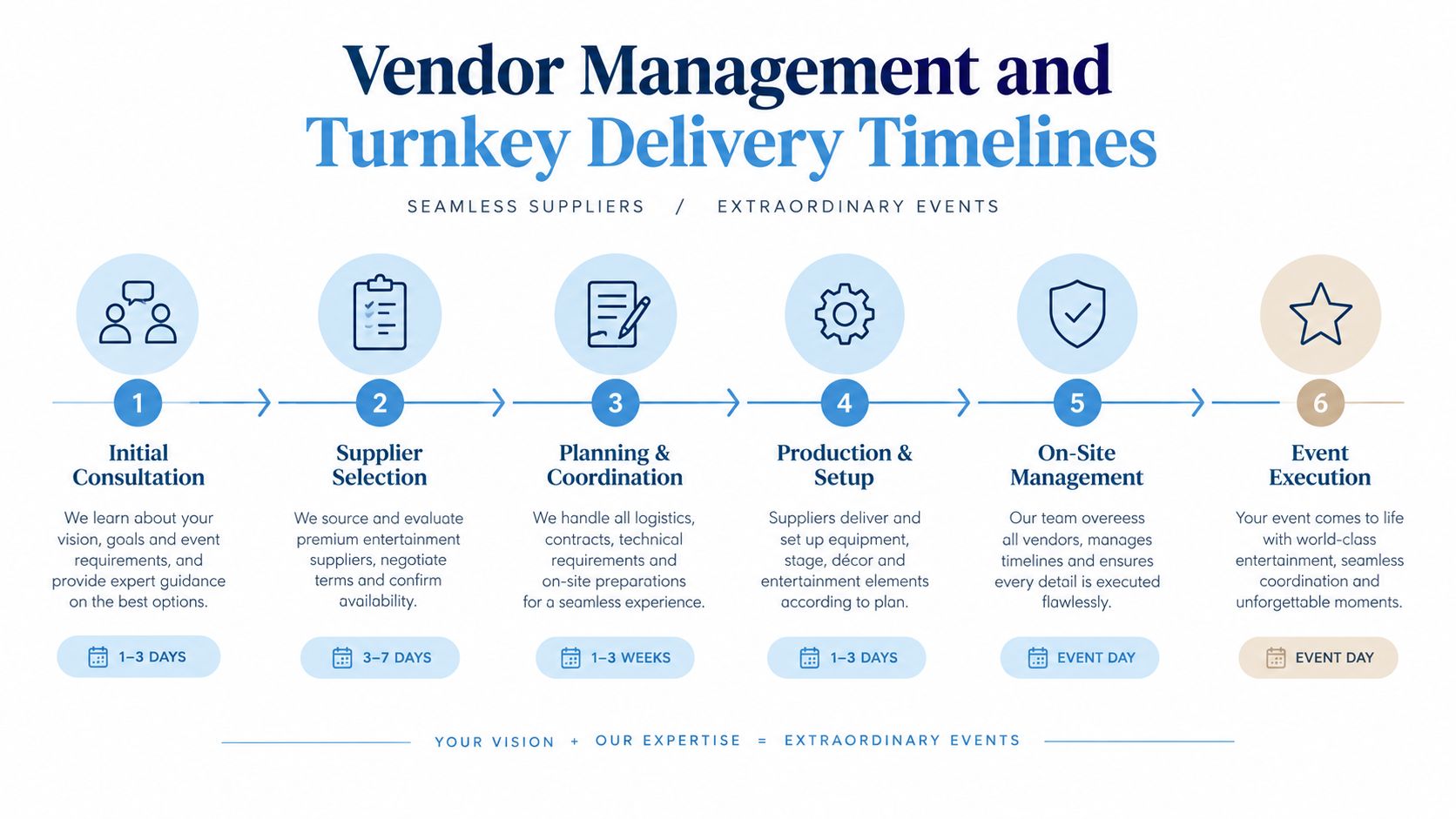
A complex attraction fails most often at the handover points. Creative teams approve a concept, the venue discovers a power constraint, the logistics team receives incomplete dimensions and the operator arrives without enough time to test the equipment. Turnkey delivery reduces those gaps only when one supplier owns the interfaces and documents decisions clearly.
Use a phased plan.
- Concept and objective: Agree the audience, brand message, participation mechanic, data requirement and success measures.
- Site survey: Confirm dimensions, ceiling height, access routes, loading arrangements, power, rigging, floor loading, noise restrictions and emergency egress.
- Technical design: Approve the site plan, risk assessment, method statement, branding artwork, queue layout and accessibility arrangements.
- Production and logistics: Confirm equipment, transport cases, crew, local access times, storage, spares and a named escalation contact.
- Installation and sign-off: Complete set-up, electrical checks, structural inspections, operator briefings and venue handover before opening.
- Event operation and close-out: Run the attraction, monitor queues and data, manage incidents, dismantle safely and issue performance and impact reporting.
A realistic delivery example
For a large exhibition at ExCeL London or SEC Glasgow, start with a site conversation before finalising the attraction. The supplier should review the organiser manual, determine the loading route, check the proposed position against neighbouring stands and establish how the experience will operate during peak visitor periods.
The branded build then needs a controlled approval path. Artwork, safety signage and electronic leaderboard language should be signed off together, because a late branding change can affect dimensions, cables or operator visibility. The crew plan should identify who installs, who tests, who supervises guests and who can make an operational decision on site.
International freight adds another layer. For cross-border work, a specialist logistics provider's partners page can help planners understand the importance of coordinated shipping relationships. The entertainment supplier should still provide the event-specific packing list, transport schedule, customs responsibility and contingency plan.
A supplier's internal process should be visible in writing. The PSW Events vendor selection criteria can support a structured comparison of experience, documentation, delivery scope and operational fit. Don't accept “turnkey” as a label. Ask which party owns each task, when each approval is due and what happens if the venue changes access times.
Maximising ROI Through Measurable Engagement
The business case for luxury event entertainment becomes stronger when the supplier reports behaviour rather than impressions. Track throughput, dwell time, queue abandonment, participation attempts, scores, scans, enquiries and booked meetings. Tie every measure to a definition agreed before the event.
A live electronic leaderboard can encourage repeat participation, while timed performance reporting shows how the attraction operated across the day. Lead capture should be transparent, consent-based and connected to the campaign's qualification rules. A high participation count isn't enough if the team can't distinguish a casual attempt from a meaningful sales conversation.
The operating model matters. Insufficient station capacity creates queues and lost interactions. A better balance of stations, session duration, reset time and staffing can increase the number of useful conversations available within the same event window.
Ask for a post-event report that combines engagement, safety, accessibility and environmental information. That gives stakeholders something more credible than photographs and anecdotal feedback, and it helps you decide whether to repeat, adapt or replace the format.
PSW Events provides sports, racing and flight simulators, VR, electronic leaderboards, casino tables, climbing walls and other interactive attractions, with planning, branding, logistics, installation, staffing and health-and-safety coordination. Visit PSW Events to discuss an activation built around measurable engagement, compliant delivery and an inclusive guest experience.