
You're already past the easy part. The brief is signed off, the venue is pencilled in, the client wants “something memorable,” and three suppliers all look fine on paper, until you dig into the detail and realise one is cheap but fragile, one is polished but vague, and one can deliver on site without drama. That's where vendor selection criteria stop being theory and start protecting your event.
For UK corporate and experiential work, the right comparison isn't just about who sends the slickest deck. The FCA's work on wholesale market-data vendors shows buyers weigh coverage, quality, resilience, integration and reputation, not just price, which is a useful reminder for event procurement too, because the cheapest option is rarely the safest one when outcomes matter (FCA market study annex). Greenwich and SIX reported a similar pattern in market-data buying, with quality and reliability outweighing cost in provider selection, which is exactly how experienced event teams think when the deadline is immovable and the venue won't forgive errors (Greenwich/SIX whitepaper).
This checklist uses a scoring mindset shaped for high-stakes UK event delivery, with PSW Events' standards in mind. If you're comparing simulator hire, interactive activations, production support, or full turnkey event partners, use it to separate the vendors who can talk from the vendors who can perform.
1. Financial Stability and Payment Terms
A vendor can have the right kit, the right people, and the right pitch, then still become a problem if cash flow breaks mid-project. For corporate events, I want to know whether the supplier can absorb delays, carry inventory, and keep staff moving without chasing every invoice. That matters even more for multi-site work, where one weak supplier can create a chain reaction across locations.
What to check
- Company accounts and financial statements: Ask for recent filings and look for signs of strain, not just headline turnover.
- Credit history and payment behaviour: Confirm whether the vendor pays its own suppliers on time and manages obligations cleanly.
- Payment flexibility: Good partners can handle upfront, milestone-based, or post-event structures when the job justifies it.
- International handling: If the event crosses borders, the supplier needs sane currency handling and the ability to manage cross-border payments without chaos.
- Insurance and bonding: Financial resilience should go hand in hand with evidence that the vendor can stand behind the contract.
The FCA found UK wholesale buyers look beyond price and prioritise data coverage, plus quality factors such as accuracy, consistency, reliability, resilience and support (FCA market study annex). That logic maps neatly onto event procurement, because a vendor's financial stability is part of its operational resilience, not a separate box-tick.
Practical rule: If a supplier can't explain how it funds peak season delivery, don't treat it as a safe option for a large activation.
Strict financial screening does have a downside. Smaller, newer vendors may not have long credit histories, and that can block genuine talent if you use the criterion lazily. The better approach is to score financial strength alongside contract structure, insurance, and visible delivery controls, then decide whether the risk is acceptable for the specific event.
2. Technical Capability and Equipment Quality
The best-looking pitch deck can hide poor kit. In simulators, interactive games, AV-led experiences, and branded entertainment, technical capability is visible on the floor, not in the brochure. If the equipment is outdated, badly maintained, or hard to integrate with venue infrastructure, the whole event feels cheaper than it should.
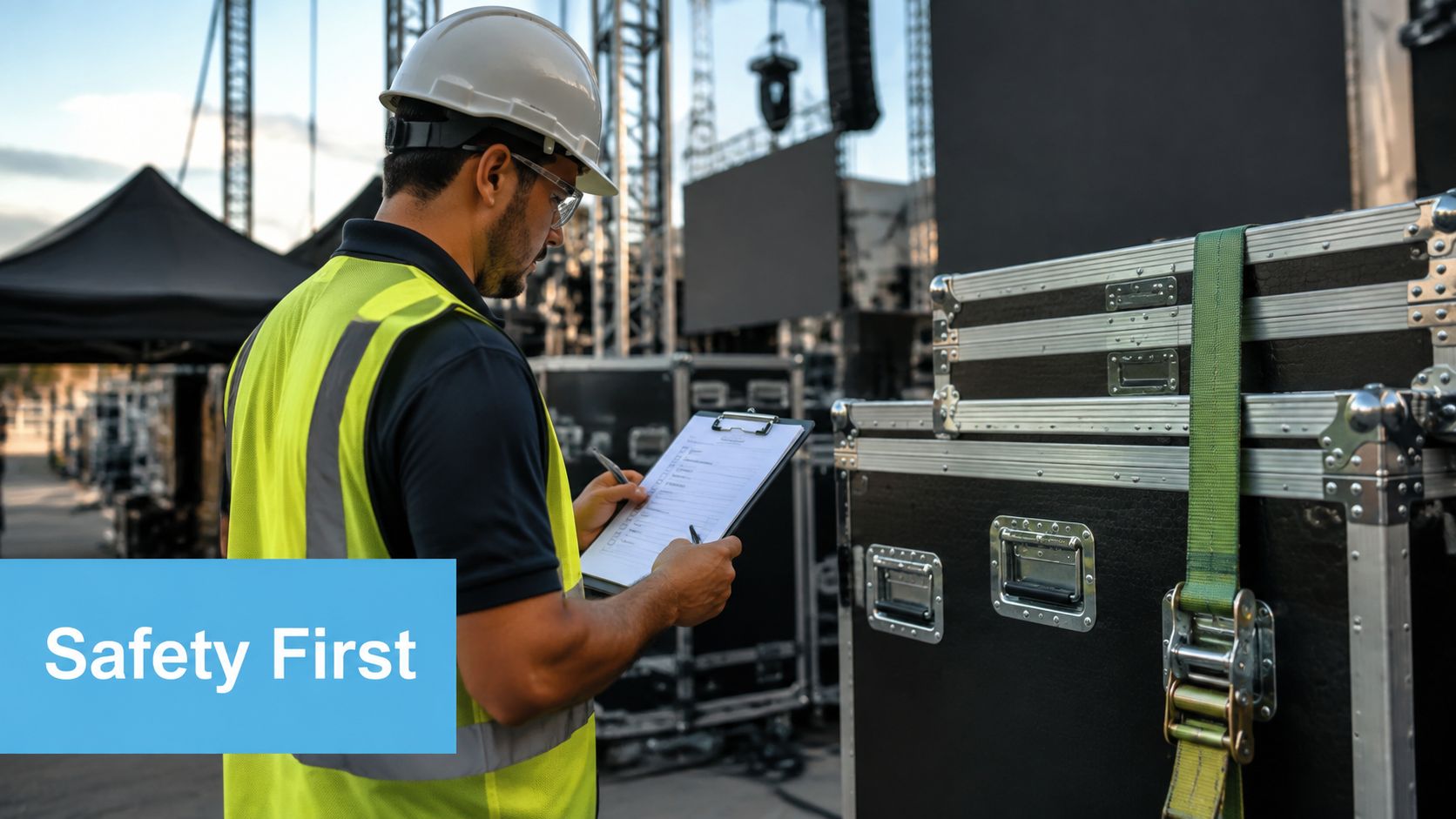
Score the hardware, not the hype
At minimum, the vendor should show:
- Modern, maintained equipment: Not just ownership, but proof of servicing and updates.
- Backup systems: A serious supplier plans for failures in critical components.
- Venue compatibility: Power, space, rigging, connectivity, and access all need to be checked early.
- Technical support coverage: Somebody competent needs to be available when something breaks on site.
- Installation expertise: The same supplier that sells the kit should know how to deploy it safely and cleanly.
PSW Events' own website is a useful benchmark here because it presents technical delivery as a full-service discipline, not a hire-only transaction (PSW Events). That's the standard I'd expect from a serious experiential vendor, especially for venues like Silverstone, Wembley, or ExCeL London where technical mistakes become visible immediately.
The trade-off is simple. High-quality equipment costs more to maintain, and rapid tech change means vendors have to keep reinvesting. That's why I'd rather see a smaller but well-kept inventory than a huge, tired stock list with weak servicing discipline.
Good technical vendors don't just arrive with equipment. They arrive with a plan for how that equipment behaves under pressure.
If you're comparing suppliers for premium activations, ask to see the actual units, the service records, and the venue-fit assumptions before you award anything. A polished sales narrative won't save a poor installation.
3. Experience and Track Record
A vendor's experience shows up fast once the schedule tightens, the venue team starts asking questions, and a small issue threatens the run of show. I care less about how long a supplier has existed than whether they have repeated the same kind of work under the same kind of pressure. In practice, that means looking for relevant delivery in UK venues, multi-site activity, and projects where the team had to solve problems on the day.
A short list of evidence tells you far more than a glossy capability deck.
Match the evidence to the job
Look for proof that mirrors your brief:
- Comparable events: same scale, similar audience, and similar operational pressure.
- Recognisable clients: a familiar brand name matters only if the scope is clear.
- Venue familiarity: repeated work in UK blue-chip venues usually cuts friction on load-in, build, and compliance.
- Cross-format delivery: exhibitions, conferences, activations, celebrations, and private events each expose different weaknesses.
- International adaptability: if the brief crosses borders, the team needs practical flexibility, not just confidence in a pitch meeting.
The FCA notes that brand reputation and client adoption are part of vendor selection in the wholesale market-data market (FCA market study annex). In event buying, that only matters when it sits on top of operational proof. A long client list helps, but only if it shows the same type of delivery problem you need solved.
For research-heavy procurement, I use the same discipline that legal teams apply when they verify claims against reliable sources rather than accepting a vendor story at face value. That is the logic behind a guide to lawyer research tools, and event teams should apply it to references, site photos, and venue-specific claims. If a supplier says they have worked at a venue before, ask for a named contact, the exact scope, and one or two details that only someone on the job would know.
The better test is simple. Ask for a reference that matches your brief closely, then check whether the story holds up across more than one source. A supplier can look polished and still outsource the hardest parts of delivery, so experience should reduce uncertainty, not disguise it.
Before I shortlist anyone, I also want the claims checked against a live operating standard, not just a website claim. A useful internal benchmark is how to select a medical certification provider, because it shows the same habit of verifying competence, process, and proof before trusting a supplier with a high-stakes brief.
Experience should show me who will be on site, how they handled pressure before, and whether their strongest work matches the job in front of me. If a vendor cannot answer those questions cleanly, the track record is not strong enough.
4. Insurance, Compliance, and Health & Safety
A vendor can look strong on paper and still create a site-level problem if its insurance, compliance, or safety paperwork is weak. In the UK, venues, clients, and insurers expect those documents before anything is moved, installed, or operated. For event suppliers, that means public liability, product liability, employer's liability, RAMS, and the H&S process that sits behind them.
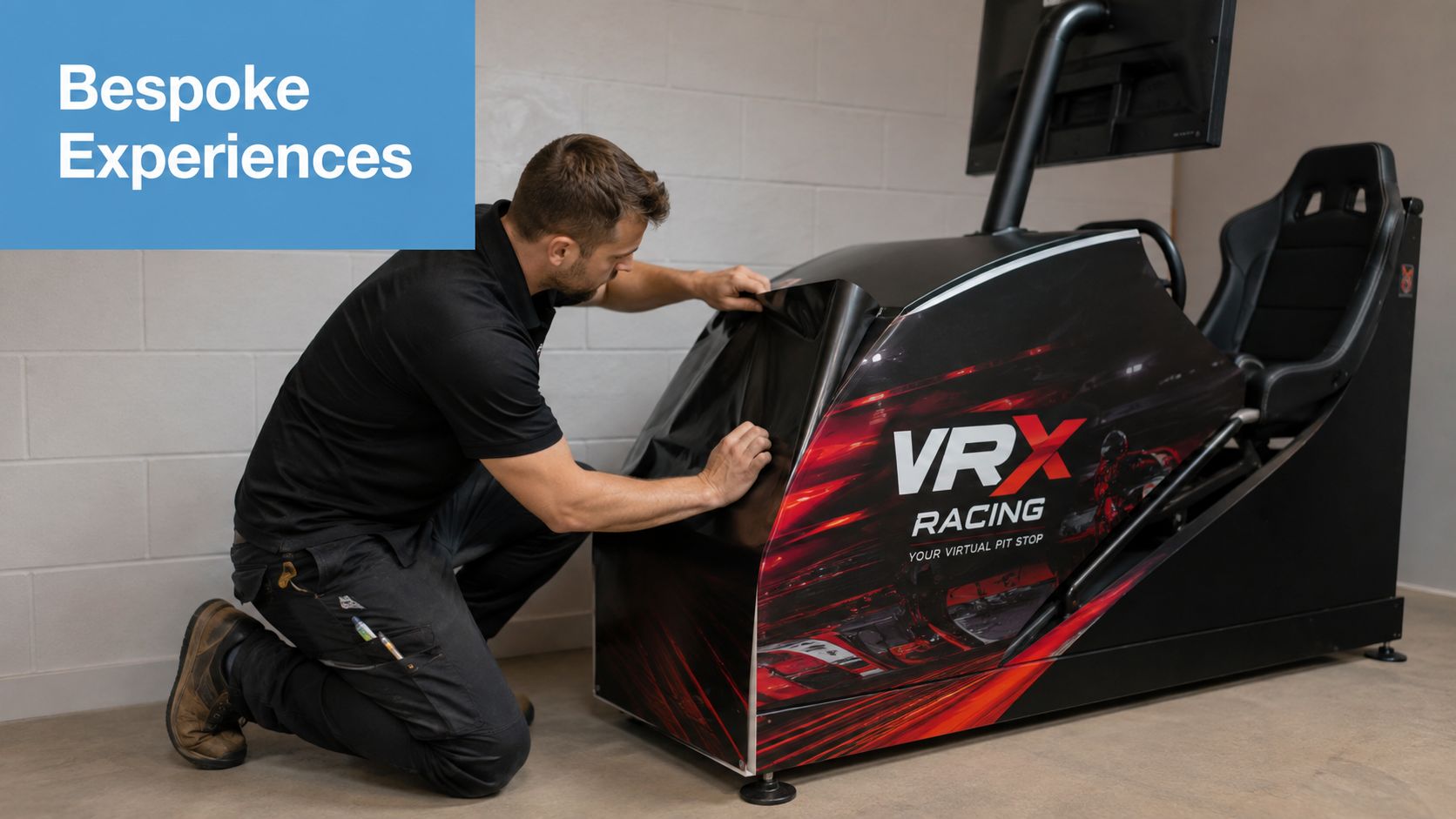
A supplier should be able to hand over the right documents without hesitation. If they can't, I treat that as a sign that the operational controls may be just as loose.
What I check before approval
- Public and product liability insurance: The policy has to match the scale of the work and the risks on site.
- Employer's liability cover: Anyone sent onto site needs to be covered properly.
- COSHH compliance: This matters if the supplier uses substances during installation, cleaning, or maintenance.
- Equipment inspections: Service records and certification should be current and easy to verify.
- RAMS documentation: Risk assessments and method statements need to reflect the actual job, the venue, and the conditions on the day.
- Staff competency: Training records and safety awareness should be available, not assembled after the fact.
For UK vendors handling personal data through event registration, staffing, or client operations, privacy controls matter as much as insurance. The UK GDPR and the Data Protection Act 2018 require controllers to use processors that provide sufficient guarantees on technical and organisational measures, and they require a written contract with mandatory clauses covering processing scope, duration, security, and related obligations (UK GDPR processor requirement summary). That is a legal control, not a preference.
Use this event risk assessment template as part of the onboarding pack, then compare the supplier's own paperwork against the venue's rules and the client brief. If the documents do not line up cleanly, the vendor is not ready for site.
Practical rule: If the supplier cannot produce clean insurance, current safety paperwork, and named responsibility lines, do not let it onto site.
The trade-off is time. Compliance checks add admin and can slow procurement, but that is a better outcome than discovering on build day that a missing document has blocked access.
5. Reliability and Delivery Consistency
A vendor can look strong on paper and still create chaos on site. If deliveries drift, crews arrive half-prepared, or the same supplier performs differently from one job to the next, you spend the event managing avoidable problems instead of the client brief. Reliability is the filter that separates polished promises from practical performance.
For high-stakes corporate and experiential events, I score reliability against the same standard I use for event staffing solutions, because the vendor's plan only matters if the people and kit show up ready to work.
What consistent delivery actually looks like
A supplier worth shortlisting should be able to show, in plain terms, how it keeps jobs on track:
- On-time delivery history: Clear evidence of punctual arrival, not soft reassurance.
- Milestone control: Build, transport, install, test, and handover all tracked against the plan.
- Contingency paths: Spare resource, rerouting options, and backup timing if traffic, weather, or access changes.
- Change handling: A quick response when the brief shifts or the venue imposes new limits.
- Pre-departure and site checks: Kit inspected before it leaves the depot and again after it lands on site.
The Greenwich/SIX whitepaper is useful here because it shows how buyers in another high-stakes market prioritise accuracy, availability, and coverage over cost alone. The same buying logic applies to events. If the supplier misses the moment, the client does not care that the quote was competitive.
A vendor with mediocre kit and consistent delivery is usually safer than a brilliant vendor who improvises badly under pressure.
That trade-off matters. Reliable operators often cost more and ask for tighter paperwork, but that is easier to absorb than a build-day failure, a late handover, or a crew that has to invent solutions on the fly. Consistency is the scoring factor that protects the event when the schedule stops forgiving mistakes.
6. Cost Competitiveness and Value for Money
Price matters, but only as part of the full picture. A quote that looks sharp on paper can become poor value once you add transport, setup, overtime, or the extra crew needed to keep the job on schedule. The right question is simple: what does the price buy on site, and what costs are likely to appear later?
A quote that belongs on a short list should make the scope easy to test against the brief. It should show exactly what is included, what is excluded, and where the supplier is charging for optional extras rather than core delivery.
What good pricing looks like
A useful vendor quote should include:
- Itemised scope: Line-by-line detail, not a single figure with loose assumptions.
- Clear extras: Transport, installation, staffing, strike, and out-of-hours charges should be visible from the start.
- Market fit: The price should sit in a realistic range for the level of service promised.
- Flexible pricing model: Hourly, daily, and event-based structures all have their place, depending on the brief.
- Explained value: The vendor should be able to say why the price is set where it is.
A practical example of a hidden cost is a low headline hire rate that excludes delivery to a difficult venue, then adds labour for a late-night install and a separate fee for technical support on site. That quote can look cheaper than the competition until the extras are added. By the time the event is live, the actual cost is often higher than the better-scoped alternative.
The procurement literature is clear that lowest price is not always lowest risk. For high-impact categories, quality, reliability, and continuity usually matter more than headline cost, and the same logic appears in UK public procurement, where the Procurement Act 2023 frames award around the Most Advantageous Tender rather than price alone (MAT procurement framing). Cost still matters, but it should be scored alongside the elements that affect delivery, rather than used as a stand-alone filter.
That trade-off is easy to miss. Premium pricing does not guarantee premium value, and the cheapest quote can become the most expensive if it drives rework, delays, or a poor client experience. I score cost only after the scope is locked and the quality checks have been completed.
7. Flexibility and Customisation Capability
A vendor can look perfect on paper and still fail the brief the moment the venue forces a change. A simulator that was designed for a spacious exhibition stand may need to be rebuilt for a narrow hotel suite, with a smaller footprint, altered power routing, and a different guest flow. That is the point where Flexibility and Customisation Capability becomes a real selection criterion, not a nice-to-have.
Test for real customisation
A flexible vendor should be able to adapt without turning every change into a separate project. I look for practical proof that they can shift the setup, the content, and the delivery model while still protecting the client experience.
A supplier worth trusting should handle:
- Branded configuration changes: New colours, wraps, signage, and interface tweaks that still feel aligned with the brand.
- Venue constraints: Low ceilings, tight access, unusual floor loads, awkward loading routes, or restricted build windows.
- Scale variation: A small leadership event should not trigger a completely different procurement path.
- Integrated content: Interactive features, themed graphics, or bespoke experiences that fit the brief rather than sit on top of it.
- Staffing models: Fully managed delivery or client-provided personnel where the handover is clear.
A good test is whether the vendor can explain what is fixed, what is configurable, and what changes the cost or lead time. That answer should be specific. If they can only say they are “happy to adapt,” the risk usually lands on your team later.
I want to hear how they have handled constraints before. A strong example is a simulator installation that had to work in a venue with limited access and a low ceiling. The right supplier can show how they reduced the footprint, adjusted the build sequence, and kept the user experience intact without losing control of safety or presentation. That kind of answer tells me they understand live event pressure, not just product supply.
The best vendors do not force every client into the same default setup. They change the offer in a controlled way, so the event feels customized without becoming chaotic. That balance matters for corporate audiences, where the experience has to feel specific to the brand while still being reliable for the delivery team.
Flexibility also has trade-offs. More customisation can extend timelines, increase approval steps, and make it harder to repeat the same setup across multiple activations. In some cases, that is worth paying for because the event needs to stand apart from the usual format. A rigid supplier may be easier to manage, but if differentiation is the brief, they will limit what you can achieve.
8. Communication and Responsiveness
A supplier can have the right kit, the right team, and the right venue plan, then still put the event at risk through poor communication. In practice, that usually shows up as delayed replies, vague answers, and updates that arrive only after the client has already noticed a problem. On live corporate work, that kind of drift creates avoidable stress fast.
What the vendor should commit to
- Named account ownership: One person who knows the job and can make decisions.
- Multiple channels: Phone, email, and messaging when the situation demands it.
- Response expectations: Agreed SLAs for urgent and non-urgent issues.
- Proactive updates: Status notes before you have to chase them.
- Escalation path: Clear senior contact routes when things go off track.
The test is simple. Ask a basic pre-sales question and see whether the reply is specific, timely, and useful. If the answer takes days, or if it sounds like a template written to avoid commitment, that is usually how the project will feel later, especially once build day starts and the pace changes.
I have seen events lose time because a supplier failed to flag a small issue early. A venue access change was mentioned late, the build team arrived with the wrong assumption, and the whole schedule had to be reshuffled while everyone waited for a fix. No one failed because of a major technical breakdown. The failure came from slow, unclear communication that let a manageable issue turn into an operational headache.
Good vendors keep the client informed without waiting to be chased. They tell you what has changed, what it affects, and what decision is needed next. That style can feel demanding if you are used to passive suppliers, because it keeps the project exposed and specific, but it protects the delivery team from last-minute surprises and reduces rework caused by assumptions that were never confirmed.
For high-stakes events, I score communication on clarity, speed, ownership, and escalation discipline. PSW Events' own standard is a useful benchmark here, because it reflects the level of responsiveness needed for corporate and experiential delivery where timing, coordination, and presentation all have to stay aligned (PSW Events). A supplier that handles those conversations well is usually easier to trust when the event is under pressure.
9. Scalability and Capacity Management
A vendor can look excellent on a single activation and still strain under a wider brief. That shows up fast when the same team has to cover multiple sites, multiple loads, or multiple clients at once. Capacity is more than stock in a warehouse. It is the supplier's ability to repeat the same standard without stretching people, transport, or control too far.
Scale is tested in the operating model, not the pitch deck
Look for practical signs of scale:
- Equipment inventory: Enough stock to cover concurrent jobs, not just one flagship event.
- Staffing depth: A real bench of trained people, not a single crew carrying every project.
- Sub-contractor control: External support can work if the supplier still manages quality tightly.
- Logistics coverage: The ability to move, store, and deploy assets without delays building up.
- Regional reach: Useful when events span several UK cities or international venues.
The trade-off is straightforward. A supplier with genuine capacity can be easier to work with over time because you are not forced to split one brief across several different vendors. Scale also brings risk. As teams grow, quality can drift if the business leans too heavily on temporary labour or loose subcontracting. Capacity only helps when the control system grows with it.
For high-stakes corporate and experiential work, I want to see whether the supplier can hold standards when the brief gets bigger, the timing gets tighter, and the locations are less forgiving. That is the practical benchmark. The question is not whether the company looks large. The question is whether it can repeat the same delivery standard under changing conditions.
10. Innovation and Continuous Improvement
A supplier can have strong kit and still fall short if it treats innovation as a one-off sales pitch. In live events, the test is whether new ideas make the experience better without adding avoidable risk for the crew, the client, or the venue. A good vendor knows that novelty only earns its place when it holds up under pressure.
What a practical innovation culture looks like
- Investment in useful new tech: VR, AR, motion systems, telemetry, AI, and analytics where they support the brief.
- Regular product refreshes: The offer keeps pace instead of drifting into stale, repeat-use setups.
- Feedback loops: Each deployment feeds into the next one, so the service changes based on what happened on site.
- Training: Staff know how to run newer kit safely, not just demo it in a controlled environment.
- Industry awareness: Conferences, partnerships, and thought leadership keep the supplier close to current practice, including tools such as Orbit AI vendor forms that improve how feedback and vendor data are handled.
The best vendors do not sell innovation as decoration. They show how a new tool improves reliability, audience engagement, or the quality of reporting after the event. That matters for brands that want fresh experiences without handing control to a flashy but shaky setup.
There is a hard trade-off here. Innovation costs money, and live conditions expose weak planning fast. I have seen technically impressive activations fail because the hardware worked in the studio but not under venue noise, load-in pressure, or poor connectivity. One supplier can have a clever interactive feature that looks strong in a proposal, then spend the first hour of the event rebooting kit while staff improvise around it. That is why I score innovation, but I never let it outrank reliability, compliance, or venue fit. A vendor that cannot deliver cleanly in the room is still the wrong choice.
Top 10 Vendor Selection Criteria Comparison
| Item | 🔄 Implementation complexity | ⚡ Resource requirements | ⭐ Expected outcomes | 📊 Ideal use cases | 💡 Key advantages / tips |
|---|---|---|---|---|---|
| Financial Stability and Payment Terms | Moderate–High, detailed due diligence and contract setup | Finance/legal time, credit reports, insurance verification | ⭐⭐⭐⭐, reduces supplier failure risk; predictable cash flow | Large multi-site or high-value events; long-term vendor contracts | Request 2–3 years accounts, credit checks, milestone payments; require £10m COI |
| Technical Capability and Equipment Quality | High, technical integration, maintenance & testing | Capital equipment, skilled technicians, spare parts, SLAs | ⭐⭐⭐⭐⭐, superior attendee experience; low downtime | High-profile experiential activations (simulators, VR) at major venues | Verify specs/certifications, site visits, maintenance schedules, SLA for response |
| Experience and Track Record | Low–Moderate, reference and portfolio checks | Time to review case studies, client references | ⭐⭐⭐⭐, proven execution, faster setup, lower perceived risk | Complex venues, simultaneous activations, international events | Request 5–10 recent refs, review similar-scale case studies, verify via venues |
| Insurance, Compliance, and H&S | Moderate, documentation, certifications, audits | Insurance premiums, H&S staff, risk assessments, training | ⭐⭐⭐⭐, legal compliance and strong risk mitigation | Major venues, public events, installations with safety exposure | Request current COI, risk assessments, staff IOSH/First Aid certs; confirm active coverage |
| Reliability and Delivery Consistency | Moderate, process controls, KPI tracking | Logistics network, contingency resources, reporting tools | ⭐⭐⭐⭐, high on-time delivery and operational predictability | Tight timelines, multi-site rollouts, high-stakes events | Request historical KPIs, include milestones/penalties, require daily progress updates |
| Cost Competitiveness and Value for Money | Low–Moderate, pricing comparisons and TCO analysis | Detailed itemised quotes, market benchmarking | ⭐⭐⭐, optimised budgeting; variable quality trade-offs | Budget-sensitive events, multi-event contracts | Obtain itemised quotes, compare 3–5 vendors, negotiate volume discounts, calculate TCO |
| Flexibility and Customisation Capability | High, bespoke design, approvals, iterative changes | Design resources, custom fabrication, additional time and testing | ⭐⭐⭐⭐, differentiated, memorable experiences | Brand activations, bespoke themed experiences, constrained venues | Define scope early, request past custom examples, agree timelines and change controls |
| Communication and Responsiveness | Low, protocols and designated contacts | Dedicated account manager, PM tools, defined SLAs | ⭐⭐⭐⭐, faster issue resolution and clearer coordination | Complex setups, tight timelines, multi-stakeholder events | Set SLAs, identify primary/backup contacts, use PM platforms and scheduled check-ins |
| Scalability and Capacity Management | High, capacity planning and resource allocation | Large inventory, staffing networks, logistics & regional coverage | ⭐⭐⭐⭐, supports multi-site delivery and growth | Large campaigns, simultaneous national/international activations | Verify max concurrent capacity, inventory levels, subcontractor standards and priority rules |
| Innovation and Continuous Improvement | High, R&D, trials, integration planning | R&D budget, tech partnerships, staff training, demo environments | ⭐⭐⭐⭐, competitive differentiation and future-proofing | Cutting-edge experiences, repeat clients seeking novelty | Request technology roadmap, demos, ask about upgrade cycles and R&D investment |
From Checklist to Contract Making the Final Decision
Selecting the right supplier is the foundation of a successful event, not a nice-to-have procurement exercise. A 10-point scoring matrix forces discipline into a process that can otherwise drift into opinion, familiarity, or whichever deck looked best in the room. If you score each vendor against the same criteria, you make the decision easier to defend and much harder to distort.
The strongest selection processes begin before the quote stage. Requirements are defined clearly, mandatory controls are separated from scored criteria, and the same evidence is requested from each supplier. That approach fits the logic behind UK procurement rules, where award criteria must be published in advance and used consistently, rather than adjusted on the fly to favour a preferred bidder (MAT procurement framing). It also aligns with procurement best practice in volatile markets, where resilience, continuity, and risk profile can matter more than chasing the lowest number on the page.
For event teams, that means comparing the practical factors that affect delivery, insurance, staffing depth, technical competence, response speed, flexibility, and the ability to scale without losing control. It also means thinking beyond the event date. The right supplier makes briefing easier, installation cleaner, troubleshooting faster, and post-event review more useful. The wrong one creates admin, fire-fighting, and excuses.
A practical scoring matrix should separate the “must-have” items from the “nice-to-have” items, then weight the criteria according to the job. A one-day exhibition stand and a multi-city activation shouldn't be judged by the same emphasis. One might prioritise speed and responsiveness, another might put more weight on continuity, compliance, and capacity. The point is not to find a universal model. The point is to build a model that matches the actual risk.
That's why selection should end in a contract that reflects the scorecard. If a supplier wins on reliability, the agreement should include service levels, escalation routes, and recovery obligations. If it wins on technical quality, the contract should lock in equipment standards and maintenance expectations. If it wins on flexibility, the scope needs enough clarity to avoid disputes when the brief moves.
Procurement teams that use this discipline tend to make better calls and avoid expensive surprises. The process is slower at the start, but it saves time later because fewer assumptions are left unresolved. It creates the kind of supplier relationship that can hold up under pressure.
If you're ready to tighten up how you compare vendors, PSW Events can help with turnkey delivery, interactive attractions, compliance, and on-site execution across the UK and beyond. Visit PSW Events to speak with a team that treats vendor selection criteria as an operational safeguard, not a paperwork exercise.