
The brief lands in your inbox with the usual warning signs. The team wants something “fun but not cringe”, leadership wants a clear business reason for doing it, and half the guest list may be in the room while the rest join from elsewhere. That's the moment when basic icebreakers stop being useful.
The best office events create the kind of after-event chatter planners want. People replay the final lap from the racing challenge, compare scores from Batak Pro, or talk about who turned out to be the calmest co-pilot in the flight simulator. Those moments matter because team-building has shifted from a soft perk to a more measurable workplace tool. Highly engaged teams are linked with stronger business outcomes, including 21% higher profitability and 17% higher productivity in one widely cited Gallup summary referenced by With Confetti's team-building statistics round-up.
That matters even more in hybrid organisations. In autumn 2024, 28% of working adults in Great Britain were hybrid working, 13% worked exclusively from home and 59% exclusively on-site, according to Asana's discussion of team-building games using ONS data. If your activity only works for the people physically present, it's not modern team building. It's side entertainment for part of the company.
That's why strong team building games office programmes now favour short formats, visible scoring, inclusive participation and proper facilitation. If you're weighing formats for your next event, these top corporate team building events are a useful benchmark. Below are ten higher-impact options that move well beyond trust falls.
1. Racing Simulator Challenges

Few formats beat racing simulators for instant buy-in. People understand the objective immediately, the queue watches the action instead of drifting away, and the competitive energy builds without needing a long explanation. In an office setting, that's valuable because the event has to start fast.
This works best when you avoid the obvious mistake. Don't run it as a simple fastest-lap contest for confident drivers only. Build it as a team relay with driver rotation, pit-lane style handovers, and a live leaderboard so the quieter participants still shape the result.
How to make it work in practice
A strong setup uses F1 simulator rigs, multi-racing stations, or giant Scalextric alongside a host who keeps the room engaged between runs. For larger departments, split by function or mixed tables rather than friendship groups. Mixed teams usually produce better interaction because nobody can hide inside their usual work circle.
For indoor corporate formats, I'd also keep rounds short. Long race sessions sound attractive on paper, but they create bottlenecks and spectator drop-off. Short heats, visible scoring, and fun side awards keep momentum high. A planner looking at indoor team building activity options from PSW Events will usually get more value from rapid rotation than from one long grand final.
Practical rule: Prize categories shouldn't only reward the winner. Recognise fastest lap, best comeback, most improved driver, and even the funniest spin.
Useful event scenarios include quarterly sales celebrations, conference breakouts, graduate intake socials, and executive away days where you need a shared challenge without forcing physical exertion. It also photographs well, which matters when internal comms wants a visible success story after the event.
2. Flight Simulator Team Missions
Flight simulators change the mood completely. Racing is loud, immediate and competitive. Flight missions are more measured. They expose communication habits, decision-making under pressure, and how people share control when one person has the joystick and another has the information.
That makes them especially strong for leadership groups, project teams and cross-functional departments. A helicopter or motion flight simulator can be framed as a rescue mission, route challenge, or timed objective where one participant pilots and the rest act as navigator, mission control, or support.
Where the learning sits
This format earns its place because team-building activities can range from 5-minute icebreakers to multi-hour challenges, and they're used to strengthen relationships, communication and collaboration, as noted in Gusto's guide to indoor team-building activities. Flight simulators sit neatly in the middle. They feel substantial, but they don't require a full-day offsite.
The most effective version includes a short debrief after each mission. Not a corporate lecture. Just a sharp review of what happened. Who gave clear instructions. Who overloaded the pilot. Who stayed calm when the route changed.
A practical setup often looks like this:
- Co-pilot pairing: Match a confident participant with someone less experienced so the challenge feels collaborative rather than intimidating.
- Mission roles: Give non-pilots active jobs such as navigation, timing, or resource calls.
- Comfort planning: Offer seated alternatives and a clear opt-out route for guests who don't enjoy motion-based experiences.
For planners wanting a more immersive centrepiece, flight simulator hire from PSW Events gives you a format that feels premium without becoming inaccessible. It's one of the better choices when you want team building games office sessions to feel like a real event, not just a meeting with props.
3. Sports Simulator Tournaments
Sports simulators are useful when the guest list is mixed and not everyone wants the same kind of competition. American football, rugby, golf and boxing each attract different personalities, which is exactly why they work well together. Instead of forcing everyone into one activity style, you create a tournament environment with multiple ways to join in.
That flexibility matters because office team-building is now mainstream partly because it fits around the modern working day and varied group sizes. The same Gusto article cites workplace statistics reporting that 63% of leaders saw improved team communication and 61% saw better morale after team-building activities, while another survey cited there found 73% of employees wanted their company to invest more in team building.
Best tournament format for mixed groups
The mistake here is making it too serious. If you run a sports simulator tournament like an elite contest, beginners switch off. If you build it with handicap scoring, short coached trials and team-based cumulative points, even the people who've never picked up a golf club will join in.
Good examples include:
- Golf simulator bays for a client hospitality evening where departments compete by table
- Rugby or American football targets at a conference social where guests rotate between stations
- Boxing simulator score challenges as a high-energy staff party feature with hosted commentary
The room stays engaged when one guest is competing, another is coaching, and everyone can see how the team score shifts in real time.
Sports simulators also solve a common office-event problem. They let people be active without demanding full athletic participation. Someone can throw one rugby pass, take a few golf shots, or test reaction speed on a boxing machine and still feel involved. For planners balancing entertainment with professionalism, that's often the sweet spot.
4. Batak Pro Reaction Training Games
Batak Pro is one of the fastest ways to wake up a room. It creates a queue instantly because people understand the challenge on sight. Hit the illuminated targets. Do it quickly. Beat the score. That simplicity makes it one of the best team building games office planners can use when energy is flat or attention is fragmented.
It's especially effective at conferences, exhibition stands and kick-off meetings where people arrive in waves. You don't need a briefing room, printed materials or a long setup window. You need a clear score, a host with pace, and enough space around the unit for spectators.
Why Batak works so well at live events
Batak Pro is short-form competition done properly. The challenge lasts seconds, but the replay value is high because people want another attempt. That matters in event environments where not every participant can disappear for half an hour.
I'd use it in one of three ways:
- Tournament bracket: Best when you want a scheduled competitive focal point
- Open score challenge: Best for exhibitions or drop-in networking events
- Relay format: Best for office teams where you want collective rather than individual bragging rights
What doesn't work is placing it in a dead corner with no host. Batak needs noise around it. Announce scores. Call near misses. Celebrate improvement, not just top placement. The attraction is as much about atmosphere as reaction speed.
For brand activations and mixed corporate crowds, it also helps bridge demographics. Senior leaders, graduates and clients can all understand it immediately. That ease of access is rare in experiential team building, and it's why Batak often outperforms more complicated formats on actual participation.
5. VR Experience Challenges and Adventures
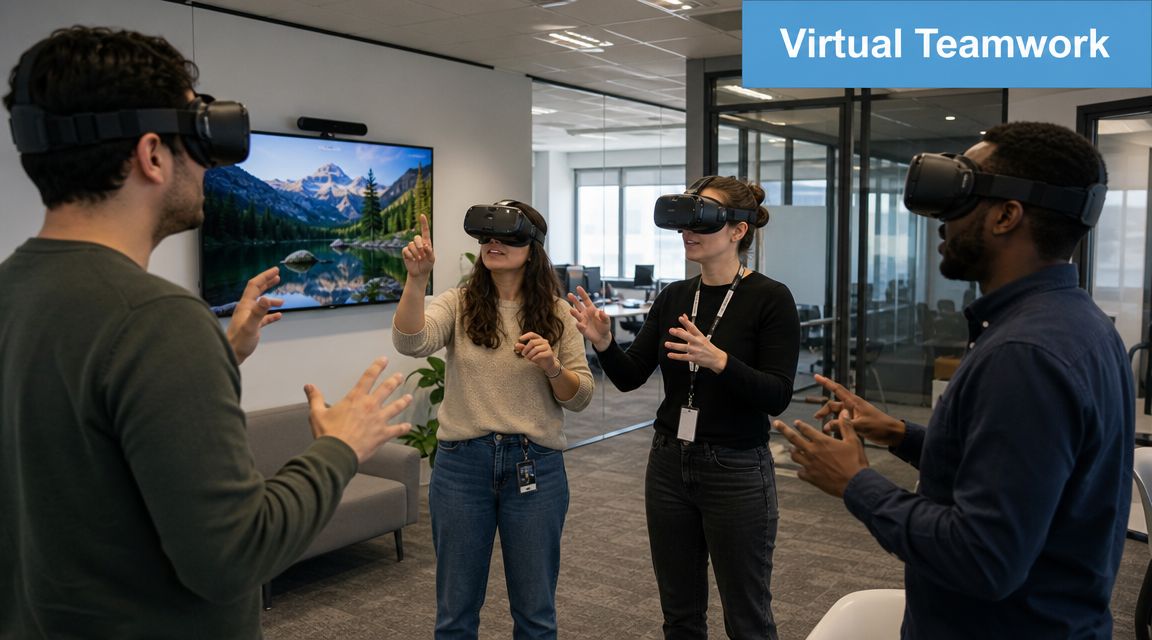
VR can be brilliant or awkward. The difference comes down to facilitation. Left unmanaged, it becomes one person in a headset while everyone else waits. Run properly, it becomes a team challenge where communication, observation and role-sharing matter just as much as what the headset wearer sees.
That's why I rarely recommend VR as a novelty add-on. It performs better as a structured mission. Escape-room logic, timed puzzles, cooperative adventures and observer roles all help turn it into a genuine group activity.
Make remote and in-room guests feel equally involved
Modern planning is important. In early 2024, around 28% of working adults in Great Britain did some work from home, with 14% hybrid-working and 14% working only from home, according to Business Research Insights' summary of hybrid work patterns. If your team has mixed-presence staff, your design should account for in-room and remote participants from the start.
For VR, that usually means assigning remote guests active support roles. They can manage clues, time limits, answer banks, or scoring while the headset user moves through the virtual environment. That turns a potentially exclusive experience into a hybrid-compatible challenge.
A few trade-offs matter here:
- Comfort screening: Not everyone enjoys headsets or immersive visuals
- Observer engagement: Non-headset roles need substance, not token participation
- Technical staffing: VR needs quick resets and calm troubleshooting
VR is strongest for innovation teams, graduate programmes, creative departments and client-facing events where you want a modern, high-interest activity. It's weaker when you need very high throughput with minimal staffing. Used in the right context, though, it's one of the most memorable upgrades you can make to office team building.
6. Climbing Wall Challenges and Relay Races
Climbing walls change the social dynamic because they bring visible encouragement into the room. People cheer for effort, not just results. That's useful when you want a team-building activity with a physical edge but don't want full-contact sport or high-complexity competition.
For office groups, I prefer relay and support formats over pure speed climbing. The strongest events give every participant a role. One climbs, another tracks time, another supports from the floor, another helps the team plan attempts. That keeps the activity from turning into a spectator sport for everyone except the boldest few.
Inclusion and safety need proper design
This is also where many planners get caught out. Accessibility isn't an add-on issue. In Great Britain, 16.1 million people were disabled in 2022/23, representing 24% of the population, as noted in Montana Nights' discussion of offsite team-building activities. Any physical challenge needs adaptation options, not a last-minute apology.
That doesn't mean avoiding climbing walls entirely. It means designing the surrounding game so different forms of contribution still count. Team strategy, route planning, timed support tasks and ground-based scoring roles can all be meaningful if they're built in from the start.
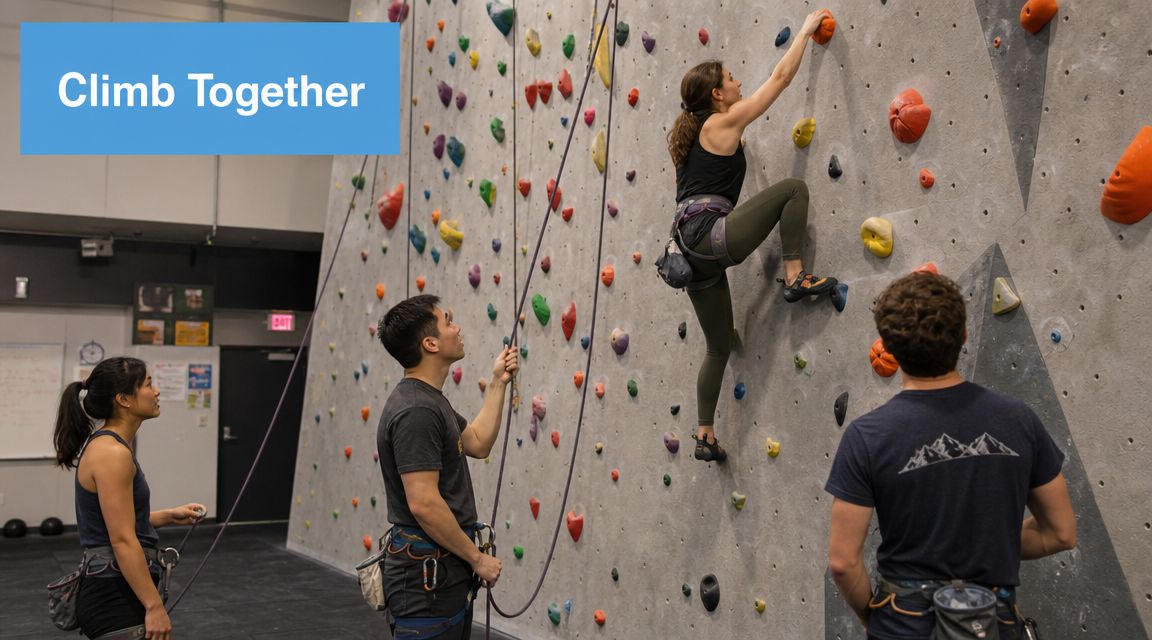
A few planning principles matter:
- Certified staffing: Use trained climbing instructors and clear safety briefings
- Visible encouragement: Celebrate completions, not only fastest times
- Alternative roles: Build non-climbing contributions into the scoring model
Climbing works well at summer staff events, larger conference socials and venue-based away days where there's space for a visual centrepiece. It's less suitable for tightly scheduled board-level events. The upside is strong atmosphere. The downside is that you must plan inclusion carefully or the format becomes narrower than it looks.
7. Giant Scalextric Racing League Championships
Giant Scalextric sits in a sweet spot between nostalgia and spectacle. It gives you the racing energy people love without requiring motion rigs, driver confidence or long technical briefings. That makes it one of the easier competitive formats to deploy at conferences, exhibitions and office celebrations.
It also handles volume well. A giant track becomes a visual hub, and guests understand the game quickly. Pick a lane, control the trigger, stay on the track, post a score. For broad guest lists, that simplicity is a major strength.
Why this outperforms many desk-based games
Scalextric works because it's social by design. People gather around it. They comment, laugh, coach and take sides. Compare that with quieter tabletop puzzles that often split attention and create fragmented pockets of activity. Giant track racing gives the room a common focus point.
The strongest format is a league system rather than a one-off knockout. Build in practice laps, seeded rounds and team colours. If branding matters, custom liveries and branded trackside signage can turn the game into a proper event feature rather than a retro novelty.
When a planner needs one attraction that entertains participants and spectators at the same time, giant Scalextric is one of the safest bets.
It's particularly effective for trade shows and client hospitality because people can join for a short burst without committing to a full session. That helps footfall and dwell time without making the stand feel clogged. For internal office events, it's a smart option when you want racing energy but need something more accessible than full simulator competition.
8. Casino Table Team Competitions and Strategy Games
Casino nights survive because they work. Not because they're original, but because they create easy conversation, visible stakes and flexible pacing. For office events, the professional version is far better than the DIY version. Proper tables, trained croupiers and play-money tournaments turn what could feel tacky into something polished.
The key is to frame it as team strategy, not just gambling theatre. Give each team equal starting chips, a set tournament window, and a final leaderboard that rewards collective decision-making. Once people understand that no real money is involved, resistance usually drops quickly.
What makes casino formats useful for corporate groups
Casino games are good for departments that don't want physical activity and don't love overt silliness. They let people participate while talking, observing and learning as they go. Blackjack often works best for beginners, roulette adds spectacle, and poker tends to suit smaller groups who enjoy longer-form play.
The trade-off is tone. If the wider event is high-energy and informal, casino tables can feel too static unless the croupiers are engaging and the tournament has a strong host. If the event is an evening gala or client social, they fit naturally.
Use them for:
- Awards evenings: A post-dinner competitive element with polished presentation
- Sales incentives: A social format that encourages table mixing
- Executive retreats: A lighter evening activity with strategic rather than physical focus
Casino tables aren't the most original item on this list, but they remain effective because they're easy to enter and easy to scale. For many mixed-age corporate audiences, that matters more than novelty.
9. Electronic Leaderboard Competitions and Multi-Game Tournaments
Leaderboards aren't a side feature. They're often the thing that turns a collection of attractions into one joined-up event. Without a shared scoring system, guests see separate activities. With a leaderboard, they see a tournament.
That shift matters because team-building now has to justify itself more clearly. Gallup's 2024 meta-analysis is summarised in Wise Guy Reports' market discussion as showing that highly engaged teams deliver 23% higher profitability and 14% higher productivity, while also reducing turnover relative to lower-engagement teams. For planners, the practical lesson is simple. Don't just count attendance. Build experiences that can be scored, repeated and reviewed.
The operational advantage of visible scoring
Electronic leaderboards solve several live-event problems at once. They create urgency, make progress visible, and help participants understand where they stand without chasing staff for updates. They also let you combine very different experiences, such as racing, Batak Pro, golf and Scalextric, into one coherent format.
The best systems use simple scoring logic. If guests need a five-minute explanation to understand the rankings, you've already lost momentum. Clear categories work better. Team score, individual score, department ranking, best rookie, best comeback.
A good multi-game tournament usually includes:
- Highly visible screens: Participants should see standings from multiple points in the room
- Frequent updates: Delay kills drama
- Multiple win conditions: Let competitive and casual guests both find a reason to stay engaged
I've seen average activities lifted by excellent leaderboard design, and I've seen premium attractions fall flat because nobody knew what counted. If you're planning team building games office sessions for a large group, scoring architecture deserves as much thought as the attractions themselves.
10. Customised Team Escape Room and Problem-Solving Challenges
Escape-room style challenges remain one of the strongest formats for planners who want collaboration to be the star. Unlike racing or sports, the value doesn't depend on confidence, coordination or prior experience. It depends on how people share information, test ideas and cope with pressure.
That makes customised versions especially useful for corporate settings. Generic padlock puzzles can be fun, but bespoke challenges create much more relevance. A product team can solve innovation-themed clues. A leadership group can work through a crisis scenario. A sales department can tackle a timed negotiation game that mirrors real collaboration gaps.
Why bespoke beats off-the-shelf
The strongest escape experiences are built around role diversity. One participant spots patterns, another manages time, another organises clues, another questions assumptions. When the design is good, different thinking styles become useful instead of peripheral.
That's also why escape rooms often outperform more old-fashioned in-person team-building advice. A lot of standard content still assumes everyone is in one room doing the same physical exercise, even though hybrid work has become normal. Custom puzzle formats are easier to adapt with digital clue feeds, remote observers and staggered participation than many classic office games.
Good problem-solving games don't just test whether a team can solve the puzzle. They reveal whether the team can organise itself fast enough to solve it together.
For best results, insist on a debrief. Not a long one. Just enough to surface what happened. Who took over. Who didn't get heard. Which clues were missed because nobody shared them. Those are the moments that make the activity useful beyond the event itself.
Office Team-Building Games: 10-Item Comparison
| Activity | Implementation Complexity 🔄 | Resource Requirements ⚡ | Expected Outcomes 📊⭐ | Ideal Use Cases 💡 | Key Advantages ⭐ |
|---|---|---|---|---|---|
| Racing Simulator Challenges | Medium, setup rigs, networked scoring | High, simulators, space, tech support | High engagement, measurable competition | Large group corporate races, incentive events | Immersive, competitive, measurable performance |
| Flight Simulator Team Missions | High, mission design and safety briefings | High, motion sims, instructors, longer sessions | Strong teamwork, communication, trust building | Leadership retreats, crisis-simulation training | Realistic co‑piloting, deep collaboration |
| Sports Simulator Tournaments | Medium, sport-specific rigs and brackets | Medium–High, various simulators, space | Increased energy, team cohesion, skill display | Company tournaments, wellness days, conferences | Appeals to sports fans; physical engagement |
| Batak Pro Reaction Training Games | Low, plug-and-play stations | Low, compact units, minimal staff | Quick bursts of excitement, measurable reflex gains | Conferences, icebreakers, exhibition booths | Fast setup, high-energy, broad visibility |
| VR Experience Challenges and Adventures | High, hardware, content, safety protocols | High, headsets, controllers, staff, space | Memorable shared experiences, strong bonding | Tech showcases, immersive team-building, recruitment | Deep immersion, customisable branding |
| Climbing Wall Challenges and Relay Races | Medium–High, safety infrastructure and instructors | High, wall, harnesses, certified staff, space | Confidence building, trust, visible achievement | Away days, confidence workshops, outdoor-style events | High trust-building, memorable physical challenge |
| Giant Scalextric Racing League Championships | Medium, track construction and timing systems | Medium, track footprint, controllers, AV | Spectator-friendly competition, sustained play | Exhibitions, trade shows, family-friendly events | High visual appeal, easy-to-learn, inclusive |
| Casino Table Team Competitions | Low–Medium, tables and trained dealers | Medium, professional staff, themed décor | Strategic discussion, upscale atmosphere | Evening galas, sales incentives, client entertainment | Sophisticated ambience, strategic teamwork focus |
| Electronic Leaderboard Multi-Game Tournaments | Medium, integration and real-time feeds | Medium, AV systems, software, monitors | Heightened engagement, transparent scoring, data | Multi-activity events, conferences, multi-venue games | Centralises competition, clear recognition, analytics |
| Customised Team Escape Room & Problem-Solving | High, bespoke design and facilitation | High, custom builds, facilitators, longer prep | Improved collaboration, problem-solving, role clarity | Leadership development, culture-aligned training | Highly customisable, directly transferable skills |
Ready to Plan Your Next Unforgettable Event?
A good office event doesn't need to feel worthy and awkward to be taken seriously. It needs to be well matched to the group, properly facilitated, and designed so participation feels natural from the first few minutes. That's where a lot of team-building efforts succeed or fail.
The strongest formats on this list work because they give people something real to do. Racing simulators create immediate competition and shared drama. Flight simulators reveal communication habits quickly. Sports simulators widen the pool of participants because not everyone wants the same style of challenge. Batak Pro adds short, sharp energy. VR creates immersion when it's run as a group mission rather than a headset demo. Climbing walls bring visible encouragement into the room. Giant Scalextric adds spectacle with low barriers to entry. Casino tables give mixed groups a polished evening format. Electronic leaderboards pull separate attractions into one event story. Bespoke escape challenges turn collaboration into the main event.
That variety matters because there isn't one perfect answer to team building games office planning. A graduate cohort, an executive retreat, a conference audience and an exhibition stand all need different mechanics. What works for a highly social sales team may fall flat with a technical project group. What engages a room of in-person guests may exclude a hybrid workforce unless you build remote roles in from the start. Practical planning means accepting those trade-offs early rather than pretending one format suits everyone.
The business case is stronger when the event aligns with real workplace outcomes. Team-building is now commonly treated as a structured way to improve communication and collaboration rather than just provide entertainment, and UK workplace guidance increasingly places it inside a wider employee-experience strategy. That's the right frame for procurement conversations as well. A planner doesn't need to argue that games are “fun enough”. The stronger argument is that the right format creates interaction, visibility, shared memory and measurable engagement in a short window.
Professionally managed delivery makes the difference. The hardware matters, but so do the details around it. Floorplan design, throughput, host quality, role allocation, accessibility adjustments, branding, live scoring, technical support and health and safety all shape whether the event feels premium or improvised. Most problems associated with team-building aren't caused by the activity itself. They're caused by poor facilitation, weak pacing, or formats that ignore the actual makeup of the team.
PSW Events is built for exactly this kind of brief. The team delivers simulator-led entertainment across the UK, from racing and flight experiences to sports simulators, VR, Batak Pro, giant Scalextric, casino tables, climbing walls and integrated leaderboard competition. If you want your next corporate event to create genuine buzz rather than polite applause, it's worth planning around an experience people will still be talking about the following week.
Contact PSW Events to shape a team-building experience that fits your audience, your venue and the kind of impact you actually want.