
Delegates arrive carrying half-finished emails, Slack notifications and the pressure of a packed day, then you're expected to offer a stress relief activity that feels useful in the moment, not awkward, tokenistic or hard to join. In a UK corporate setting, the best option is rarely the quietest or the most energetic, it's the one that fits the audience, venue, timing and outcome you need. A short simulator break can be right for one group, while a calm reset, a creative pause or a walk outside works better for another. PSW Events can support interactive simulator and attraction-based activations where a managed, measurable experience is the brief. The comparison lens is simple, purpose, group size, duration, space, delivery, H&S and the way you'll know people engaged.
1. Interactive Simulator Experiences
A simulator break works when a team needs a sharp mental reset, not a soft landing. Racing, flight and sports simulators pull attention into a single task, which makes them strong for conferences, away days and exhibition floors where people are overloaded but still want energy.
For a UK event, the practical advantage is structure. You can run short turns, keep the footprint compact and use the same attraction for mixed audiences, from senior leaders to visiting clients. A managed setup like PSW Events' immersive experience design suits that format because it combines delivery, branding and control in one activation.
Practical rule: use simulators when you want a break that feels active, social and time-bounded, not when the room needs silence.
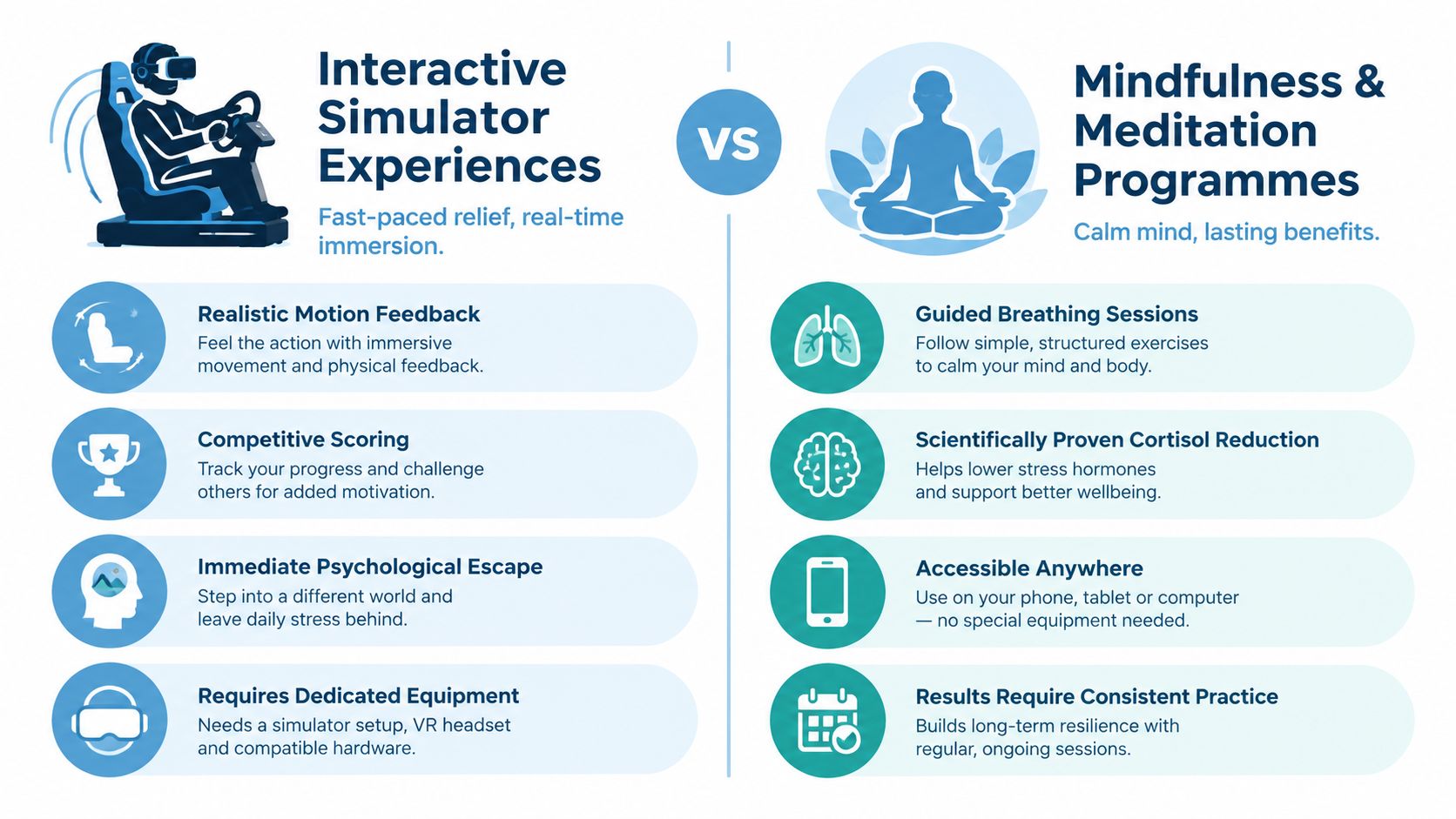
The trade-off is obvious. Competitive formats can energise confident participants, but they can also put off people who dislike performance pressure. Keep the tone light, brief everyone before they step in, rotate turns fairly and add a refreshment zone nearby so the break feels complete rather than rushed.
Best fit
- Purpose: high-engagement reset and visible participation
- Group size: small rotating groups, or larger audiences with queued turns
- Duration: short sessions work best, especially between agenda blocks
- Space: needs a managed footprint and safe circulation around equipment
- Success metrics: throughput, dwell time, repeat participation and simple pre/post mood scoring
2. Mindfulness and Meditation Programmes
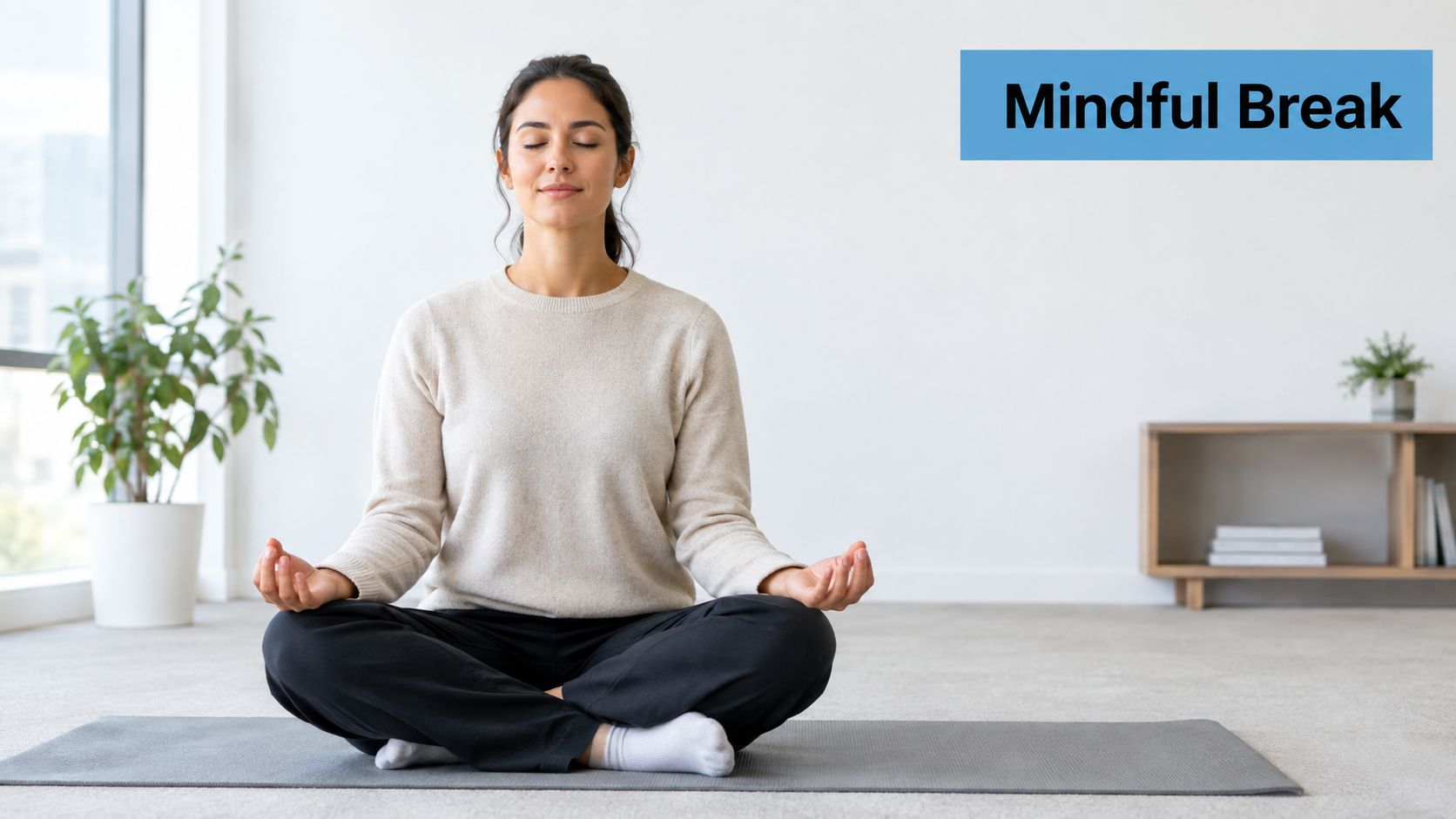
Mindfulness fits a different kind of event need. It works best when the room is overstimulated, people are carrying stress underneath, or the brief calls for calm rather than entertainment. UK adoption is already familiar enough to make the format understandable, and the PLOS ONE finding that 16% of adults in Britain had learned to practise mindfulness in 2021 gives organisers a useful benchmark for familiarity without assuming everyone wants the same thing. PLOS ONE
The delivery matters more than the label. A quiet room, a short guided breathing exercise, and a facilitator who keeps the session simple will do more than an overdesigned wellbeing installation. For exhibitions or conferences, a 5 to 10 minute reset slot is often more realistic than a long workshop, because people can join, settle and leave without missing the flow of the day.
Where it works and where it doesn't
Mindfulness is strongest when the audience wants decompression, reflection or a pause between meetings. It's weaker when the audience is restless, sceptical, or under time pressure and looking for something more social.
Good delivery choices
- Short guided sessions: easier to join than full meditation workshops
- Quiet zones: useful for conferences, breakouts and staff welfare spaces
- Multiple formats: audio-led, group-led and individual options improve access
- Timing: consistent slots help, especially around lunch or late afternoon
A common mistake is treating mindfulness as a cure-all. It can support immediate perceived relaxation, but it shouldn't be used to distract from poor workload planning or other organisational stressors. The best use is as one option in a wider event mix, especially where some attendees want stillness and others want a more active reset.
3. Physical Activity and Exercise
Movement is one of the clearest stress relief activity options because it gives people an immediate shift in focus. The NHS says activity can reduce tension, anxiety, stress and mental fatigue, help calm the mind during difficult emotions and improve sleep, and it notes that even a few minutes of movement can benefit mental wellbeing. Its adult target remains about 150 minutes of moderate-intensity activity each week, including muscle-strengthening work. NHS guidance on being active for mental health
In event terms, that doesn't mean turning every activation into a gym session. It means building in movement that feels accessible. A corporate sports day, a brisk team walk, a stretch break between presentations or a low-pressure game zone can all work if the design matches the audience and the venue.
The best examples are the simplest ones. Some groups want a competitive challenge, others just need a physical change of pace after sitting for hours. PSW Events' corporate sports day format is a good example of how movement can be packaged for team-building without making the experience feel like compulsory exercise.
A movement break should leave people clearer, not sweaty, embarrassed or worried about skill level.
Trade-offs matter here. Physical activity is effective, but it can be exclusionary if the energy level is too high or the format assumes everyone is already confident. Offer alternatives, keep instructions short and let people opt into intensity rather than being funnelled into one level.
Useful delivery ideas
- Low-barrier entry: walking routes, light relays, reaction games or stretch sessions
- Venue fit: indoor or outdoor options depending on weather and floor space
- Accessibility: seated variations and alternative participation modes
- Measurement: participation, completion and a quick mood check before and after
4. Creative Expression and Artistic Activities
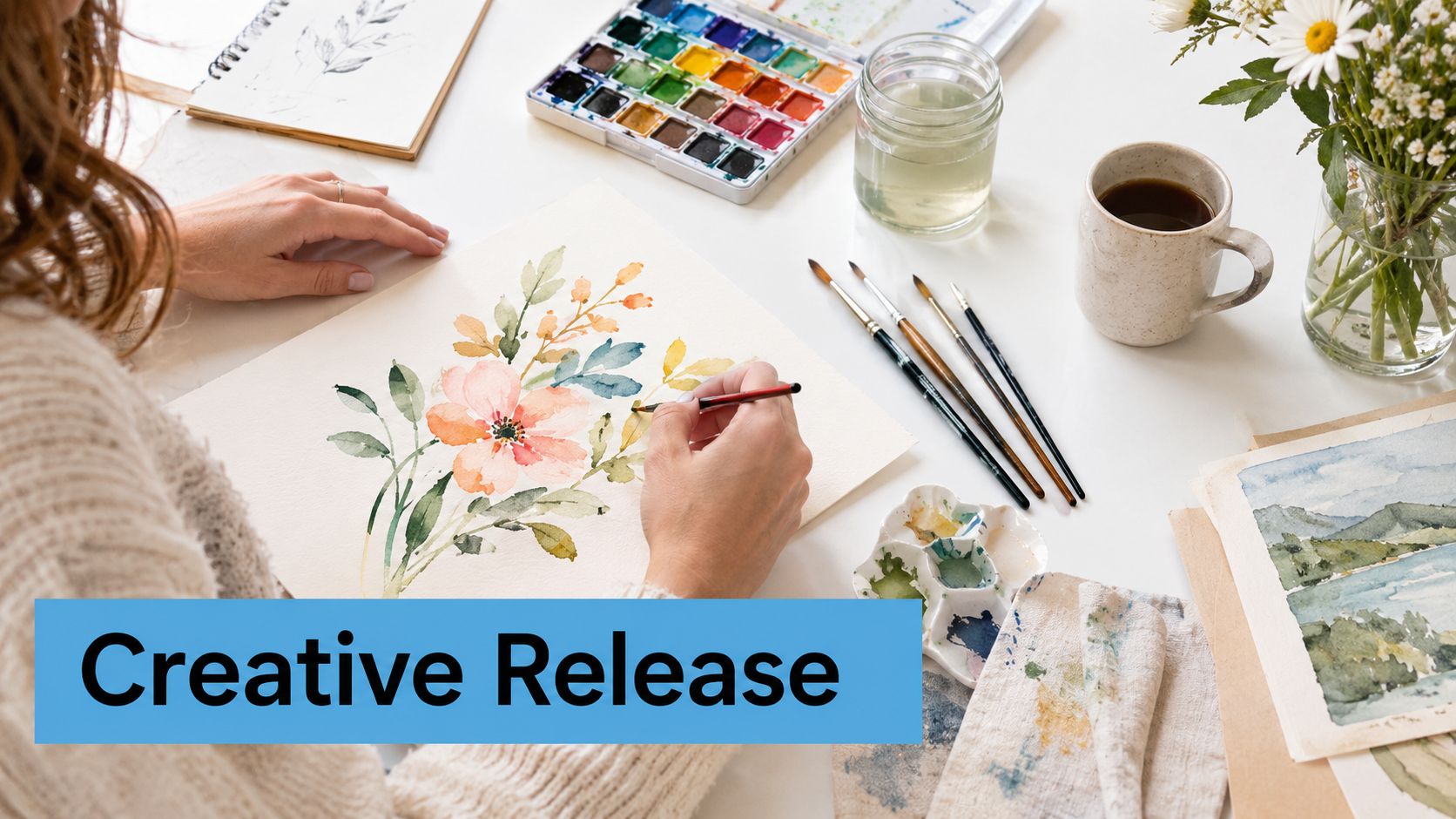
At a busy corporate event, a delegate may choose a quiet watercolour table while colleagues use simulators, join a physical activity or move between interactive attractions. Creative expression gives organisers a lower-pressure activation for people who want to participate without competing, performing or discussing workplace stress.
Painting, collage, clay, writing and craft sessions provide a non-verbal outlet. The result matters less than the process, which makes these formats suitable for mixed groups with different confidence levels and communication styles. A facilitator should set out materials, give one clear prompt and state that artistic skill is not being assessed.
Match the format to the event
For a drop-in corner, use quick activities such as postcard painting, collage or marker prompts. A booked workshop can support clay, guided drawing or collaborative artwork, provided the room has enough tables, drying space and cleaning facilities. Keep walkways clear, choose non-toxic materials and check whether attendees need seated access or alternatives to fine-motor tasks.
What tends to work
- Neutral setup: avoid judging, scoring or comparing finished pieces
- Diverse materials: offer paper, paint, markers and clay for different preferences
- Display space: let participants share work only if they choose
- Timing: lunch breaks and end-of-day sessions suit quieter formats
- Measurement: record participation, completion, dwell time and a short feedback response
Creative activations suit small groups and steady drop-in traffic better than a tightly timed, high-volume programme. They also carry a trade-off. Open-ended making can frustrate attendees who prefer clear rules or faster feedback, so provide a short guided brief rather than a blank canvas.
Place the activity beside louder attractions, not inside their busiest flow. It gives delegates a deliberate place to pause while keeping them connected to the event.
5. Social Connection and Team Activities
Some of the best stress relief happens through other people, not through silence. Team activities reduce isolation, create a sense of belonging and give people a reason to laugh together, which is why they're such a strong fit for corporate events where people from different departments rarely mix.
The organiser's job is to make connection feel safe. That means optional participation, light rules and a pace that lets new groups settle before the activity starts. In practice, a good team format might be a simulator tournament, an informal lunch challenge, a mixed-department game or a hosted icebreaker that doesn't force personal disclosure. PSW Events' corporate team building events show how structured interaction can be built into a managed event environment.
Danza Academy's overview of wellness through dance is a useful reminder that shared movement and social rhythm can be part of the same wellbeing moment, even when the format is playful rather than formal.
Design for comfort first. People connect more honestly when they don't feel trapped in the activity.
The trade-off is pressure. A social activity can energise a room, but it can also exclude people who are shy, neurodivergent, tired or new to the organisation. Give people a clear way to join, a clear way to step back and enough unstructured time for conversation to happen naturally.
Strong formats
- Facilitated team challenges: useful for mixed groups and new teams
- Shared breaks: coffee, lunch or post-session social time
- Light competition: enough to create energy, not enough to create winners-only tension
- Psychological safety: voluntary involvement and no forced disclosure
6. Nature Exposure and Outdoor Activities
A conference room can lose energy after hours of presentations. Moving attendees into a garden, courtyard or nearby green space changes the sensory environment and gives organisers a practical way to break up the day.
Outdoor recreation also has a credible wellbeing case. The ONS valued the UK health benefits of outdoor recreation at between £6.2 billion and £8.4 billion in 2020, based on ten years of Monitor of Engagement with the Natural Environment survey data. Its analysis also referenced research showing that people spending at least 120 minutes per week in natural environments reported better health and wellbeing than comparable people with no nature exposure. ONS analysis of health benefits from outdoor recreation
An event will not create a complete weekly pattern, but the evidence helps organisers set a useful direction. A guided green walk, garden networking slot, outdoor break area or short nature challenge can provide a change of pace without requiring a complex attraction.
The UK Government's environment assessment cites a study of more than 19,000 people in England. It found that spending at least two hours per week in nature was associated with a significantly greater likelihood of reporting good health or high wellbeing. UK Government environment and health assessment
Choose the activation around the site and audience:
- Green walks: suitable for smaller groups, provided the route supports different mobility levels and the pace remains optional.
- Outdoor break zones: practical for larger conferences because people can enter and leave without holding up the programme.
- Garden or nature challenges: add light structure for teams, but need clear instructions, supervision and a weather alternative.
- Running or water-based activities: appropriate only when fitness expectations, equipment, supervision, insurance and safety controls are explicit.
Weather, wayfinding and ground conditions can determine whether the idea works. Plan for waterproofs, shade and suitable footwear, and check access before promoting the activity. Routes should offer a comfortable option for attendees who cannot walk far or manage uneven surfaces.
Nature can support a quieter reset through sound, colour, texture and natural light. Keep the format simple. Pair outdoor time with refreshments, informal conversation or gentle movement, while retaining an indoor fallback for poor weather. The environment should support participation, not become another logistical test.
7. Cognitive Behavioural Techniques and Reframing
Some teams don't need more stimulation, they need a better way to handle the thoughts driving the stress. Cognitive reframing and CBT-based tools help people separate the event from the interpretation, which can be useful in high-pressure corporate settings where the source of stress is uncertainty, workload or a looming presentation.
A practical event version should stay simple. Short thought-challenging exercises, worry-postponement prompts or a guided “name the pressure, test the assumption, choose one action” format works better than a long classroom-style workshop. The value is that participants leave with a method they can use later, not just a nice feeling in the room.
The strongest reframing exercise is one people can repeat without a facilitator.
This format suits smaller groups, leadership sessions and employee support events, especially where the aim is resilience rather than entertainment. It's also easy to combine with another activation, because it doesn't need much space or equipment.
The trade-off is engagement. Some attendees love practical psychology, while others find it too abstract or too close to work. Use examples from ordinary office life, keep the language plain and avoid making the session feel like therapy by another name.
Best practice
- Use real scenarios: deadlines, client pressure and decision fatigue are easier to work with than vague stress talk
- Keep it short: brief, repeatable tools beat long theory
- Offer privacy: not everyone wants to speak in front of colleagues
- Pair with action: a reframed thought should end in one next step
8. Competitive Games and Gamification
Competitive games work as event activations when participation stays light, optional and easy to understand. Leaderboards, reaction challenges, quiz rounds and simulator contests can create quick focus and energy at exhibitions, brand activations and team events. PSW Events' attraction mix, including simulators and reaction-based games, suits briefs that need visible participation rather than a quiet reset.
Match the format to the audience. Short solo rounds suit limited time and steady footfall, while team challenges help larger groups take part without putting one person under constant scrutiny. Check floor space, queue flow, accessibility and operator requirements before booking equipment. A simulator may create strong engagement, but it needs more space, supervision and safety preparation than a quiz or tabletop challenge.
Design for participation, not pressure
Clear rules and short rounds reduce hesitation. Categories, handicaps and team formats prevent confident players from dominating, while practice attempts give less experienced attendees a fair entry point. The host should explain how scores are recorded and celebrate participation alongside performance.
What to prioritise
- Clear rules: keep instructions brief and make the first attempt easy
- Multiple formats: offer solo, team and mixed modes for different comfort levels
- Visible feedback: use score updates to encourage return visits without forcing competition
- Inclusive recognition: reward effort, improvement and participation, not only winners
Track dwell time, repeat plays, queue conversion and completed rounds to judge engagement. For organisers refining this approach, improve engagement with gamification provides useful context for leaderboard tactics.
Competition is less suitable for anxious, overloaded or performance-sensitive groups. Give attendees the option to watch, join a low-pressure team or skip the activity entirely. That flexibility keeps the activation coherent while allowing people to engage at their own level.
8-Method Stress Relief Comparison
| Activity | Implementation complexity 🔄 | Resource & setup ⚡ | Expected effectiveness ⭐ | Measurable outcomes 📊 | Ideal use cases & tips 💡 |
|---|---|---|---|---|---|
| Interactive Simulator Experiences | High, specialist hardware, trained operators, safety prep | High, dedicated space, equipment purchase/rental, maintenance | High short-term relief and engagement; strong flow induction | Clear, immediate metrics (leaderboards, session stats); demonstrable dwell/engagement increases | Best for corporate events, exhibitions, team-building; schedule during peak stress, rotate users |
| Mindfulness and Meditation Programmes | Low, simple delivery but benefits require consistency | Low, quiet space or audio apps; facilitator improves outcomes | Moderate–High long-term (evidence-based reduction in anxiety/cortisol) | Measurable after weeks (burnout/cortisol reductions, survey scores) | Daily short sessions or app-based rollout; start 5 min, offer multiple formats |
| Physical Activity and Exercise | Moderate, programme design and scheduling required | Variable, minimal for walking, higher for gyms/classes | High, immediate endorphin effects and cumulative neuroplastic benefits | Trackable via attendance, fitness metrics, reduced sick leave | Workplace gyms, group classes, walking clubs; schedule consistently, use wearables |
| Creative Expression and Artistic Activities | Low–Moderate, materials and facilitator advisable | Low, basic materials and a flexible space | Moderate, promotes emotional processing and flow | Harder to quantify; improvements via wellbeing surveys and participation rates | Workshops or drop-in sessions; emphasise process over product and provide non‑judgemental space |
| Social Connection and Team Activities | Moderate, coordination and skilled facilitation often needed | Moderate, venue, facilitators, logistics | High, immediate reduction in isolation and improved psychological safety | Measured by engagement, team cohesion surveys, retention metrics | Team-building, optional social events; ensure inclusivity and psychological safety |
| Nature Exposure and Outdoor Activities | Low, planning and weather contingency needed | Low, free/low-cost locations, possible travel/time costs | Moderate–High immediate calming and restorative effects | Short-term physiological changes (heart rate/cortisol) and mood improvements | Short walks, green breaks or retreats; adapt to seasons and local access |
| Cognitive Behavioural Techniques & Reframing | Moderate–High, requires training and practice | Low–Moderate, facilitator or validated apps/workbooks | High long-term, strong evidence for reducing anxiety and building resilience | Improvements in validated clinical scales and workplace stress measures over time | Resilience training, EAPs, self-directed workbooks; practice regularly and combine with other supports |
| Competitive Games & Gamification | Moderate, design fairness and facilitation important | Variable, simple quizzes to advanced platforms/leaderboards | High immediate engagement; may increase stress in some individuals | Strong short-term engagement metrics; recognition/achievement tracking | Events, tournaments, leaderboards; ensure fairness, handicap options and celebrate participation |
Turn a Wellbeing Idea into a Measurable Event
Choose the stress relief activity that matches the brief, not the trend. Use mindfulness or reframing when the audience needs calm and reflection, movement or nature when people need a physical reset, creative sessions when the room needs low-pressure expression, social activities when connection matters most, and simulators or gamified attractions when engagement and energy are the priority. If the event has mixed needs, pair one energising option with one quieter option so attendees can choose the level that suits them.
The best corporate delivery is rarely single-track. Offer opt-outs and accessible alternatives, brief facilitators properly, check venue risks in advance and collect consent where needed, especially if you're capturing images or running competitive formats. For exhibitions, conferences and branded activations, that balance is what keeps an experience welcoming rather than forced.
Measurement should stay simple and useful. Track participation and completion rates, repeat engagement, short pre- and post-activity mood scores, qualitative feedback, dwell time and any leaderboard or interaction data where it applies. That gives you a clearer read on whether the activation reached the people who needed it, not just whether the room looked busy.
For teams planning a managed UK activation, PSW Events is worth reviewing at pswevents.com. The right attraction can do more than fill time, it can create a visible recovery point inside a demanding event day.
PSW Events supplies interactive attractions, simulators and full event delivery across the UK, so you can turn a wellbeing idea into something guests join. If you want a managed activation that balances engagement, safety and measurable participation, visit PSW Events and explore the options for your next corporate event.