You've got a product launch approaching, an exhibition stand booked and a budget that won't stretch to a celebrity appearance. Your team needs guests to stop, try something and leave with more than a branded tote bag. Sales wants useful conversations. Marketing wants content. The venue needs a workable site plan.
The best brand activations solve those competing demands with a clear mechanic. Guests know what to do, spectators can understand what's happening, and the brand has a sensible way to measure the response. The memorable part might be a personal keepsake, a live challenge or a useful product demonstration. It doesn't have to be an expensive installation.
Ten Activations That Still Set the Standard
The campaigns below offer different answers to the same practical problem. Some created a public spectacle. Others made an ordinary product feel personal or removed a barrier to purchase. Each offers a format that a UK team could adapt for a conference, fan zone or exhibition stand.
Use broader data on marketing trends to inform your channel planning, but build the event around a specific audience action. The useful question isn't how to copy a famous campaign. It's which part deserves your budget, what it demands operationally and how to reproduce that effect at a manageable scale.
1. Red Bull Stratos
Red Bull Stratos made Felix Baumgartner's jump from a balloon capsule into a live event that people could follow, discuss and watch again. The connection to Red Bull's extreme-sports positioning was clear. The brand didn't need a lengthy product explanation beside the action.
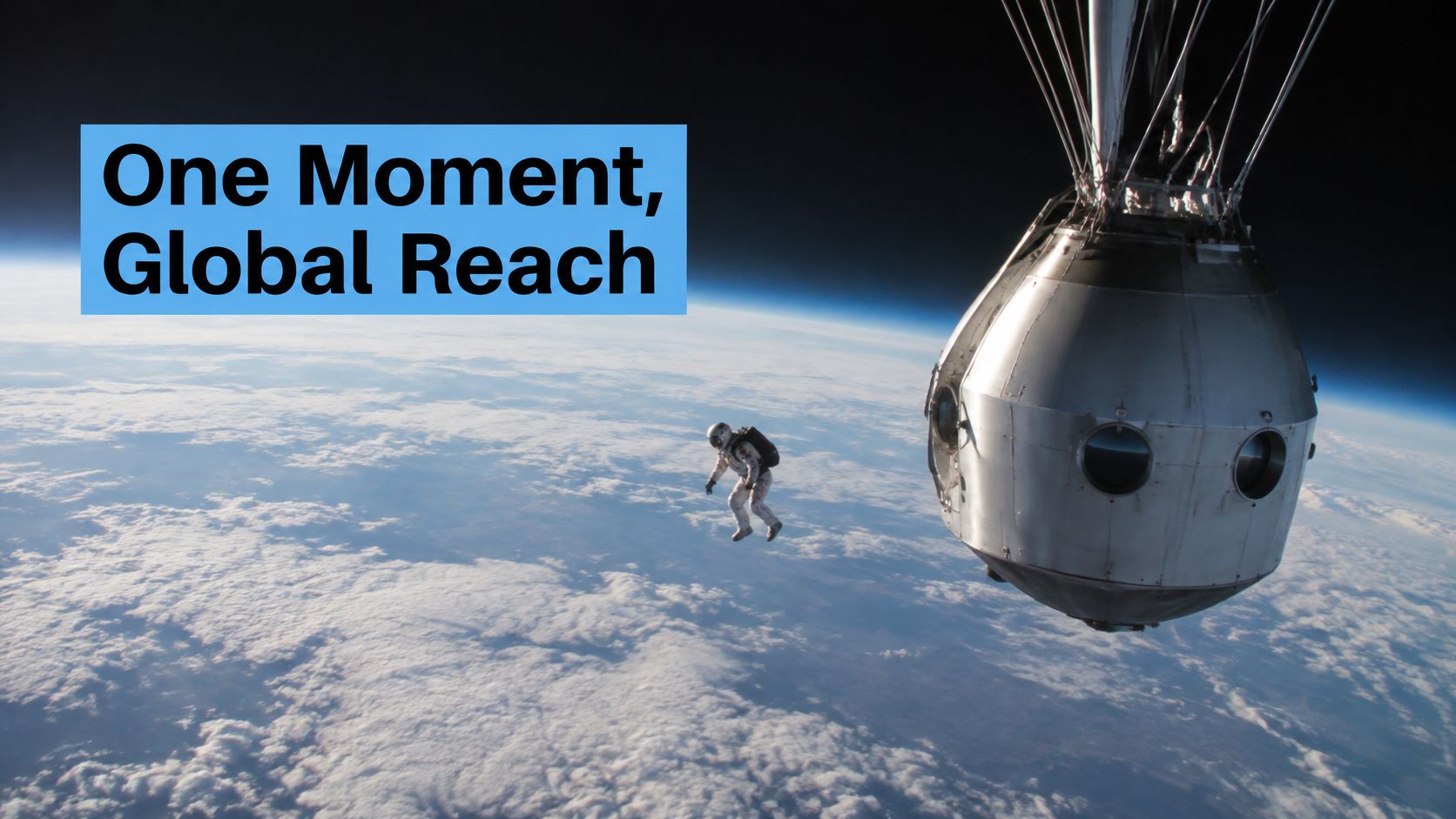
What worked was anticipation around a decisive moment. Preparation, the live jump and subsequent films gave the audience different ways to engage. Red Bull's wider athlete and filmed-event content kept that adventurous identity consistent.
Scale the spectacle, not the risk
The original format demands specialist engineering, safety leadership, broadcast production and contingency planning. That's a major production commitment, not a sensible template for a normal exhibition budget.
For a UK technology launch, use a flight simulator with a clearly defined landing challenge. Position a spectator screen towards the aisle, brief the operator to explain the task and schedule a final between leading participants.
- Budget priority. Fund reliable equipment, operation and screen visibility before decorative scenery.
- Content plan. Capture preparation, attempts and the final, rather than filming only the winner.
- Measurement. Separate participants, spectators and subsequent product conversations.
A headline moment needs an audience plan before it needs a bigger stage.
Keep safety decisions with competent specialists. Don't let a promised launch time pressure the team into running an activity that isn't ready.
2. Coca-Cola Share a Coke
Finding your name on a familiar product gives you an immediate reason to pick it up. Coca-Cola's Share a Coke campaign used named packaging to turn a mass-market drink into something people could choose for themselves, a friend or a family member.
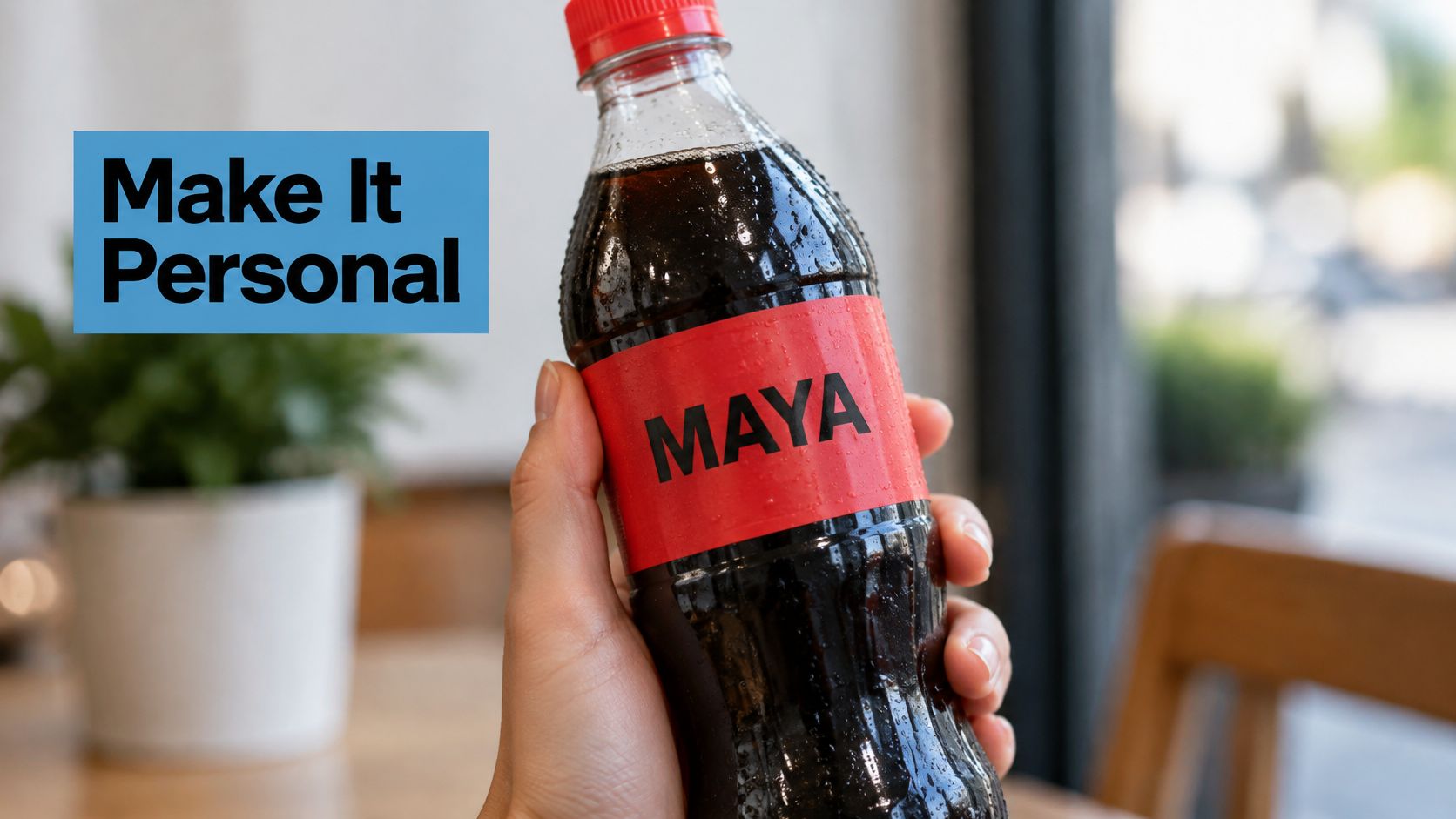
The Australian launch and subsequent UK rollout connected packaging, retail discovery and social participation. Personalisation gave the photograph a reason to exist. Guests weren't just holding a logo; they were showing something that felt relevant to them.
Make personalisation easy to fulfil
Live printing adds equipment, consumables, artwork checks and queue pressure. A limited list of names is easier to operate, but risks excluding visitors whose names aren't available. Let guests enter their preferred spelling and preview the result.
For a conference stand, create a digital team-name board beside a racing simulator. Participants choose a display name, complete the challenge and receive a branded result image they can save.
Spend on the personalised output, not an elaborate surrounding set. Test the screen layout, spelling workflow and image delivery before opening.
Give guests a campaign hashtag, but don't make posting compulsory. Track completed experiences, saved images and separately consented follow-up requests. A personal keepsake can support sharing without turning every interaction into a public endorsement.
3. Mastercard Priceless Cities
Mastercard's Priceless Cities platform connects its brand proposition with curated experiences, partner venues and cardholder access. London experiences and exclusive ticketing illustrate the central mechanism: give people access to something they value, rather than relying entirely on a promotional offer.
For a corporate event, that could mean a hosted simulator session with an expert briefing and a comfortable viewing area. The hospitality should support conversation, not conceal a sales pitch.
Access needs an operational plan
The effort sits in partner coordination, booking, hosting and fulfilment. A modest-looking experience can still demand substantial staff time if every booking needs individual attention.
For a London conference reception, combine scheduled simulator sessions with a walk-up demonstration area. These corporate event ideas in London offer useful formats for building that kind of programme.
- Protect availability. Reserve capacity for booked guests without leaving the attraction visibly unused.
- Provide context. Explain why the experience belongs with the brand.
- Capture intent. Ask whether guests want a relevant follow-up, rather than treating entry as sales qualification.
Commercial measurement should extend beyond attendance. A GottaBe! Marketing case study reports that Fusion Students engaged more than 15,000 students and captured over 3,500 leads through an immersive campus activation.
That's a useful operational comparison, not a forecast for hospitality. Define what makes a lead useful before collecting it.
4. Dove Real Beauty Sketches
Dove's Real Beauty Sketches invited women to describe themselves to a forensic artist, then compared those portraits with drawings based on strangers' descriptions. The contrast made self-perception the subject of the experience, connecting the brand with its wider self-esteem theme.
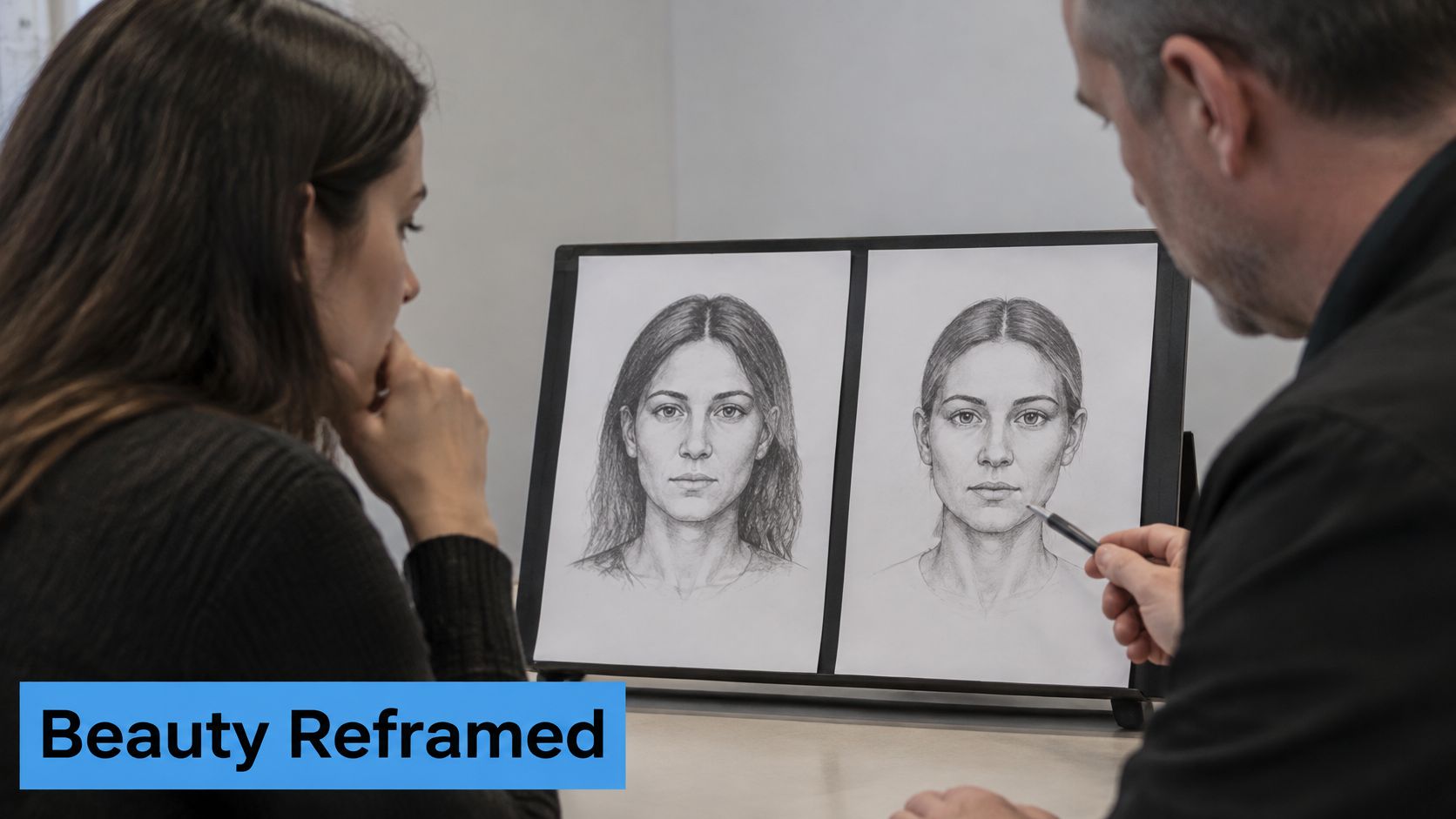
The practical lesson is participation with emotional relevance. The audience supplied the story. Follow-up self-esteem campaigns could continue that theme without repeating the exact drawing exercise.
Don't manufacture vulnerability
A sensitive activation needs skilled facilitation, privacy and careful editorial decisions. Filming consent isn't the same as permission to use someone's most emotional reaction in promotional content.
Planning safeguard: Give participants a complete experience even if they decline photography, recording or publication.
For a workplace wellbeing event, use a private digital reflection station. Guests choose a strength they recognise in a colleague, then contribute an optional anonymous message to a moderated screen. Don't rank people or ask them to assess their appearance.
The smaller format reduces production costs, but moderation and participant care still need budget. An unattended touchscreen isn't a substitute for a trained host.
Measure voluntary completion, feedback and requested resources. Keep sensitive responses separate from lead capture. If the purpose message doesn't connect credibly with the product, audience and organisation's behaviour, choose a different creative route.
5. Oreo Dunk in the Dark
Oreo's response to the Super Bowl blackout used a familiar product behaviour, dunking a biscuit, to make a timely social post. Its line, “You can still dunk in the dark”, worked because the connection was easy to understand.
Other brands have since used live events as prompts for reactive content. The useful lesson isn't to chase every trending topic. It's to prepare a team that can recognise a relevant moment and publish without a cumbersome approval chain.
Build the response system beforehand
This format is relatively light on physical production. Its real cost is dedicated attention, creative judgement and access to someone authorised to approve the work.
At a trade show, a simulator stand can provide its own live material. A surprising comeback, a team rivalry or an amusing reaction gives the social team something connected to the actual event.
- Prepare assets. Build editable score graphics, branded frames and caption templates.
- Assign authority. Name the approver and establish subjects the team won't use.
- Check permission. Confirm participant approval before publishing identifiable footage.
Don't turn equipment faults, injuries or visitor frustration into jokes. A fast response still needs judgement.
Measure whether posts attract relevant engagement and visits, not merely whether the team published quickly. For a small budget, a staffed challenge and prepared content templates are more useful than an expensive set with nobody available to document it.
6. Nike Breaking2
A marathon attempt with a clear target gives spectators a simple question to follow: can the runner sustain the required pace? Nike Breaking2 used that challenge to focus attention on performance and the work behind it. The format made the campaign understandable even to viewers who knew little about footwear development.
For a conference or fan zone, turn the idea into a timed sports or racing challenge. Set clear rules, explain scoring before play and show results on an electronic leaderboard. A sports simulator or racing challenge for corporate events can give participants a similar test, while keeping the activity relevant to the campaign.
The main costs are equipment, operation, spectator displays and content capture. Filming adds value when the campaign has a plan for using the footage. Otherwise, put that budget into reliable equipment and enough space for the queue.
Plan circulation alongside the challenge. Keep the activity clear of the aisle, and leave room for spectators without blocking quieter product conversations. A compact simulator setup can create the same visible contest with less production than a full-scale public attempt.
7. Coca-Cola Christmas Truck Tour
The Coca-Cola Christmas Truck Tour gives visitors a recognisable seasonal object to gather around and photograph. Its UK town and city stops connect a physical encounter with imagery people also see in advertising and social content.
The strength is familiarity combined with a limited opportunity to attend. The operational challenge is delivering that experience repeatedly, outdoors and in public-facing locations.
Touring costs more than transport
Route planning, permissions, loading access, staffing, weather contingencies and daily resets all need attention. A photogenic vehicle is only part of the budget.
A smaller exhibition version could use a reusable festive backdrop, an interactive reaction game and a clearly positioned photo point. At a fan zone, make the activity relevant to the sport rather than adding seasonal decoration without a purpose.
- Design for repetition. Use replaceable graphics and components that pack securely.
- Control the queue. Keep photography separate from the activity exit.
- Offer a next step. Place an optional QR sign-up where guests can stop safely.
A touring activation also needs consistent delivery between stops. MGN Events' European e.l.f. Beauty roadshow ran across three cities, three countries and three weekends, illustrating the coordination behind a repeated format.
Don't assume that a queue proves success. Record completed interactions, abandonment and follow-up response. A smaller attraction that operates consistently can be more useful than a larger installation that repeatedly needs attention.
8. Red Bull Flugtag
Red Bull Flugtag makes the entrants part of the entertainment. Teams build human-powered flying machines, present them to spectators and launch from a ramp into water, with creativity, distance and showmanship shaping the competition.
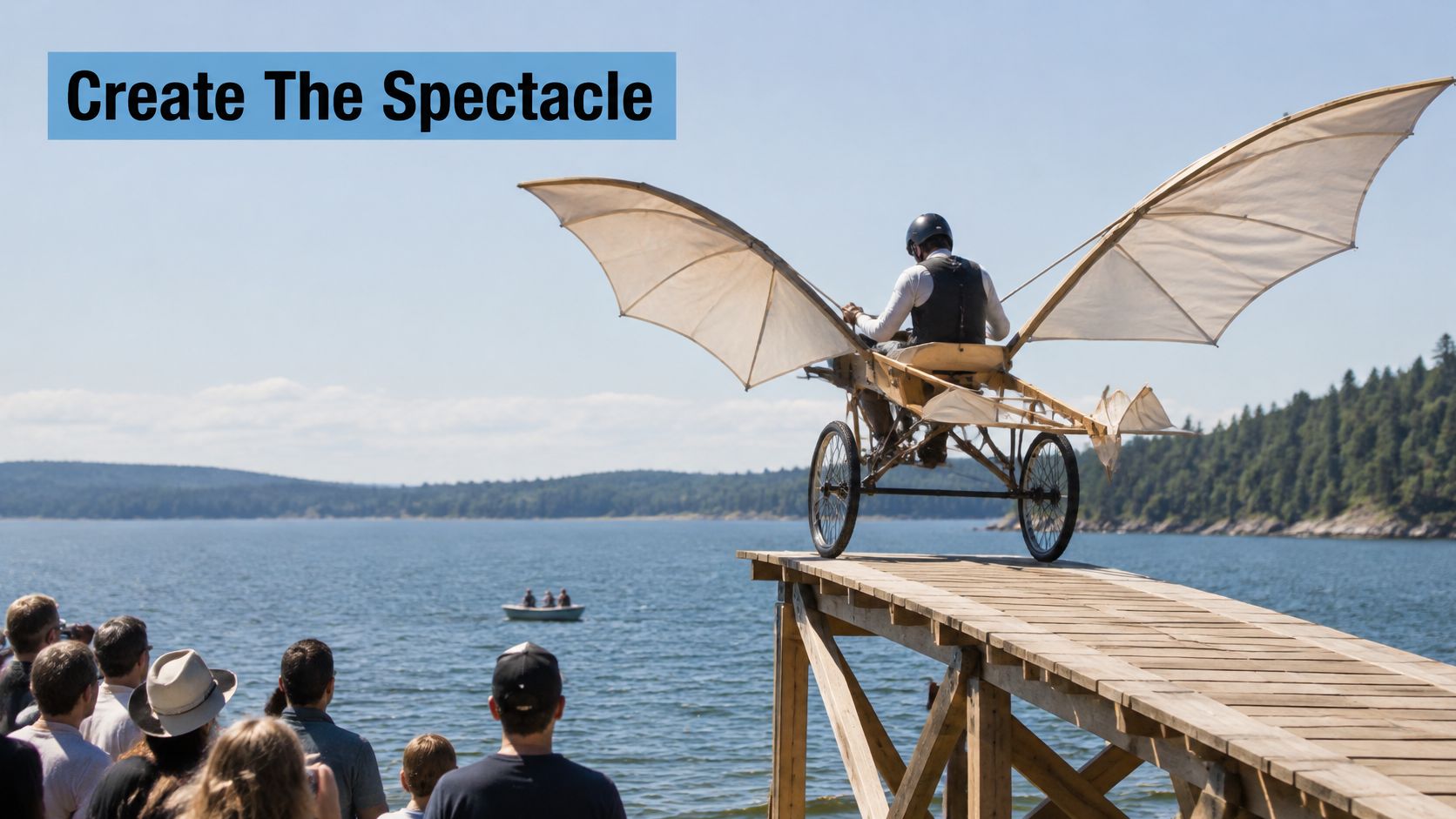
UK and international events show the appeal of a format where preparation, costumes and team identity are visible parts of the spectacle. Local teams also have an obvious reason to share their involvement.
Keep the creativity, remove the hazardous infrastructure
A water-based public event demands specialist safety planning, rescue provision, engineering and coordination with local authorities. It's a high-effort format with costs far beyond the launch ramp.
For a conference, invite departments to create team identities for a flight-simulator challenge. Judge flying performance separately from presentation so that creative entrants don't have to outperform experienced players to contribute.
Budget for hosting and clear scoring. Without those, spectators see disconnected attempts rather than a competition.
Let visitors compete in different ways, rather than making physical confidence the price of participation.
Accessibility needs deliberate design. Exhibition News' Venue Trend Report coverage says nearly 70% of venues describe themselves as fully accessible; that doesn't establish whether an individual attraction is suitable.
Check step-free approaches, control reach and transfer requirements. Offer a seated or non-physical alternative, and let guests participate through commentary, team design or judging without treating those roles as consolation prizes.
9. IKEA Place Augmented Reality App
IKEA Place lets customers visualise furniture in their own rooms through a smartphone camera. Placing a sofa, table or light in a familiar setting addresses a practical question: will this work in my space?
That makes it a useful example of interactive technology with a job beyond entertainment. The product stays central to the experience. The digital layer helps customers examine a purchase rather than distracting them from it.
Demonstrate something customers struggle to picture
At an exhibition, a supplier could let visitors configure a room, inspect equipment or explore a product layout on a shared screen. Start with the decision the visitor needs to make, then choose the technology.
Augmented reality and virtual reality aren't interchangeable. Use virtual reality in events when an immersive environment helps; choose a tablet or touchscreen when visitors need a quick demonstration alongside colleagues.
Development, suitable assets, device management and technical support can make bespoke applications expensive. A lower-cost alternative is a guided interactive product demonstration with prepared configurations and a trained operator.
The physical environment matters too. Eventbrite's survey of UK respondents aged 18–35 found 88% said it was important that an event helped them feel connected to their local community.
For a regional exhibition, use recognisable local scenarios and encourage shared exploration. Measure completed demonstrations, questions resolved and requested consultations, rather than treating screen taps as purchase intent.
10. Lynx Effect Fragrance Activations
A fragrance campaign has a straightforward live advantage: visitors can experience the product rather than relying on a description. Lynx Effect sampling and experiential activity bring the scent proposition into a social setting, supported by the brand's wider advertising.
The trade-off is equally straightforward. Not everyone wants fragrance applied to them, and scent can spread beyond the activation footprint.
Keep sampling controlled and optional
Use blotters or clearly explained sampling methods, follow product guidance and agree the approach with the venue. Avoid ambient spraying in shared exhibition aisles.
A compact version could pair optional sampling with a digital preference quiz or reaction game. Keep the scent trial separate from participation so guests can enjoy the activity without using the product.
- Stock control. Record distribution by location and shift.
- Staff briefing. Explain the product without making unsupported attraction or performance claims.
- Conversion route. Give interested visitors a relevant retailer destination or trackable offer.
Location can strengthen that last step. A GottaBe! Marketing workplace sampling campaign distributed 20,000 samples near relevant retail locations and reported an estimated 70% post-campaign sales uplift.
That estimate isn't a forecast for another campaign. Use redemption tracking and suitable sales comparisons before claiming incremental revenue.
Consumables also demand replenishment and reset routines. Budget for stock handling, cleaning and staff cover, not just the samples and the game.
Ten brand activations compared by format, primary channel and replicability
The formats below range from a global live stunt to a single-person interaction. For a UK conference, exhibition stand or fan zone, the smaller versions keep the central mechanic while reducing production, space and staffing demands.
| Item | Format | Primary Channel | Replicability at Smaller Budgets |
|---|---|---|---|
| Red Bull Stratos | Live balloon ascent and stratospheric jump, filmed for a global audience | Livestream and broadcast | Difficult to reproduce; use a simulator or interactive countdown to create a smaller spectacle |
| Coca-Cola Share a Coke | Personalised packaging with names | Personalised packaging and social media | Scalable; personalise event materials or let guests create a take-away |
| Mastercard Priceless Cities | City-based experiences with local partners | City-based partner experiences | Adaptable; focus on one local partner and a single experience |
| Dove Real Beauty Sketches | Portrait exercise with a forensic artist, comparing participants' descriptions with the artist's sketches | Social video | Adaptable; run a smaller, consent-led portrait or storytelling activity |
| Oreo Dunk in the Dark | Timely social post responding to a live event | Real-time social media | Highly replicable; requires a small team, monitoring and rapid approvals |
| Nike Breaking2 | Elite marathon attempt built around a sub-two-hour target | Livestream and documentary content | Difficult to reproduce; use a timed running challenge or simulator |
| Coca-Cola Christmas Truck Tour | Branded truck touring public locations and making physical stops | Touring public events | Adaptable; use a branded pop-up or a smaller local tour |
| Red Bull Flugtag | Teams build human-powered flying machines and launch them into water | Outdoor participatory event | Difficult to reproduce; run a smaller team design-and-launch challenge |
| IKEA Place Augmented Reality App | Augmented reality app for placing furniture in a room | Mobile augmented reality | Adaptable; offer a short digital product demonstration |
| Lynx Effect Fragrance Activations | Live fragrance sampling using blotters and optional product trials | Live sampling and experiential events | Highly adaptable; use a compact sampling station with a simple interactive element |
Turning Headline Ideas into Repeatable Activations
The best brand activations aren't necessarily the largest. They give the audience something understandable to do and give the marketing team a credible way to assess what happened afterwards. A simulator, sampling counter or personalisation station can achieve that without reproducing a famous campaign's production scale.
Start with the mechanism, not the scenery. Decide whether guests should compete, discover, personalise, taste or explore. Then choose equipment and staffing that make that action easy within the available footprint.
Keep the operating checklist short
- A clear mechanic. Explain the task from the aisle and demonstrate it without a lengthy briefing.
- A shareable moment. Frame a result, reaction or keepsake that guests might want to save.
- A capture point. Collect only useful information, explain its purpose and keep marketing permission clear.
- A plan for the day. Allocate responsibility for queues, breaks, replenishment, technical issues and escalation.
- An inclusive alternative. Provide another way to participate when the headline activity isn't suitable.
- A measurement route. Connect participation to the next meaningful action, such as a meeting, trial or purchase.
Build the communications around the experience as well. The IPA's channel-mix analysis supports an approximate 60% investment in long-term brand building and 40% in short-term activation. Treat that as a planning principle, not an automatic budget split for an individual stand.
For a conference, a racing simulator can provide the challenge, a leaderboard can make progress visible and a hosted conversation can connect the experience to the product. At a fan zone, a sports simulator can support team participation while a separate viewing area keeps circulation clear.
Plan reuse and follow-up before opening
Choose modular branding and equipment that can travel to another event. Assess transport, power, materials and disposal alongside commercial performance. The EICC's integrated impact reporting offers a useful example of treating environmental performance as something to measure, not merely describe.
Plan content permissions and distribution in advance. PostSyncer's guide to UGC campaigns can help shape the participant-content element, but guests should still be free to take part without posting.
We can handle site planning, power requirements, installation, staffing and on-the-day management, leaving your brand team free to engage guests. Before choosing an attraction, write down your audience, footprint, intended action and follow-up process. That gives everyone a practical basis for choosing the right format.
PSW Events supplies sports, racing and flight simulators alongside interactive attractions for conferences, exhibitions and fan zones, with planning, installation and on-site support. Visit PSW Events with your event location, available space and campaign objective to discuss a brand activation your team can operate and measure.