
A reliable corporate event planning checklist should move through objectives, budget, suppliers and venue feasibility, compliance, production, staffing, attendee experience and post-event measurement. In the UK, conferences and meetings generated £19.3 billion in direct spend in 2024, across 1.08 million events, so the opportunity is substantial, but so is the cost of getting delivery wrong. UK meetings market data
Build the event backwards from its outcome. A date, venue and guest list aren't a plan until every choice supports a defined result and can work inside the selected UK venue. A product launch may need qualified conversations, a staff event may need participation and shared memories, while a trade stand may need footfall, dwell time and sales-ready data.
Use the checklist below as a live working document. Give every task one owner, one deadline and one clear status. Add decision gates for budget approval, venue sign-off, risk controls, technical testing and final attendee data. Interactive attractions make those gates more important. Racing, sports and flight simulators introduce equipment footprints, power requirements, operator training, queue management, insurance and lead-capture decisions that generic event lists often miss.
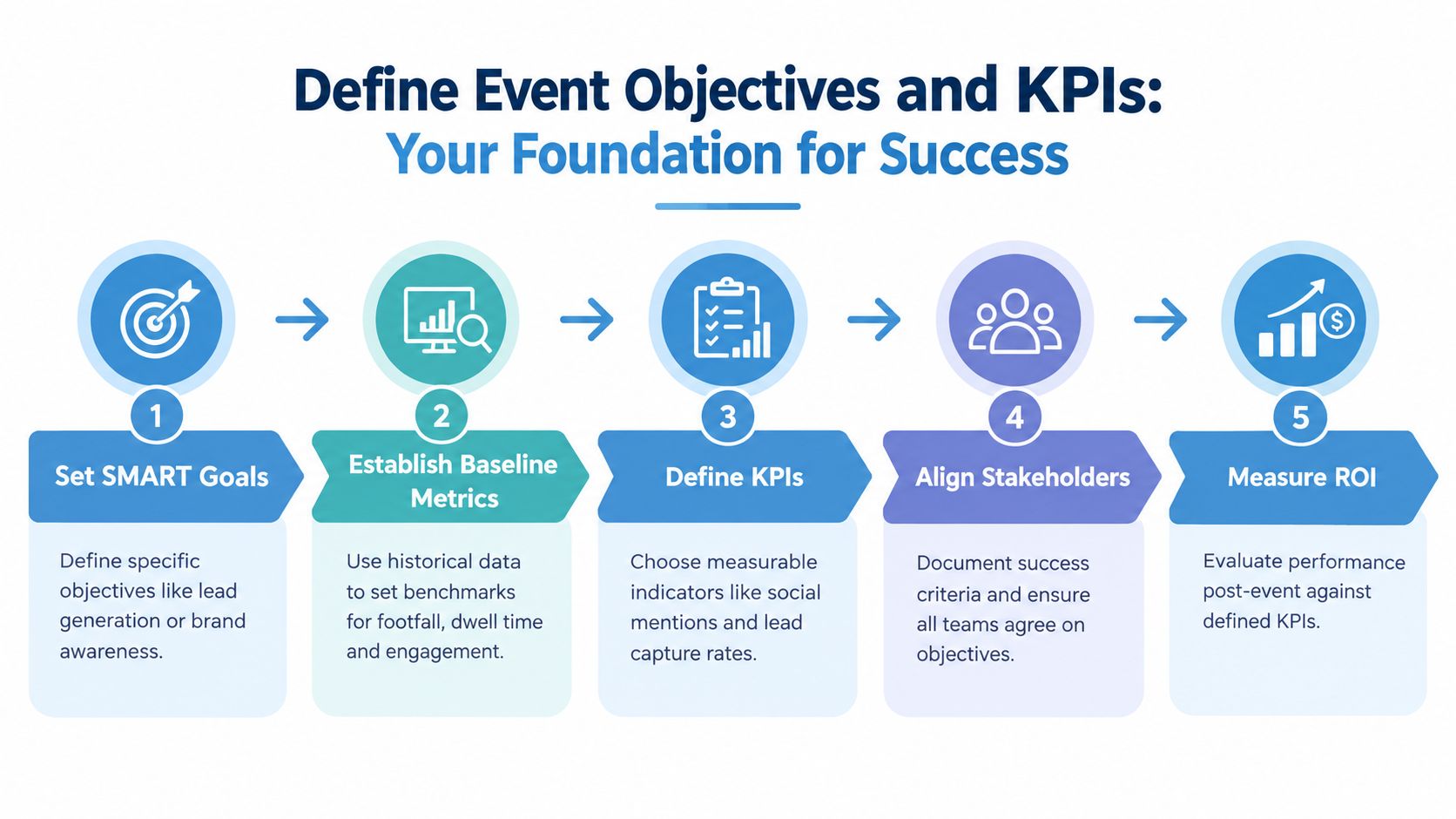
1. Define Event Objectives and KPIs
Start with the business result, not the attraction. Decide whether the event needs to generate leads, support a product launch, strengthen customer relationships, improve employee engagement or create content for later campaigns. A single primary objective keeps the budget and programme disciplined. Secondary objectives can be recorded, but they shouldn't compete with the main measure of success.
For an interactive stand, define the action that follows participation. A visitor might register for a simulator challenge, consent to receive product information, speak with a sales representative or share branded content. Track the measures that connect activity to that outcome, such as qualified lead volume, participation, dwell time, repeat visits, lead quality and post-event pipeline attribution. UK industry reporting highlights the need to design measurement at the brief stage, particularly as booking lead times have shortened to an average of 12 weeks. UK events industry report
Write the measurement brief
Record each KPI beside its definition, data owner, capture method and reporting deadline. Don't promise a result that the budget, audience or venue can't support. An internal team-building event may prioritise participation and feedback, while a B2B activation may prioritise audience quality and sales follow-up.
Practical rule: If nobody owns a metric before doors open, it probably won't be measured properly afterwards.
Use PSW Events' guide to experiential marketing ROI to connect engagement activity with commercial evaluation. Keep the signed brief visible throughout procurement, because it gives suppliers a practical test for every proposed feature.
2. Budget Planning and Financial Management
Build the budget around the attendee journey and the outcome, rather than treating every line as an isolated purchase. Include venue hire, catering, production, staffing, marketing, transport, insurance, interactive attractions, installation and post-event reporting. For simulator hire, ask whether the quote includes delivery, setup, breakdown, operators, technical support, branding, safeguarding and insurance. A low headline price can become expensive once those items are added.
Separate committed costs from estimates and identify which decisions are reversible. A venue deposit may be difficult to recover, while branded merchandise or optional entertainment can often be adjusted. Keep VAT visible, especially when comparing suppliers, and record payment milestones so cash flow doesn't become an operational constraint.
Protect the experience, not just the spreadsheet
Contingency belongs beside the risks that can affect delivery. It may cover a late technical requirement, replacement graphics, additional crew time or a change in attendee numbers. The precise amount depends on the event, so don't copy a fixed percentage without testing the actual exposure.
Request itemised quotes from more than one supplier, but compare scope and reliability rather than selecting the lowest figure. For a simulator-heavy activation, ask:
- Technical inclusions: What equipment, software, screens, scoring systems and connectivity are supplied?
- Crew coverage: Who operates the attraction, manages queues and handles a fault?
- Access costs: Are loading, parking, storage, night working or venue supervision charged separately?
- Commercial protection: What happens if delivery is delayed, equipment fails or the event changes?
- Approval trail: Which person can authorise an additional cost on event day?
A live budget should show estimate, commitment, paid amount, owner and approval status. That format makes trade-offs visible before they become surprises.
3. Venue Selection and Site Logistics
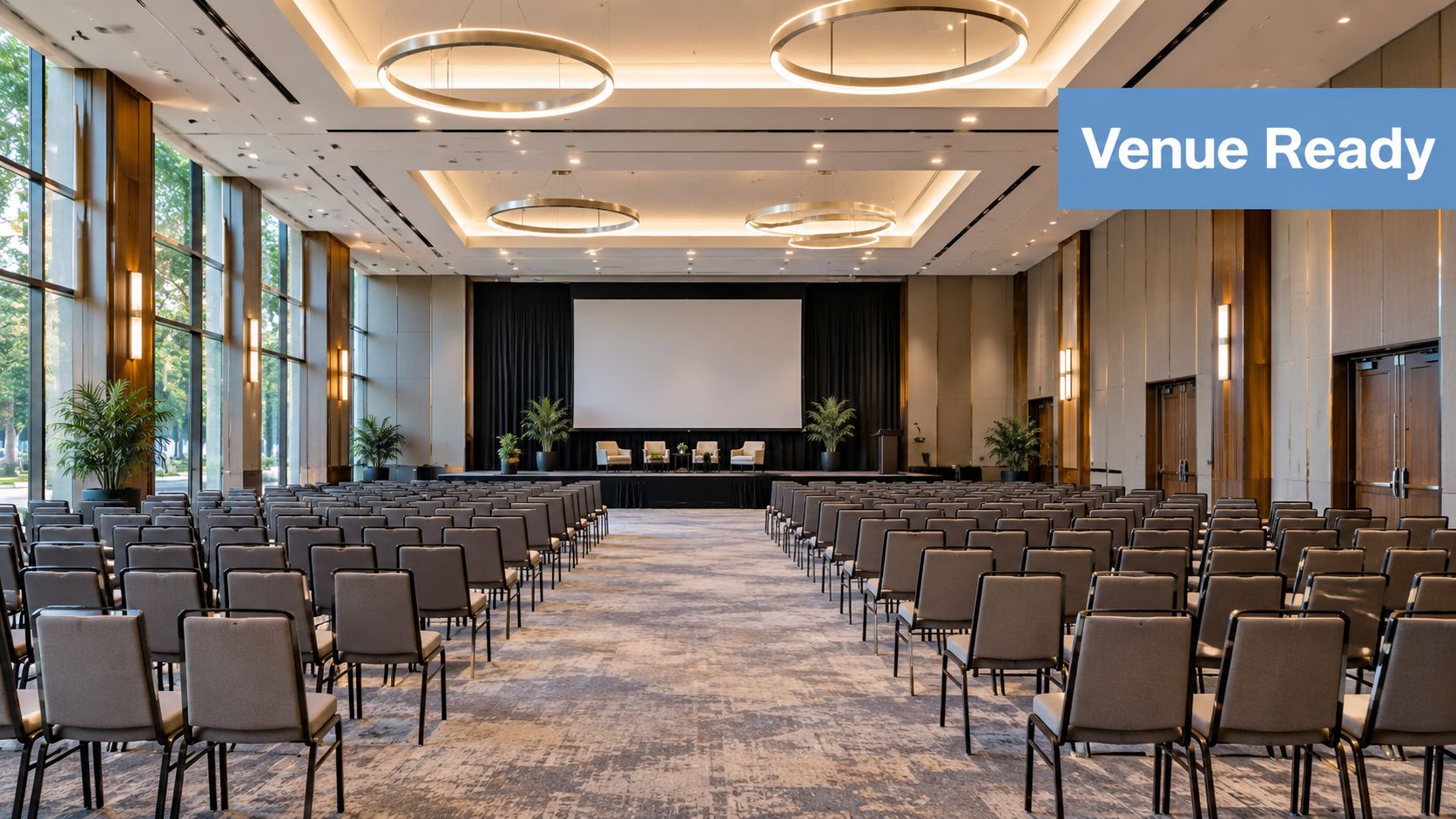
A venue that looks right in a brochure can fail during a technical site visit. Before signing, check the route from loading bay to event floor, doorway dimensions, lift access, floor loading, ceiling height, power distribution, internet performance, noise rules and supplier access hours. A flight simulator or tall attraction needs safe installation, a suitable operating envelope and clear space for people to approach, participate and leave without blocking other activity.
UK meeting demand makes capacity and delegate flow practical priorities. Corporate clients represented 52% of UK conferences and meetings in 2024, while events with 101 to 500 delegates accounted for 22% of all events, according to UK meetings market reporting. These figures do not set your event size, but they reinforce the need to plan registration, catering, AV, circulation and breakout logistics alongside the room layout.
Test the site as an attendee and supplier
Request current floor plans and CAD files. Mark registration, queues, attraction footprints, catering, toilets, emergency exits, accessible routes, storage, speaker areas and staff-only paths. A Silverstone activation may prioritise motorsport context and vehicle access. A Manchester conference may need separate breakout areas for simulators and workshops.
Visit with the attraction supplier where possible. Test power outlets and WiFi at the proposed position, confirm external supplier rules and agree the setup window in writing. Record cable routes, equipment storage, operator positions and the fallback plan if connectivity fails.
The final plan should show who controls each area, when it becomes available and how lead capture will work without obstructing attendee flow.
4. Entertainment and Experience Curation
Choose the attraction because it advances the brief, not because it looks impressive in isolation. A racing simulator can create a natural competition around a product launch. A rugby, American football, golf or boxing simulator can give a trade stand a clear participation mechanic. VR, Batak Pro, giant Scalextric, electronic leaderboards and flight simulators can support different audiences, but each needs a reason to exist within the programme.
Match the experience to the audience, tone and available time. A formal executive reception may suit a short, guided challenge, while a staff day can support multiple activities and team scoring. If the experience needs lengthy explanations or complicated registration, it may create a queue rather than engagement. The best attraction is one that people understand quickly and that staff can connect to the brand message.
Design the interaction around the KPI
Give the attraction a beginning, action and follow-up. The visitor sees the invitation, takes part, receives a score or result, then knows what to do next. A digital leaderboard can encourage repeat participation, but it shouldn't replace a useful conversation or accessible alternative route.
Plan queues before selecting the final format. Put the waiting area where it doesn't block registration, catering or emergency routes. Offer spectators something to watch, and decide how operators will reset equipment between users. Test the attraction with people unfamiliar with it, because an expert demonstration rarely exposes unclear instructions.

5. Staffing and Crew Planning
Staffing affects safety, hospitality, data quality and commercial performance at the same time. Name the event lead, registration owner, attraction operators, brand ambassadors, technical contact, security lead, first aid contact and venue liaison. Each person needs a defined responsibility, escalation route and handover point.
Simulator operators need more than equipment knowledge. They should understand startup and shutdown procedures, participant briefings, accessibility adaptations, queue control, customer service and the approved brand message. A confident operator can explain an experience clearly, spot unsafe use and pass a qualified visitor to the right commercial colleague. A rushed or untrained operator can create risk and lose a valuable conversation.
Build a crew plan that survives absence
Write the run-of-show with staff positions against each activity. Include breaks, shift changes, meal arrangements, briefing time and cover for illness or delayed arrival. Cross-training helps, but don't use it to blur safety-critical accountability. Complex attractions should have a named person who can stop operation and contact technical support.
Use PSW Events' event staffing solutions when the activation needs trained operators and coordinated front-of-house delivery. Staff handling attendee information must also understand the approved privacy wording and consent process. Event teams that recruit volunteers or community support may also review volunteer donation software, but that tool shouldn't replace event-specific training or supervision.
A full crew briefing should cover the event objective, customer journey, safety controls, data handling, accessibility, breaks and escalation contacts. Don't assume a supplier briefing reaches every temporary team member.
6. Marketing, Promotion, and Post-Event Evaluation
Promotion should make the value of attending obvious. Segment invitations by role, customer status or interest, then adapt the message. A product launch can lead with a demonstration and a relevant business benefit. A team event can focus on participation and shared experience. A trade show activation should tell visitors what the challenge is, where to find it and what happens after they take part.
Use channels that match the audience. LinkedIn, direct email, partner communications and industry publications can support B2B attendance, while internal email, manager briefings and workplace channels may work better for employees. Registration should capture only information that supports the event and its follow-up. Record the source of each registration so the marketing team can distinguish reach from useful attendance.
Close the loop quickly
Agree the post-event workflow before the event. Decide who will clean the data, score leads, send the thank-you message, distribute content, review feedback and report against costs. A simulator challenge might capture participation and a consented contact, but that record only has commercial value if the sales team receives a clear next action.
Send a short survey while the experience is fresh, combine ratings with one useful open question, and compare responses with observed participation. Review attendance, dwell time, lead quality, content use, supplier performance and final expenditure. Keep a lessons log that changes the next brief rather than producing a report nobody uses.
7. Health, Safety, and Compliance Management
Safety planning starts when the event is conceived. The Health and Safety Executive's event guidance says organisers should establish responsibility, understand the event's scale, type, audience, location, duration and timing, then create a suitable safety plan. It also directs organisers to risk assess the event, involve workers during planning and liaise with venue management, emergency services and, where relevant, the local authority Safety Advisory Group.
Put named duty holders on the corporate event planning checklist. Add the written risk assessment, method statements, equipment checks, staff competence records, emergency arrangements, first aid provision, incident reporting and insurance evidence. For physical attractions, include participant briefings, safe operating limits, shutdown procedures and a clear decision about who can stop the activity.
Treat accessibility and data as operational controls
Accessibility needs to be built into the venue and experience brief. Scope's accessible venue guidance gives practical reference points, including ramps no steeper than 1:12, doors and hallways at least 1200 mm wide, aisles to tables at least 1000 mm wide, lifts at least 1100 by 1400 mm, and at least 700 mm beneath tables. Confirm the venue's actual measurements and provide an adapted or alternative way to participate.
For registration and lead capture, document the lawful basis for each processing activity, minimise collected data, provide a clear privacy notice and separate electronic marketing opt-in where required under PECR Regulation 22. UK event GDPR guidance also covers security, retention, breach response within 72 hours and DPIAs where processing is likely to create high risk.
8. Technology and Registration Systems
Technology should remove friction, capture useful data and support the live experience. Select the registration, check-in, badge, lead-capture, CRM, event-app, scoring, video and reporting systems as one connected workflow. A racing simulator may need a participant form, consent field, score display and follow-up export. A conference may need registration, room access, speaker information and attendee communications.
UK event technology remains mainstream. Event Tech Live buyer data records UK event technology buying activity at 79.1% in 2025, compared with 84.8% in 2023, showing a slight cooling but continued adoption. UK events technology reporting supports treating platform selection, integrations and post-event data capture as core planning decisions rather than optional extras.
Rehearse the complete chain
Test the attendee journey from invitation to CRM handover. Check mobile forms, badge scanning, WiFi, permissions, leaderboard updates, video capture, privacy wording and offline procedures. Don't accept a demonstration of separate components as proof that the whole system works together.
Use platforms such as Eventbrite, Whova or another suitable registration system only after checking integration, access and reporting requirements. Confirm who owns the data and who can make changes during the event. Give technical support a visible position and a fallback process, such as a controlled manual record, if the network or platform fails.
9. Catering and Hospitality Planning
Catering influences energy, timing and perception. Choose the format around the programme and movement through the venue. A seated meal supports conversation but needs a firm service window. A buffet can offer choice but may create queues. Food stations or passed items can suit a networking reception, provided they don't obstruct attraction queues or accessible routes.
Collect dietary and access requirements through registration, then pass an accurate, controlled summary to the caterer. Include vegetarian, vegan, allergy, religious and medical requirements without exposing unnecessary personal information. Confirm allergens, labelling, service arrangements and a contact who can answer questions on the day.
Coordinate food with the activity
Schedule refreshments away from the busiest attraction moments. A team event may need food before physically demanding activities and drinks afterwards. A conference may need arrival refreshments, a planned break and a lunch format that allows delegates to return on time. An evening networking event needs enough seating, surfaces and clear routes for people carrying food.
Ask the caterer to confirm delivery, preparation, waste collection, staffing, last orders and breakdown. Review disposable materials, local sourcing and excess-food arrangements as part of the wider sustainability plan. Master event planning logistics can help structure the operational detail, but the final plan must reflect the venue, audience and programme.
Hospitality isn't decoration. It determines whether people stay, talk, participate and leave with a positive view of the organiser.
10. Vendor Management and Coordination
Every supplier should receive the same approved version of the brief. That document should state the objective, audience, schedule, venue rules, access arrangements, branding, technical requirements, safety responsibilities, data process and success measures. Ask each vendor to identify dependencies, exclusions and decisions they need from you.
For a simulator supplier, the contract should cover equipment specification, delivery route, setup and test window, operators, technical response, safeguarding, branding, breakdown and damage responsibility. For catering, confirm final headcount, menu approval, dietary handling, service times and waste. For AV, specify content deadlines, rehearsal access, backup procedures and who controls the show call.
Put one person in charge of coordination
Create a supplier matrix showing owner, contact, deliverable, dependency, deadline, approval and escalation route. Schedule a shared production call, then complete a venue walkthrough with the key suppliers. Don't leave external suppliers to resolve conflicts on site. The event lead should decide whether a queue moves, a room changes, a delivery is delayed or an attraction pauses.
Use PSW Events' vendor selection criteria when comparing experience suppliers. Ask for relevant references and evidence of delivery, but also test how clearly the vendor answers practical questions. A supplier who can't explain power, access, staffing or contingency requirements before contract signature is unlikely to become easier to manage later.
10-Point Corporate Event Checklist Comparison
| Item | 🔄 Implementation complexity | ⚡ Resource requirements | 📊 Expected outcomes | 💡 Ideal use cases | ⭐ Key advantages |
|---|---|---|---|---|---|
| Define Event Objectives and KPIs | Low–Moderate: stakeholder workshops and goal setting | Time, past-data access, basic analytics tools, stakeholder input | Clear success metrics, ROI benchmarks, aligned planning | All events, essential for launches, trade shows, engagement programs | ⭐ Aligns decisions, enables objective measurement, justifies budget |
| Budget Planning and Financial Management | Moderate–High: detailed itemisation and contingency planning | Financial expertise, multiple supplier quotes, accounting tools, contingency funds | Controlled spend, prioritised allocations, financial visibility | Large conferences, simulator-heavy activations, multi-supplier events | ⭐ Prevents overspend, supports negotiation, optimises resource allocation |
| Venue Selection and Site Logistics | High: site surveys, technical and safety checks, detailed layouts | Site visits, floorplans/CAD, logistics team, technical specs (power/WiFi) | Operational feasibility, safety compliance, optimised attendee flow | Events with heavy equipment or strict technical needs (simulators, climbing) | ⭐ Ensures safety, avoids operational issues, enables optimal layouts |
| Entertainment and Experience Curation | Moderate: sourcing, technical integration, audience matching | Budget for attractions, specialised operators, AV/tech integration | Increased engagement, longer dwell time, social media buzz | Brand activations, product launches, trade show feature areas | ⭐ Drives engagement, differentiates event, generates measurable interactions |
| Staffing and Crew Planning | Moderate–High: recruitment, shift planning, operator training | Trained operators, coordinators, scheduling tools, contingency staff | Consistent service, safe equipment operation, efficient runs | Simulator-heavy experiences, multi-day events, high-attendance shows | ⭐ Delivers professional experience, enables data capture, ensures safety |
| Marketing, Promotion, and Post-Event Evaluation | High: multi-channel campaigns and measurement frameworks | Creative assets, media spend, CRM/analytics tools, PR support | Higher attendance, qualified leads, extended post-event reach | Product launches, trade shows, consumer activations | ⭐ Builds awareness, captures leads, provides actionable insights |
| Health, Safety, and Compliance Management | High: risk assessments, certifications, legal checks | H&S consultants, insurance, training, documentation, audits | Reduced incidents, legal compliance, protected reputation | Events with physical/technical attractions or large crowds | ⭐ Mitigates legal risk, protects people and brand, enables insurance cover |
| Technology and Registration Systems | Moderate–High: platform selection and system integration | Registration platforms, WiFi/AV, lead-capture tools, on-site tech support | Seamless check-in, real-time engagement, usable event data | Large conferences, interactive booths, leaderboard-driven activations | ⭐ Streamlines operations, captures data, enables live engagement |
| Catering and Hospitality Planning | Moderate: menu planning, dietary coordination, timing logistics | Caterer contracts, service staff, tastings, service equipment | Improved attendee satisfaction, networking opportunities | Conferences, networking receptions, evening hospitality events | ⭐ Enhances attendee experience, reflects brand quality, supports inclusion |
| Vendor Management and Coordination | High: RFPs, contracts, SLAs, ongoing coordination | Procurement time, contract/legal review, PM tools, vendor contacts | Reliable deliveries, reduced on-site failures, clear accountability | Multi-vendor activations, complex installations, international events | ⭐ Aligns suppliers, reduces risk, enforces performance standards |
Turn the Checklist into Event-Day Confidence
A checklist becomes useful when it turns into one owner-led schedule. Consolidate the ten steps into a master plan with task, owner, deadline, dependency, approval status and evidence. Keep the latest venue plan, supplier contacts, insurance documents, risk assessment, method statements, technical test records, privacy wording, staff briefings and emergency procedures in one controlled location.
Work backwards from doors opening. Set the deadlines for venue confirmation, attraction design, artwork, registration closure, dietary data, final headcount, supplier access, technical rehearsal and crew briefing. The UK meetings market is operating at significant scale, with 1.08 million conferences and meetings recorded in 2024, so even a smaller corporate event benefits from disciplined coordination rather than informal reminders. UK meetings market evidence
Short planning cycles make dependencies harder to recover. Tagvenue's 2026 Event Planning Index reports a UK median enquiry lead time of 53 days, alongside a median estimated budget of £875 and a typical group size of 40 guests. Tagvenue's event planning index points to the value of early venue decisions, clear approvals, supplier backups and fixed cut-off dates. Those figures aren't a universal template, but they are a useful warning against assuming every event has a long runway.
On event day, run a production meeting before guests arrive. Confirm registration, catering, speakers, attraction operators, technical support, security, emergency contacts, accessible routes and the escalation process. Check that the team knows what to do if a simulator fails, a queue blocks a route, a guest needs an adaptation or a lead doesn't provide the expected consent.
Measurement starts before the first participant. Record the agreed baseline and make sure the team captures attendance, participation, dwell time, lead quality, feedback, content and final costs in the agreed format. Don't measure only what is easy. A high footfall figure means little if the audience isn't relevant or sales follow-up can't identify the next action.
After the event, reconcile invoices, review incidents and near misses, clean consented data, contact leads promptly and gather feedback from attendees, staff, venue and suppliers. Compare actual performance with the original KPI definitions, then record specific changes for the next brief. If an interactive attraction created queues, decide whether to change the footprint, operating format or staffing. If it produced valuable conversations, preserve the mechanism and improve the handover.
PSW Events provides planning meetings, site visits, site plans, power and utility coordination, installation, branding, on-the-day management, staffing and health and safety support for interactive attractions. Its portfolio includes sports, racing and flight simulators, VR, Batak Pro, electronic leaderboards, giant Scalextric, climbing walls and other event experiences. The company is based in Cambridge and delivers across the UK and internationally, with £10 million products, employee and public liability insurance stated in its company information.
Review the attraction against the whole event, not as a standalone booking. The right supplier should help you manage logistics, participant flow, technical delivery, compliance and measurable follow-up. Visit PSW Events to discuss an interactive corporate event plan built around your objectives, venue and audience.
PSW Events can supply and deliver sports, racing and flight simulators, immersive games and branded attractions, with planning, logistics, installation, staffing and H&S coordination included. Visit PSW Events to explore options for your UK conference, exhibition, activation or team event and start building the delivery plan.