
You’re probably in one of two situations right now. You need an attraction that stops people walking past your stand, or you need an activity that gives guests something better than another drink and polite conversation. In both cases, car simulator hire can work brilliantly, but only when the rig, the format, and the logistics match the job.
That’s the part many guides skip. They jump straight to specs, screens, and motion platforms, as if the event objective is obvious. It usually isn’t. A simulator for lead capture at ExCeL London should be chosen differently from one for a leadership team day at Silverstone, and differently again from one for a product launch where brand theatre matters as much as driving realism.
From an event delivery point of view, the simulator is only half the decision. The other half is throughput, staffing, queue design, branding, venue access, insurance, and what guests do once they sit down. Get that right and the simulator becomes an event tool, not just a novelty.
Why Car Simulators Drive Unforgettable Events
A professional driving or racing simulator works because it gives people a reason to stop, watch, compete, and stay. That matters at exhibitions, conferences, dealer events, and internal company days where attention is scarce and every activation is competing for the same crowd.
Europe’s position in this category tells you this isn’t a fringe idea. Europe dominated the global driving simulator market with a 37% market share in 2025, reflecting strong adoption across corporate events, training, and brand activations, according to Precedence Research’s driving simulator market analysis.
That matters for UK planners because the market is already mature. Venues, organisers, and suppliers understand the format. Guests understand it instantly. You don’t need to explain why a live leaderboard, a recognisable circuit, and a visible competition draw a crowd.
What people respond to in the room
The attraction isn’t just the person driving. It’s the mini audience around them.
People gather because they can see the result in real time. They compare lap times. They challenge colleagues. They wait to see who spins at the first corner. Good car simulator hire creates a pocket of energy around itself, and that energy spreads further than the footprint of the rig.
Practical rule: If the simulator only entertains the driver, it’s underperforming. The best setups also entertain the queue, the spectators, and the people deciding whether to take part.
Why this works better than passive stand activity
Passive attractions often ask too much of guests. Read this. Watch that. Scan here. A simulator gives them a clear action instead. Sit down. Drive. Compete. Share your result.
For corporate planners, that simplicity is valuable because it supports several objectives at once:
- Footfall attraction because motion, screens, and competition are visible from distance
- Longer conversations because guests stay around the activation after their turn
- Natural team interaction because colleagues immediately start comparing times
- Brand association because the experience feels premium when the setup is well presented
That’s why car simulator hire keeps showing up across trade shows, hospitality spaces, conferences, and end-of-year events. It’s one of the few attractions that can be playful and commercially useful at the same time.
Decoding the Rigs to Match Your Event Goals
Not every simulator should be sold the same way. The mistake planners make most often is choosing by visual appeal alone. The better approach is to choose by what success looks like on the day.
If you need high volume, you want a rig that people can understand in seconds. If you need prestige, realism, or a premium hospitality feel, you choose differently. If the event has a training element, that changes the brief again.
UK-based validation is useful here because it links simulator use to real outcomes rather than pure entertainment. Participants in simulator-based training improve real-world skills by an average of 22%, with sessions achieving a 92% engagement retention rate at corporate events, according to this UK-specific simulator training reference.
Start with the event outcome, not the hardware
Ask this first: what are you paying for?
- A queue and crowd
- A premium guest experience
- A team-building competition
- A training-led driving experience
- A branded content moment
- A combination of the above
Once that’s clear, the rig choice gets easier.
Simulator Rig Decision Matrix
| Simulator Type | Best For | Typical Footprint | Avg. Dwell Time |
|---|---|---|---|
| Compact static rig | Busy exhibitions, receptions, high-throughput activations | Compact exhibition-friendly setup | Shorter sessions with faster rotation |
| Triple-screen immersive rig | Team building, premium hospitality, stronger visual impact | Medium event footprint with spectator space | Moderate session length |
| Motion racing simulator rig | VIP experiences, headline activations, motorsport-themed events | Larger area with technical clearance | 5-7 mins/user |
Compact rigs for throughput
Compact static rigs are the practical workhorses of exhibition environments. They’re easier to place, easier to queue, and easier to cycle through participants quickly. They suit events where lots of people need a turn and where the simulator supports the stand rather than dominating it.
What works well here is simplicity. Clear controls. One operator. Fast reset between drivers. A short format such as a fastest-lap challenge or one-lap shootout.
What doesn’t work is overcomplicating the experience with long briefings or advanced setups that intimidate casual users.
Triple-screen setups for balance
A triple-screen or wider immersive setup tends to hit the middle ground. It has more presence than a compact rig, gives a stronger sense of speed and immersion, and still works well in corporate environments where you want a polished look without going fully theatrical.
This category is strong for:
- Client hospitality where guests expect a more substantial experience
- Internal events where colleagues want repeat turns
- Automotive launches where brand presentation matters
- Agency activations where the simulator needs to photograph well
The trade-off is footprint and time. These setups usually need more surrounding space to feel right, and they deserve a queue plan that doesn’t choke your stand.
Motion rigs for impact
Motion platforms are where the experience becomes memorable enough to anchor the event. When a rig adds movement, stronger visual drama, and a more obvious sense of realism, people stop and watch for longer. That makes it excellent for premium activations, hospitality zones, and headline attractions.
The compromise is operational. Motion rigs need better planning, more technical oversight, and more respect for venue constraints. They are not the thing to book casually and figure out later.
The right question isn’t “What’s the most impressive rig?” It’s “What rig helps us hit the event KPI without creating bottlenecks?”
Matching rig type to objective
Here’s the practical version planners need.
For lead capture at a trade show, a simpler and faster rig often beats the most advanced one. You want volume, a visible queue, and quick entry and exit.
For VIP hospitality, the reverse is often true. A premium motion setup with a polished operator-led experience creates the right tone and gives guests something they’ll remember.
For team building, realism matters less than fairness and repeatability. Everyone should feel they can take part without needing sim-racing experience. A clear competition format matters more than hardcore technical fidelity.
For driver training or safety engagement, the software, debrief process, and session design carry more weight than visual theatre.
If you’re comparing supplier options, it helps to look at examples of driving simulators for UK events and judge them by event fit, not by the longest feature list.
What people often overvalue
Planners sometimes overvalue:
- Maximum realism when the audience is casual
- Exotic specs that guests won’t notice
- Longer sessions that damage throughput
- Large footprints that leave no room for spectators
They often undervalue:
- Queue visibility
- Operator quality
- Easy onboarding
- Leaderboard format
- Clean branding integration
That’s the difference between a simulator that looks good in a proposal and one that performs well on a live event floor.
Budgeting and Pricing Your Simulator Hire
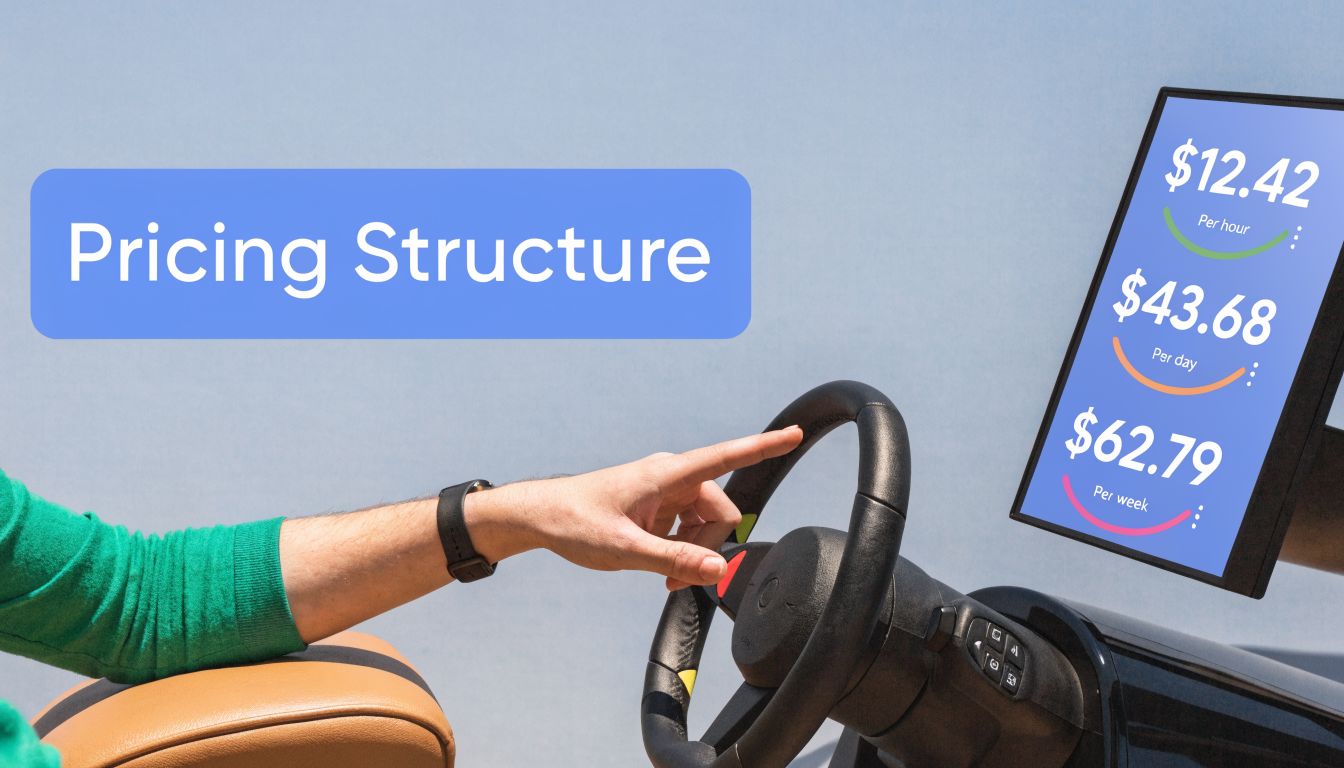
Pricing for car simulator hire isn’t just about the rig. It’s about the whole delivery model around it. A quote can look similar on page one and be very different once transport, staffing, branding, install timing, venue rules, and overtime are added.
That’s why the cheapest line item rarely stays the cheapest delivered option.
What actually shapes the quote
The final cost usually comes from five moving parts.
Rig type
A compact static setup is a different proposition from a motion-enabled F1-style simulator. Hardware complexity changes transport, setup time, staffing, and risk.Hire duration
One day, three days, or a full exhibition run are priced differently. Multi-day hires often make more commercial sense than repeated single-day bookings because transport and setup are spread across longer use.Staffing level
One operator may be enough for a simple setup. Larger activations, branded competitions, or premium hospitality formats may need more on-site support.Branding requirement
Basic branded screens are one thing. Wrapped simulator bodywork, branded gantries, custom game assets, and competition visuals add design and production work.Venue logistics
Access windows, restricted loading, upper-floor placements, and distant venues all affect labour and delivery time.
Questions to ask before you approve a quote
A solid supplier proposal should answer these points without vagueness:
- What’s included in transport
- How many staff are on site
- How long setup and derig take
- Whether branding is included or separate
- What power is required
- Whether insurance and risk paperwork are covered
- What happens if venue access is delayed
If those answers are fuzzy, the quote is not complete yet.
Cheap car simulator hire can become expensive when the quote excludes the things that make the activation usable.
What works for budget control
There are a few reliable ways to keep spend sensible without weakening the experience.
- Choose one strong rig instead of several average ones when the venue footprint is tight
- Run a short-format competition rather than long free-play sessions
- Keep branding focused on the elements guests see on camera and in person
- Book for longer periods if the simulator is travelling to a major exhibition anyway
- Use turnkey packages where transport, staffing, and operation are already built in
If you’re comparing package structures, it helps to review what is typically included in simulator hire options before you compare headline figures alone.
Where planners overspend
The most common waste isn’t the simulator. It’s everything around it being decided too late.
Late changes to branding, uncertain venue access, and last-minute requests for extra operators are what push budgets around. The planners who manage costs best usually lock the following early:
| Cost Area | Best Early Decision |
|---|---|
| Session format | Decide whether it’s competition, free-play, or guided experience |
| Branding | Approve visible assets early and avoid late redesign |
| Venue access | Confirm loading route, lift use, and install windows |
| Staffing | Match team size to guest volume from the start |
Good budgeting is less about squeezing the supplier and more about reducing uncertainty.
The Pre-Event Logistics Checklist
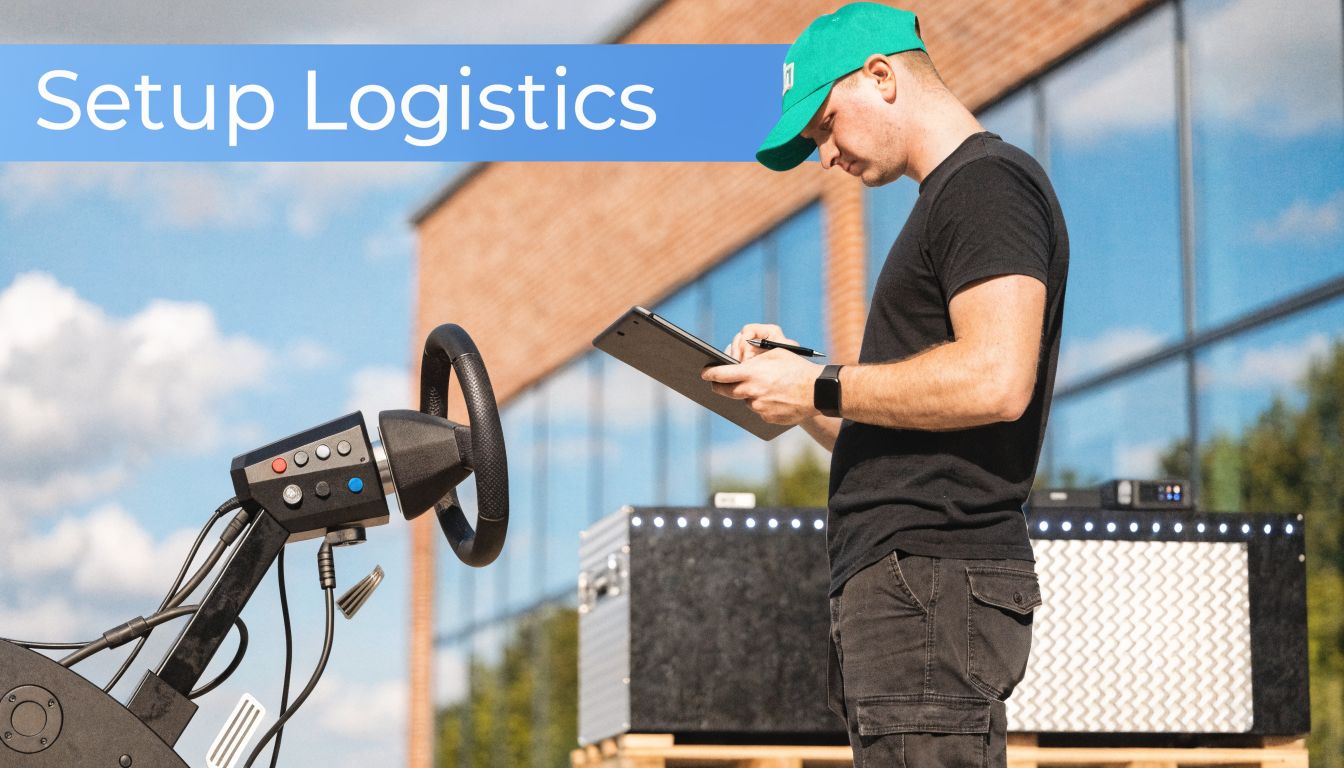
A simulator can look effortless on event day because somebody has done the hard work before the doors open. That work starts with a proper site survey. Without it, you’re guessing on access, power, and safe operating space.
For motion-based deployments, that survey matters even more. A professional motion simulator deployment requires a detailed site survey assessing power (typically 5-10kW), floor load (up to 500kg), and a clear 2m x 1.5m transit case access route, with a 98% uptime achieved through meticulous pre-event planning, according to this event activation deployment guide.
Space planning beyond the rig
The simulator footprint on a plan rarely tells the whole story. You also need:
- Operator space to brief and reset guests
- Queue space that doesn’t block neighbouring stands
- Spectator sightlines because the crowd is part of the attraction
- Branding room for backdrops, screens, or leaderboard displays
- Safe entry and exit clearance around the seat and controls
A rig can technically fit in a space and still be wrong for that space. This happens all the time at exhibition venues where the stand has been sold tightly and every square metre is working hard.
Power and technical checks
Don’t leave power wording vague with the venue. “Standard supply” is not enough detail.
For larger or motion-based car simulator hire, the venue and supplier need to agree exactly what’s being provided, where it is, and how cable runs will be managed. If the simulator has high-performance PCs, large screens, or motion hardware, stable power becomes a planning item, not a minor detail.
Access can kill a good plan
Some of the biggest event-day issues have nothing to do with the simulator itself. They come from loading routes, lifts, timing, and venue restrictions.
Check these early:
- Loading bay booking and unload slot
- Door widths and turning space
- Goods lift dimensions and limits
- Upper-floor restrictions
- Build windows and curfews
- Outdoor contingency if any part of the route is exposed
A rig that arrives in proper transit cases still needs a clean path to the stand.
If the venue route is awkward, measure it. Don’t rely on “it should be fine”.
What setup usually involves on site
A professional build follows a sequence. Cases arrive, the structure is assembled, the wheel and pedal hardware are mounted, screens are positioned, software is checked, and the full system is tested before guests arrive.
For higher-spec motion rigs, this usually includes hardware calibration and lap testing rather than just turning the system on. That’s why experienced technical crew matter. The last thing you want is to discover a calibration issue while your first guests are already waiting.
Common practical issues
A few problems show up repeatedly across venues:
| Issue | What usually causes it | Practical fix |
|---|---|---|
| Overheating PCs | Enclosed or poorly ventilated stands | Build ventilation into the stand design |
| Awkward queues | Simulator placed hard against aisle edge | Leave room for operator-managed queue flow |
| Screen glare | Venue lighting and poor orientation | Face screens away from direct light where possible |
| Unstable floor feel | Vibration transfer or weak positioning | Confirm floor suitability and use proper isolation where needed |
Outdoor use needs a stricter brief
Planners often ask whether simulators can go outside. They can, but outdoor use needs more control than indoor exhibition deployment.
Weather cover, power reliability, ground level, and temperature management all become part of the design. If the event is a fan zone or festival, build around the simulator properly. Don’t treat it like a piece of furniture you can just place in the open.
Outdoor car simulator hire works best when it is effectively treated as a managed technical installation with shelter, staffing, and protected audience flow.
Maximising ROI with Branding and Data Capture
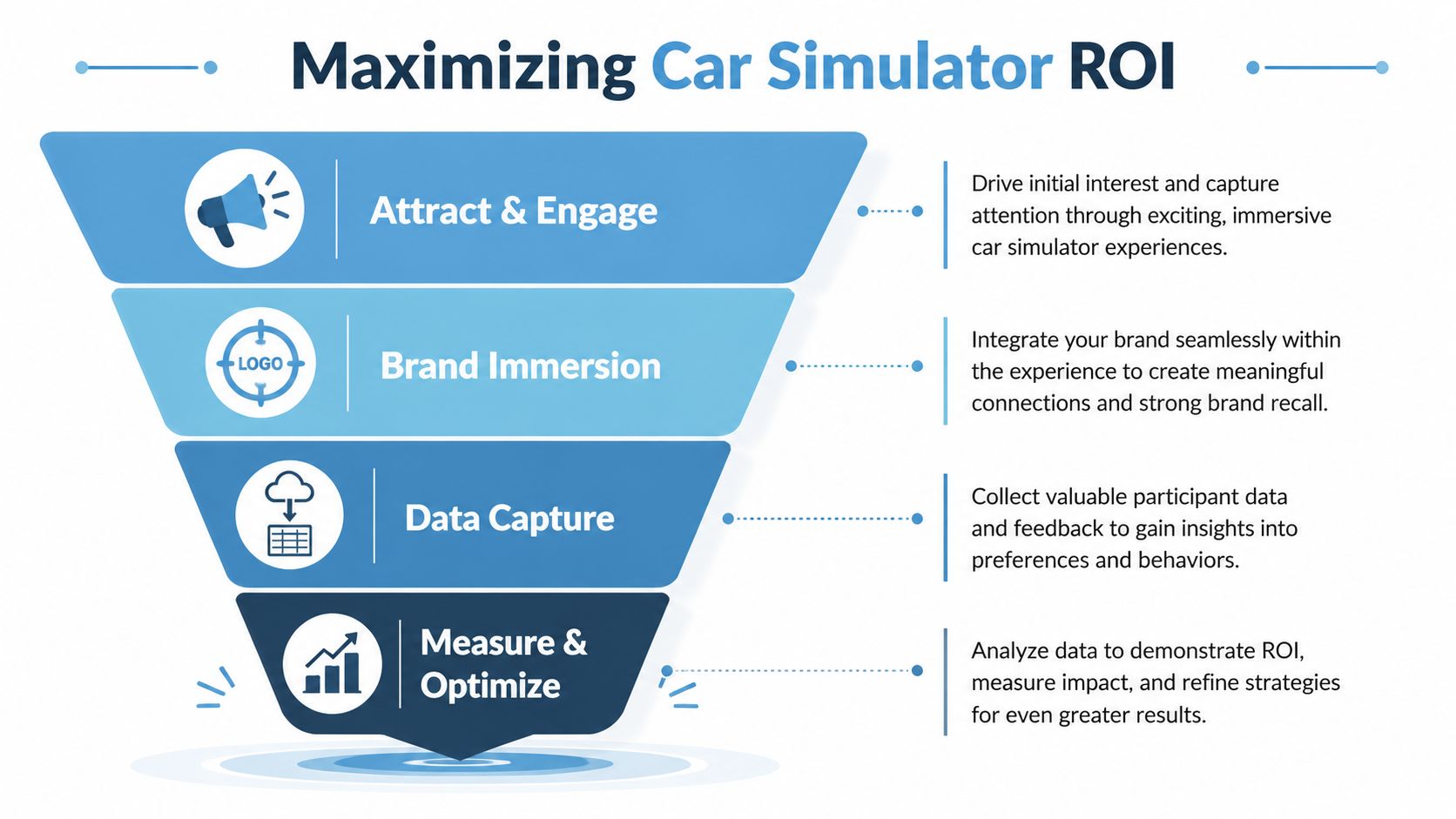
A simulator gets attention. That alone isn’t enough. If you’re hiring one for a trade show, launch, or B2B activation, the commercial value comes from what happens around the drive.
That means branding, competition design, and data capture have to be built into the activation from the start. Otherwise you’ve paid for excitement without a system for converting it into something useful.
Data from the racing simulator market points in the same direction. Interactive rigs can increase attendee dwell time by 30-50% at trade shows, which directly supports stronger lead capture and brand recall, according to Fortune Business Insights on the racing simulator market.
Branding that actually gets noticed
Not all branding carries equal value. Guests remember what they interact with and what appears in photos and video.
The strongest options are usually:
- On-screen branding before and after the drive
- Leaderboard visuals with campaign identity
- Branded bodywork or cockpit panels
- Backdrops and gantries behind the rig
- Staff uniforms or event attire that connect the experience to the wider stand
What tends to underperform is branding that sits low, small, or outside the natural eyeline of the driver and spectators.
Competition formats that convert attention
A simple competition format usually outperforms open-ended free play. It creates urgency, it gives guests a reason to enter details, and it gives your team an easy opening for conversation.
The most reliable versions are:
Fastest lap challenge
Simple, familiar, and easy to explain.Team versus team leaderboard
Strong for internal events, dealer groups, and hospitality.Beat the benchmark
Useful when you want a controlled challenge without the queue slowing down.
A visible leaderboard matters because it turns every completed drive into live social proof.
The simulator attracts the crowd. The competition structure gives the crowd a reason to stay, return, and register.
Data capture without killing the mood
The handover between experience and data capture should feel natural. If guests have to stop for a clunky form before they drive, you’ll lose momentum. If you wait until they walk away, you’ll lose details.
The best timing is usually one of these:
- Pre-drive entry for a prize draw or leaderboard participation
- Post-drive capture when the operator is showing result screens
- QR follow-up for scoreboards, photos, or campaign extras
What matters is that the process is clear, quick, and compliant with your own data handling standards.
What works at B2B events
For exhibitions and trade shows, the best event teams use the simulator as the opening line, not the whole conversation. One operator runs the experience. Another team member picks up the commercial conversation while the guest is still engaged.
That division of labour matters. If your sales team is also trying to run the simulator queue, both jobs suffer.
One factual mention is worth making. Providers such as PSW Events offer simulator supply alongside staffing, branding, logistics, and on-site operation, which is useful when the internal team needs the activation to run cleanly without splitting focus between guest handling and stand conversations.
Measuring whether it worked
You don’t need a complicated dashboard to judge event ROI. Track the basics well:
| Metric | Why it matters |
|---|---|
| Competition entries | Shows direct participation volume |
| Qualified conversations | Shows whether engagement turned commercial |
| Queue consistency | Reveals whether the format held attention |
| Repeat visits | Strong sign the activation had pull |
| Content capture | Useful for post-event marketing value |
A simulator becomes commercially worthwhile when those numbers connect back to the stand objective, not just when the queue looks busy.
Contracting Safety and Staffing Essentials
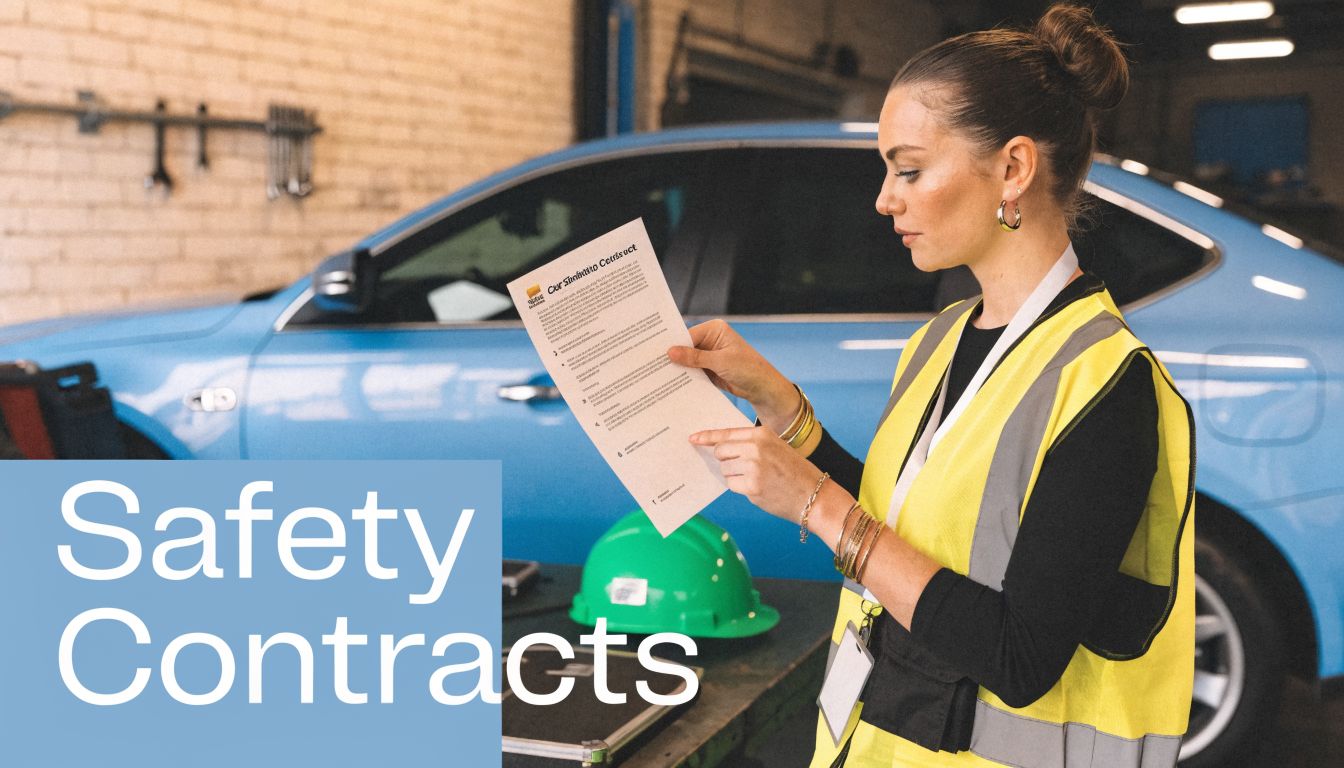
The contract stage is where you find out whether a simulator hire is professionally run or loosely assembled. The equipment may look identical in a proposal deck, but paperwork, insurance, and staffing standards vary sharply between suppliers.
This is the part corporate planners shouldn’t rush.
What the hire agreement should cover
A clean agreement should spell out:
- Hire period including setup and derig times
- Payment schedule
- Cancellation terms
- Damage and liability position
- What is included in staffing and transport
- Branding responsibilities
- Venue access assumptions
- Power and space requirements
If these points are missing, you’re left to resolve them under pressure later.
Insurance is not a footnote
For public events and corporate venues, insurance cover is a core requirement, not an administrative extra. The supplier should be able to provide documents quickly and clearly.
For planners working in major UK venues, that usually means checking public liability and related operational cover before sign-off. That’s particularly important where the simulator is part of a busy exhibition stand, public fan zone, or branded activation with high guest turnover.
Health and safety paperwork
A reputable operator should already have a process for risk assessments, equipment checks, and event-specific operating notes. You shouldn’t need to invent the safety structure on their behalf.
Ask for clarity on:
- Risk assessment
- PAT or electrical compliance where relevant
- Operator supervision
- Guest suitability guidance
- Emergency stop and shutdown procedure
- Load-in and load-out method statement if the venue needs one
Why staffing quality changes the result
A simulator operator is not just there to switch the system on. Good staffing increases participation, keeps queues moving, reassures nervous guests, and protects the client experience when the event gets busy.
At a live event, the best operators do four jobs at once. They brief. They troubleshoot. They encourage. They keep the line moving without making guests feel rushed.
If your event needs broader support around the activation, it’s worth looking at event staffing solutions for live experiences rather than assuming venue crew or stand staff can absorb the role.
A great simulator with weak staffing feels disorganised. A good simulator with strong staffing often outperforms it.
Frequently Asked Questions for Event Planners
Can a car simulator be used outdoors
Yes, but only with proper cover, stable power, and a managed setup. For festivals and fan zones, outdoor car simulator hire should be treated as a technical installation, not an exposed attraction dropped onto a patch of ground.
How much time should we allow per person
For event flow, short sessions usually work best. Motion racing simulator activations commonly benchmark around 5-7 mins per user in professional event deployment formats, as noted in the earlier logistics section.
What power information should I give my venue
Give the venue the supplier’s exact requirement, not a rough summary. Larger simulator setups may need more than a simple domestic-style expectation, so the venue and supplier should agree the specification early.
Are car simulators suitable for team building
Yes. They work particularly well when the format is structured around a shared challenge, leaderboard, or paired competition rather than individual free play. The social element is what makes the activity stick.
What should I ask about accessibility
Ask early, and ask specifically. This is still a gap in much of the market. With 16% of UK working-age adults having a disability, planners should ask about adaptive controls to support inclusivity and Equality Act 2010 considerations, as highlighted in this accessibility gap note for simulator hire.
Practical questions include whether the rig allows easier transfer, whether controls can be adjusted, whether seated access options exist, and how the operator supports guests with mobility limitations.
Is one simulator enough
Sometimes yes. If the format is sharp and the crowd is right, one well-run simulator can do a lot. If your objective depends on very high throughput, larger attendance, or multiple simultaneous users, you may need more than one rig or a different session format.
Car simulator hire works best when it’s treated as an event system, not just a piece of kit. Choose the rig around the objective. Plan the queue as carefully as the footprint. Build in branding and data capture from the start. Then check the contract, logistics, and staffing with the same care you’d give any other high-visibility activation.