
So, what’s actually in a professional race night kit? Think of it as your fast track to hosting a proper, interactive betting event. Inside the box, you’ll usually find all the race footage, a sound system for the commentary, and crucially, a complete tote system for handling all the bets. It’s everything you need to turn a village hall or a corporate suite into a buzzing racecourse for the evening.
Planning Your Race Night: From Idea to Race Day
A brilliant race night is about more than just hitting 'play' on a few videos. It’s about creating an atmosphere—an experience that gets people on their feet, shouting and laughing together. This is where you can really deliver, whether you're fundraising for a good cause or putting on a memorable corporate do.
The secret ingredient is always in the preparation. Proper planning is how you create an event people love. It’s about making the night engaging, simple for everyone to join in, and something they'll be talking about weeks later. Getting the foundation right is everything.
The Ultimate Race Night Planning Timeline
From experience, trying to "wing it" with an event like this is a recipe for disaster. Spreading the key tasks out over a few weeks is the best way to avoid that last-minute panic and make sure nothing gets missed. This timeline isn't rigid, but it’s a solid framework that we’ve seen work time and time again.
| Planning Phase | Timeline (Before Event) | Key Actions |
|---|---|---|
| The Big Picture | 8-12 Weeks | Define your goal (fundraiser, social). Set your budget. Book the venue and date. Choose and book your race night kit provider. |
| Promotion & Logistics | 4-6 Weeks | Start selling tickets. Secure race and horse sponsors. Plan your team and roles for the night. Finalise layout and catering with the venue. |
| The Final Straight | 1-2 Weeks | Confirm all bookings and sponsors. Print race cards and any other materials. Send a reminder email to all attendees. Run a final check on your equipment. |
This simple breakdown takes you from the initial concept right through to the final pre-event checks, ensuring you stay in control every step of the way.
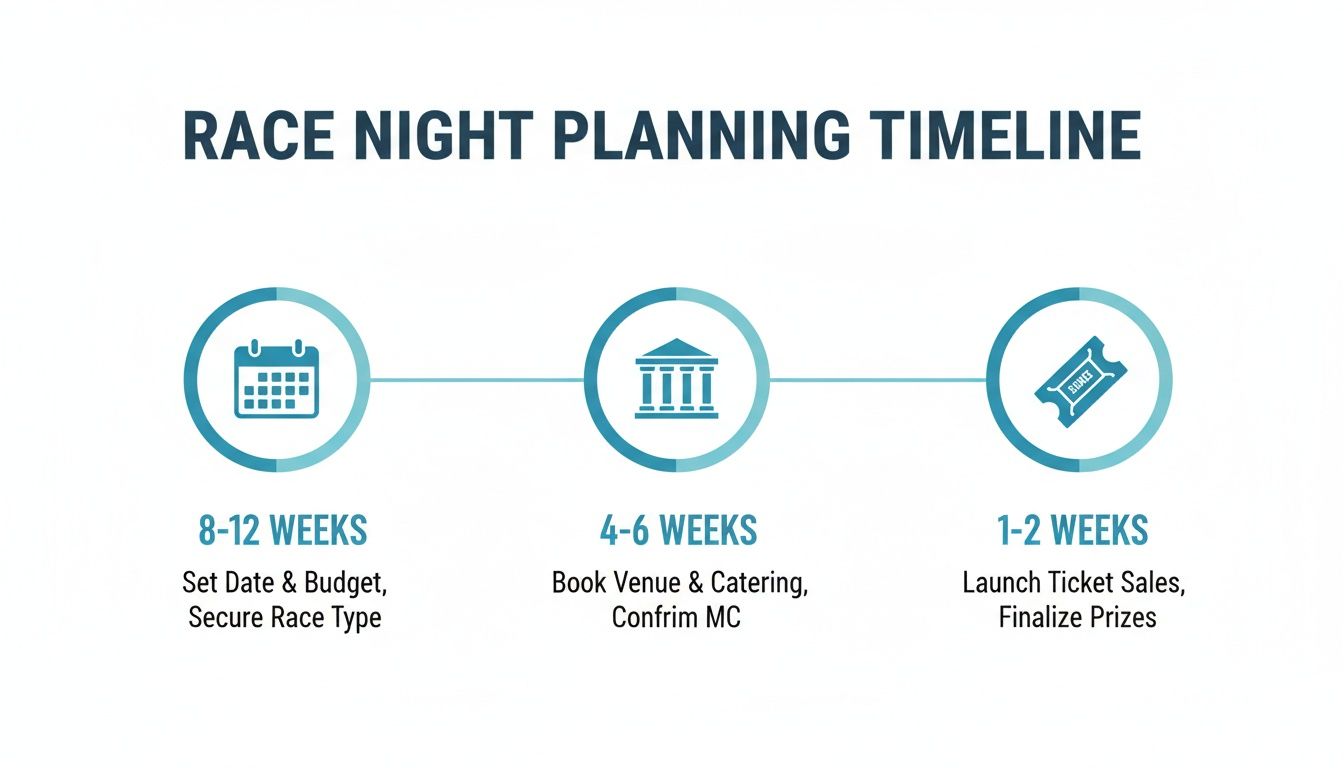
As you can see, locking in the big-ticket items like your venue and budget happens months out. This gives you a clear runway to ramp up your promotional efforts as the date gets closer.
Why Are You Doing This? Defining Your Goal
Before you start dreaming up witty horse names, stop and ask the most important question: why are you running this event? Your answer will guide every single decision you make from here on out.
Is this a fundraiser for the local school? A team-building night for the office? A social for your sports club? Be specific.
A clear objective is your compass. It dictates your budget, how you'll promote the night, and what success actually looks like. For a charity, it's about the pounds raised. For a corporate event, it might be about staff feedback and morale.
For example, a fundraising event will be laser-focused on maximising profit. That means driving ticket sales, getting race sponsorships, and running side games on the night. A corporate fun night, on the other hand, is all about engagement. The company will likely cover the costs, and any betting might be just for fun with bragging rights as the prize. Getting this clarity early on ensures your entire plan is perfectly aligned with what you want to achieve.
Laying the Groundwork: Your Pre-Event Checklist
Any seasoned event organiser will tell you that a truly memorable race night is won or lost long before the first horse leaves the stalls. It all comes down to the prep work. Getting the basics right is what separates a chaotic evening from a slick, profitable, and genuinely fun one.
Think of this as your blueprint. We're moving beyond a vague idea and into a concrete plan of attack. A good event planning checklist template is a great starting point, but for a race night, you need to focus on some very specific details.
Lock in Your Date and Define Your Mission
First things first: get your date in the diary. This sounds simple, but it’s a critical decision. You absolutely must check for clashes with big football matches, bank holiday weekends, or other major local events that will compete for your audience. A quick look at community calendars or even just asking a handful of potential guests can save you a lot of grief.
Just as important is knowing why you’re running the event. What’s the primary goal?
- Fundraising? If you're raising money for a charity, school, or sports club, your focus is squarely on maximising profit. Every decision, from ticket price to sponsorships, should be viewed through this lens.
- A Corporate Team-Builder? Here, the goal is pure fun and engagement. Financial returns are secondary to creating a brilliant, shared experience that gets colleagues talking.
- Client Entertainment? This is all about making a professional impression. You’re aiming for a high-quality, polished event that reflects well on your brand and leaves clients impressed.
Your ‘why’ will dictate everything else, from the scale of your budget to the type of prizes you’ll be sourcing.
Nail Down a Realistic Budget
Without a budget, you're flying blind, and costs have a nasty habit of creeping up. You need a financial roadmap from day one. Start by listing out every conceivable expense, and always, always add a contingency fund for those little surprises.
Your main outgoings will likely be:
- Venue Hire
- Race Night Kit Rental
- Host or MC (if you're not using a volunteer)
- Food and Drink
- Prizes for the winning owners
- Printing Costs (for tickets, race cards, posters)
- Theming and Decorations
Once you have a handle on your total estimated costs, you can work backwards to set a sensible ticket price or get the final sign-off on your corporate budget. This isn't about restricting your plans; it’s about making smart choices.
A clear budget actually sparks creativity. Knowing you have exactly £200 for prizes forces you to think outside the box to find something genuinely desirable, rather than just throwing cash at the problem.
Pick the Perfect Venue and a Quality Kit
Your venue is so much more than just a room – it sets the entire tone. The right space creates energy and buzz; the wrong one can kill the atmosphere before you even start.
When you're looking at potential locations, think about:
- Layout and Capacity: Can everyone see the screen? Is there a logical place for the betting desk (the 'tote')? You need clear sightlines and enough room for people to move around comfortably.
- In-House AV: Does the venue already have a decent projector, screen, and sound system? If not, you need to make sure your race night kit provider can supply them. Don't assume.
- Access: Is it easy for your guests to get to? Is there ample parking or good public transport links?
- Licensing: If you plan on running a cash bar, double-check that the venue holds the correct alcohol licence.
Just as crucial as the venue is the race night kit itself. This is the heart of the entertainment. Don't settle for a package with grainy, dated footage from the 90s. You want a provider offering modern, high-definition races, professional commentary, and a simple system for running the bets. A quality kit delivers that authentic, exciting 'day at the races' experience that gets everyone shouting for their horse.
Unlocking the Profit Potential of Your Race Night
Sure, the thrill of the races gets people in the door, but a race night is also a seriously effective way to make money. With a bit of clever planning, your event can go from a simple get-together to a proper fundraising machine. The trick is to think beyond just one source of cash and layer in multiple ways to generate income throughout the night.
This way, you’re not just covering your outgoings but actively building a healthy profit for your charity, sports club, or even as part of a corporate event. Let's break down how the numbers actually work and what a successful night can look like.
Building Your Revenue Streams
The most profitable race nights I’ve seen never just rely on ticket money. They build a whole portfolio of income-generating activities that keep guests engaged from the moment they hear about the event to the final race.
Your main money-makers will usually be:
- Ticket Sales: This is your foundation. Price them right to cover your basic costs without putting people off.
- 'Horse' Ownership: Let people "buy" a horse for each race. The owner of the winning horse gets a prize. It’s a simple, fun way to create a bit of a buzz.
- Race Sponsorships: Get local businesses on board to sponsor individual races. They get their name on the race card and a few shout-outs during the night.
- Tote Betting: Here’s where the real action is. Guests place small bets on the horses, a slice of the total pot goes to the winners, and the rest goes straight to your cause.
- Supplementary Fundraising: Don’t forget the extras. A raffle, a silent auction, or even a game of last-man-standing bingo can seriously boost your final total.
When you combine all these, you give your guests loads of opportunities to chip in while they're having a good time. It makes supporting your cause feel like part of the fun.
A Real-World Profit Scenario
Let’s talk real numbers. Race night kits are a massive hit for fundraisers all over the UK, especially for sports clubs and charities. Imagine a local football club with a decent following.
They sell 80 tickets at £25 each, maybe including a bit of food, and that’s £2,000 in the bank straight away. Selling horse ownership before and during the night can easily add another £200-£300 to that.
Getting a local business to sponsor the event programme for £250 is a common and easy win. Then, you add in a raffle and a small auction, which can bring in another £400. Suddenly, your total takings are up around £2,950.
After you take off about £250 for hiring a professional race night kit, you’re looking at a clear profit of over £2,000 from one evening's work. These are typical figures from real events we've seen. For corporate planners, this model shows how a low-cost, high-engagement activity can create a real buzz.
The secret to a profitable event isn’t just selling – it’s about creating value. A £25 ticket is a bargain when it includes food, a full night of entertainment, and the feel-good factor of supporting a cause. A sponsorship offers a local business genuine, targeted advertising.
Pricing Strategies for Success
Getting your prices right is a balancing act. You need to maximise your income but not so much that people feel they're being ripped off.
Here are a few pricing models we often see:
| Item | Charity/Club Model | Corporate Fun Model |
|---|---|---|
| Ticket Price | £15 – £25 (inc. food) | N/A (company-funded) |
| Horse Ownership | £5 – £10 per horse | Fun money or small prizes |
| Race Sponsorship | £50 – £250+ per race | N/A |
| Tote Bet | £1 – £2 per ticket | Fun money vouchers |
With fundraising events, the aim is to cover your main costs (venue, kit hire, food) with ticket sales. That way, everything you make on the night is pure profit.
For corporate events, where profit isn't the goal, just swap real cash for 'fun money' to keep that competitive edge. This is also a great chance to bring in other interactive activities. If that's you, you might want to check out our full range of games rental UK services to really make your event stand out.
Bringing the Race Night Experience to Life
All the planning is locked in, the sponsors are on board, and your tickets are sold out. Now for the fun part: turning your venue into a buzzing, authentic racecourse for the night. This is where a good race night kit really earns its keep, providing the technical muscle for a brilliant evening.
Success on the night comes down to three things working together: a flawless technical setup, a schedule that keeps the energy up, and a host who knows how to work a room. Get these right, and your guests are in for a truly memorable event.
Nailing the Technical Setup
Once you're at the venue, the first thing on your mind should be the tech. A professional race night kit is designed to be user-friendly, but you absolutely must test everything long before the first guest walks through the door. Don't rush this part.
Get your main screen and projector set up first. Walk around the room and check the sightlines from every angle. The goal is simple: everyone needs a clear, unobstructed view of the races. If you have to shuffle tables and chairs around, do it. It makes a world of difference.
Next up, the audio. A crackly or muffled PA system is an instant atmosphere killer. Test it thoroughly, making sure the race commentary is crisp and audible right to the back of the room and over the chatter at the bar.
Finally, set up your betting station, or 'tote' desk. Whether you're using modern digital terminals or old-school paper slips and cash, it needs to be clearly signposted and easy to get to. A bottleneck at the betting desk will slow the whole night down.
Pacing the Evening for Maximum Energy
A truly great race night is a show, not just a sequence of races. You need to build the atmosphere, give people time to socialise and spend money, and keep them hooked from the first race to the last. If the evening drags, you've lost them.
A good flow feels natural. You'll want to kick things off with a bang, running the first race fairly early on so everyone gets the hang of it. From there, plan for 15-20 minute breaks after every couple of races. This is your golden window for people to grab drinks, get their bets on, and mingle.
Use those breaks to inject some variety. Announce the winners of a raffle, run a quick game of 'heads or tails', or hold a prize draw. If you've brought in other entertainment, now's the time to feature it. For instance, a spinning prize wheel can boost engagement and fill those gaps perfectly.
Always build towards a big finish. Many organisers make the last race an 'auction race', where guests bid to 'own' a horse for that race. With a bigger prize pot and bragging rights on the line, it creates a fantastic climax to the night.
Think of your race night like a live sports broadcast. The race is the main event, but it's the commentary, analysis, and side stories that keep people glued to the screen. Your breaks and extra games are doing that exact job.
The Power of a Great Host
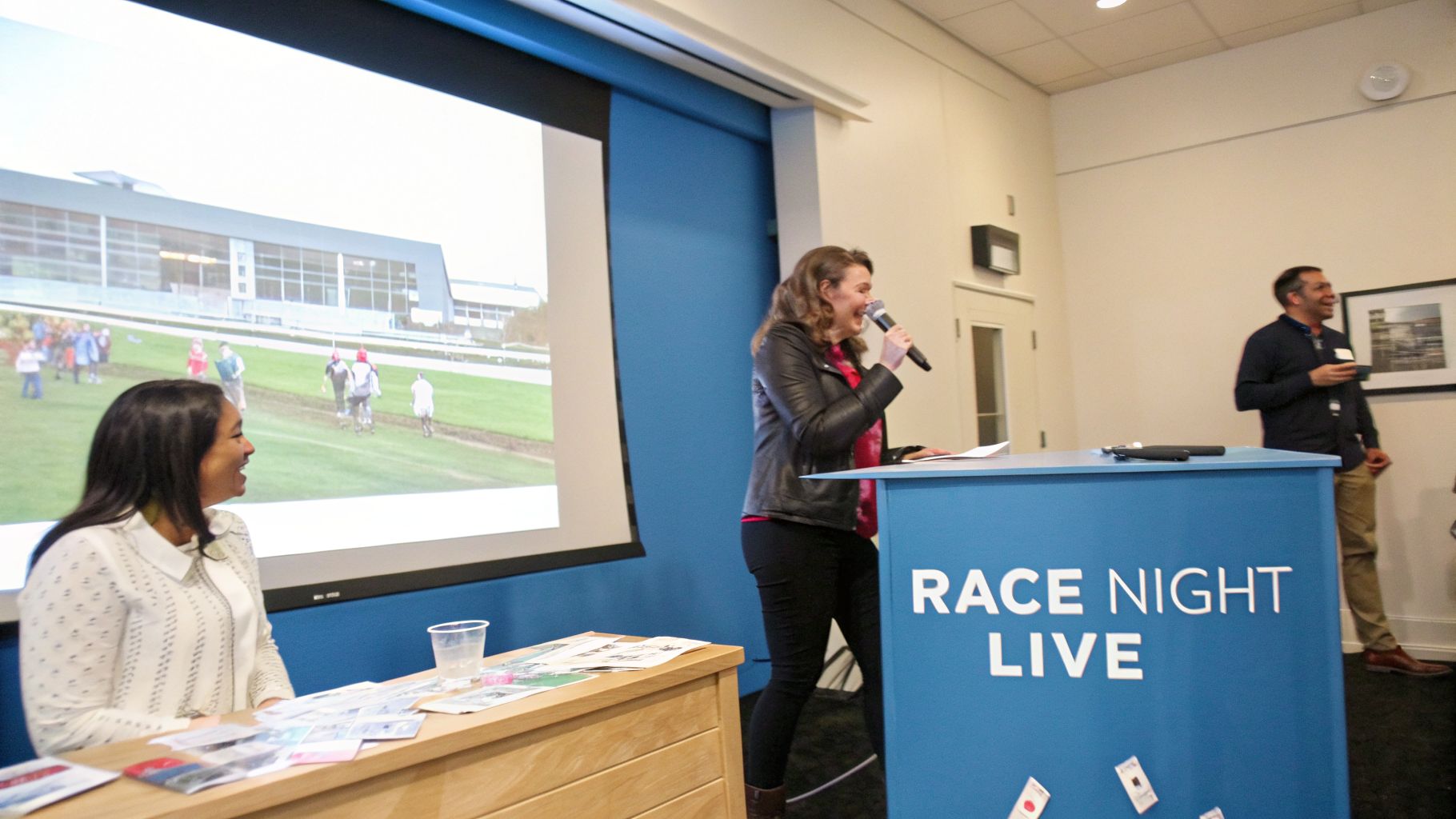
You can have the best kit in the world, but your host is the one who brings the fun. They are your compere, commentator, and hype-person, all rolled into one. They don't need to be a stand-up comic, but they absolutely must be confident, engaging, and clear.
Your host's main jobs are to:
- Explain how it all works: They need to clearly and simply explain how to bet, what the odds mean, and how payouts work. And they'll need to repeat it a few times!
- Build the narrative: A great host gives the horses silly names and backstories, encourages friendly rivalries, and gets the crowd invested in the outcome.
- Drive the pace: They keep the show on the road, announcing the next race, and creating a sense of urgency to get those last-minute bets in.
This role plays directly into the massive cultural appeal of horse racing in the UK. With racecourse attendance hitting 5.8 million in a single year, the thrill of the track is something people instantly connect with. A good host channels that excitement, bringing a slice of the big-time to your event.
Ensuring a Smooth and Professional Operation
The cheering has died down and the last horse has crossed the line, but your work isn't quite done. What you do now separates a good event from a great one. It’s all about the wrap-up – handling the details efficiently and professionally to leave a lasting positive impression.
These final steps, from navigating the legal bits to figuring out what "success" really looked like, are what make your race night a repeatable triumph, not just a one-off.
Navigating Legal and Safety Requirements
If you're raising money, particularly for a charity or a not-for-profit club, you absolutely have to know the rules. In the UK, running a tote system is covered by gambling regulations, but don't panic – you almost certainly won’t need a full gambling licence.
Most charity race nights operate as ‘non-commercial prize gaming’. This comes with a few strict conditions:
- Purpose: All your profits have to go to the good cause. No one can profit privately.
- Stakes and Prizes: There are set limits on how much someone can pay to play and the total value of the prizes you can offer. These numbers do change, so always check the latest guidance from the Gambling Commission before your event.
Think of it this way: the rules are designed to help genuine fundraisers, not hinder them. But pleading ignorance won’t get you very far, so a quick check on the official guidelines is a non-negotiable part of your planning.
Beyond the betting, you need to do a basic health and safety sweep of your venue. Before anyone arrives, walk the space and look for potential trouble spots.
- Are all the cables from your race night kit and PA system taped down? Tripping hazards are the last thing you want.
- Are the fire exits obvious and completely clear?
- Is the lighting good enough, especially in walkways or out to the car park?
It only takes a few minutes, but these checks are crucial. A professional event is a safe event, full stop.
The Post-Event Wrap-Up
Right, the last guest is gone. Time for your final checklist. This is where you count the cash and tie up every loose end. First job: the money.
Get all the income together from the tote, your sponsors, ticket sales, and anything else. You need to meticulously count it all and get a final profit figure. This isn't just for your own records; it’s about being transparent with everyone who supported you.
Next up, the winners. Make sure every winning horse owner and anyone with a winning tote ticket gets their prize or cash payout. Nothing builds trust like a smooth, fair, and quick payout process. It just reinforces that you ran a tight ship.
Finally, don't skip the thank yous. A personalised email or note to your sponsors, key volunteers, and prize donors goes a very long way. When you acknowledge their contribution, they feel valued and are much more likely to help you out next time. For bigger events, it can be worth looking into professional event staffing solutions to make sure every single detail is handled perfectly.
Measuring Success Beyond the Bottom Line
The total money raised is the big, obvious number, but it’s rarely the whole story. A truly successful night delivers value based on your original goals.
For a corporate event, success might look like this:
- Employee Feedback: What did the team think? A quick survey can tell you a lot. High scores and positive comments are a clear win for morale.
- Lead Generation: If you were hosting clients, how many new leads or solid conversations came out of the evening?
For a fundraiser, think bigger than the final cash total:
- Community Building: Did you bring new people into your circle? Did the event strengthen bonds with your existing supporters?
- Future Engagement: Use the event to grow your email list. Every attendee is now a warm contact for your next appeal or event.
By tracking these wider results, you get a full picture of your return on investment. It proves your race night wasn't just a bit of fun – it was a strategic move that delivered real, lasting value.
Your Race Night Kit Questions Answered
Once you've decided on a race night, a few key questions always seem to pop up. We've run countless of these events, so we've heard them all. Here are the straight answers to get you over those final planning hurdles and on your way to a brilliant, successful night.
Do I Need a Gambling Licence for a Charity Race Night?
Let's tackle the big one first: the gambling licence. It's the question we hear most often, and the good news is, you probably don't need one. For most charity fundraisers in the UK, you can run the event without a full licence, provided it's set up as a non-commercial event where all profits go to your good cause.
There are strings attached, though. You have to operate within specific rules about the maximum stakes and prizes allowed. These guidelines can and do get updated, so it's absolutely essential to check the latest advice from the Gambling Commission on 'non-commercial prize gaming' before you do anything else. It's a quick check that will give you complete peace of mind.
What’s Actually Included in a Race Night Kit?
Think of a professional race night kit as your event in a box. It’s designed to take all the technical stress off your shoulders, leaving you free to host and entertain your guests.
A quality professional kit will always include:
- High-Quality Race Footage: This is the heart of the show, usually on a digital file or DVD. The races must be randomised to keep it fair and exciting for everyone.
- PA System: A microphone and speakers are non-negotiable. Your host needs to be heard over the crowd to build atmosphere, provide commentary, and announce the all-important winners.
- Projector and Screen: You need a big, clear view of the action. A decent-sized screen and a bright projector ensure no one misses the finish line.
- Tote System: This is how you handle the betting. It might be traditional printed betting slips and a cash float, or it could be a simple software system to manage bets and calculate payouts on a laptop.
The quality of your kit has a direct impact on the feel of your event. Crisp, modern HD race footage and an easy-to-use tote system will always look more professional and keep your audience more invested than a tired, old-school setup.
How Many Races Should We Plan for the Night?
Getting the number of races right is all about pacing. You want to keep the energy levels high, but you don't want to exhaust your guests or let long, dead-air gaps kill the atmosphere. After years of running these events, we've found the sweet spot is between 8 and 10 races.
This number fits perfectly into a typical three-hour evening. It gives you enough time for the full cycle of each race: building the hype, taking all the bets, running the race itself, and celebrating the winners. Just as importantly, it creates natural pauses in the action. These breaks are golden opportunities for guests to grab another drink, have a chat, and for you to run other fundraising games like a raffle or an auction.
A good structure is to plan for eight races, leaving about 15-20 minutes between each one. This creates a fantastic, lively pace that keeps the excitement bubbling all night. You build anticipation before every race, and you use the downtime to maximise your fundraising. It’s a win-win.