
A show quiz game isn't just a bit of fun. When done right, it’s a powerful tool for pulling crowds, creating a buzz, and hitting your specific event targets. Think of it as part TV-style competition, part strategic brand messaging.
Developing Your Winning Show Quiz Game Concept
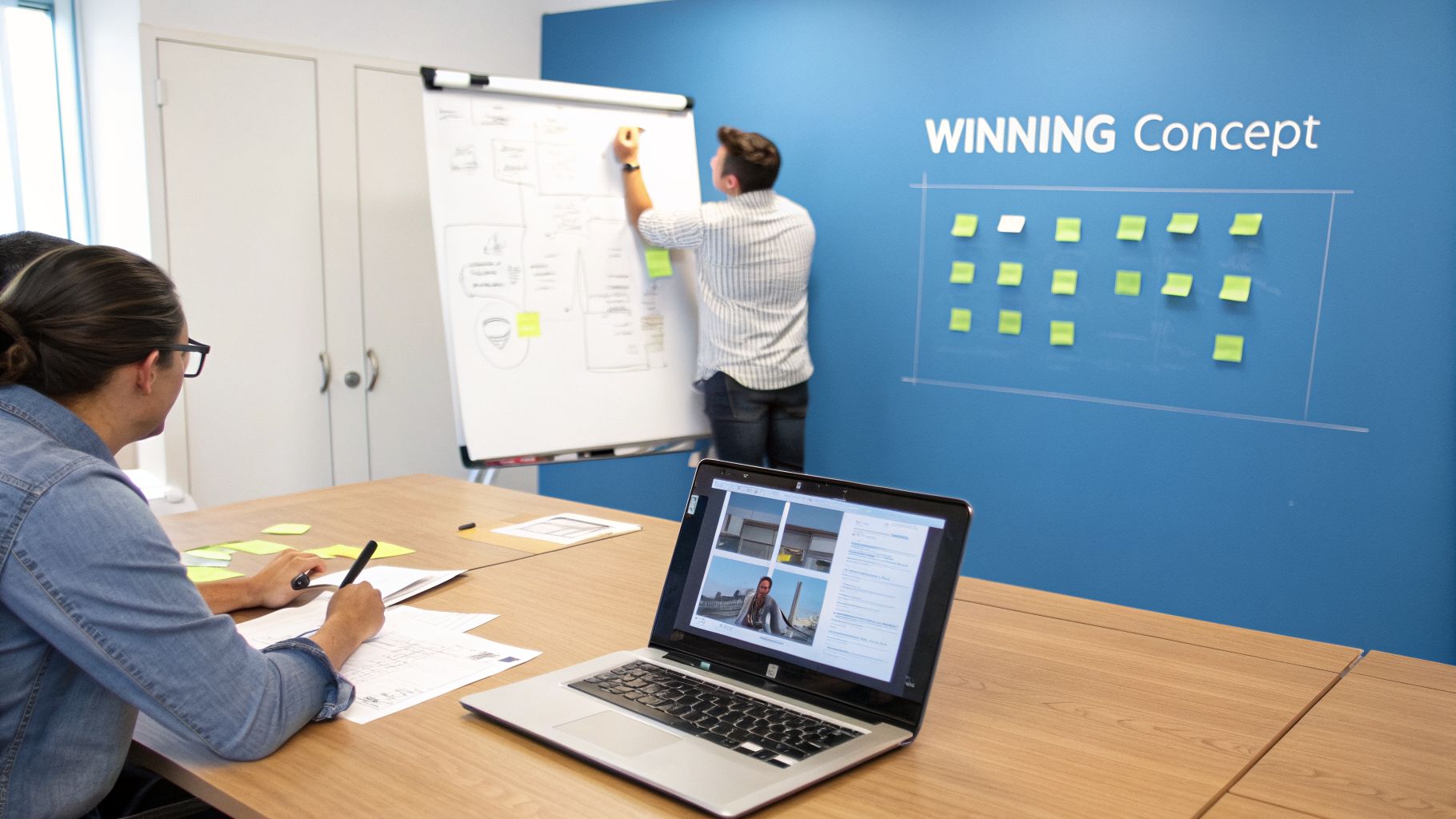
Before you even think about buzzers or leaderboards, you need a rock-solid concept. This is what separates a fleeting distraction from a memorable brand activation that actually delivers results. The very first question to ask is: what are we trying to achieve?
Are you looking to pack your CRM with highly qualified leads? Maybe the goal is to get attendees up to speed on a complex new product. Or perhaps you just want to create an undeniable energy around your stand that no one can ignore. Each of these goals needs a completely different approach.
Defining Your Quiz Format
With a clear objective in mind, you can start shaping the game itself. There’s no need to reinvent the wheel here; drawing inspiration from classic TV formats is smart because they’ve been proven to work for decades.
- Fastest Finger First: This is your go-to for high-traffic areas where you need quick, energetic player turnover. It’s all about speed, which creates a real spectacle and pulls in passers-by.
- Team-Based Challenge: Fantastic for encouraging a bit of networking and collaboration. This format shines at internal corporate events or anytime you want groups to put their heads together.
- Head-to-Head Duel: If you want to create a focused, high-stakes competitive atmosphere, this is it. It’s a brilliant way to showcase expert knowledge and can be billed as a ‘champion’s corner’ at your event.
A successful quiz isn’t just about the technology; it's about the emotional journey. Your concept should build anticipation, create moments of tension, and deliver a satisfying conclusion for both players and spectators.
Crafting Engaging and Balanced Questions
The questions are the absolute heart of your show quiz game. The real art here is striking the right balance. You need questions that are accessible enough for a casual attendee to have a go, but challenging enough to keep the real experts in the room hooked. A quiz where no one gets anything right is just as dead in the water as one that’s far too easy.
Just look at the enduring appeal of Channel 4's Countdown, a UK television staple since 1982. It maintains a huge following precisely because of its intellectual rigour. In fact, a survey revealed that a massive 89% of viewers feel it's unlikely they could ever win an episode. That difficulty creates respect and a dedicated audience. You can discover more about what makes classic game shows so popular.
To get that balance right for your own event, try this mix:
- Blend general knowledge with branded content: Kick off with some fun, accessible questions to warm everyone up before you start weaving in topics about your industry or company.
- Use a difficulty curve: Structure your rounds to start easy and get progressively harder. This builds a player’s confidence before you really test their limits.
- Vary the question types: Don't just stick to text. Mix in multiple-choice, true/false, and picture-based questions to keep the game dynamic and visually interesting for the crowd.
Choosing the Right Technology and Equipment
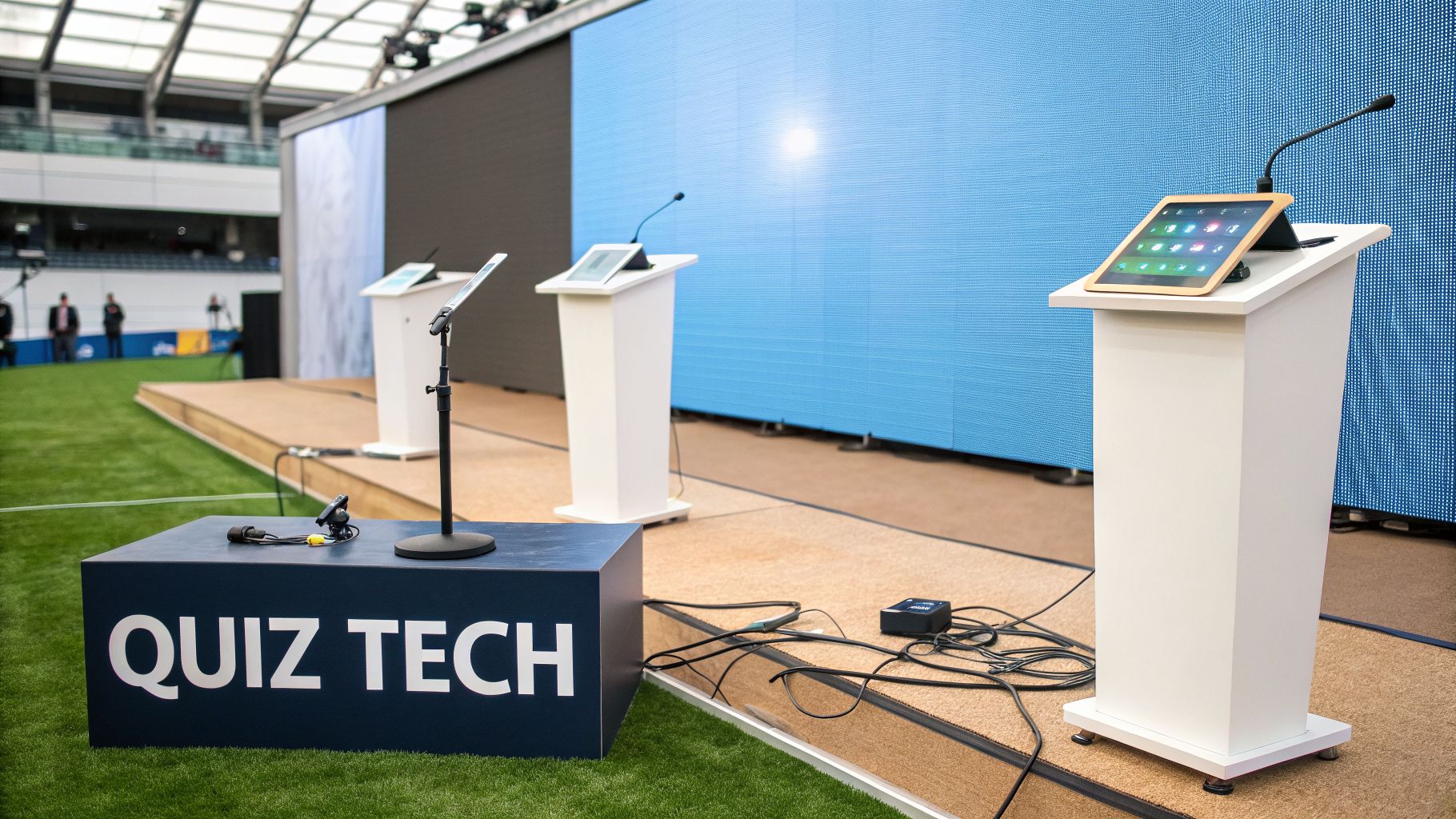
The right tech is what turns a simple quiz concept into a slick, professional show quiz game. It can feel like a minefield of hardware and software, but your decision should always come back to two things: reliability and the exact experience you want for your audience. The kit doesn't just run the game, it creates the entire atmosphere.
Your first big decision is how players will actually play. This choice dictates the energy of the whole setup.
- Classic Buzzer Podiums: For that authentic, high-drama TV game show vibe, nothing beats a physical buzzer. The act of slamming that button is pure theatre and a real crowd-pleaser. We've got a whole guide on the different types of buzzers for your quiz if you want to go deeper.
- Interactive Tablets: If you need more flexibility, tablets are the way to go. They’re brilliant for showing questions with images or videos, and they open up possibilities beyond just a simple buzz-in. Think team-based games or detailed data capture.
Display and AV Essentials
In a loud, bright exhibition hall, your average telly just won't do the job. You need to think bigger. A large-format LED screen is essential for displaying questions and, most importantly, a live leaderboard that's crystal clear from across the aisle. That visibility is what builds the competitive spirit.
And don't even think about skimping on the audio-visual side. This is what separates a forgettable stand activity from a real showstopper. For a full rundown, this is a great resource on selecting dependable audio visual equipment for events.
At a minimum, your professional AV package must have:
- A quality microphone for the host so they can cut through the background din.
- A proper speaker system for pumping out sound effects, music, and amplifying the host's voice.
- Some dynamic lighting to put the spotlight on your contestants and add that extra layer of showbiz flair.
Expert Tip: In a high-interference environment like an exhibition, always go for wired systems. It's tempting to use wireless for a cleaner look, but the sheer number of Wi-Fi signals and electronic noise from other stands is a recipe for disaster. A hardwired connection for your buzzers and mics guarantees they'll work when it counts.
Connectivity and Power
Now for the less glamorous but absolutely critical stuff: power and internet. Your tech supplier should give you a detailed power spec list to pass on to the venue's electricians. Our rule of thumb? Plan for more sockets than you think you need. You'll always use them.
A stable internet connection is also non-negotiable, especially if your show quiz game software is capturing data live or using cloud-based leaderboards. Always push for a dedicated, hardwired internet line. Relying on venue Wi-Fi is a gamble you don't want to take. Getting these details locked down early on will save you from huge headaches on show day and make sure your activation runs without a hitch.
Keeping Your Stand Buzzing: Engagement and Participation
Let's be honest, the biggest fear at any exhibition is an empty stand. Your show quiz game needs to be a gravitational force on the show floor, pulling people in and keeping them there. This isn't about just having flashy tech; it's about smart psychology and creating a dynamic that people can't resist.
A classic mistake we see time and again is pinning all hopes on one huge grand prize. It sounds great on paper, but it often backfires by scaring off casual players. Most attendees are realistic—they know the odds of winning the single big-ticket item are tiny, so they don’t even bother stepping up.
The real secret is to stop thinking like a national lottery and start thinking like a modern arcade.
How to Structure Your Prizes and Rewards
A tiered prize system is infinitely more powerful. By offering smaller, more frequent wins, you keep the energy and motivation high all day long. This creates a constant stream of winners, which generates a real buzz and makes everyone feel like they have a genuine shot.
Just look at the psychology of popular UK TV game shows. A revealing YouGov analysis found that 40% of viewers reckon they could win Tipping Point, which mixes trivia with the chance element of a giant coin-pusher. By contrast, a mere 6% felt they had a chance on the notoriously difficult Mastermind.
Quiz Format vs Audience Confidence
The lesson here is that perceived winnability is a huge driver. Tipping Point feels accessible and interactive, making people believe they could walk away a winner. Your quiz needs to capture that same feeling.
| Quiz Show Format | Primary Mechanic | Viewer Confidence (Believe They Could Win) |
|---|---|---|
| Tipping Point | Knowledge + Physical Luck | High (40%) |
| The Chase | Knowledge vs Expert | Moderate |
| Who Wants to Be a Millionaire? | High-Stakes Knowledge | Low |
| Mastermind | Specialist Knowledge | Very Low (6%) |
This data shows a clear link: the more a game relies on pure, high-level intellect, the less confident the average person feels. Introducing elements of luck or team play makes your game far more inviting.
You can apply this principle with a multi-layered prize strategy:
- Instant Wins: Award small, branded goodies for hitting a certain score or answering a key question correctly.
- Top-of-the-Hour Finals: Run a mini-final every 60 minutes, with the winner getting a slightly better prize. This keeps the crowd turning over.
- Grand Prize Draw: Give every single player an entry into a draw for one major prize at the end of the day or event.
This approach guarantees a steady flow of rewards and excitement. For even more ideas on prize mechanics, check out our guide on how to use a spinning prize wheel to boost engagement.
The Power of a Great Host and Dynamic Gameplay
Prizes are only one part of the equation. The game itself has to be exciting. Think about injecting dynamic elements like ‘fastest finger’ rounds for bonus points, or spark some friendly competition by grouping players into teams representing their companies. That competitive spirit is infectious and a brilliant way to draw in spectators.
But your single most important investment? A brilliant host. They are the glue that holds the entire experience together and the engine for your engagement.
Your host is your chief engagement officer. Look for someone with charisma, quick wit, and the ability to think on their feet. They need to be able to improvise, handle unexpected moments, and make every single participant feel like a star.
A great compere doesn't just read questions. They build rapport, explain the rules with zero friction, and manufacture genuine excitement from thin air.
Finally, make your lead capture a seamless part of the fun. Don't let it feel like a chore. By using tablets for a quick registration, you can frame it simply as the step needed "to get your name on the leaderboard". This smooth, frictionless process lets you gather valuable data without ever interrupting the game, turning entertained players into qualified leads.
Mastering Logistics and On-Site Management
A flawless show quiz game doesn't just happen. It's the direct result of serious planning weeks, if not months, before anyone sets foot on the exhibition floor. Once your concept, tech, and engagement strategy are locked in, it's all about nailing the execution. This is your playbook for making sure the whole activation runs like a well-oiled machine from the moment the first crate arrives.
One of the biggest mistakes we see is underestimating staffing. You simply can't run a professional activation with just one person trying to do everything. You need a drilled team, and each member has a specific part to play in creating a slick experience for every attendee.
Assembling Your On-Site Dream Team
Your staff are the face of your game, and their energy (or lack of it) will make or break its success. For a smooth operation, you'll want to fill three core roles:
- The Charismatic Host: As we’ve talked about, this person is your chief engagement officer. They’re not just a script-reader; they are the energy, the guide, and the personality of the entire game.
- The Technical Operator: This is your hero behind the curtain. They run the quiz software, fire off the AV cues, and are ready to jump on any technical glitches instantly. Their job is to ensure the game never misses a beat.
- Brand Ambassadors: These are your crowd-wranglers. They manage the queue, handle sign-ups on tablets, and can even pre-qualify players. They are essential for keeping a steady, orderly flow of excited people coming through.
Pro Tip: Never, ever skip the pre-show briefing. Walk your entire team through the player journey, from the moment they join the queue to scanning their badge to collect a prize. Role-play a few "what if" scenarios so everyone knows exactly what to do without having to ask.
Designing Audience Flow and Managing Safety
A popular game will naturally draw a crowd. That's what you want. But a messy, disorganised crowd creates bottlenecks and a frustrating experience for everyone.
Your stand layout needs to be designed to manage this flow. Think about positioning your registration point slightly away from the main game area to stop a scrum from forming right at the front. Use clear signage or even rope-and-pole stanchions to create an obvious queueing system. It makes a huge difference.
Health and safety is completely non-negotiable. An event floor is a minefield of potential hazards, and you absolutely must have a comprehensive risk assessment. Pay close attention to these common culprits:
- Cable Management: Trip hazards are the number one risk, and they're so easy to avoid. Use professional-grade cable ramps or gaffer tape to secure every single wire. No excuses.
- Electrical Safety: All your kit needs to be PAT tested, and you must make sure you're not overloading the power sockets. Any good supplier will provide all the necessary certification.
- Accessibility: Have you thought about wheelchair users? Your stage and player area must be accessible. This might mean adding a ramp or ensuring screens are positioned so everyone can see them clearly.
This timeline shows you how to think about the different stages of audience interaction—from grabbing their attention in the first place to keeping them hooked and, finally, turning them into a valuable lead.
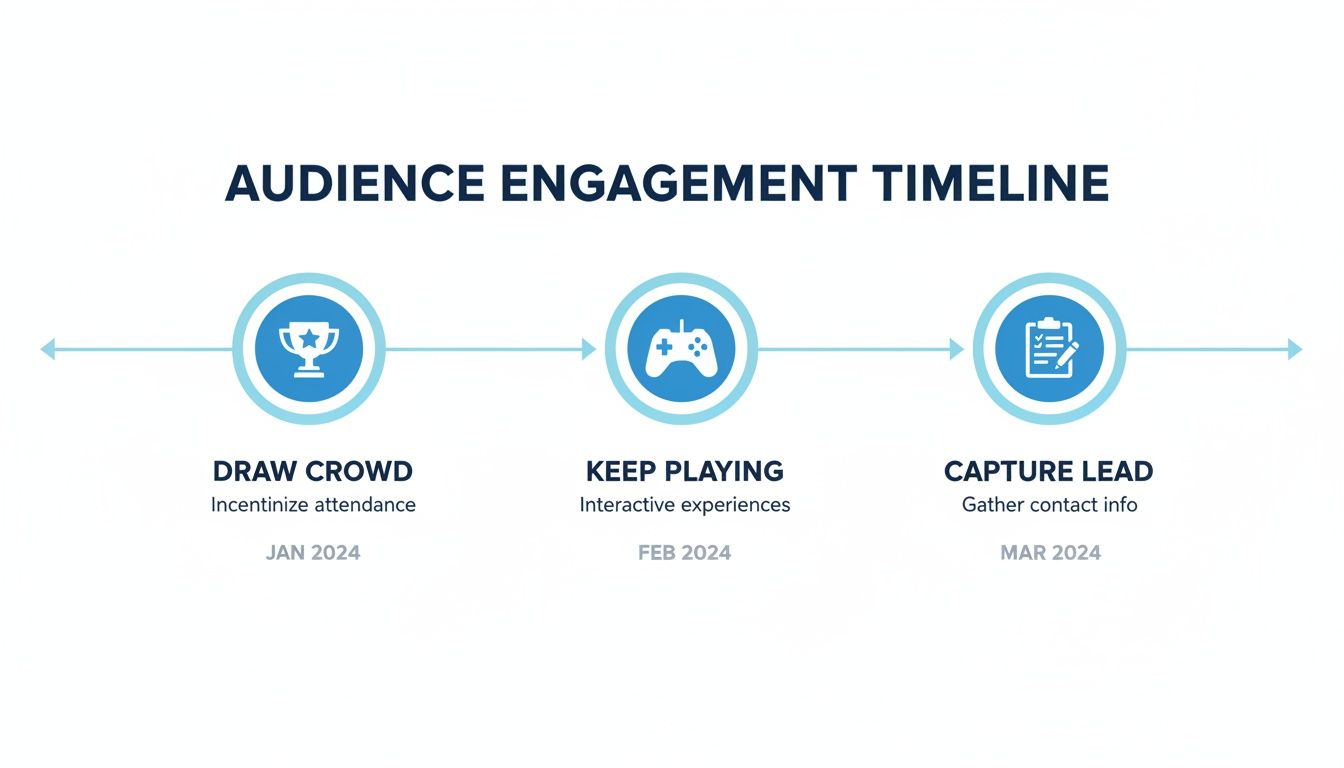
The key takeaway here is that engagement isn't a single event. It’s a process with three distinct parts. You need different tactics to first attract people, then retain their attention, and finally capture their details. Getting this structure right is fundamental to seeing a real return on your investment.