In an oversaturated market, a static banner or a simple giveaway no longer cuts it. Today's audiences crave experiences, memorable and shareable moments that forge a genuine connection with your brand. This is where strategic brand activations come in. They transform passive viewers into active participants, creating a powerful emotional link that translates directly into brand loyalty, lead generation, and measurable return on investment.
This guide moves beyond generic ideas to provide a deep strategic analysis of 10 powerful brand activation examples . We will dissect the objectives, execution, KPIs, and key takeaways for each, providing a replicable blueprint for your next corporate event, trade show, or product launch. Every detail matters in creating a cohesive experience; even small details like custom printed paper cups for brand promotion can turn everyday interactions into powerful brand touchpoints.
Our focus is on creating truly immersive campaigns. Throughout this article, we'll explore actionable strategies that you can adapt to your own goals. We'll also highlight how hiring specialised attractions, such as the simulators and interactive games from PSW Events, can elevate these concepts from good to unforgettable, ensuring your brand is not just seen, but experienced. Forget theory; this is a practical playbook for creating activations that capture attention, drive engagement, and deliver results.
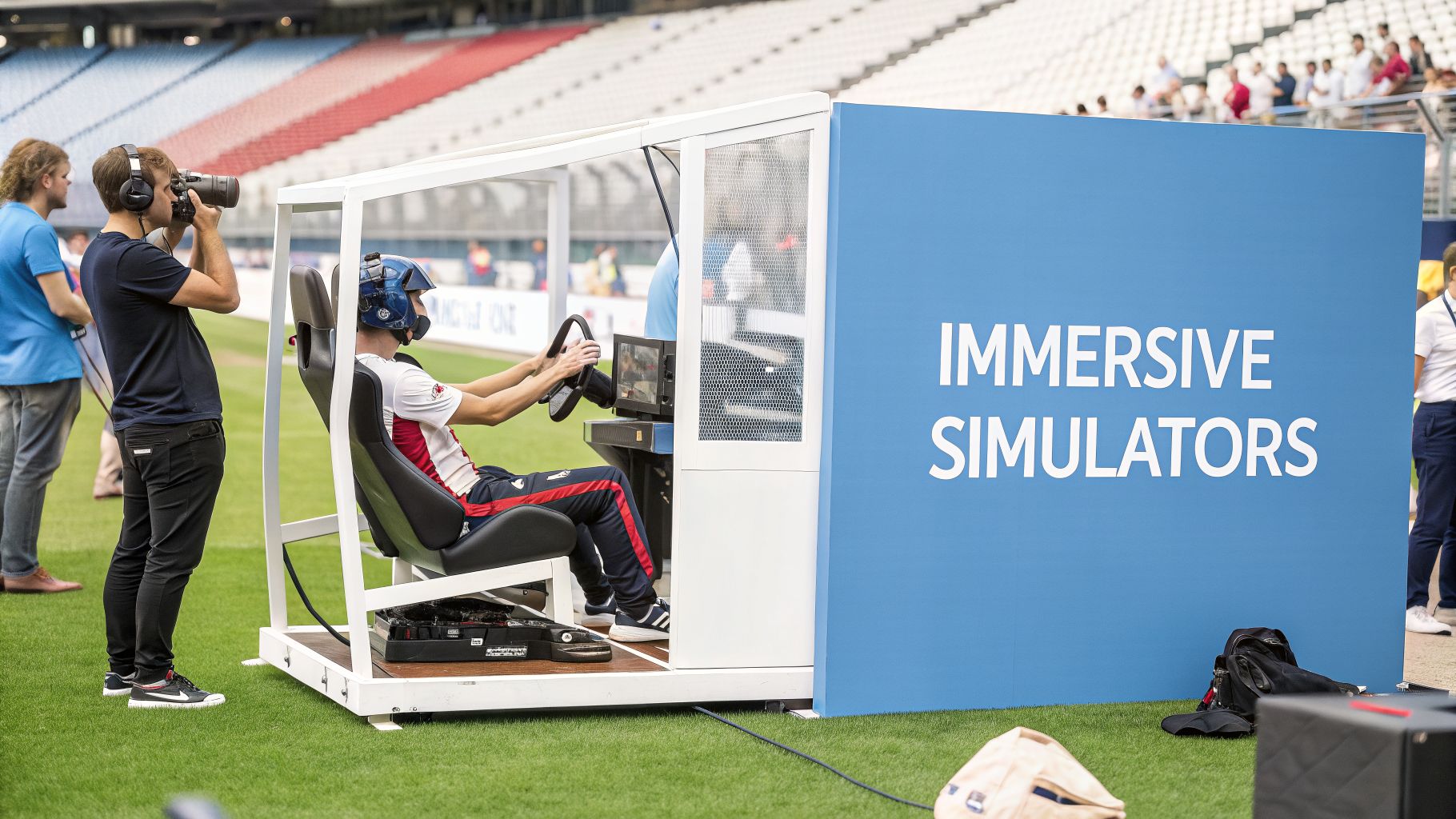
One of the most effective brand activation examples involves deploying immersive simulators at major sporting events or corporate exhibitions. This strategy places a high-energy, interactive attraction directly in the path of a captive and engaged audience, turning passive attendees into active participants. Brands like Aston Martin and Mercedes F1 frequently use this at venues such as Silverstone and ExCeL London to connect with fans on a memorable, physical level.
The core principle is simple: offer an experience that is aspirational and not easily accessible. Whether it's the thrill of an F1 race, the precision of a golf swing, or the challenge of a flight simulation, these attractions command attention and create a natural focal point. Participants register their details to take part, providing a direct channel for lead generation and post-event communication.
To successfully implement this type of activation, focus on strategic execution. Position the simulator in a high-traffic area, such as near the entrance or main stage, to guarantee visibility. Use large screens to display a live leaderboard, which fuels competition and encourages repeat plays.
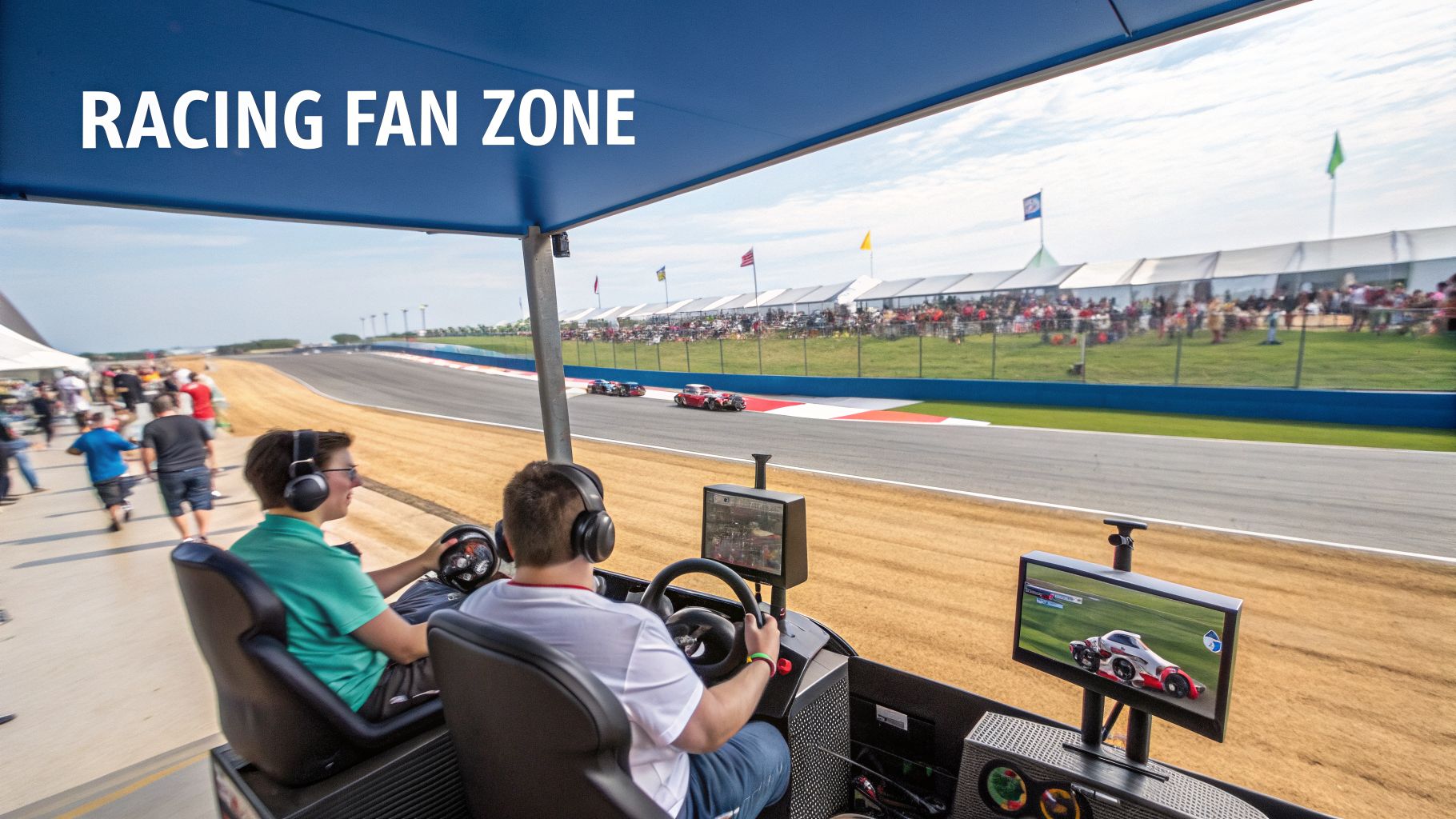
A powerful way to create memorable brand activation examples is by setting up interactive fan zones centered around multiple racing simulators. This approach moves beyond a single attraction to create a complete, branded environment at motorsport events, festivals, and large-scale exhibitions. By featuring several F1, Le Mans, or rally simulators, brands can foster a competitive, high-energy atmosphere that directly associates their identity with the excitement of professional motorsport.
The strategy is to build a destination within an event. A multi-car setup naturally draws a crowd and encourages social interaction as participants compete against each other in real-time. This is often seen at venues like Silverstone for corporate hospitality or used by automotive brands like Porsche and Ferrari to launch new models, allowing attendees to virtually experience the performance they see on display.
VIDEO
Actionable Takeaways for Your Event
To make a racing fan zone successful, focus on creating a cohesive and competitive experience. Use a live leaderboard displayed on a large screen as the central point, showing lap times and rankings to fuel the competitive spirit. Offering branded prizes for the "fastest lap of the day" provides a clear incentive for participation and repeat plays. For more information on how to organise this, you can explore options for hiring professional racing simulators .
Key Insight: A fan zone's success lies in its ability to operate as a self-contained event-within-an-event. Integrate brand ambassadors who can act as race marshals, provide tips to drivers, and encourage social sharing. By managing the experience from registration to the final leaderboard announcement, a brand can control the entire narrative and create a deeply engaging activation.
3. Flight Simulator Brand Activations
Flight simulator brand activations offer a premium and aspirational experience, aligning brands with themes of precision, adventure, and cutting-edge technology. This strategy involves using advanced motion or helicopter flight simulators to give attendees a taste of being a pilot, a highly memorable activity that generates significant buzz. This approach is frequently seen at aviation industry conferences, luxury brand hospitality events, and defence sector exhibitions.
The core appeal is offering an exclusive, high-fidelity experience that most people will never have the chance to try. Whether it's a commercial pilot scenario or a military training simulation, the activity captures attention and positions the host brand as a purveyor of unique, high-value engagements. Participants often provide their details to book a "flight," creating a natural and effective lead generation funnel.
Strategic Breakdown & Key Objectives
Premium Brand Association: The primary goal is to associate the brand with qualities like luxury, technical excellence, and exclusivity. A flight simulator is not a common game; it's a sophisticated piece of equipment.VIP & Hospitality: This activation works perfectly as a centrepiece for a VIP lounge or hospitality suite, providing a high-end activity that justifies the exclusive setting and enhances the guest experience.Targeted Lead Generation: Registration for a 5-15 minute session is an ideal way to capture data from a highly qualified audience. The perceived value of the experience makes data exchange feel worthwhile.Content Creation: The cockpit setup is visually impressive and creates compelling photo and video opportunities. Capturing participants' reactions provides authentic content for post-event marketing.
Actionable Takeaways for Your Event
To deploy this activation effectively, market it as a premium, limited-availability experience. Have a professional instructor on hand to guide users, ensuring both safety and maximum enjoyment while reinforcing the brand's commitment to quality. Consider creating branded "pilot wings" or achievement certificates for participants to take away, extending brand recall long after the event.
Key Insight: The value of a flight simulator activation is in its positioning. Frame it as a team-building challenge, an incentive reward, or an exclusive VIP perk. The simulator itself is the attraction, but the narrative you build around it is what connects the experience back to your brand's core message and objectives.
4. Esports and VR Tournament Activations
Organising competitive esports tournaments and VR gaming installations is one of the most direct ways to connect with Gen Z and millennial audiences. This brand activation example positions a company within the dynamic culture of competitive gaming, creating an authentic and high-energy environment. Brands like Red Bull and Intel execute these activations at gaming conventions, fan zones, and even tech conferences to generate genuine enthusiasm and brand loyalty.
The concept revolves around creating a structured competition within a branded environment. Participants register to compete for prizes, driving both engagement and lead collection. Whether it’s a fast-paced battle royale tournament or an immersive VR challenge, the competitive format attracts a dedicated audience and provides a platform for memorable, shareable moments.
Strategic Breakdown & Key Objectives
Audience Authenticity: The goal is to integrate the brand into gaming culture, not just advertise to it. A well-run tournament shows respect for the community and builds credibility.Extended Reach: Streaming the tournament on platforms like Twitch or YouTube expands the activation's audience globally. This turns a physical event into a digital content engine.Targeted Lead Generation: Registration for the competition is a natural data capture point. The process can be designed to qualify participants based on their interests and gaming preferences.Community Building: A tournament creates a shared experience and a sense of community around the brand. Leaderboards and prize-giving ceremonies foster friendly rivalries and social interaction.
Actionable Takeaways for Your Event
For a successful esports or VR activation, authenticity is paramount. Partner with established esports teams, influencers, or streamers to lend credibility and promote the event to their existing followers. Ensure the gaming setup is professional, with high-quality hardware and a stable internet connection to prevent technical hitches.
Key Insight: The activation's success is measured by both physical participation and digital viewership. Integrate real-time social media feeds and stream chats into the physical space to bridge the gap between in-person attendees and the online audience. By offering tiered prizes and creating content around top players, you give everyone a reason to stay engaged, transforming participants into brand advocates.
5. Team Building Simulator Experiences
A powerful form of internal brand activation involves using competitive simulators for corporate team building. This approach moves beyond traditional trust falls and icebreakers, creating structured, high-energy events that foster camaraderie through friendly competition. Companies in demanding sectors like finance and tech often use full-day simulator packages, featuring racing, boxing, or golf, to build rapport and reward their staff.
The concept is to create a shared, memorable challenge that requires teamwork, strategy, and communication. By organising departments into teams and running a scored tournament, companies can strengthen internal relationships and associate the brand with positive, engaging experiences. These events are not just about fun; they are strategic tools for improving morale and inter-departmental collaboration.
Strategic Breakdown & Key Objectives
Foster Camaraderie: The main objective is to break down workplace silos. A shared competitive goal encourages colleagues to support each other in a new, informal context, building relationships that transfer back to the office.Boost Morale: A day of exciting, game-oriented activities serves as a powerful reward and a break from routine. This investment in employee experience can significantly improve team spirit and job satisfaction.Reinforce Company Culture: Organising a well-structured, competitive event signals a company culture that values teamwork, performance, and rewarding its people. It's a tangible demonstration of company values.Internal Communications Content: The event generates a wealth of photos and video testimonials. This content is perfect for internal newsletters, recruitment materials, and social media, showcasing the company as a great place to work.
Actionable Takeaways for Your Event
For a successful team-building day, focus on balanced competition and shared enjoyment. Create teams that mix departments and seniority levels to encourage new connections. Use a variety of simulators, like racing for individual skill and multi-sport games for team play, to appeal to a wide range of interests and abilities. Displaying a live leaderboard is essential for building excitement and tracking progress throughout the day. Concluding with an awards ceremony for winning teams creates a celebratory climax. You can learn more about how to structure these corporate team building events to maximise engagement.
Key Insight: The true measure of success is the long-term impact on team dynamics. By combining individual challenges with team-based scoring, you ensure everyone feels involved. The focus should be less on individual victory and more on the collective experience, turning a simple game day into a meaningful investment in your company’s human capital.
6. Product Launch Interactive Demonstrations
Using interactive demonstrations for a product launch moves beyond a static presentation, allowing potential customers to experience a product's core benefits in a dynamic setting. This approach is one of the most powerful brand activation examples for creating genuine excitement, especially for high-value items where feel and performance are critical. Automotive brands like Porsche use racing simulators to launch new models, letting guests feel the car's handling and power, while tech firms like NVIDIA use VR to showcase new graphics cards.
The strategy is to build a controlled environment that amplifies the product's best features. A flight simulator for a new aircraft, a golf simulator for new clubs, or a racing simulator for a new vehicle creates a memorable, hands-on narrative. This transforms a launch event from a one-way broadcast into a two-way, participatory experience, generating buzz and giving media and influencers a tangible story to share.
Strategic Breakdown & Key Objectives
Benefit Amplification: The primary goal is to make a product’s key selling points tangible. A simulator can highlight a car's superior grip or a gaming PC's frame rate in a way a spec sheet never could.Media & Influencer Engagement: This format provides journalists and influencers with unique content opportunities. The visual, exciting nature of the activity creates compelling footage and social media posts, extending the launch's reach.Create Exclusivity: A simulator can be used to create a VIP experience for key stakeholders, press, or early adopters, making them feel valued and giving them a premium first look.Data-Driven Feedback: Participation metrics offer immediate insight into audience reception. Tracking who engages, how long they participate, and their reactions provides valuable initial feedback for marketing teams.
Actionable Takeaways for Your Event
To make an interactive launch demonstration successful, ensure the experience directly aligns with the product's core message. Customise the simulator's software and branding to reflect the new product, creating a cohesive brand world. Organise a structured schedule that includes dedicated slots for press, influencers, and VIPs to guarantee they get a high-quality experience.
Key Insight: The true success of an interactive product launch lies in its ability to generate authentic advocacy. When a journalist or influencer gets to "drive" the new car or "fly" the new jet, their resulting coverage is not just a report; it’s a personal story. This turns media coverage from a passive announcement into an active endorsement.
7. Exhibition and Trade Show Interactive Booths
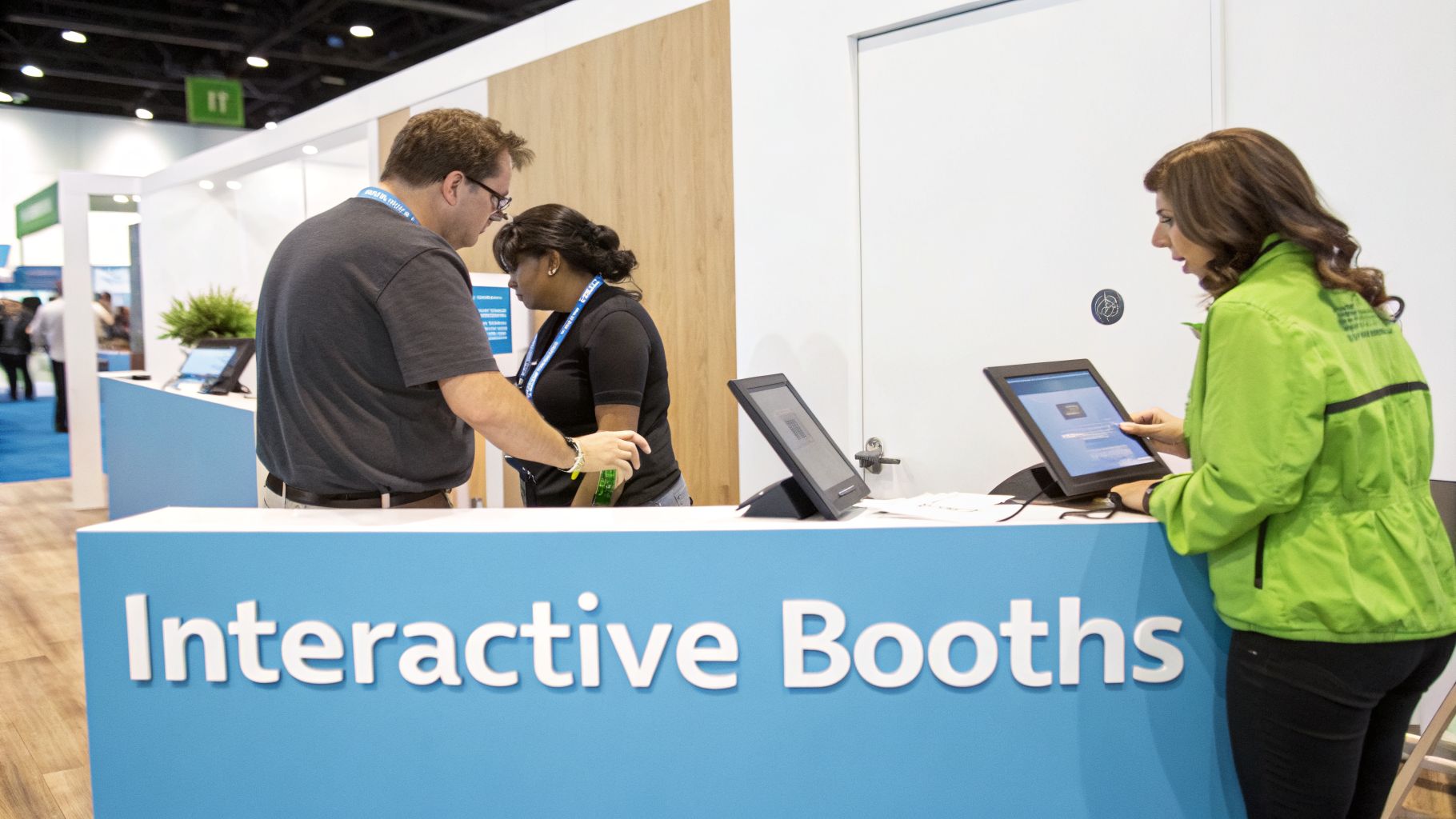
A classic yet highly effective brand activation example is the deployment of interactive booths at major trade shows and exhibitions. This approach transforms a standard exhibition space from a passive information point into an active engagement hub. By integrating attractions like racing simulators or competitive games, brands can cut through the noise at busy venues like ExCeL London or Manchester Central, generating significant foot traffic and creating memorable experiences.
The strategy centres on offering a brief, high-energy activity that attracts attendees and encourages them to linger. Technology companies might use gaming simulators at tech conferences, while automotive brands can draw crowds with realistic racing rigs at car shows. The core exchange is simple: a few minutes of fun in exchange for valuable contact information, turning passing visitors into qualified leads.
Strategic Breakdown & Key Objectives
Footfall & Attraction: The primary goal is to make your booth a destination. The audio-visual appeal of an interactive game acts as a powerful magnet, drawing people away from competitors and into your brand's environment.Dwell Time: In a trade show setting where attendees are constantly moving, extending interaction is crucial. A five-minute game session is significantly longer than the average glance-and-go visit, allowing more time for brand messaging to register.Qualified Lead Capture: Requiring registration to play provides a direct, non-intrusive mechanism for collecting contact details. This data is far more valuable than a simple business card drop, as it's tied to a positive brand interaction.Brand Association: By linking the brand to an exciting and positive experience, companies create a strong, favourable association in the minds of potential customers, making follow-up conversations more receptive.
Actionable Takeaways for Your Event
To maximise impact, booth placement is key; secure a location with high traffic flow for guaranteed visibility. Use large screens and audible cues to attract attention from a distance. Staff should be trained not just to operate the game, but to engage participants in conversation, explain the brand's value, and qualify them as potential leads. For more inspiration, explore these interactive exhibition stand ideas to find the perfect fit.
Key Insight: The success of an interactive booth isn't measured just by the number of participants, but by the quality of the data captured and the subsequent follow-up. Create a post-show communication plan to nurture the leads generated, referencing their positive experience at your booth to re-establish the connection and move them down the sales funnel.
8. Sports-Specific Simulator Experiences
Moving beyond generic entertainment, sports-specific simulator experiences offer a highly targeted form of brand activation. This strategy taps into the passion of sports fans by letting them test their skills in a virtual version of their favourite sport. Brands can deploy these attractions at major sporting fixtures, fan zones, or product launches to create a powerful connection with a dedicated audience.
The concept is to offer an authentic, skill-based challenge that resonates with athletic competition. Whether it’s an American football quarterback challenge at an NFL London game, a rugby conversion kick simulator at Twickenham, or a golf swing analysis at a PGA tournament, these activations attract crowds and generate a competitive buzz. Participants often provide contact details to register their scores, making it a valuable tool for direct marketing.
Strategic Breakdown & Key Objectives
Audience Targeting: The primary aim is to engage a specific demographic with a shared passion. A sports-specific game ensures the activation attracts a relevant and enthusiastic audience.Credibility and Association: By aligning with a specific sport, a brand can build credibility and be seen as a genuine supporter of the athletic community, enhancing its image.Data-Driven Engagement: Registration and in-game performance metrics provide rich data. This allows for personalised follow-up, such as sending participants their performance report or inviting them to related training programmes.Competitive Atmosphere: The inclusion of leaderboards and benchmark scores from professional athletes fuels competition. This increases participation and encourages social media sharing as players post their achievements.
Actionable Takeaways for Your Event
To make this activation effective, authenticity is key. Partner with professional teams or athletes to lend credibility and provide aspirational targets for participants. Position the simulator in a high-visibility area within a fan zone or event hall to capture footfall. Staff should be knowledgeable about the sport to engage with fans on a deeper level.
Key Insight: The success of these brand activation examples lies in their ability to offer a genuine athletic challenge, not just a game. Provide participants with personalised performance feedback, such as throwing accuracy or kick power. This adds real value and transforms the experience from a momentary diversion into a memorable, data-rich interaction.
9. Private Event and Celebration Entertainment
Brand activation principles can be powerfully adapted for the private sector, transforming personal celebrations into unforgettable interactive experiences. Customised simulator entertainment is an exceptional way to elevate high-end private events such as weddings, Bar/Bat Mitzvahs, and milestone birthdays. This strategy moves beyond traditional entertainment by offering an engaging focal point that appeals to mixed-age groups and diverse interests.
The concept is to integrate a high-energy attraction that complements the existing event flow. Whether it's a pair of racing simulators at a wedding reception or a golf simulator at a retirement party, these activities serve as a natural ice-breaker. They provide guests with a shared activity that encourages interaction and creates lasting memories, distinguishing the celebration from any other.
Strategic Breakdown & Key Objectives
Guest Experience: The primary aim is to deliver a unique and memorable entertainment option that delights guests of all ages, ensuring the celebration is talked about long after it ends.Social Interaction: Simulators act as a social hub, encouraging friendly competition and conversation among guests who may not know each other, breaking down social barriers.Event Flow Management: Strategically placed simulators can help manage guest flow, providing an engaging activity during transitional periods, such as between a ceremony and reception or during cocktail hour.Personalisation: The experience can be themed to match the event or the interests of the guest of honour, from their favourite racetrack to a beloved sport, adding a deeply personal touch.
Actionable Takeaways for Your Event
For a successful deployment, coordinate closely with the venue on space, power, and logistical requirements well in advance. Consider creating tiered packages with single or multiple simulators to offer budget flexibility. Position the attractions in a visible but non-disruptive area to draw guests in without overwhelming the main event space.
Key Insight: The true value lies in creating an inclusive and fun-filled atmosphere. Staff should be on hand to offer brief instructions and encourage participation, ensuring even novices can enjoy the experience. Organising simple tournament brackets with small prizes can amplify competitive engagement and create a highlight moment for the celebration.
10. Festival and Entertainment Venue Fan Zone Attractions
Moving beyond single-event deployments, one of the most commercially astute brand activation examples involves establishing multi-simulator fan zones at high-footfall entertainment venues. These permanent or semi-permanent attractions are installed at festivals, theme parks, and large entertainment complexes, transforming an area into a dedicated hub of interactive experiences. This strategy creates a new, revenue-generating asset for the venue while offering brands a continuous point of contact with their target audience.
The model works by integrating paid-for experiences directly into the visitor journey. Unlike a one-off trade show activation, these fan zones are designed for repeat engagement and monetisation. By offering racing, flight, or VR simulators, venues like major UK theme parks can increase per-capita spend and position themselves as premium entertainment destinations. For a brand sponsor, this provides sustained visibility and association with a high-energy, positive experience.
Strategic Breakdown & Key Objectives
Revenue Generation: The primary goal is to create a new income stream for the venue through pay-to-play or package-deal models. This turns the activation from a cost centre into a profit centre.Visitor Retention: Dynamic content, such as rotating games, seasonal tournaments, and leaderboards with loyalty rewards, encourages repeat visits from local audiences.Increased Dwell Time & Spend: An engaging fan zone keeps visitors on-site for longer, increasing the likelihood of secondary spending on food, drinks, and merchandise.Data Integration: Linking the attraction to the venue's official app allows for seamless booking, score tracking, and the collection of valuable user data for targeted marketing.
Actionable Takeaways for Your Event
To maximise the success of a fan zone, focus on operational excellence and visitor experience. Offering multi-experience packages can significantly boost the average transaction value. For instance, a "Triple Thrill" pass for a go on three different simulators is often an easy upsell. While your primary focus might be on immersive tech experiences, simpler activations, such as setting up a mobile hot chocolate stand at events , can also create memorable brand touchpoints for your audience.
Key Insight: The long-term success of a venue-based fan zone depends on its ability to stay fresh. A "set and forget" approach will lead to diminishing returns. A content calendar with monthly game rotations, seasonal events (like Halloween-themed races), and influencer-led tournaments is critical for driving sustained traffic and creating a buzz that extends beyond the venue walls.
10 Brand Activation Examples Compared
Activation Type
Implementation Complexity 🔄
Resource Requirements ⚡
Expected Outcomes 📊
Ideal Use Cases 💡
Key Advantages ⭐
Immersive Simulator Experiences at Major Sporting Events
High — complex logistics, trained on-site staff
Large footprint, power, multiple rigs, AV, staffing
High engagement, social reach, lead capture; ⭐⭐⭐
High-footfall sporting venues, hospitality zones
Memorable shareable moments; measurable leads
Interactive Racing Simulator Fan Zones
High — motion systems & multiplayer integration
Capital-intensive rigs, power, maintenance, space
Very high emotional engagement and UGC; ⭐⭐⭐⭐
Motorsport events, festivals, brand activations
Appeals to enthusiasts; strong brand association
Flight Simulator Brand Activations
Very high — specialized safety and certification
Very high-cost motion cockpits, certified instructors
Premium positioning, high perceived value; ⭐⭐⭐⭐
VIP hospitality, luxury/aviation launches, incentives
Ultra-premium experience; justifies premium pricing
Esports and VR Tournament Activations
High — tournament ops and streaming infrastructure
High-performance PCs/VR, networking, production crew
Strong reach among Gen Z; streaming amplification; ⭐⭐⭐
Conventions, fan zones, youth-focused activations
Drives repeat participation; strong social/streaming ROI
Team Building Simulator Experiences
Medium — facilitation and program design required
Multiple simulators, facilitators, scoring systems
Improved team cohesion and measurable outcomes; ⭐⭐⭐
Corporate retreats, HR programs, sales incentives
Builds team dynamics; flexible durations
Product Launch Interactive Demonstrations
High — custom integration and tight timelines
Custom branding, creative dev, technical integration
High media/PR impact and product understanding; ⭐⭐⭐⭐
New-product unveilings, influencer/media launches
Demonstrates features interactively; high earned media
Exhibition and Trade Show Interactive Booths
Medium–High — exhibition logistics and staffing
Modular booths, simulators, lead-capture tech, staff
Increased footfall and qualified leads; ⭐⭐⭐
Trade shows, industry exhibitions, B2B events
Measurable ROI; differentiates booth presence
Sports-Specific Simulator Experiences
Medium — requires sports expertise & calibration
Sport-specific hardware, coach/athlete partners
Strong niche engagement and performance data; ⭐⭐⭐
Team events, fan activations, sports marketing
Authentic appeal to fans; partner opportunities
Private Event and Celebration Entertainment
Medium — event coordination and timelines
Flexible multi-simulator packages, staff, power
High guest enjoyment and shareable moments; ⭐⭐
Weddings, parties, private celebrations
Broad age appeal; unique entertainment alternative
Festival and Entertainment Venue Fan Zone Attractions
High — permanent/large temporary installs & ops
Significant capital, staffing, payment systems
Revenue generation, repeat visits, loyalty data; ⭐⭐⭐
Theme parks, festivals, entertainment complexes
High-margin attraction; drives repeat visitation
From Blueprint to Buzz: Activating Your Brand with Confidence
Throughout this exploration of diverse brand activation examples , a clear pattern emerges. The most successful activations are not simply about deploying impressive technology; they are about forging a genuine connection with an audience. From the high-octane thrill of racing simulators at major sporting events to the focused engagement of a team-building challenge, the core principle remains the same: create an unforgettable experience that aligns perfectly with your brand's objectives. These examples demonstrate that whether your goal is generating qualified leads, boosting brand recall, or simply providing pure entertainment, a well-executed interactive activation delivers measurable results. The common thread is a deep understanding of the target audience and a commitment to creating moments that feel personal, participatory, and shareable.
The journey from a strategic blueprint to a buzzing, talked-about event requires careful planning and a clear vision. The activations we have analysed, from immersive product launches to bustling festival fan zones, all succeed by transforming passive spectators into active participants. This shift is fundamental. It is the difference between an attendee simply seeing your logo and them viscerally experiencing what your brand stands for.
Your Actionable Roadmap to Activation Success
Moving from inspiration to implementation is the next crucial step. The strategies outlined in these brand activation examples provide a solid foundation for your own planning. To begin crafting your high-impact activation, consider the following actions:
Define Your "Why" with Precision: Before you even think about the "what," you must solidify the "why." Are you aiming for data capture, social media amplification, or direct sales? Your primary objective will dictate every subsequent decision, from the choice of simulator to the design of the user journey.Map the Audience Experience: Put yourself in your guest’s shoes. What is the ideal journey from the moment they see your activation to the moment they walk away? Focus on making it intuitive, exciting, and rewarding. A seamless experience, managed by professional staff, ensures the focus remains on positive brand engagement.Choose the Right Tools for the Job: As seen in the examples, a racing simulator is perfect for a high-energy, competitive environment, while a flight simulator might be better suited for a campaign focused on precision and ambition. Align your chosen attraction with your brand's core message and the specific goals of the event.Integrate Your Brand Authentically: Effective branding goes beyond just placing a logo on a piece of equipment. It involves customising the digital interface, tailoring the physical environment, and ensuring that even the staff's messaging reinforces your brand values. This creates a cohesive and immersive world for your guests.
The Lasting Impact of Experiential Moments
Mastering the art of brand activation is about more than just a single successful event. It's about building a bank of positive memories and associations that form the bedrock of long-term brand loyalty. Each person who participates in a well-designed simulator experience, shares their photo from a branded attraction, or competes with colleagues in a friendly tournament walks away with a story. That story becomes an authentic endorsement, far more powerful than a traditional advertisement.
The brand activation examples in this guide are not just case studies; they are a testament to the power of putting people at the centre of your marketing. By creating these pockets of joy, competition, and discovery, you are not just capturing attention for a moment, you are building relationships that last. The next time you are tasked with bringing your brand to life, remember the blueprint: start with a clear goal, focus on the audience, and partner with experts who can handle the complexities of execution. This is how you move beyond simple marketing and begin creating genuinely memorable moments.