
Remember the unmistakable glow of a CRT screen and the satisfying click of a joystick? Retro arcade machines are the real deal—the original, authentic gaming cabinets from the 70s, 80s, and 90s that were the backdrop to a whole generation's youth. They’re much more than just games; they are powerful tools for creating shared, physical experiences that are making a huge comeback at modern events.
The Timeless Appeal of Retro Arcade Machines for Events
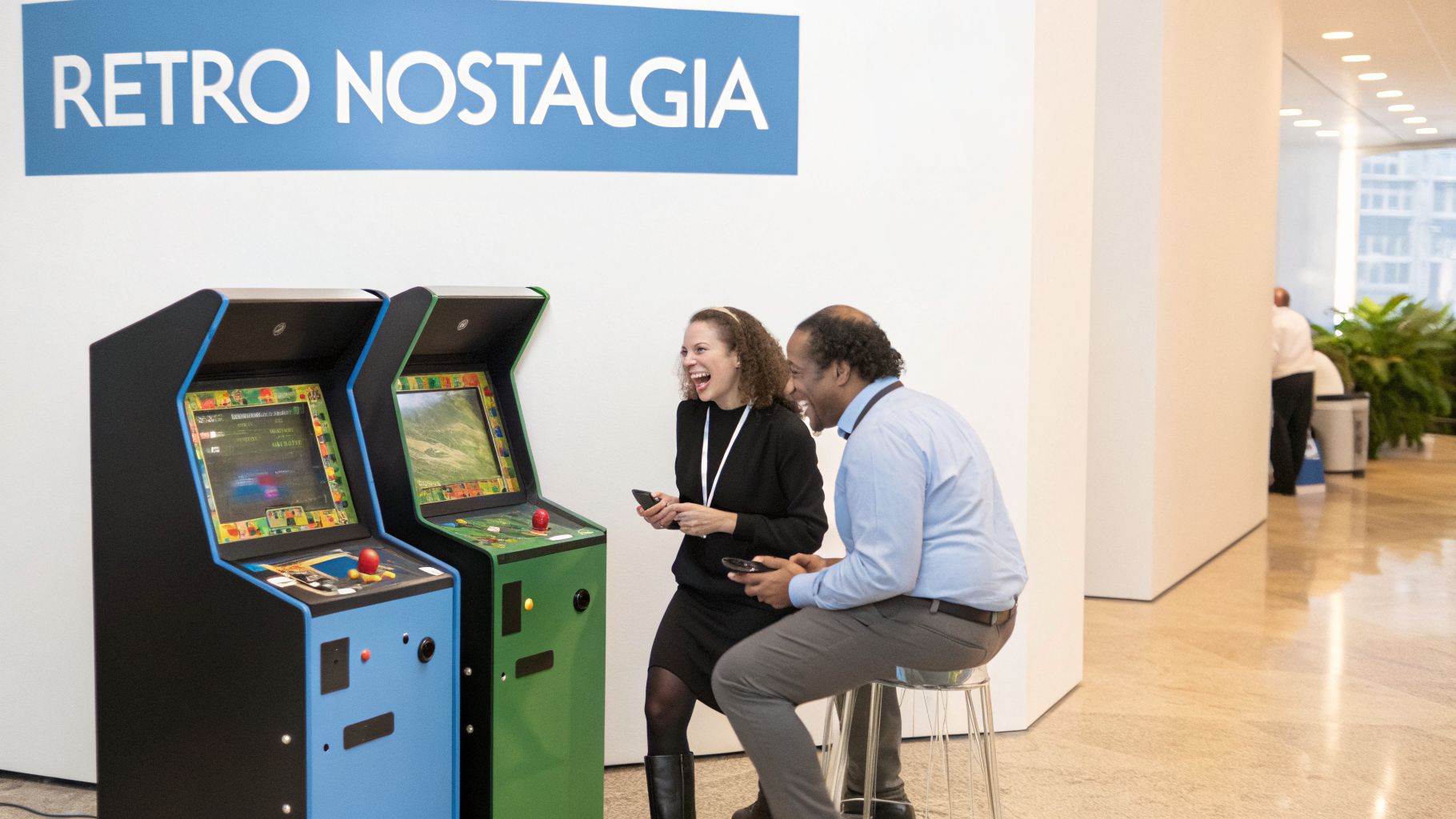
In a world full of digital entertainment that often keeps us apart, the appeal of a physical, shared activity is stronger than ever. Retro arcade machines offer something different: a real, tangible connection that gives people a genuine reason to gather, chat, and compete in a friendly, low-stakes way.
Think of it like this: streaming music is convenient, but putting on a vinyl record is an experience. The warm, authentic sound and the physical ritual create a much deeper, more memorable moment. Arcade machines work in the same way, turning attendees from passive observers into active players.
Tapping into the Power of Nostalgia
At their core, the magic comes from nostalgia marketing. These iconic cabinets instantly take guests back to simpler times, sparking fond memories of seaside arcades, youth clubs, and chippy runs. This shared cultural memory is an instant icebreaker, getting colleagues and strangers talking.
For most people, playing Pac-Man or Space Invaders isn't just about the game itself. It's about reliving a piece of their past. This emotional connection is a fantastic tool for event planners who want to build a warm, welcoming atmosphere.
It’s no surprise the retro scene is booming. The resurgence is so significant that in the UK, classic cabinets now make up about 20% of all installations in arcade bars and entertainment venues. This reflects a wider trend, where Europe holds 24% of the global arcade market.
More Than Games—They Are Interactive Centrepieces
It’s easy to dismiss arcade machines as just a bit of fun, but that’s a mistake. When used properly, they become interactive centrepieces that shape the whole feel of an event. They are natural magnets for engagement, drawing people in and giving them a reason to stick around.
The real value of a retro arcade machine isn't just the gameplay; it's the crowd that forms around it. It’s the cheers, the friendly rivalries, and the shared moments of triumph that turn a standard corporate function into a truly memorable occasion.
This vibrant energy is gold for any event, whether your goal is team building, networking, or brand activation. They naturally create focal points for:
- Friendly Competition: A high-score challenge on Donkey Kong can create a buzz that lasts all evening.
- Spontaneous Team-Ups: Co-op games like Gauntlet get people working together without even realising it.
- Effortless Conversation Starters: Guests have an easy, fun topic to break the ice, which helps break down social barriers.
Ultimately, these classic machines are masters of atmosphere. They fill any space with a sense of fun and excitement that people remember long after the last credit has been played, making them one of the most effective corporate event entertainment ideas you can find.
How Retro Gaming Boosts Corporate Engagement and ROI
Sure, the nostalgia factor is a big part of the appeal, but let's be honest: the real reason you put retro arcade machines at a corporate event is for the results. These aren't just fun distractions; when used correctly, they are a serious investment that pays dividends for event planners and marketing managers.
We've seen it time and again, from bustling trade show floors to exclusive brand activations. The unmistakable lights and sounds of classic arcade games act like a beacon, pulling attendees directly to your stand. That immediately translates into more footfall—the first and most critical hurdle for any event.
But getting people to your space is just the start. The real magic happens next.
Extending Dwell Time and Deepening Connections
Once you've grabbed their attention, the simple, addictive gameplay of a retro arcade keeps them there. This extended dwell time is where the value really lies. The longer someone stays at your booth, the more chances your team has to strike up a real conversation, share your brand’s message, and qualify them as a genuine lead.
For exhibition organisers, this is a game-changer. The post-pandemic demand for proper, in-person entertainment has shot up, and arcade machines are a reliable way to keep guests on-site and happy. If you want to dig deeper, the data on the growing arcade market shows just how much this trend is influencing events.
Arcade machines turn passive wanderers into active participants. Your event space becomes a destination, not just a walkway. That shift is fundamental to seeing a proper return on your investment.
Think about a typical trade show stand. A visitor might give your banners a 90-second glance before moving on. But if they stop for a quick game of Pac-Man, that interaction can easily stretch to five minutes or more. That’s your team’s perfect opening for a natural, no-pressure chat.
Creating Unique Lead Generation Opportunities
Beyond just holding people's attention, you can cleverly weave arcade machines into your lead generation. The competitive spirit of these games is the perfect vehicle for capturing contact details without the usual friction. Nothing works better than a classic high-score leaderboard.
Imagine running a Street Fighter II tournament or a simple 'highest score wins' on Galaga. To get their name on the board and be in with a chance of winning a prize, all a player needs to do is pop in their name and email. It feels like part of the fun, not a clunky data-capture form.
This gamified approach gives you several key wins:
- Voluntary Data Capture: People want to give you their details for a shot at glory. This means the leads you get are higher quality and already engaged.
- Memorable Brand Interaction: The experience is genuinely fun. They’ll remember your brand for the positive, competitive buzz, not for a hard sell.
- Social Media Amplification: Leaderboards, photos of top players, and winner announcements are all brilliant, shareable content that can push your event's reach far beyond the venue walls.
Fostering Team Building and Breaking Down Hierarchies
The benefits are just as powerful for internal corporate events. Arcade games are a fantastic leveller. When the CEO and a junior team member are locked in a frantic two-player battle, job titles simply disappear.
We find that cooperative games like Gauntlet or The Simpsons are especially good for team building. They literally force players to work together towards a shared goal, building communication and collaboration in a completely relaxed setting. That shared fun helps build much stronger, more authentic relationships that carry right back into the office, boosting morale and creating a properly connected culture.
Of course. Here is the rewritten section, adopting the voice, style, and formatting of the provided examples.
Choosing the Right Arcade Machines for Your Audience
Picking the right lineup of retro arcade machines isn't about just grabbing the most famous titles you can think of. It's a game of matchmaking. You have to think like a curator, carefully selecting each piece to match your event's specific goals and, most importantly, the people who will be playing.
The sheer variety available is fantastic, but it can feel a bit much when you're starting out. You've got everything from the classic uprights like Donkey Kong, to the more sociable cocktail tables and even multi-game cabinets that pack hundreds of titles into one box. The key is to step back from your own personal favourites and think strategically.
Aligning Games with Event Goals
First things first: what are you actually trying to achieve? Your answer will immediately cut your options in half. Are you looking to generate a high-energy buzz for a product launch, or are you trying to create a relaxed space where people can network?
For instance, a fast-paced fighter like Street Fighter II is an absolute magnet at a busy trade show. It creates a spectacle, draws a crowd, and gets people fired up. On the other hand, for a company team-building day, you might want something that encourages a bit more collaboration and chat. A cooperative classic like The Simpsons arcade game or even a puzzle game like Tetris works wonders here.
The real magic happens when your arcade setup feels like a curated collection, not just a random assortment of games. Each machine should have a clear purpose—whether that's to spark a bit of friendly competition, get people working together, or just provide a fun, nostalgic backdrop for conversation.
Getting this right is what separates a good event from a great one. The flowchart below maps out exactly how your primary objectives should steer your game selection.
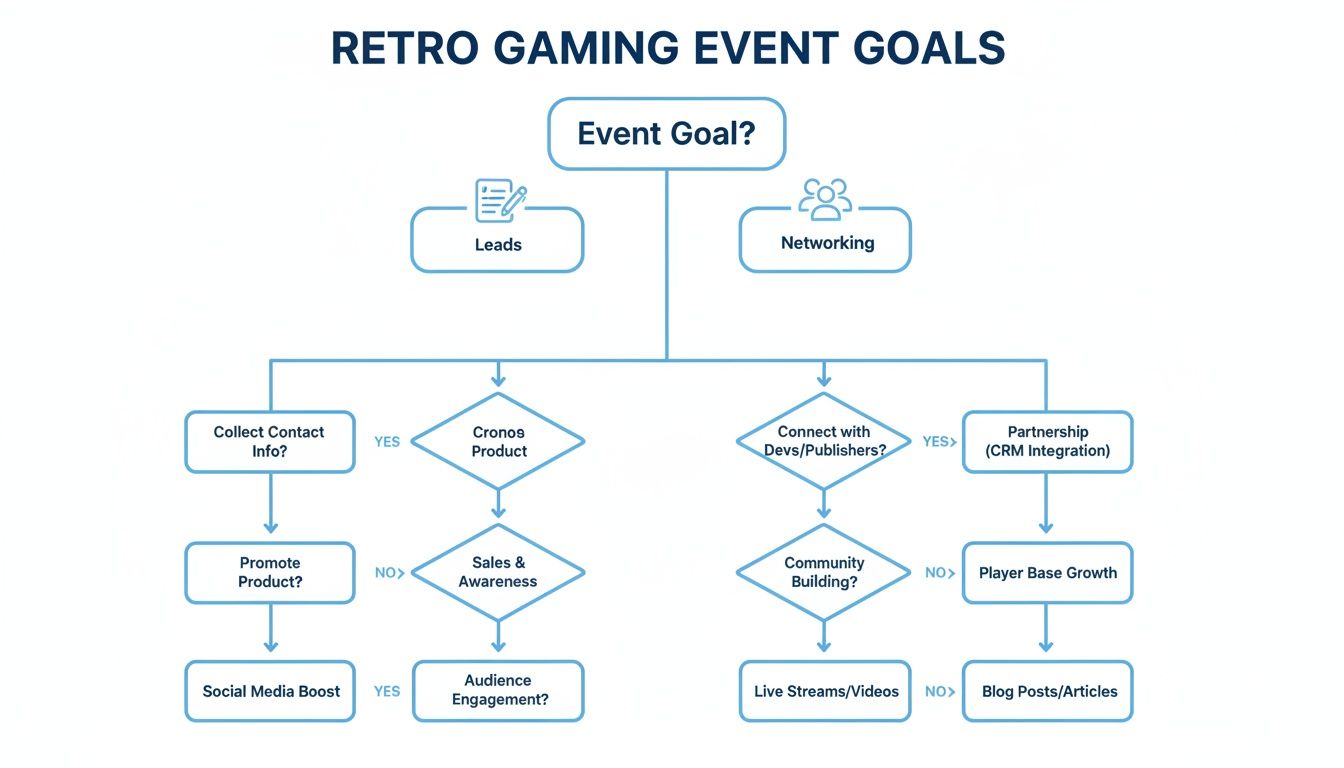
As you can see, there’s a clear line from your high-level goal to the perfect type of game. Whether you're chasing leads or building community, there’s a retro classic that’s perfect for the job.
Here’s a quick-reference table to help you match the right game to your specific objective. Think of it as a cheat sheet for building the perfect arcade lineup.
Matching Retro Arcade Games to Your Event Goals
| Event Goal | Recommended Game Type | Example Titles | Why It Works |
|---|---|---|---|
| Lead Generation | Fast, high-turnover, single-player | Pac-Man, Galaga, Donkey Kong | Quick play sessions mean more people can play (and be scanned). High-score challenges encourage repeat plays. |
| Networking | Cooperative or casual 2-player | Ms. Pac-Man (Cocktail), Bubble Bobble | Encourages conversation and light-hearted interaction. Cocktail tables let guests put down drinks and chat. |
| Team Building | Multi-player (3-4 players) | The Simpsons, Teenage Mutant Ninja Turtles | Requires communication and teamwork to succeed, fostering a sense of shared accomplishment. |
| Brand/Product Launch | Competitive 1v1 or Racing | Street Fighter II, Mortal Kombat, Out Run | Creates a high-energy spectacle that draws a crowd and generates buzz. Perfect for tournament-style play. |
Choosing a game that aligns with your core goal is the single most effective way to ensure the machines deliver real value and don't just sit in the corner looking pretty.
Understanding Your Audience Demographics
Once you know what you're trying to do, you need to think about who will be there. The age, gaming habits, and general interests of your guests are massive factors in deciding what will actually get played.
For a Broad Mix of Ages: You can never, ever go wrong with the golden age classics. I'm talking Pac-Man, Galaga, and Space Invaders. The controls are dead simple, and everyone from a CEO to a new intern can pick them up in seconds. They're the universal crowd-pleasers.
For a Younger, Competitive Crowd: If your event is for a more tech-focused or younger group, lean into the 90s. Two-player fighting games or frantic racers like Out Run are perfect for creating that high-octane, competitive vibe you're after.
For Fostering Conversation: For networking events where you want people to talk, cocktail table machines are your secret weapon. Their flat-top design is literally made for guests to place their drinks and chat while they have a casual game. Ms. Pac-Man is the king of this format.
Categorising Your Arcade Options
To make the best choice, you need to know what you're choosing from. Think of it like furnishing a room—each type of cabinet serves a different purpose and creates a different feel.
Upright Cabinets
These are the icons. The classic stand-up machines are the visual anchor of any arcade zone. They command attention and are perfect for single-player high-score battles or intense one-on-one showdowns. If you want to create that authentic arcade feel, you need a few of these.
Cocktail Table Cabinets
These are the social hubs. They are sit-down machines with the screen built into the tabletop, designed for a more relaxed, conversational experience. Stick these in your lounge areas or breakout spaces to give people a reason to linger and chat.
Multi-Game Systems
For pure bang-for-your-buck and variety, you can't beat a multi-game cabinet. These are modern units packed with hundreds of classic games. They let your guests pick and choose their own adventure, ensuring there's something for absolutely everyone. It's a brilliant way to cater to diverse tastes without having to hire dozens of separate machines.
Right, you’ve picked out the perfect retro arcade machines for your event. That’s the fun part done. But the real make-or-break moment comes down to logistics. Getting the practical side wrong is the fastest way to turn a brilliant idea into a mess on the day.
Think of it like setting up any complex piece of kit, whether it's for a conference or a flawless home theater systems installation. The success is all in the prep work. A bit of planning before the machines even roll up to the venue will save you from some major headaches and keep the focus exactly where it should be: on the fun.
The Essential Logistics Checklist
Before you sign on the dotted line, you need to run through a few crucial logistical checks. Getting these sorted early is non-negotiable.
First up, power requirements. Most individual cabinets will run off a standard 240V plug socket, but don’t take that for granted. If you’re creating a full "arcade zone" with several machines, you'll need to know exactly how many sockets you have and be certain you won’t trip the circuit. Always, always confirm the specific power draw with your supplier.
Next, and this is the one people forget: venue access. These machines are big, heavy, and definitely don't bend. You have to measure everything. Doorways, corridors, and especially lifts. Are there any awkward corners or flights of stairs? Any professional supplier will ask you these questions, but having the answers ready makes the whole process faster and avoids any nasty surprises.
The single best logistical decision you can make is working with a professional supplier. Their job isn’t just to drop off the games. It’s to manage the entire delivery, setup, and breakdown, including all the health and safety compliance that protects you and your guests.
When you hire experts, you're not just getting a machine; you’re buying peace of mind. To get a better idea of what's involved, it's worth looking into the details of professional arcade game rentals and what their service covers.
Turning Your Machines into Brand Ambassadors
With the practicalities sorted, it’s time to get creative. A retro arcade machine isn't just an activity; it's a blank canvas for your brand. This is where you can turn a classic game into a memorable touchpoint for your company.
The biggest impact comes from custom cabinet wraps. Picture a Pac-Man machine completely covered in your company’s colours and logo. Or a Street Fighter II cabinet themed around your latest product. These custom wraps are impossible to ignore and create fantastic, shareable moments for social media.
Beyond a full wrap, you can also consider these options:
- Branded Marquees: The light-up sign at the top of the cabinet is prime real estate. Customise it with your event hashtag or brand name.
- On-Screen Graphics: Your logo can be added to the game's attract mode screen or even as a subtle watermark during gameplay.
- Customised Control Decks: Add your brand colours or a small logo around the joystick and buttons for that extra premium finish.
This kind of customisation makes the machine a core part of your event strategy, not just a side attraction. It creates an experience that reinforces your brand in a genuinely engaging way, ensuring you’re remembered long after the event is over. A well-branded machine isn't just there to entertain; it’s there to communicate.
Maximizing Your Return on Investment with Arcade Rentals
Putting retro arcade machines at your event is a savvy investment, but you’ll need to prove it was worth the budget. To do that, you need a clear handle on the costs involved and, more importantly, a solid plan for measuring what you get back. Thankfully, tracking the return on investment (ROI) from an arcade hire is more straightforward than you might think.
First things first, let's talk about the money. Hiring costs aren't a simple, flat fee; a few different things will shape the final quote you receive from a supplier.
Understanding Hiring Costs
The price you'll pay typically boils down to a mix of these key elements:
- Duration of Hire: How long do you need the machine? A single evening for a party is very different from a three-day trade show or a month-long brand activation. Longer hires almost always come with a better daily rate.
- Number of Machines: Are you after one standout "hero" machine or a full-blown arcade zone? Most suppliers will offer a package discount for hiring multiple units.
- Type of Machine: A classic upright Pac-Man cabinet will have a different price point than a huge, four-player Teenage Mutant Ninja Turtles machine or a rare racing simulator.
- Customisation: If you go for bespoke branding, like a full vinyl wrap with your company logo, it’s an added cost. But it’s an investment that pays for itself in brand visibility.
Getting a grip on these variables means you can put together a realistic budget and compare quotes properly. But cost is only one side of the coin; the other is measuring the real value you get in return.
The true ROI of arcade rentals isn't just measured in pounds and pence. It's seen in the quality of leads generated, the buzz created on social media, and the lasting positive impression your brand makes on every single guest.
This is the shift in mindset you need—seeing these machines not as a simple expense, but as a powerful tool for hitting your business goals. And to prove that value to the higher-ups, you have to track your success.
Clear Methods for Measuring Success
To really get the most from your investment, you need to decide on your key performance indicators (KPIs) before the event even starts. What does a win look like for you? By setting clear targets, you can put simple tracking methods in place to gather the data you need.
Here are a few metrics you can actually measure:
- Lead Generation: A high-score competition is your best friend here. Get guests to enter their details (name, company, email) to get on the leaderboard. After the event, you have a ready-made list of qualified leads who actively engaged with your brand.
- Social Media Engagement: Come up with a unique event hashtag and get people posting photos with the branded machines. You can then track mentions, shares, and the overall reach across platforms like Instagram and LinkedIn.
- Brand Awareness and Recall: Send out a post-event survey and ask attendees what they remember most. If a high percentage of them mention "that fun arcade game at the [Your Company] stand," you've made a memorable impact.
- Booth Footfall and Dwell Time: Use a simple manual clicker or badge scanner to compare traffic to your stand against previous years. You can also just informally time how long people stick around to play—every extra minute is another opportunity for your sales team to connect.
For event planners aiming to create truly unforgettable moments, these machines are a key piece of the puzzle in modern experiential marketing activations.
Mini Case Study:
At a recent tech trade show, 'Company X' hired a branded Space Invaders machine for their booth. They ran a high-score competition with a great prize. The result? They not only doubled their usual booth footfall but also captured a 40% increase in qualified leads compared to the previous year. That simple bit of gamification gave them all the hard data they needed to prove the hire was money well spent.
Designing Creative Layouts to Maximise Engagement
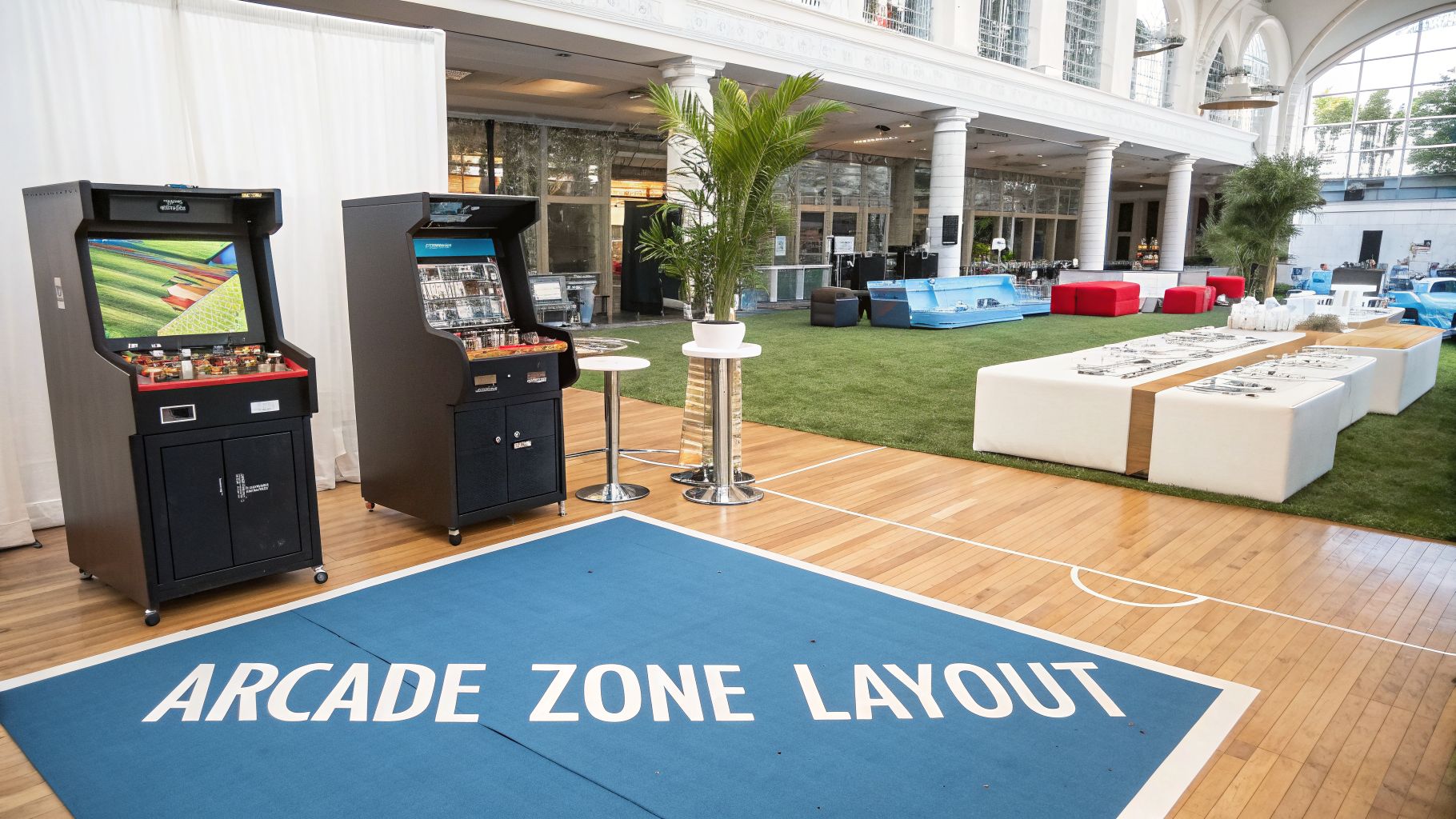
It’s easy to focus on which retro arcade machines you hire, but where you put them is just as critical. The right placement can transform a few games from a simple distraction into the interactive core of your event. Just scattering them around is a wasted opportunity; a bit of strategic thinking will pay dividends in guest interaction.
Think of it like being an interior designer for the event. Each machine has a job to do, and its position should be deliberate. A well-planned layout creates energy, sparks conversation, and makes sure every bit of your venue is being used effectively.
Creating a Dedicated Arcade Zone
One of the most reliable approaches we use is creating a dedicated ‘Arcade Zone’. This simply means grouping all your machines in one area, concentrating the buzz of lights, sounds, and friendly competition. This method turns the games into a destination, a high-energy hub that naturally draws people in.
What you're creating is a self-contained entertainment space. You can cordon it off with branded banners or use specific lighting to make it feel like a proper arcade. The collective energy of multiple games running at once creates a fantastic atmosphere that becomes a genuine feature of the event, not just a sideshow.
A well-designed Arcade Zone becomes the heart of your event's social activity. It’s where rivalries are born, high scores are set, and colleagues connect in a fun, informal setting. Concentrating this energy makes it more potent and memorable.
This setup is particularly effective for larger, multi-purpose events. It neatly contains the gaming activity, allowing other parts of the venue to be used for quieter networking or presentations without any noise bleed.
Scattering Machines to Encourage Exploration
On the other hand, you can do the complete opposite and scatter the machines throughout your venue. Placing a single cabinet in a quiet corner or a cocktail table machine in a lounge area encourages guests to move around and explore. Each game becomes a nice little discovery.
This works brilliantly for breaking up big, open-plan spaces and stopping guest traffic from bunching up in one area. It makes the whole event feel more dynamic.
Consider these placement ideas:
- Near the bar: A classic like Pac-Man or a cocktail table is a perfect fit for the bar. It gives guests something to do while waiting for a drink or having a chat.
- In breakout lounges: A sit-down cocktail cabinet creates a relaxed, social gaming spot that works perfectly alongside comfy sofas.
- At strategic waypoints: Place a machine near an entrance or an exit to another room. It acts as a fun landmark, guiding people from one area to the next.
Using a Hero Machine as a Focal Point
Another powerful strategy is to pick one standout ‘hero’ machine and make it an undeniable centrepiece. A four-player cabinet like The Simpsons or a deluxe racing simulator has serious presence and draws immediate attention.
Position this hero machine somewhere with high footfall, like the centre of the room or just inside the main entrance. You could even create a ‘challenge arena’ by placing two fighting game cabinets, like Street Fighter II, back-to-back. This naturally invites head-to-head competition and creates a spectacle that other guests will gather around to watch, amplifying the excitement.
Of course. Here is the rewritten section, crafted to sound like a human expert in the style of the provided examples.
Your Retro Arcade Hire Questions Answered
When you're pulling together an event, you've got a million things on your mind. We get it. That's why we've put together some straight answers to the most common questions we hear from organisers about hiring retro arcade machines.
Let's start with the big one: space. It's the first thing everyone asks. While these cabinets have a huge presence, you'll be surprised at how little floor space they actually need.
For a classic upright machine like Pac-Man or Galaga, you're looking at a footprint of roughly 1×1 metre. All it needs is a single, standard 240V plug socket. It’s an incredibly efficient way to make a big impact without totally rearranging your venue.
Just be sure to double-check the specs with your supplier. Some of the bigger beasts, like four-player setups or racing sims, will naturally demand a bit more room.
Nailing the Finer Details
Can the arcade machines be branded with my company logo?
Yes, and this is where you can get really creative. Professional hire companies should offer a whole range of branding options. You can go for something subtle, like adding your logo to the game's attract mode screen, or go all-out with a full vinyl wrap that transforms the entire cabinet. It’s a brilliant, tactile way to get your brand in front of people.
Are the machines difficult for guests to operate?
Absolutely not. The real magic of these retro arcade machines is their simplicity. They were designed from the ground up to be instantly playable. No complex tutorials, no steep learning curve. Just a joystick, a button or two, and you're in. We call it "pick up and play" for a reason—it means anyone, regardless of age or gaming experience, can walk up and have a great time straight away.