
Picture this: you turn a corner of your event space into a high-octane digital racetrack where guests go head-to-head for the top spot on the leaderboard. That’s the core idea behind online car simulators — connected driving experiences that can be as simple as a browser game or as complex as a full-motion F1 rig.
Think of them as portable 'digital racetracks' you can set up just about anywhere.
What Are Online Car Simulators Anyway?
It’s best to see 'online car simulator' not as one single thing, but as a whole spectrum of interactive driving. At its heart, it’s any driving setup that uses an internet connection to add another layer to the experience, whether that’s for live competition, tracking lap times, or sharing results.
What these simulators really do is create a focal point for competitive fun, giving you a brilliant platform for guests to engage with your brand.
This isn't just a niche hobby anymore, either. The global racing simulator market, which includes all these online platforms, was valued at over $0.9 billion in 2025 and is on track to hit $1.31 billion by 2030. Here in the UK, that growth is fuelled by our strong motorsport culture and rising interest in esports, which directly feeds the demand for simulators at events. You can dig into the global market trends to see the full picture.
The Main Simulator Categories
To figure out what works for an event, it helps to know the four main types. Each one strikes a different balance between realism, how easy it is for guests to use, and the technical setup required.
- Browser-based simulators: The most straightforward option. They run directly in a web browser, so there are no downloads needed, making them incredibly accessible.
- PC simulators: This is software you install on a computer. It opens the door to much better graphics, more realistic physics, and deeper customisation.
- Virtual Reality (VR) simulators: By using a VR headset, these simulators put the driver right inside the cockpit. You can’t get much more immersive than this.
- Cloud gaming simulators: These stream high-end racing games over the internet. You get the incredible graphics of a top-tier PC without needing a beast of a machine on-site.
Knowing the difference between these types is key. It allows you, as the event planner, to pick the right tool for the job. Are you after mass participation at a busy trade show, or an exclusive, high-end experience for a VIP product launch? This flexibility is what makes online car simulators such a potent addition to any event.
Choosing the Right Simulator for Your Event
Picking the right online car simulator for your event is a lot like choosing the right car for a race. You wouldn't enter a family saloon in a Grand Prix, and you wouldn't take a delicate Formula 1 car on an off-road rally. The best choice comes down to one thing: your event goals.
Not all simulators are built the same. Matching the technology to your objectives is the absolute key to making your event a success.
First things first, you need to be crystal clear on what you want to achieve. Are you after maximum brand exposure at a huge trade show, with thousands of people walking by? Or are you creating an exclusive, high-end experience for a small group of VIPs at a product launch? Answering this question will tell you whether to go for wide appeal or deep immersion.
Matching Simulator Type to Event Goals
If your event is all about maximum reach and lead capture—think a busy exhibition hall—a browser-based simulator is usually your best bet. These are incredibly accessible. Guests can jump on and play instantly on a tablet or screen without any downloads or complicated controls. This low barrier to entry means you get a high throughput of players, letting you engage more people and collect more data.
On the other hand, if your goal is to create a genuine ‘wow’ factor and a premium experience people won't forget, you'll need a more advanced setup. This is where high-fidelity PC and VR simulators, complete with physical racing seats and controls, really come into their own. They're a massive draw and deliver a level of immersion that leaves a serious impression.
This simple flowchart can help guide your initial decision-making process.
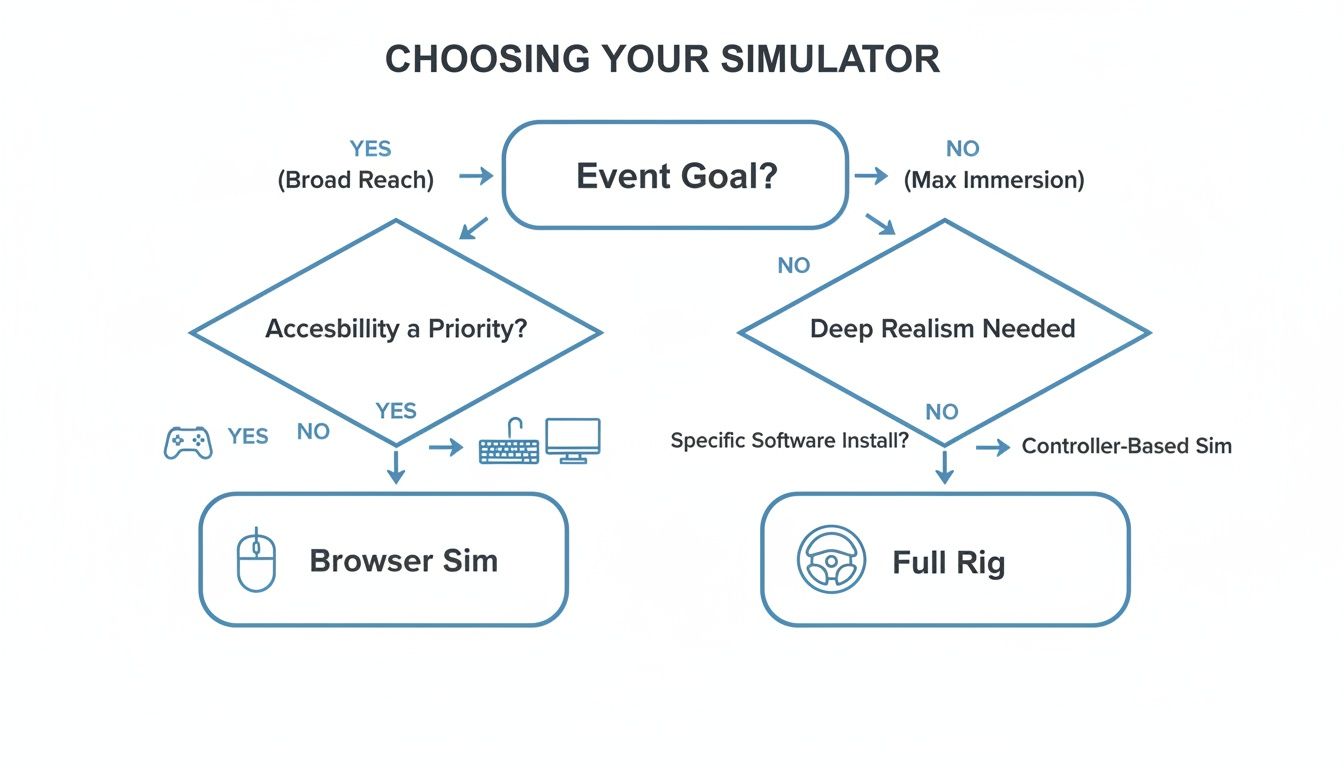
As you can see, the choice often boils down to a trade-off. Browser-based sims are fantastic for engaging a wide audience, while full rigs offer an unmatched, immersive experience.
A Deeper Look at Your Options
To help you decide, here is a quick comparison of the main types of online car simulators and what they're best used for in an event setting. Each one offers a different mix of user experience, technical needs, and branding potential.
Online Car Simulator Comparison for Event Planners
This table compares the key characteristics of different online car simulator types to help you choose the best fit for your event's objectives and budget.
| Simulator Type | User Experience | Technical Requirements | Best For | PSW Events Example |
|---|---|---|---|---|
| Browser-Based | Quick & casual. Simple tap/tilt controls. | Low. Tablet or touchscreen. | High-traffic areas, lead capture, broad audience engagement. | A branded racing game on iPads at an exhibition stand. |
| PC Simulators | Realistic. High-quality graphics & physics. | Moderate. Gaming PC, monitor, wheel & pedals. | Automotive events, brand showcases, enthusiast audiences. | A detailed track day experience featuring a client’s new car model. |
| VR Simulators | Fully immersive. Unparalleled sense of presence. | High. VR headset, powerful PC, motion rig. | VIP experiences, product launches, creating a huge 'wow' factor. | A full-motion VR rig that puts guests in the driver’s seat of a hypercar. |
| Cloud Gaming | High-end visuals, low hardware footprint. | Moderate. Stable internet, screen, controller. | Events with limited space but high-quality expectations. | Streaming a graphically intense racing game to a simple setup at a pop-up event. |
Understanding these differences is the first step toward building an attraction that really hits the mark.
Our Take: There's no single "best" simulator. The right choice is the one that perfectly aligns with your audience, budget, space, and ultimate goal—whether that's getting hundreds of new leads or creating one unforgettable moment for a key client.
To see how these concepts translate into professionally managed, real-world setups, take a look at our guide on driving simulators in the UK. It will give you a much clearer picture of what’s possible with a high-end, professionally run experience.
Why Physical Rigs Win the Engagement Race
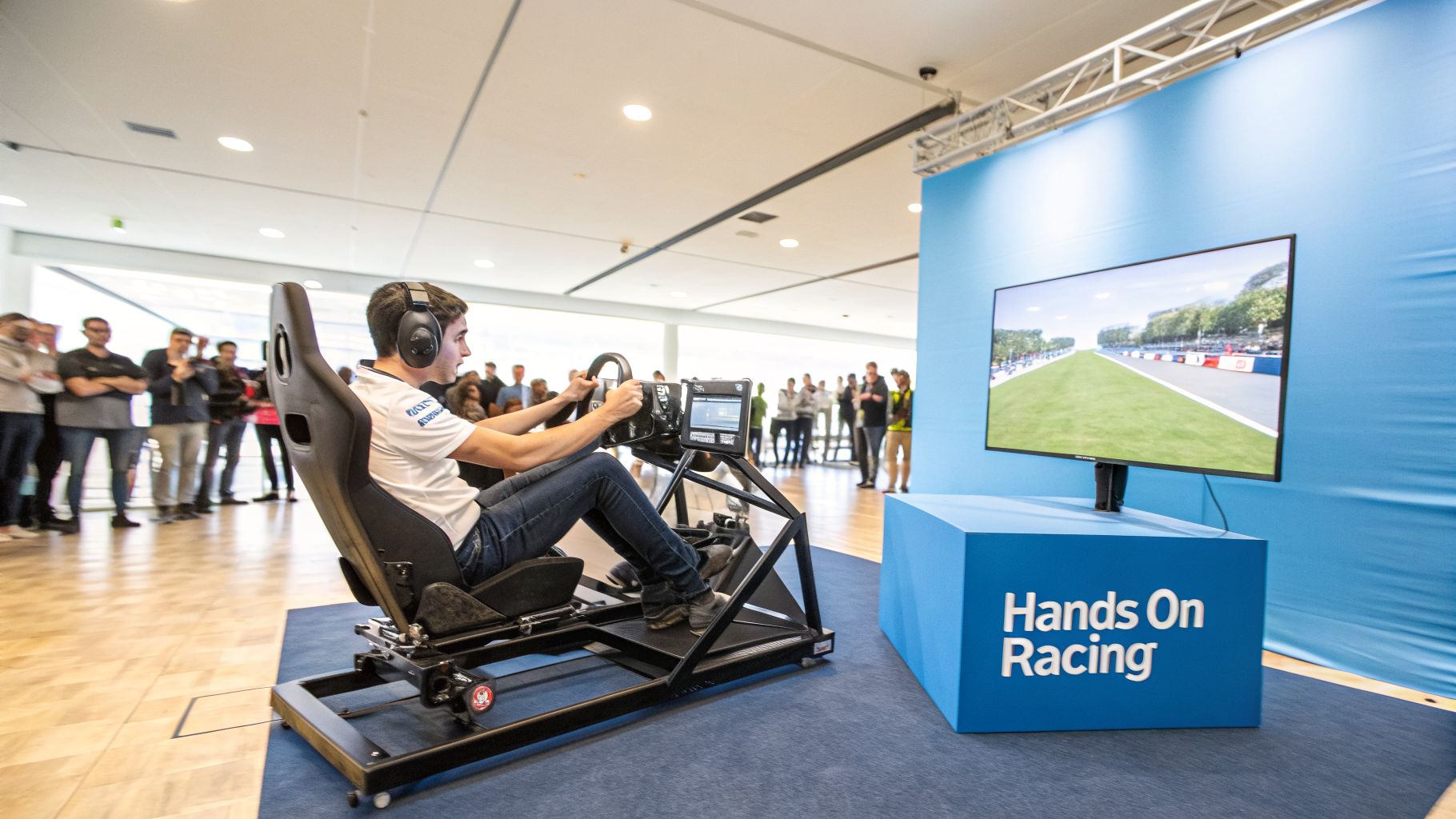
Let's be honest, there's a universe of difference between tapping on a phone screen and properly gripping a force-feedback wheel in a full simulator rig. While a browser game is easy for anyone to access, a professional physical setup completely changes the game for a high-impact event. It turns a simple activity into a genuine spectacle.
Think of it like this: you can stream a concert on YouTube, or you can be there in the front row, feeling the bass thumping in your chest. The physical rig is the live show. It delivers a multi-sensory hit that a purely digital game on a screen just can’t touch.
The Power of a Tangible Experience
The real pull of a physical rig comes from its tangible, immersive nature. It’s not just about seeing the track ahead; it’s about feeling every single bump, kerb, and loss of traction through the wheel and pedals.
That level of immersion is what draws a crowd. The sight of someone wrestling with the wheel, the roar of the virtual engine, the cheers from spectators—it all creates an undeniable social buzz. Suddenly, you don't just have a game; you have an attraction.
A professional simulator rig isn’t just an activity; it's a centrepiece. It creates a gravitational pull on the event floor, attracting attendees who might otherwise have walked straight past your stand. This immediately boosts footfall and brand visibility.
The numbers don't lie. Driving simulators are proven to increase visitor dwell time by as much as 40% at exhibitions. That gives your team a much wider window to connect with people and generate real leads.
Creating an Unforgettable Brand Moment
Beyond just pulling in a crowd, a physical simulator offers a premium, branded experience that makes your company look the business. The rig itself can be fully wrapped in your company’s colours and logos, turning the whole setup into a huge, three-dimensional advert.
This creates a powerful, lasting impression for both B2B and B2C events. The key benefits are clear:
- Sensory Immersion: Force-feedback wheels, professional pedal sets, and optional motion platforms make the experience feel incredibly real, creating memories that stick.
- Social Spectacle: A live leaderboard screen fuels natural competition and gets people sharing on social media, amplifying your brand’s reach for free.
- Premium Perception: A high-quality, professional rig signals that you invest in quality. This polished image reflects positively on your brand and what you offer.
For those who love the raw power and excitement that these rigs try so hard to replicate, checking out real-life supercar driving experiences is a great way to understand the thrill. When it comes to your event, hiring a physical simulator is a powerful way to create a memorable, high-impact activation that delivers a tangible return.
Weaving Simulators Into Your Event Strategy
Think of an online car simulator as more than just a fun gadget for your stand. It shouldn't be a last-minute thought. To get real value from your investment, it needs to be a central part of your event marketing plan, with clear goals for before, during, and after the show.
When you do this right, the simulator stops being a simple activity and becomes a powerful tool for generating leads, capturing data, and making your brand stick in people's minds long after they've left. You're not just offering entertainment; you're building a complete brand experience that pulls people in.
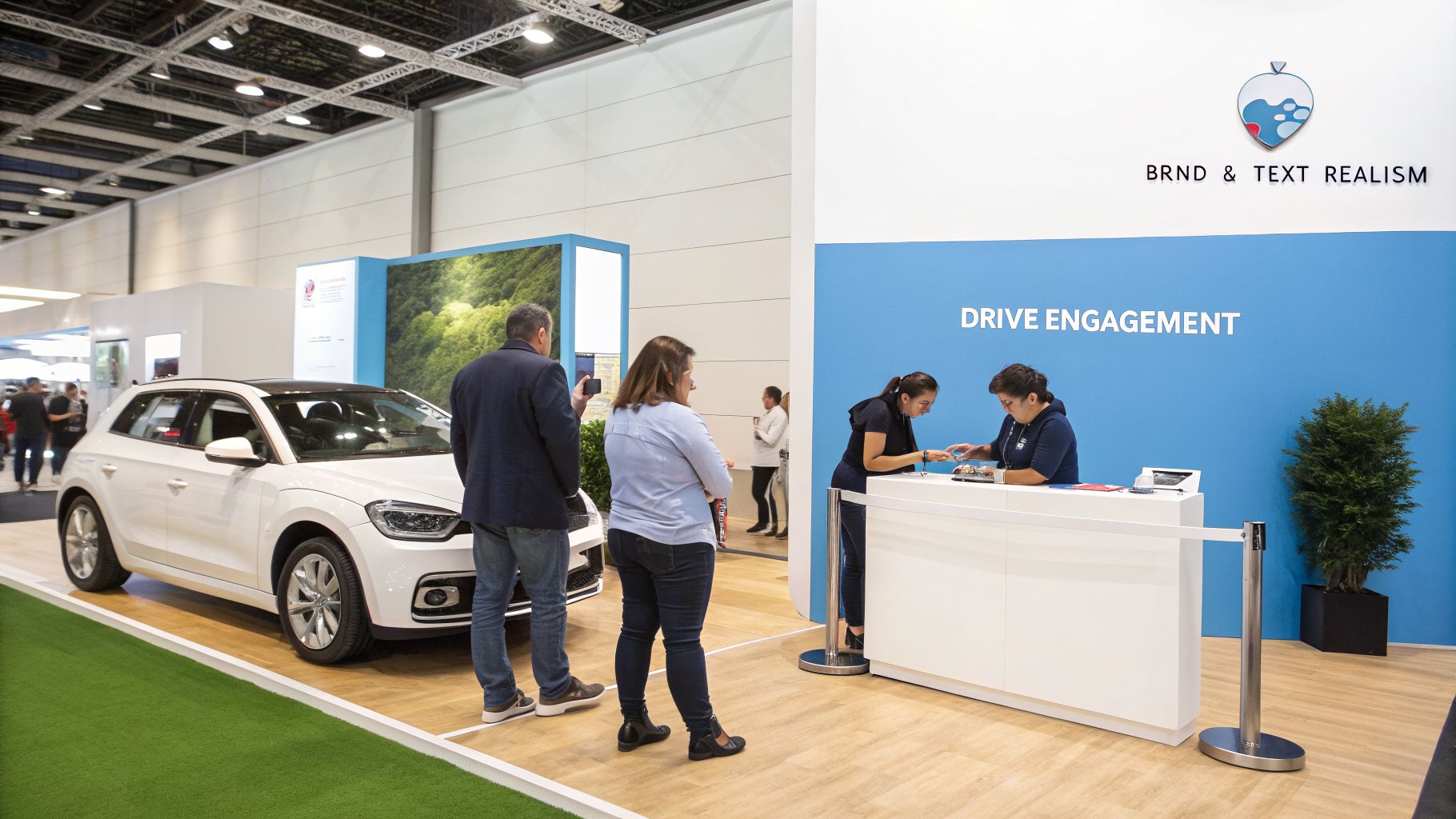
Promoting Your Simulator Attraction
The work starts well before the event doors even open. You need to build some buzz and give attendees a solid reason to hunt down your stand. A competition is the perfect way to do this.
Put your pre-event marketing channels to work:
- Email Campaigns: Send an announcement to your pre-registered list about a "Fastest Lap Challenge". Mentioning a prize for the winner gives people a real incentive to compete.
- Social Media: Share short, exciting videos of the simulator in action. Use the event's official hashtags and a direct call to action, like: "Think you’re fast? Come prove it at stand H54 and set the fastest lap!"
- Website Banners: Place a banner for the simulator on your event landing page. This will grab the attention of anyone looking up your company before the show.
This approach builds anticipation and guarantees you'll have a queue of interested visitors from the moment the doors open.
Integrating a simulator isn’t just about having an activity; it's about creating a destination. By promoting it beforehand, you turn your exhibition stand into a must-visit location on the event map, pulling in attendees who are already primed to engage with your brand.
Maximising On-Site Engagement
On the day, your focus shifts to creating an electric atmosphere of competition. A live digital leaderboard is a must-have. It shows everyone the current top times and encourages people to come back for another go, trying to climb the ranks. This friendly rivalry is fantastic for increasing dwell time at your stand.
To really dial up the excitement, consider adding live commentary. A host who can announce lap times, do quick interviews with the top drivers, and get the crowd involved creates a spectacle. This energy pulls in passers-by and makes even the spectators feel like they're part of the action. This is just one of many great interactive exhibition ideas that can make your stand the talk of the show.
Finally, don’t forget about branding. The simulator itself is a brilliant piece of marketing real estate.
- Physical Rig Branding: Customise the simulator's frame and seat with your company colours and logos.
- In-Game Customisation: Work with your provider to add custom car liveries that feature your branding. You can even place virtual trackside banners throughout the digital race environment.
This ensures your brand is front and centre, tying it directly to the high-energy, premium experience you're offering. Once the event is over, follow up with everyone who took part by sharing the final leaderboard results—a simple way to turn a fun five-minute interaction into a warm sales lead.
Getting the Simulator to Your Event: A Look at the Logistics
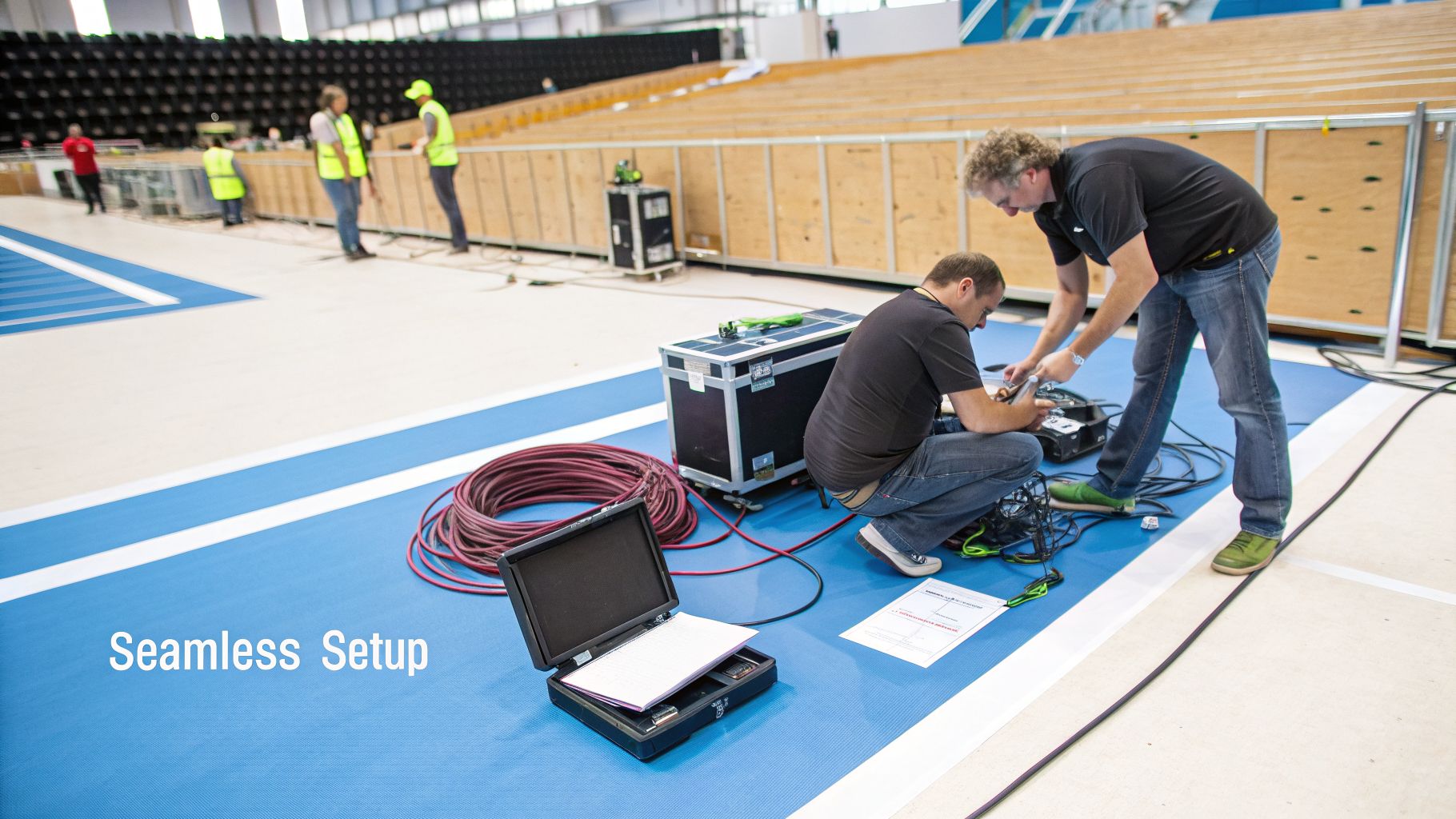
So, you’ve decided a high-end online car simulator is the right fit for your event. The next big question is a practical one: how do you actually get it there and make it work? This is where the logistics of space, power, and connectivity come into play, and for an event planner, it can feel like a lot to juggle.
The good news is, you don't have to navigate this alone. Working with a full-service provider takes the technical complexity off your plate. They handle everything from the initial site check and planning to delivery, setup, and running the simulator on the day. This leaves you free to concentrate on what matters most—your guests.
This end-to-end management is what separates a smooth, high-impact attraction from a stressful technical headache. It ensures all the crucial details, like a stable internet connection for online racing, the right power supply, and proper floor space, are sorted long before the doors open.
The Real Value of Turnkey Management
Choosing a full-service hire partner like PSW Events is about more than just convenience; it’s about peace of mind. The job isn’t just to drop off the equipment. It's to guarantee a flawless and safe execution from start to finish.
This is particularly true for corporate events held at large, professional venues. The UK driving simulator market is on track to bring in USD 127.9 million in revenue by 2026, and it's the compact simulators that are leading the charge, holding a 41.28% market share. Their smaller footprint and big impact make them ideal for spaces like ExCeL London, and an experienced partner knows exactly how to deploy them effectively.
A professional hire service delivers a complete solution, not just a piece of kit. This means you get expert staff to run the attraction, full liability insurance, and total compliance with all health and safety regulations.
Core Components of a Professional Service
A reliable hire partner will always provide these essentials as standard:
- Expert On-Site Staff: You'll have trained technicians to manage the rig and brand ambassadors to help guests, ensuring everyone has a brilliant—and safe—time.
- Comprehensive Insurance: Full public, product, and employee liability insurance is non-negotiable. At PSW Events, we're covered for £10 million, providing a crucial safety net.
- Health and Safety Compliance: All equipment is PAT tested. You’ll also receive full risk assessments and method statements to satisfy any venue requirements.
By bringing in an expert, the powerful technology that makes online car simulators so engaging becomes simple to manage. To get a better idea of the components and planning that go into a professional installation, take a look at our guide on a F1 car racing simulator setup.
When Should You Call In the Pros?
Figuring out whether to go it alone or hire a professional for your event's car simulators really boils down to what you're trying to achieve. While you can certainly get some engagement with off-the-shelf software, a professional partner is a must when the stakes are high and things simply have to go right.
It’s a classic risk vs. reward calculation. A DIY setup might look cheaper on paper, but it introduces a host of variables—technical glitches, a disjointed guest experience, and logistical nightmares. These problems can easily wipe out any initial savings, especially at a flagship event where your brand's reputation is on the line.
High-Impact Scenarios Need Professional Execution
Have a look at these common event goals. If your event fits into one of these categories, bringing in a professional service isn't a luxury; it’s essential for getting the results you need.
- Maximising Leads at Exhibitions: You need to draw a crowd and, more importantly, capture qualified leads. A professional provider delivers a reliable, high-draw attraction that keeps the queue moving, manages guest throughput, and plugs directly into your lead capture system without a hitch.
- Delivering a 'Wow-Factor' Product Launch: The goal here is to create an unforgettable centrepiece that shouts 'premium'. Experts can supply flawlessly executed, fully branded racing rigs that get people talking, generate social media buzz, and tie your launch to a feeling of quality and excitement.
- Creating Unforgettable Team-Building: You want a competitive, fun, and genuinely unique activity. A professional service handles everything from structuring the competition and running live leaderboards to providing on-site coaching, making sure the entire experience is smooth, engaging, and memorable for your team.
Choosing a professional partner like PSW Events transforms an online car simulator from a simple activity into a guaranteed strategic asset. You aren't just hiring equipment; you're investing in decades of experience, a portfolio of successful events, and complete logistical support.
This end-to-end management—covering planning, branding, on-site staffing, and full insurance—guarantees a high-impact, reliable, and completely stress-free activation. It’s the difference between crossing your fingers for a good result and guaranteeing an exceptional one that drives real business value.
Got Questions About Car Simulators? We’ve Got Answers.
When you're planning an event, you need practical, straight-to-the-point information. Here are the most common questions we get about hiring car simulators, with the honest answers you need to make the right call.
How Much Space Will I Actually Need?
This really comes down to which simulator you choose, as the footprint can vary quite a bit. A compact, single-screen racing rig—complete with a seat, wheel, and pedals—can slot neatly into a 3m x 2m area. It's a great option for tighter exhibition stands or venues where every square metre counts.
On the other hand, if you're looking for a real showstopper like a full-motion Formula 1 simulator, you'll need to think bigger. These setups, often featuring multiple screens or even a full car chassis, require a footprint of up to 6m x 3m. This gives you enough room for the rig itself, any necessary safety barriers, and space for a crowd to gather and watch. Always double-check the exact dimensions with us beforehand.
Can We Brand the Simulators with Our Company Logo?
Of course. This is where a professional simulator hire really shines. The customisation options go far beyond just sticking a logo on the side; we can integrate your brand into the entire experience.
Our Take: Proper branding turns the simulator from just a fun activity into a memorable part of your marketing. When your logo is on the car and the track, you're tying your brand directly to the adrenaline and excitement of the race, which is something people don't forget.
Here’s what you can brand:
- The Physical Rig: The simulator chassis, seat, and any surrounding barriers can all be wrapped in your company’s colours and logos.
- The In-Game Experience: We can place your branding on digital trackside banners, design custom liveries for the cars, and feature your logo on the live leaderboards.
Are Simulators Okay for Guests Who Aren't Gamers?
Yes, absolutely. They’re designed for everyone, not just seasoned gamers. The secret is the expert staff who run the simulators on the day.
Our team can tweak all sorts of settings behind the scenes. For a complete novice, we can enable assists like automatic gears, traction control, and braking assistance. This makes the car much more forgiving and easier to handle. Our staff are also on hand to offer a bit of friendly coaching, helping first-timers get comfortable and ensuring everyone, regardless of skill, has a brilliant time behind the wheel.
What's the Real Advantage of a Physical Simulator?
The biggest difference between a proper physical simulator and just playing a game on a screen is the immersion and spectacle. It’s one thing to see a race car, but it's another thing entirely to feel it.
The force-feedback from the steering wheel pulling against you in a corner, the resistance of the pedals, and the support of a proper racing seat create an experience that a simple controller can't match. This physical presence becomes a centrepiece for your stand, naturally drawing a crowd, fuelling friendly competition with leaderboards, and creating a buzz that gets people talking.