
Your product launch event is won or lost long before the first guest walks through the door. Success is forged in the early weeks of planning, where a clear vision gets hammered into a practical, actionable roadmap. This isn't about ticking boxes on a checklist; it's about defining precisely what a win looks like for your business.
Laying the Groundwork for a Memorable Launch
It all starts with a simple question: "Why are we really doing this?" And the answer has to be more than just "to launch a product."
Are you aiming to capture 50 high-quality B2B leads? Maybe the goal is to land features in three major industry publications. Or perhaps you're looking to create an undeniable wave of social media buzz that propels your product into the market.
Defining Your Objectives and KPIs
Without clear objectives, your event is just an expensive party. To turn it into a strategic business tool, you have to tie every single activity back to specific, measurable goals. These are your Key Performance Indicators (KPIs), and they’ll become the true north for your entire event strategy.
Think about what really matters and build your KPIs around that. For example:
- Lead Generation: Generate 150 qualified leads and aim to convert 20% into sales meetings within 30 days post-event.
- Brand Awareness: Achieve 500,000 social media impressions with the event hashtag and secure 10 mentions from key industry influencers.
- Sales Impact: Drive a 15% lift in pre-orders or direct sales from attendees in the month following the launch.
Having these concrete targets transforms your product launch from an expense into an investment with a clear, measurable return. When you define these KPIs early, you empower your team to make smarter decisions on everything from catering to guest speakers.
Building Your 16-Week Strategic Timeline
One of the biggest mistakes I see in corporate event planning is drastically underestimating how much time it takes to pull off a flawless execution. A 12- to 16-week timeline isn't just a nice-to-have; it's essential for avoiding last-minute chaos and securing the best vendors, venues, and talent. Trying to cram it all into a few weeks inevitably leads to compromises on quality and paying a premium for everything.
A well-structured timeline is your single greatest defence against unforeseen challenges. It creates accountability, clarifies who depends on whom, and ensures critical milestones are hit without panic.
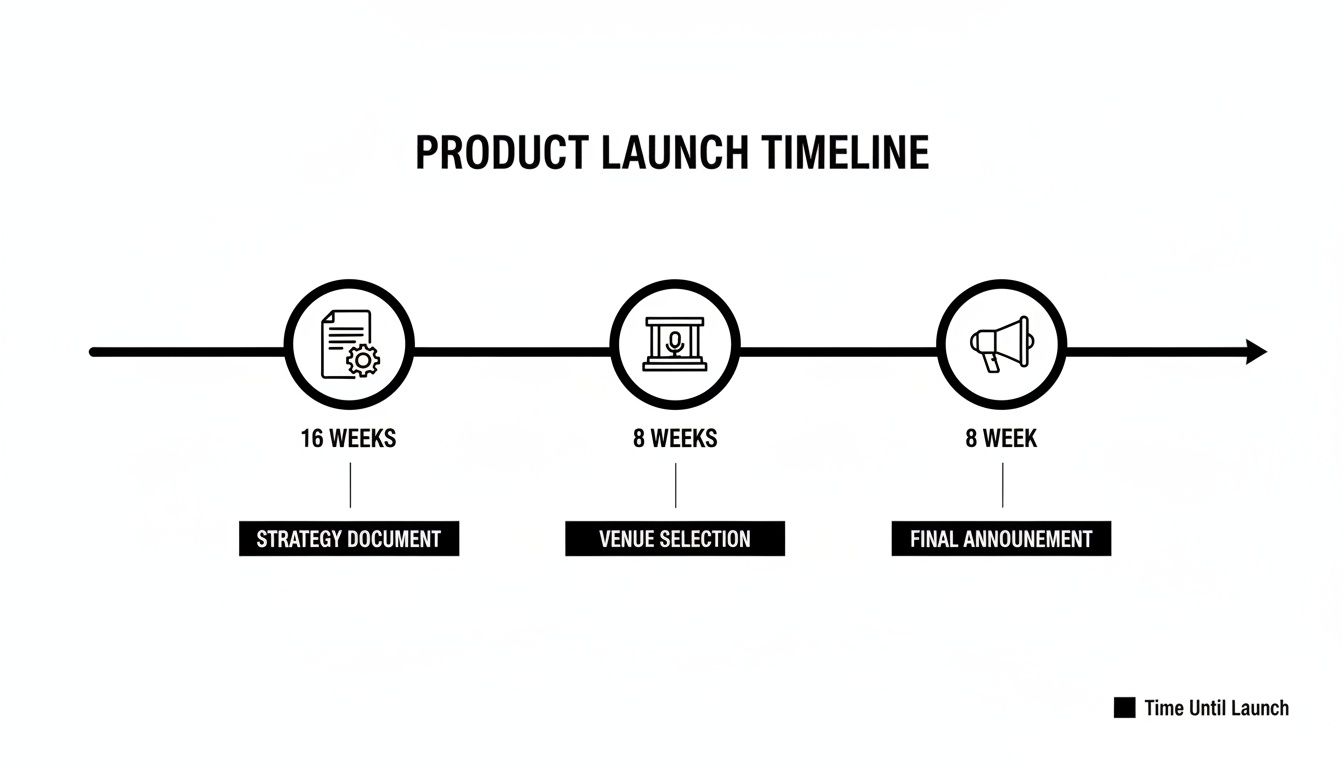
The best way to visualise this is to break the planning process down into manageable phases, from initial strategy all the way to the final execution.
Here’s a high-level look at what a typical 16-week timeline involves. It gives you a clear picture of the flow and prevents critical tasks from slipping through the cracks.
Example 16-Week Product Launch Event Timeline
| Phase | Weeks Out | Key Activities |
|---|---|---|
| Foundation & Strategy | 16–12 | Define objectives & KPIs. Finalise budget. Create core messaging. Identify target audience. |
| Venue & Key Vendors | 12–8 | Research & book venue. Source quotes for A/V, production & catering. Secure keynote speakers/talent. |
| Marketing & Promotion | 8–4 | Launch event website/landing page. Begin email marketing. Announce on social media. Start PR outreach. |
| Logistics & Finalisation | 4–1 | Finalise guest list & send reminders. Confirm run sheet. Brief all staff & vendors. Prepare on-site materials. |
| Execution & Follow-Up | 0 | Event day! Execute run sheet flawlessly. |
| Post-Event | 1+ | Send thank-you emails. Follow up with leads. Analyse KPIs & report on ROI. |
This table shows how foundational strategy needs to be locked in months ahead, while major logistics like booking a venue happen around the halfway mark. This leaves the final crucial weeks for promotion and nailing down the finer details.
This structured approach is more important than ever. The UK events industry is an absolute powerhouse, contributing £10.9 billion to the economy in 2023—a 17% increase from the year before. With the global market valued at £34.3 billion, brands are investing heavily in live experiences to make an impact, which only raises the stakes for every single launch. Getting your planning right from day one is non-negotiable.
Choosing Your Venue and Crafting the Atmosphere
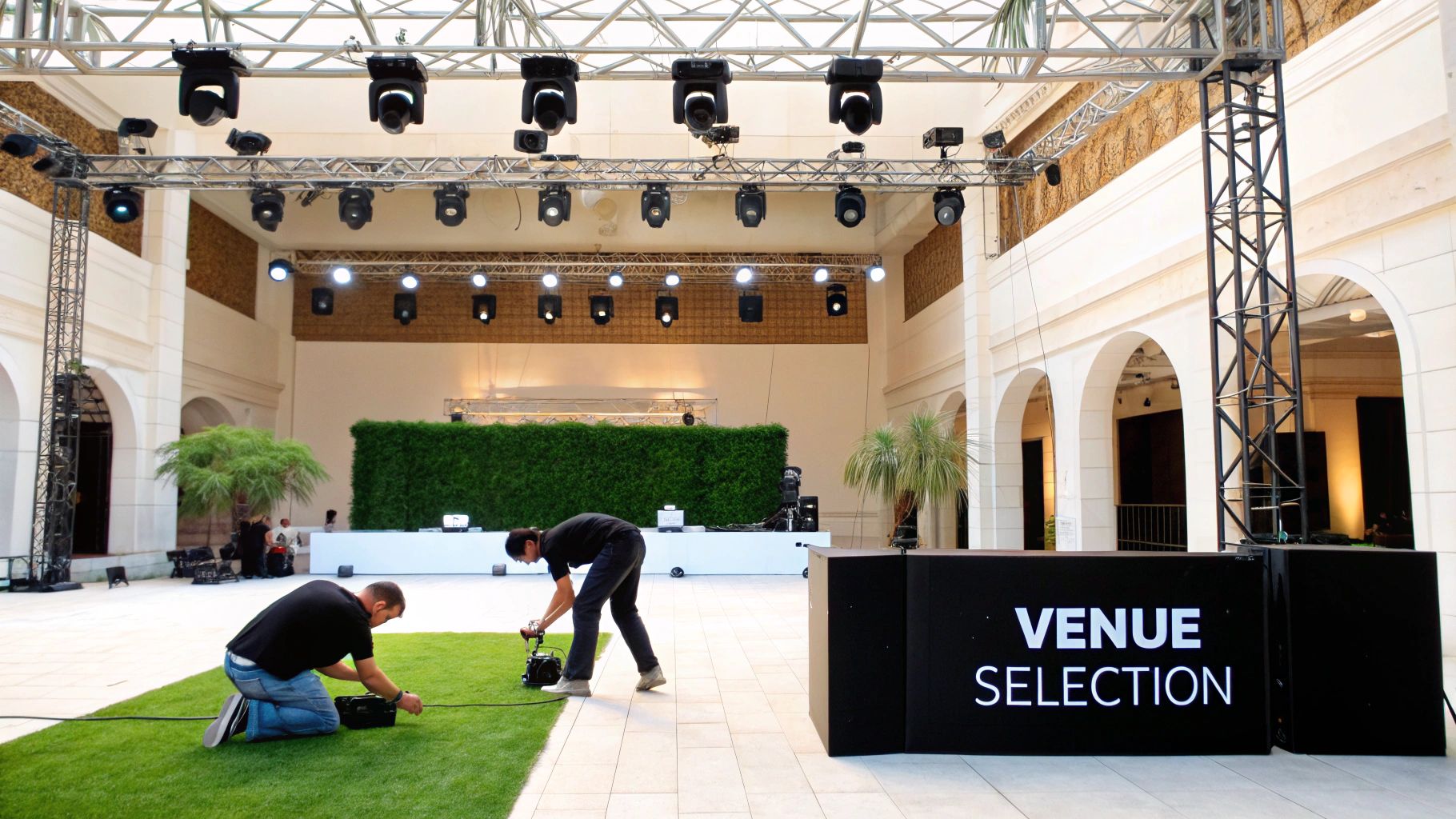
Your venue is so much more than just four walls and a roof; for one day, it is your brand. Getting this right is a cornerstone of solid product launch event planning. The goal is to find a space that doesn’t just fit everyone in, but actually tells part of your product's story. The right venue makes your message sing; the wrong one creates a jarring disconnect that can cheapen the whole experience.
Think about it. Launching a sleek, minimalist tech gadget in a rustic, country barn just sends a confusing message. On the other hand, an industrial-chic warehouse with exposed brick and soaring ceilings could be the perfect backdrop for an innovative new software platform. The atmosphere has to feel like a natural extension of the product itself.
Looking Beyond Capacity and Cost
When you're scouting locations, it's all too easy to get fixated on the two big questions: how many people can it hold, and how much does it cost? Of course, those are crucial, but they're just the starting point. A proper site visit means looking much, much deeper.
As you walk through a potential space, you need to be thinking about every detail that affects the guest experience and what your production team can pull off.
- Accessibility and Transport: How simple is it for people to get there? Check for nearby public transport, look at the parking situation, and confirm it's fully accessible for anyone with mobility needs.
- Technical Infrastructure: Does the venue have enough power for your lighting, sound, and AV rigs? What’s the Wi-Fi really like? These aren't minor details—they can make or break live demos and kill any social media buzz.
- Brand Alignment: Just stand in the middle of the room and ask yourself, "Does this feel like us?" The architecture, the decor, even the neighbourhood it's in—it all adds to the vibe.
When you get to the contract stage, don't be afraid to ask for absolute clarity on what's included. I've seen budgets get blown apart by hidden costs for staffing, cleaning, or being forced to use pricey "preferred" suppliers. Always ask about their rules on branding, load-in times, and noise levels.
Designing an Immersive Production Experience
Once you've locked in the venue, the real fun begins. This is your chance to turn an empty space into a world that grabs your audience from the second they walk in. Your production elements—the lighting, the sound, the staging—are the tools you'll use to direct their focus, build emotion, and create those "wow" moments.
Great production isn't about being the loudest or brightest. It’s about being strategic. A sudden, dramatic lighting change can snap everyone's attention to the stage for a keynote. A carefully chosen soundtrack can create a sophisticated, exclusive feel or a high-energy party atmosphere. You're essentially guiding your guests on an emotional journey using sensory cues.
From Blueprint to Reality
Bringing this vision to life means working hand-in-glove with your audio-visual (A/V) and production partners. These are the experts who know how to translate your creative ideas into technical reality. A good A/V team doesn't just drop off equipment; they help you design the entire experience.
Here’s what that collaboration looks like:
- Stage Design: This is the focal point. Work with your team to design something visually stunning that’s also practical for presenters and gives everyone in the room a clear view.
- Lighting Scheme: Use light to paint the room with your brand colours. You can use dynamic, moving lights to build hype for the big reveal, then switch to softer, focused lighting for the networking part of the evening.
- Audio Engineering: Crystal-clear sound is completely non-negotiable. Your audio setup has to be tailored to the room's acoustics to avoid weird echoes or dead spots, making sure every word lands with impact.
For a recent automotive launch, we used custom gobos to project the car's silhouette onto the venue walls, building suspense before the vehicle was even seen. We paired this with a deep, pulsing soundtrack that mimicked a heartbeat, getting faster and louder right up to the final reveal. That mix of light and sound turned a simple unveiling into a heart-stopping moment people were talking about long after they left. It's that level of detailed, thoughtful production that separates a standard announcement from a truly unforgettable launch.
Creating Unforgettable Experiential Moments
In a world drowning in digital noise, it’s the real, hands-on experiences that genuinely connect with people. This is the absolute core of planning a product launch event that works – you have to turn passive attendees into active participants who will remember your product long after the canapés are gone. The aim is to build an interactive playground for your brand, not just another slide deck presentation.
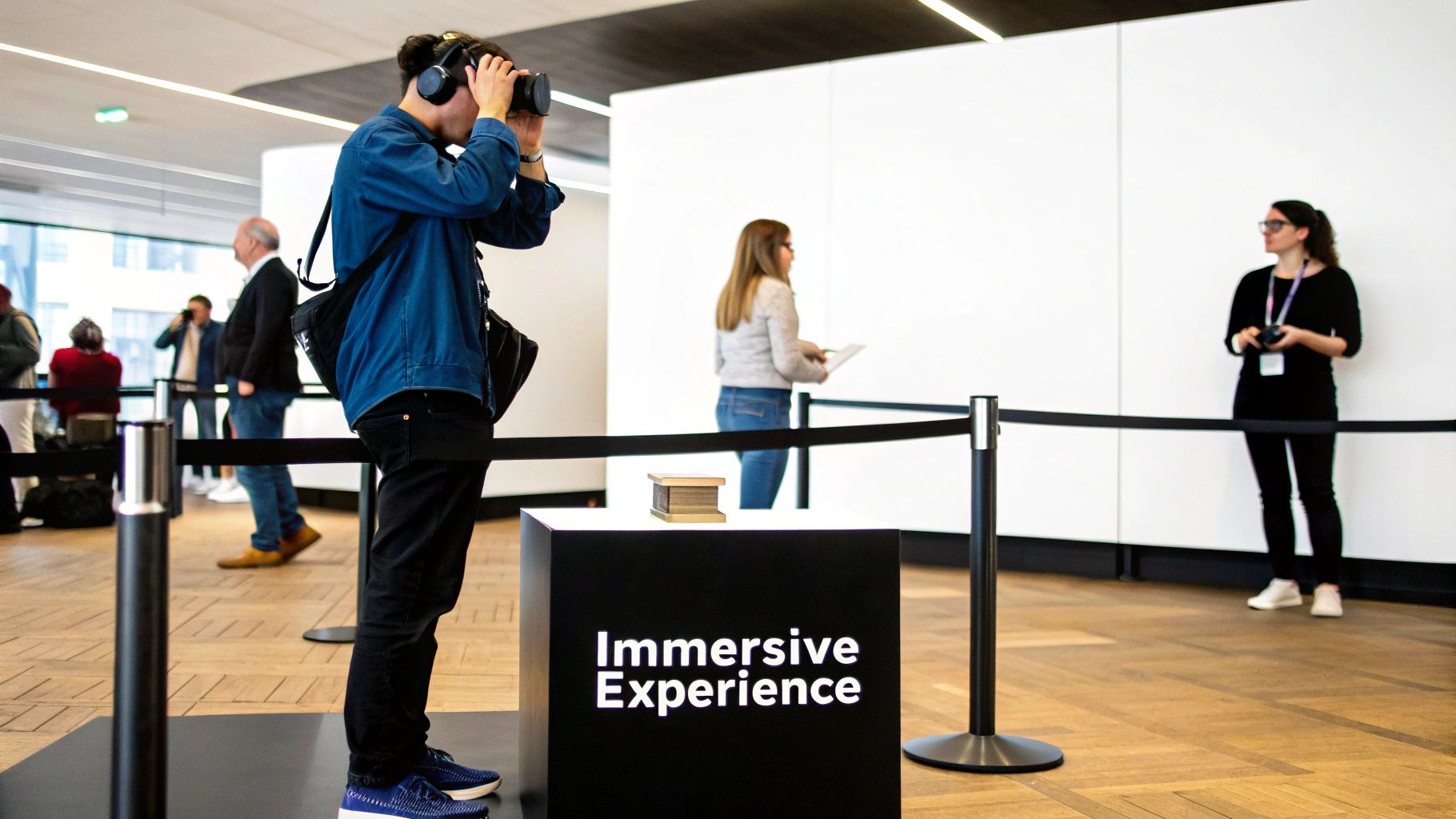
This isn’t just a fleeting trend; it’s a clear signal of what audiences are crying out for. Recent figures from the UK event scene show that face-to-face is king, with a massive 95% of exhibitors favouring in-person experiences over going virtual.
What's more, 64% of consumers say they feel more positive about a brand after getting hands-on with it at a live event. That’s a feeling that translates directly into loyalty and future sales.
Choosing Activations That Align With Your Brand
The secret to a knockout experiential activation is simple: authenticity. Just throwing in a flashy gimmick for the sake of it never lands well. The experience has to feel like it belongs to your product and its story. The best attractions take your core message and make it tangible, giving guests a memorable way to connect with your brand’s personality.
Let’s think about a few scenarios:
- Launching a high-performance luxury car? An F1 racing simulator is a no-brainer. It lets guests feel the precision engineering and thrill that your brand is all about, forging a powerful emotional connection.
- Unveiling some innovative new software? A futuristic VR challenge can plunge attendees into a world powered by your tech. You’re showing them what it can do, not just telling them.
- Introducing a new sportswear line? Get people moving with an interactive sports game, like a digital climbing wall or a rugby simulator. It immerses guests in the active lifestyle your brand champions.
The best corporate event entertainment ideas are the ones that just make sense for the product. The activation should be so on-brand that it’s impossible to imagine it at a competitor's launch.
The most powerful experiential moments are born from relevance. The 'wow' factor doesn't come from the technology itself, but from how cleverly that technology is used to tell your product's story and create a genuine, shareable memory.
Integrating Experiences for Maximum Impact
Once you’ve landed on the perfect attraction, the real logistical work begins. You can’t just plonk a massive simulator in the middle of the room and hope for the best. Integrating it requires careful thought to make sure it elevates the event, rather than causing chaos. The flow of the guest journey is everything.
You’ll need to work hand-in-glove with your venue and suppliers to nail the practicalities. This means getting the floor plan right, ensuring clear sightlines, enough space for people to queue, and easy access without creating frustrating bottlenecks. Map out the guest's path from the moment they walk in, to the main stage, to the interactive zones, and on to the bar. Every transition has to feel effortless.
To get people buzzing in the moment and spread the word online, think about using dynamic social media walls. These screens can pull in live posts using your event hashtag, creating a brilliant feedback loop that encourages more people to share what they’re seeing and doing. It transforms hundreds of individual experiences into one big, collective conversation, pushing your launch's visibility far beyond the four walls of the venue.
Getting Logistics, Branding, and Lead Capture Right
Every slick, seamless product launch you’ve ever attended is built on a mountain of behind-the-scenes logistics. Getting this right is what separates a good event from a truly great one. It’s the invisible framework that makes guests feel looked after and ensures your message lands perfectly, without a single technical hiccup or awkward queue.
This is the operational engine of your launch. We’re talking about everything from a buttery-smooth guest registration process to juggling dozens of suppliers and making sure every health and safety box is ticked. When the machine runs quietly in the background, the magic can happen out front.
Weave Your Brand Into Every Single Detail
Branding a product launch is so much more than sticking your logo on a few banners. True brand immersion is about creating a consistent, cohesive world where every touchpoint—from the first email to the last goodbye—screams your brand.
Think about the entire journey from your guest's perspective:
- Digital Invitations: This is your first impression. It needs to perfectly set the tone and visually align with your brand.
- Event Signage: Welcome boards, directional signs, even the little labels on the canapés should all share the same fonts, colours, and voice.
- Staff Uniforms: Kitting your team out in branded gear makes them easy to spot and gives you a polished, unified presence.
This isn't just about looking good; it's about creating an atmosphere. When you nail the details, guests feel like they’ve stepped directly into your brand’s universe for a few hours. To really drive the message home, think about including some genuinely useful and effective promotional products. The right item won’t just get tossed in a drawer; it’ll serve as a tangible reminder of a great experience.
Move Way Beyond the Business Card Bowl
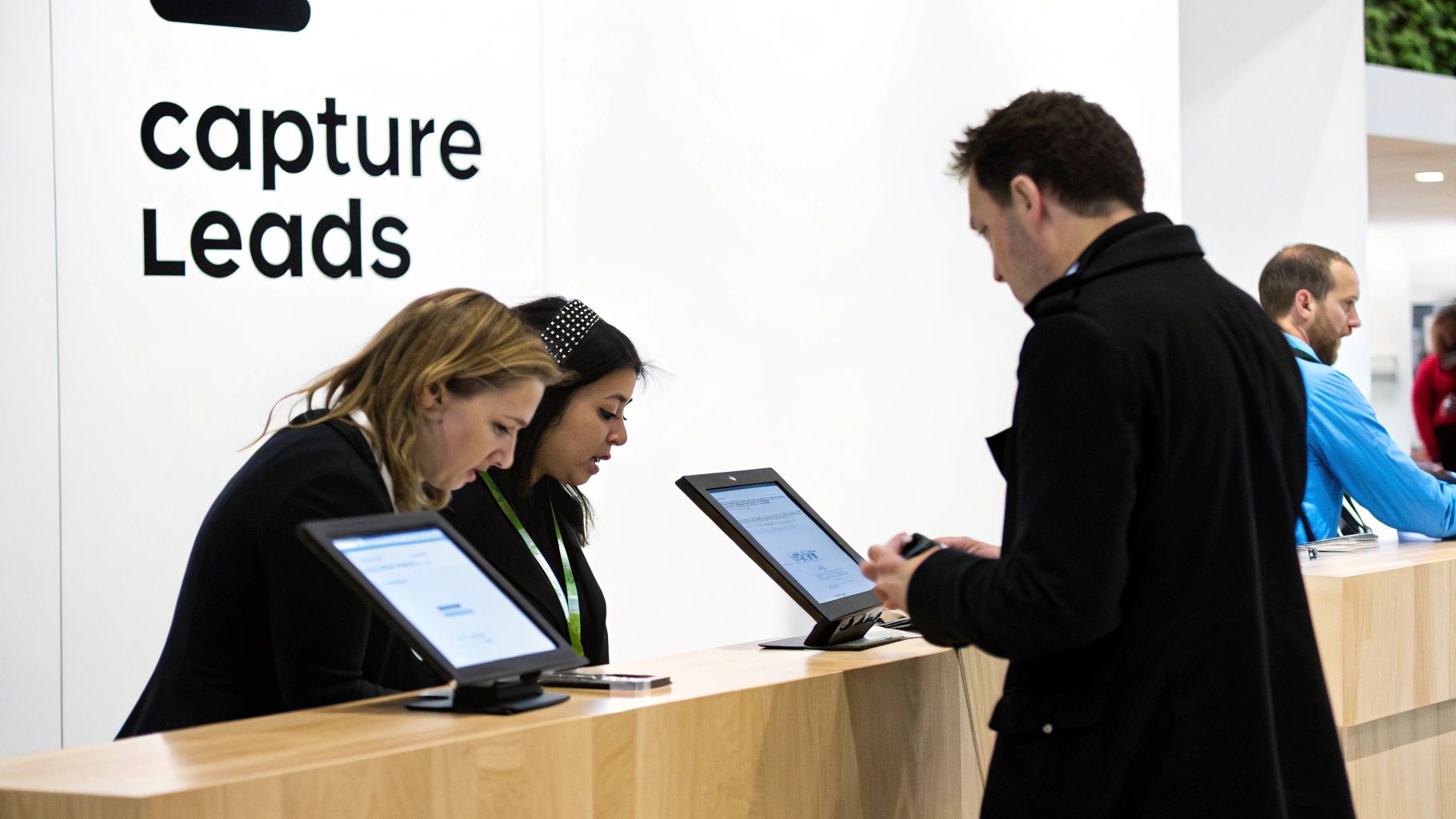
Let’s be honest: for most B2B product launches, the number one goal is to fill the sales pipeline. And the days of leaving a fishbowl out for business cards are, thankfully, long gone. Today's lead capture has to be as smart and slick as the rest of the event.
The trick is to make data collection feel like a natural part of the experience, not a clunky chore. Modern approaches are all about offering value in exchange for details. Want a go on the racing simulator? Just scan this QR code. Keen to try our VR demo? Pop your details in here. This gamified approach turns a transaction into an interaction.
The best lead capture strategies are frictionless. They integrate into activities guests want to participate in, turning a data-gathering moment into a memorable brand interaction.
Technology is your best friend here. A bespoke event app can be a game-changer, allowing guests to check in, connect with other attendees, and register their interest in a follow-up, all from their own phones. It puts them in control.
Modern Lead Capture Methods for Live Events
The right method really depends on your crowd and what you want to achieve. Are you going for sheer volume of contacts, or are you after richer, more qualified data? Here’s a quick rundown of how some popular techniques compare.
| Method | Effectiveness | Guest Experience | Best For |
|---|---|---|---|
| QR Code Scanners | High | Fast & Seamless | Capturing high volumes of basic contact info quickly at entry or activity stations. |
| Branded Games | Very High | Fun & Engaging | Events with interactive zones where data capture is a prerequisite for participation. |
| Event App Networking | Medium | Empowering | Tech-savvy audiences at conferences or longer events where networking is a key draw. |
| RFID Wristbands | Very High | Effortless | Large-scale events wanting to track attendee journeys and enable cashless payments. |
Ultimately, you want data collection to be so seamlessly woven into the fabric of the day that your guests barely notice it happening. If you’re looking for inspiration, checking out some innovative interactive exhibition stand ideas can show you how tech and gamification can make lead capture feel more like entertainment than an obligation.
By nailing the operational details, wrapping your brand around every moment, and using smart lead capture tools, you do more than just create a bit of buzz. You build the foundation for real business relationships and a measurable return on investment. You walk away with more than just good memories—you leave with a pipeline full of opportunity.
Getting Bums on Seats and Proving It Was Worth It
Let's be blunt: a phenomenal event with an empty room is just an expensive rehearsal. Your promotional strategy is the crucial bridge between a brilliant concept and a venue buzzing with engaged prospects, journalists, and partners. This is where all that meticulous planning turns into genuine excitement and, most importantly, attendees walking through the door.
Creating a Buzz and Driving Registrations
You can't just send one email and hope for the best. Promotion needs to start weeks, sometimes months, before the event. The idea is to create a steady drumbeat of anticipation that builds to a crescendo on launch day. It's a multi-channel effort where every tweet, post, and email reinforces the others, weaving an unmissable story.
Think of it as a carefully sequenced campaign, not a single announcement.
- Email Marketing: Kick things off with an exclusive "save the date" for your most valued clients and partners. This makes them feel special. Follow up with a series of emails that reveal sneak peeks of the product, introduce your keynote speaker, or tease some of the unique experiential attractions you've got lined up.
- Social Media Teasers: Get visual on platforms like LinkedIn and Instagram. Share high-quality photos, behind-the-scenes videos of the setup, and countdown posts. Create a unique, memorable event hashtag (think #BrandXUnleashed) and hammer it home in every single communication.
- Lean on Industry Influencers: Pinpoint the key voices in your sector. Offer them an exclusive pre-event briefing or full VIP access. Their endorsement can explode your reach and give your launch a powerful dose of third-party credibility.
Every single communication needs to answer the attendee's "what's in it for me?" question. Why should they give you their precious time? What will they learn, experience, or gain that they can't get anywhere else? Crystal clear value is what turns a casual 'maybe' into a confirmed registration.
Measuring the Real Success of Your Launch
The event isn't truly over when the lights go down. In many ways, the most important work is just getting started. Now is the time to connect all your efforts back to those original objectives and KPIs you set at the very beginning. Success isn't just about how many people showed up; it's about the tangible impact on your business.
Let's not forget, Airtable's 2025 Predictions report found that a staggering 92% of product leaders are now directly on the hook for revenue. Proving clear ROI has never been more critical.
The real measure of a product launch event’s success isn’t the applause on the night. It's the tangible business outcomes it generates in the weeks and months that follow. Focus on the metrics that link directly to your bottom line.
To get the full picture, you need to track a blend of metrics.
- Cost Per Lead: A simple but powerful calculation. Divide your total event cost by the number of qualified leads you captured. This gives you a hard figure for your customer acquisition cost from this specific channel.
- Lead Conversion Rate: Don't just count the leads; track them. How many of the people you met at the event actually moved through your sales funnel and became paying customers?
- Social Media Sentiment: Go deeper than just impressions. Use your event hashtag to analyse the tone of the conversation. Were people excited? Impressed? Underwhelmed? This qualitative data is gold.
- Media Mentions: Tally up the number of articles, blog posts, and press features that came directly from your launch.
The Follow-Up: Nurturing Your New Leads
The buzz you create at an event has a very short shelf life. If you don't have a prompt, strategic follow-up plan, all that energy and goodwill will evaporate. You absolutely cannot let promising leads go cold.
Your follow-up has to be personal and add value. A generic, one-size-fits-all "thanks for coming" email is a waste of everyone's time. Segment your attendee list—prospects, existing clients, media, partners—and tailor your message for each group.
For brand new leads, a good nurture sequence might look something like this:
- Within 24 Hours: Send a personalised thank-you email. Reference a specific highlight from the event (like the VR racing simulator) and include a clear call-to-action, such as booking a one-to-one demo.
- Within 3 Days: Follow up with a high-value piece of content. This could be a recording of the keynote presentation or a white paper that dives deeper into the problems your new product solves.
- Within One Week: Get your sales team on the phone or connecting on LinkedIn. They should reference the conversation they had at the event to re-establish that personal connection.
This structured approach makes sure no opportunity slips through the cracks. It respects the attendee's time while professionally guiding them to the next step, turning a memorable evening into a measurable and profitable part of your growth engine.
Common Questions About Product Launch Event Planning
Even with the best plan in the world, questions always come up. It's just the nature of the beast. Here are some of the most common things we get asked, with some straight-talking answers to help you feel more confident in your planning.
How Far in Advance Should I Start Planning?
This is probably the most important question of all. It’s so easy to underestimate how long things take, but for a major product launch, you need to be thinking 16 weeks (that’s four months) out. Minimum.
That number isn't just plucked out of thin air. It’s based on the real-world lead times for the suppliers you absolutely need to get right. The best venues and top-tier production crews are often snapped up three to six months in advance. Giving yourself this much runway means you can be strategic, not reactive. You get to secure your first-choice partners and negotiate better deals, without the panic of a fast-approaching deadline.
Trying to cram it all into a shorter timeframe? You’ll almost certainly end up compromising on quality and paying a premium for the privilege.
What Is a Realistic Budget for a Product Launch Event?
There's no single magic number here. A budget could be a few thousand pounds or spiral well into six figures. The most crucial thing is to let your objectives drive the budget, not the other way around. First, figure out what you need this event to achieve—say, 50 qualified B2B leads or a feature in a national newspaper. Then, you can work backwards to calculate what it’ll cost to make that happen.
As a general guide, a typical budget breakdown looks something like this:
- Venue Hire: Usually 20-25% of your total spend.
- Production & A/V: This can easily be another 20-30%, especially if you have complex tech requirements.
- Catering (F&B): Expect this to take up around 15-20%.
- Marketing & Promotion: Set aside 10-15% to actually get people through the door.
- Contingency: Non-negotiable. Always hold back 10% for the curveballs.
One of the biggest mistakes I see is people forgetting the ‘hidden’ costs. Things like insurance, security, staffing, and even decent Wi-Fi can add up fast. A detailed, line-by-line budget from day one is your best defence against any nasty surprises down the road.
Should I Hire a Professional Event Planner?
Look, it’s definitely possible to manage a launch in-house, particularly for smaller events. But bringing in a professional event planner is about more than just coordination; it's about strategy. They bring a wealth of experience and a black book of contacts that's hard to beat.
A seasoned planner doesn't just tick off a to-do list. They handle the nitty-gritty logistics, from negotiating with vendors and checking contracts to putting out fires on the day itself. This frees up your team to do what they’re best at: networking with guests, talking to the press, and actually showing off your new product.
Plus, their industry relationships can often secure you better rates and more reliable suppliers, which can sometimes even offset their fee. At the end of the day, a professional brings a level of polish and risk management that ensures your launch is as smooth and impactful as possible.